 Spain
About
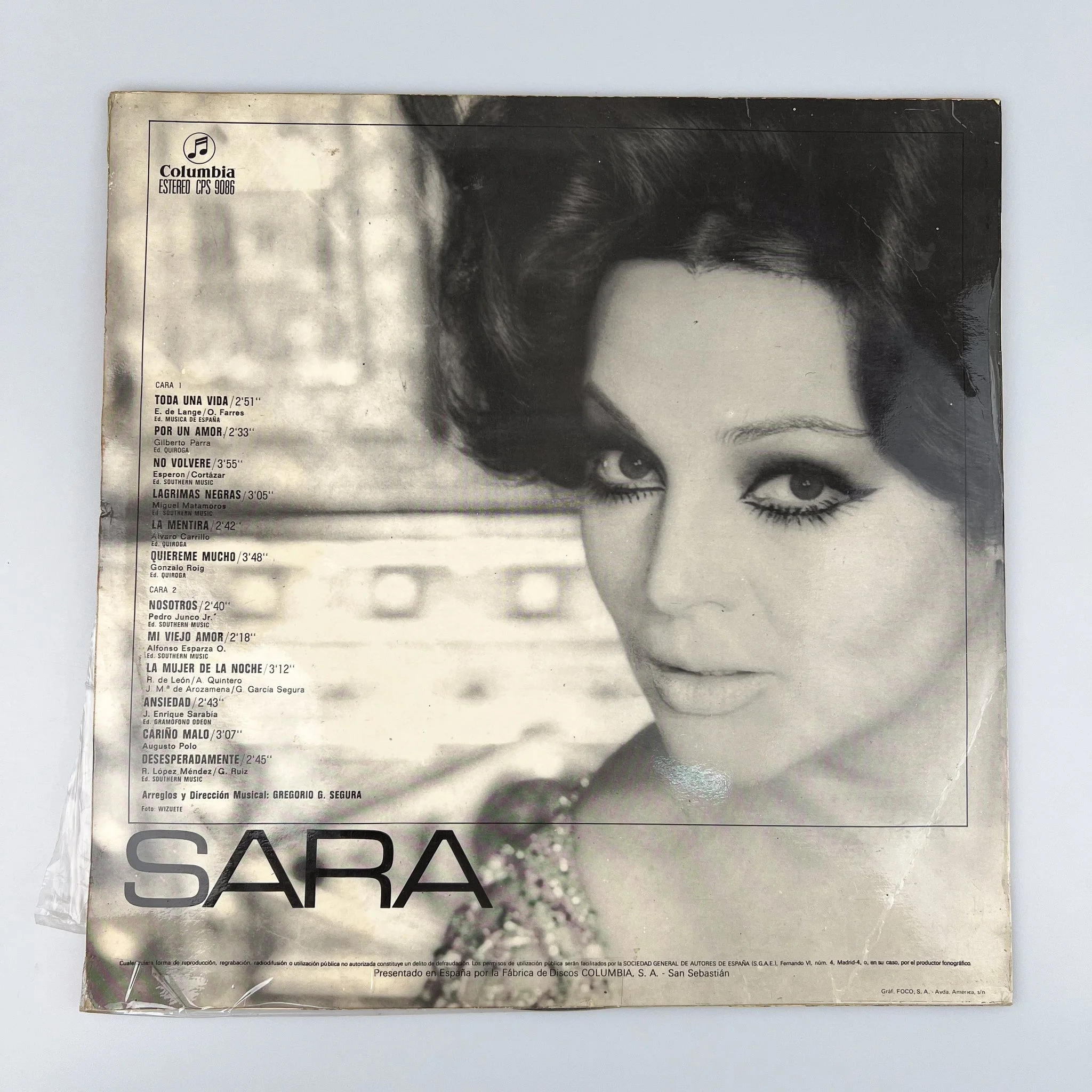
María Antonia Abad Fernández (10 March 1928 – 8 April 2013), known professionally as Sara Montiel, was a Spanish actress and singer who became the most internationally popular and highest-paid star of Spanish cinema in the 1960s. She appeared in nearly fifty films and recorded approximately 500 songs in five different languages, transcending borders to become a cultural icon in Spain, Mexico, the United States, and Latin America. Her career spanned nearly seven decades, marked by a unique blend of dramatic acting and musical performance that captivated audiences worldwide. She is frequently ranked among the greatest Spanish actresses and cited in media as one of the top divas of the 20th century. Montiel received numerous lifetime achievement honors, including an induction onto the Hollywood Walk of Fame in 1959, the Medalla de Oro al Mérito en las Bellas Artes in 1981, and the Honorary Goya Award in 1995. Her legacy endures through her timeless catalog of music and film, which continues to generate revenue and inspire new generations of artists across the Spanish-speaking world.
Early Life & Background
María Antonia Alejandra Vicenta Abad Fernández was born into poverty in the village of Campo de Criptana in the La Mancha region of Castile-La Mancha, Spain. Her father worked as a bricklayer and her mother as a housekeeper, leaving the family with few resources. She began working at a very young age to support them, taking jobs as a seamstress and a dancer in local cabarets. Her early interest in performance led her to join a small theater troupe in Toledo, where she adopted the stage name "Sarita." A pivotal moment occurred when she was discovered by a talent scout while performing in a variety show, leading to her first film roles in the late 1940s. Her professional debut came in 1947 with a role in the Spanish film Don Quixote. She quickly gained attention in Spain with films like Madness for Love (1948). Seeking broader opportunities, she moved to Mexico in 1950, entering the Golden Age of Mexican Cinema. There, she starred in Women's Prison (1951) and Red Fury (1951), establishing herself as a major box-office draw in Latin America. This period laid the groundwork for her international stardom, as she honed her skills in front of a massive audience that would follow her to Hollywood. During this time, she also developed her singing voice, which would later become central to her global appeal.
Career Growth
Montiel's breakthrough into Hollywood came in 1954 when she was cast in the American western Vera Cruz, co-starring Gary Cooper and Burt Lancaster. This was followed by Serenade (1956) opposite Mario Lanza and Run of the Arrow (1957) with Rod Steiger. Although her English-language roles were limited, they solidified her status as an international star. Upon returning to Spain in 1957, she achieved her greatest commercial success with two musical dramas: The Last Torch Song and The Violet Seller. These films shattered box office records, becoming the highest-grossing Spanish-language films of their time. She continued to release musical films throughout the 1960s, including The Gypsy Queen (1962) and The Bandit (1963), before gradually reducing her film output in the 1970s to focus on live performances and television appearances. Her singing career flourished alongside her acting, with recordings in five languages. In 1959, she was inducted onto the Hollywood Walk of Fame. Later accolades included the Medalla de Oro al Mérito en las Bellas Artes in 1981 and the Honorary Goya Award in 1995. She also received an honorary doctorate from the University of Castilla-La Mancha in 2000.
Career Timeline
Public Image & Style
Sara Montiel stood approximately 5'6" tall and was known for her striking beauty, often characterized by her dark hair, expressive eyes, and glamorous style. Her public image was that of the ultimate vedette, a mix of sensuality, drama, and elegance. Media portrayed her as a symbol of female empowerment and resilience, especially given her rise from poverty to international stardom. Her signature aesthetic involved elaborate gowns, bold makeup, and a commanding stage presence. She maintained a dignified and mysterious aura throughout her career, rarely revealing intimate details of her private struggles. Despite her glamour, she was known for her humility and often visited hospitals and orphanages in her spare time. Her ability to captivate audiences with her voice and screen presence inspired generations of artists.
Fame & Fandom (iFAMOUS Rankings)
While she does not have a single, universally recognized fandom name like modern pop stars, she is deeply revered by fans of classic cinema, particularly in Spain and Latin America. Fan campaigns often revolve around streaming her films on platforms like YouTube and maintaining her legacy through social media groups dedicated to the Golden Age of Mexican Cinema. Notable fan rituals include annual commemorations of her birthday and the anniversary of her death, where fans share clips of her performances. She is often remembered for her ability to captivate audiences with her voice and screen presence, a trait that inspired generations of artists. As of the November 2026 evaluation window, she remains outside the current published rankings of active celebrities but retains a massive historical following. Her enduring popularity is evidenced by the continued re-releases of her films, documentaries, and academic studies celebrating her impact on the industry.
Interesting Facts and Legends
Montiel recorded songs in five languages: Spanish, English, French, Italian, and Portuguese. She was the first Spanish actress to achieve such widespread success in Hollywood during the 1950s. Her song "Tú me quieres malamente" is considered one of the most recorded Spanish songs of all time. She was a close friend of many Hollywood stars, including Marilyn Monroe and Marlon Brando, during her time in Los Angeles. One of the most legendary stories surrounding Montiel involves the phenomenon of "Sara Montiel fever" in the 1950s and 60s. When she appeared in public, crowds would sometimes become so overwhelming that streets were shut down. In Mexico City, her arrival at the airport for a promotional tour reportedly caused traffic jams that lasted hours, with fans fainting and screaming for autographs. Another iconic moment was her performance of "Tú me quieres malamente" in The Violet Seller, which became a cultural touchstone; the song is still played at weddings and celebrations in the Spanish-speaking world today. These events are verified by contemporary newspaper reports and biographies, distinguishing them from folklore.
Notable Quotes
“I never wanted to be a star, I just wanted to sing and act.”
“My life has been a song, full of highs and lows, but always with music.”
“The audience gives you everything; you must give them your soul.”
Family & Personal Life
Montiel grew up in a modest family; her father was a bricklayer and her mother a housekeeper. Her childhood was marked by poverty, and she began working at a young age to support her family. Before her rise to fame, she worked as a seamstress and a dancer in local cabarets. Her early interest in performance led her to join a small theater troupe in Toledo, where she adopted the stage name "Sarita." A pivotal moment occurred when she was discovered by a talent scout while performing in a variety show, leading to her first film roles in the late 1940s. She raised two adopted children, David and Ana, during her marriage to Anthony Mann. Both adopted children predeceased her or lived privately. In her later years, she lived quietly in Madrid and remained unmarried after her fourth dissolution.
Notable Connections
Relationships & Dating History
Sara Montiel's personal life was the subject of intense media scrutiny in the Spanish-speaking world. She was married four times and adopted two children. Her first marriage was to Manuel Martínez Ceballos, a Spanish businessman, in the early 1950s. The marriage ended in divorce around 1953, attributed to the pressures of her rising career and his inability to cope with her fame. No children were born from this union. Her second marriage was to Anthony Mann, an American film director known for westerns. They met on the set of Vera Cruz in 1954 and married in 1955. Their marriage lasted until 1958. They did not have biological children together, but they adopted two children during their marriage: a son named David and a daughter named Ana. The couple divorced due to Mann's demanding work schedule and the strain of living between the US and Europe. Mann later stated in interviews that he found it difficult to balance his directing career with family life. Mann passed away in 1967. Montiel married José Luis Sáez de Hermida, a Spanish producer, in 1960. This marriage was short-lived, ending in divorce in 1962. There were no children from this union, and the separation was reported to be amicable, driven by professional differences and a desire for independence. Rumors also circulated about a relationship with renowned Spanish filmmaker Juan Antonio Bardem in the late 1960s, but there is no official record of marriage. Some sources suggest a brief engagement or long-term partnership that ended without legal formalities. No children were involved in this rumored relationship. In her later years, Montiel lived quietly in Madrid and remained unmarried after her fourth dissolution. As of her death on April 8, 2013, she was widowed, having outlived all her spouses.
- DivorcedManuel Martínez Ceballos1950 - 1953Spanish businessman; split due to career pressures.
- DivorcedAnthony Mann1955 - 1958American director; adopted two children together; he died in 1967.
- DivorcedJosé Luis Sáez de Hermida1960 - 1962Spanish producer; split over professional differences.
- RumouredJuan Antonio Bardem1968 - presentRumored relationship or engagement; no legal marriage.
Death & Aftermath
Died
April 8, 2013 (aged 85)
Death Place
Madrid, Spain
Cause of Death
Natural causes (sudden medical event)
Sara Montiel spent her final years in Madrid, living quietly away from the bustling film sets and recording studios that had once defined her career as a vedette. On April 8, 2013, emergency services were dispatched to her residence after she suffered a sudden medical event, but paramedics could not save the eighty-five-year-old icon. The cause of death was officially reported as a natural event, likely a heart attack or stroke, though specific autopsy details were not widely publicized. The immediate response from Spanish media confirmed the passing was treated as a natural event. The news sent an immediate wave of mourning across Spain, Hollywood, and Latin America, where she remained one of the most beloved divas of cinema and music. Cultural institutions and peers poured in acknowledgments of her role as a national treasure, comparing her legendary stature to Elizabeth Taylor. While specific details regarding the exact location of her burial remain unconfirmed in public records, her funeral was attended by family and close friends. Posthumous releases such as new books appeared later, with Israel Rolón-Barada's biography featured at a fair in Madrid in 2023, yet no films or albums were released immediately following her death in 2013. Her legacy continues to be celebrated through re-releases of her films, documentaries, and academic studies.
Net Worth (Estate Value)
$18 Million
iFANN Editorial Team estimate
Credible estimates from financial and entertainment outlets prior to her death placed her net worth between $10 million and $15 million USD, derived primarily from her film salaries, music royalties, and real estate holdings in Spain and Mexico. Source estimates indicate her wealth was around $12 million, while Spanish financial reports from 2012 suggested assets valued at €10 million. Research by the iFANN Editorial Team puts her estate's value at around $18 million as of 2026, reflecting inflation and the enduring popularity of her work. The estate is managed by her adopted children and legal representatives. Major revenue sources include licensing deals for her classic films, royalties from her extensive discography (particularly "Tú me quieres malamente"), and merchandise sales. Industry analysis of her royalty streams suggests her estate continues to generate significant revenue, though exact figures for 2026 are not publicly disclosed. The estate's trajectory has remained stable due to the timeless appeal of her catalog in the Spanish-speaking world.
Awards Won (8)
While specific competitive awards won (like Oscars or Golden Globes) are not extensively documented in standard databases for Montiel, she received numerous lifetime achievement honors and national distinctions. She was awarded the Medalla de Oro al Mérito en las Bellas Artes in 1981 and received the Premio Goya de Honor in 1995. She was inducted into the Hollywood Walk of Fame in 1959 and received an honorary doctorate from the University of Castilla-La Mancha in 2000.
1981 · Lifetime Achievement
Contribution to the Arts
1995 · Honorary Award
Lifetime Contribution to Spanish Cinema
Known For
Vera Cruz
1954 · Actress
The Violet Seller
1958 · La Violetera
The Last Torch Song
1957 · Actress
Women's Prison
1951 · Actress
Serenade
1956 · Lola Delgado
Keywords
Sources
Quick Facts
- Profession
- actor, singer, vedette
- Born
- March 10, 1928
- Birthplace
- Campo de Criptana
- Died
- April 8, 2013
- Death Place
- Madrid
- Gender
- Female
- Spouse
- Anthony Mann
- Birth Sign
- Pisces
Personal Details
- Full Name
- María Antonia Alejandra Vicenta Abad Fernández
- Height
- 5 ft 6 in (168 cm)
- Spouse
- Anthony Mann
- Children
- David (adopted), Ana (adopted)
- Education
- None formally recorded; began working at a young age
Filmography
49
Total
49
Film
0
TV
Frequently Asked Questions
What was Sara Montiel's ethnicity?
How old was Sara Montiel when she died?
What movies did Sara Montiel star in?
Who was Sara Montiel married to?
Did Sara Montiel have children?
Social Media

Join the community
fans discussing