 Spain
About
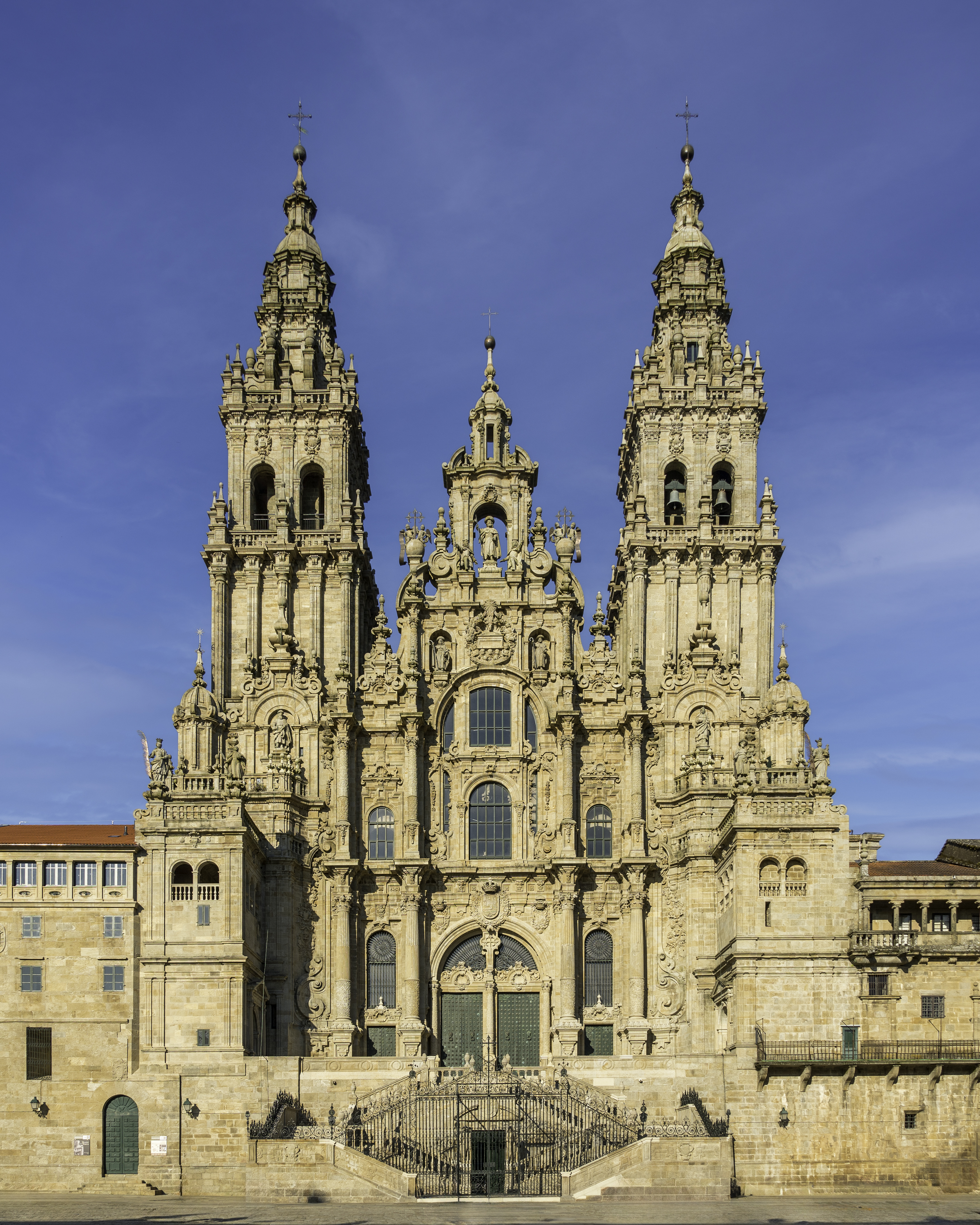
The Metropolitan Cathedral Basilica of St. James the Apostle anchors the historic center of Santiago de Compostela in Galicia, Spain. It serves as the seat of the Metropolitan Archdiocese and stands as one of Christianity's most significant pilgrimage sites. The structure marks the final destination for the Camino de Santiago, a vast network of routes where thousands of travelers converge annually to reach this sacred ground. Built over the tomb of Saint James the Great, one of Jesus Christ's apostles, the cathedral holds a unique spiritual status shared by only two other churches globally: St. Peter's Basilica in Rome and the church dedicated to St. Thomas in India.
Architecturally, the building presents a complex timeline of styles rather than a single unified vision. Construction began in 1075 under King Alfonso VI and Archbishop Diego Gelmírez, who sought a monument worthy of an apostle's resting place. The western entrance features the Portico of Glory, a masterpiece of Romanesque sculpture commissioned by King Ferdinand II in 1168 and executed by Master Mateo. This section contrasts sharply with the later additions, including the Gothic cloister and the Plateresque façade of the Acibechería. The iconic Baroque Obradoiro façade, completed in the 18th century, defines the exterior that greets visitors today.
Today the cathedral functions as both a working church and a major cultural institution. It manages the Pilgrim's Office, which verifies journeys and issues the official Compostela certificate to those who complete at least 100 kilometers on foot or by bicycle. The site draws millions of visitors each year, balancing daily liturgical life with the logistical demands of global tourism. Its recognition as a UNESCO World Heritage Site in 1985 underscores its enduring value to human history.
Mission
The institution operates with a dual purpose: maintaining active Catholic worship while serving as the guardian of a monumental artistic legacy. As the administrative heart of the Archdiocese, it hosts daily masses, confessions, and special ceremonies. A critical part of its mission involves supporting pilgrims arriving from around the world through the Pilgrim's Office. This office authenticates travel credentials and awards the Compostela document, validating the spiritual journey undertaken by those who walk the final stretch of the Camino.
Beyond religious duties, the cathedral acts as a steward of its physical treasures. Staff members manage the preservation of the botafumeiro, a massive silver censer weighing approximately 80 kilograms, and oversee the conservation of the Portico of Glory. The organization balances these preservation efforts with the need to accommodate large crowds, ensuring that the space remains accessible for both prayer and historical appreciation without compromising the integrity of the ancient structures.
History
The narrative of this site begins in 813 AD when a hermit named Pelagius reported discovering a luminous tomb near the location where Saint James had been buried since his martyrdom in 44 AD. A small chapel was erected on this spot, but the influx of visitors soon outgrew the modest structure. By 1003, Bishop San Pedro de Mezonzo rebuilt the shrine to handle the growing number of faithful arriving along the early pilgrimage routes.
The decision to construct the present cathedral in 1075 marked a turning point in European religious architecture. King Alfonso VI of León and Archbishop Diego Gelmírez funded a project intended to rival the great shrines of Rome. The work progressed slowly, with the nave and transept taking shape over the next century. In 1168, King Ferdinand II appointed Master Mateo to oversee the completion of the west front. Mateo solved engineering challenges posed by the sloping terrain by designing the Portico's Crypt and the Stone Choir, culminating in the creation of the Portico of Glory.
Subsequent centuries saw the addition of new architectural layers. The Gothic cloister provided a quiet space for contemplation, while the Plateresque style appeared in the Acibechería façade. The transformation concluded with the Baroque Obradoiro façade, finished in the 18th century, which gave the cathedral its current majestic appearance. The site gained international protection in 1985 when UNESCO designated the entire city of Santiago de Compostela as a World Heritage Site.
Subdivisions
Pilgrim's Office
Verifies travel credentials for pilgrims and issues the official Compostela certificate.
Liturgical Services
Manages daily masses, confessions, and the operation of the botafumeiro during major celebrations.
Tourist Services
Coordinates guided tours, ticket sales for the museum and towers, and general visitor information.
Museum and Towers
Oversees access to the Cathedral Museum, the Carraca Tower, and rooftop viewing areas.
Notable People
Master Mateo
Architect and sculptor · 12th century
Designed and carved the Portico of Glory, creating one of the finest examples of Romanesque sculpture.
Archbishop Diego Gelmírez
Archbishop of Santiago de Compostela · c. 1069–1140
Initiated the construction of the current grand cathedral in 1075 alongside King Alfonso VI.
Milestones
813
Discovery of the tomb of Saint James; initial construction of a small church begins.
1003
Bishop San Pedro de Mezonzo rebuilds the shrine to accommodate more pilgrims.
1075
Foundation stone laid for the current cathedral under King Alfonso VI and Archbishop Diego Gelmírez.
1168
King Ferdinand II commissions Master Mateo to design the western facade.
1211
The Portico of Glory is inaugurated, becoming the central focus of the cathedral's interior.
1985
UNESCO recognizes the Santiago de Compostela Historic Area as a World Heritage Site.
Sources
Organization Info
- Founded
- 813
- Headquarters
- C/ Hórreo 1, 15701 Santiago de Compostela, A Coruña, Spain
- Country
- Spain
- Parent
- Metropolitan Archdiocese of Santiago de Compostela
- Type
- Religious
- Style
- Romanesque, Gothic, Plateresque, Baroque
- UNESCO Status
- World Heritage Site (1985)
- Botafumeiro Weight
- Approximately 80 kg
Official Website
www.catedraldesantiago.es
Join the community
fans discussing