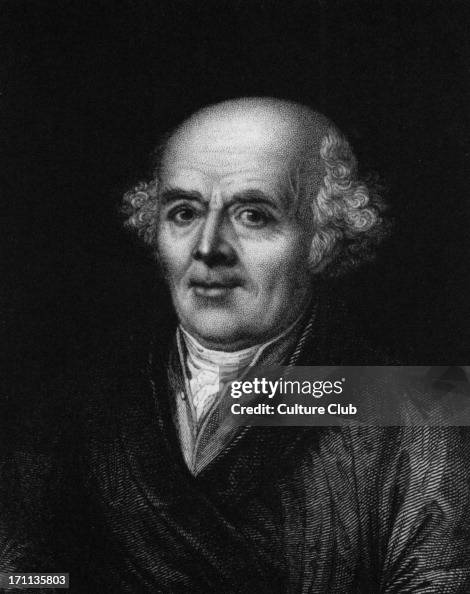
Samuel Hahnemann
physician•homeopath•pharmacologist
Also known as: Christian Friedrich Samuel Hahnemann, Father of Homeopathy
Birthday
April 10, 1755
Birth Sign
Aries
Birthplace
Meissen, Saxony
Age
Died at 88
About
Christian Friedrich Samuel Hahnemann was a German physician, pharmacologist, and chemist who created homeopathy, the alternative medical system built on the principle that like cures like. He is the single most important figure in the history of homeopathic medicine, and his name is attached to hospitals, colleges, and professional societies on multiple continents.
Two centuries after his death, homeopathy remains a global practice with millions of users, particularly in India, France, Germany, and Latin America, and Hahnemann is still the reference point for every practitioner who trains in it. His books, especially the Organon of the Healing Art and the Materia Medica Pura, are still studied and reprinted. Each April 10, his birthday, is marked as World Homeopathy Day. Mainstream medicine regards his theories as unsupported by evidence, but that has not slowed the tradition he started.
Early Life & Background
Born on April 10, 1755, in Meissen, Saxony, Samuel Hahnemann grew up in a household of modest means. His father, Christian Gottfried Hahnemann, worked as a painter in the local porcelain works, and money was tight enough that the family could not easily fund a university education. The boy showed unusual academic promise early, and according to accounts that have circulated since, his father devised a method of locking him in a room with a task, forcing self-reliance. Whatever the truth of that story, Hahnemann did learn to study independently, and he supported himself through school by teaching and translating.
He enrolled at the University of Erlangen in 1772 to study chemistry, then moved to the University of Wittenberg in 1774 to take up medicine. He completed his medical degree in 1779 at the University of Erfurt with a dissertation titled Dissertatio Inauguralis de Materia Medica. By the early 1780s he was working as a physician, but the practice did not sit well with him. He found the standard treatments of the day, bloodletting, purging, and dosing patients with mercury and other poisons, to be worse than the diseases they were meant to cure.
Translation work became his lifeline and, eventually, his intellectual turning point. In 1784, while rendering William Cullen's A Treatise on the Materia Medica into German, he hit the passage on cinchona bark, the source of quinine, used to treat malaria. Cullen credited the bark's bitterness for its effect. Hahnemann thought that explanation was nonsense. He reasoned that cinchona worked because it produced malaria-like symptoms in a healthy person, and in 1790 he tested the idea on himself by swallowing large doses of the bark. He developed chills, fever, and palpitations, a near-replica of malaria. That experiment gave him the phrase that would define his life's work: similia similibus curentur, like cures like.
Career Growth
The self-experiment with cinchona bark in 1790 gave Hahnemann his central idea, but it took years to turn that idea into a system. The first public statement came in 1796 with the Essay on a New Principle for Ascertaining the Curative Powers of Drugs, a pamphlet that laid out the law of similars for the medical world. He kept refining the method through the 1790s, testing substances on healthy volunteers and recording the symptoms they produced, a process he named proving. That work fed into the Materia Medica Pura, published in parts from 1811 and collected in 1825, which catalogued the effects of dozens of remedies.
The Organon of the Healing Art, first issued in 1801, became the movement's foundational text. It went through six editions in his lifetime, each revision sharpening the rules of practice, and by the 1820s Hahnemann had a following large enough to alarm the conventional medical establishment. The opposition was fierce. Apothecaries in Germany fought him in court over his right to dispense his own medicines, and orthodox physicians dismissed his diluted remedies as nothing at all. He moved to Köthen in 1821, where he enjoyed the protection of a sympathetic duke, and then in 1835 to Paris, partly to escape the hostility and partly because a new marriage opened a new chapter.
In Paris, his practice exploded. Patients from across Europe and even America sought him out, and he treated them until his final years. The sixth edition of the Organon was finished shortly before his death in 1843 but sat unpublished until 1921. By then homeopathy had spread to the United States, Britain, India, and beyond, carried by students he had trained and by the books he left behind.
Career Timeline
Public Image & Style
In portraits, Hahnemann appears as a serious, upright figure of the late Enlightenment, usually in dark coats with a high collar and a plain white cravat, his hair swept back. He looks like what he was: a scholar and a physician who spent his life in books and consultations. The public image he cultivated was that of a healer who rejected the brutality of his era's medicine. He positioned himself against bloodletting, against mercury, against the whole apparatus of aggressive treatment, and he framed his gentler approach as both more humane and more rational. His critics saw something else: a man who diluted medicines into nothing and charged for them anyway. That tension, the gentle healer versus the purveyor of pseudoscience, has followed his reputation for two centuries and shows no sign of resolving.
Fame & Fandom (iFAMOUS Rankings)
iFANN has not yet collected fame data for Samuel Hahnemann, so no ranking is available for him. That is a quirk of timing rather than a judgment on his reach. His name sits in medical dictionaries, on hospital buildings, and in the curriculum of every homeopathy school on earth, which is a kind of fame the ranking engines are not built to measure. He is also not on the September 2026 iFAMOUS Rankings flagship list.
The fanbase around Hahnemann has no formal name. Practitioners call themselves homeopaths, and the tradition he founded is sometimes called Hahnemannian homeopathy, but there is no equivalent of a fandom handle. What exists instead is a professional and educational network: colleges, societies, journals, and the annual observance of World Homeopathy Day on his birthday, April 10. The day is marked with rallies, free clinics, seminars, and public awareness campaigns, particularly in India, where homeopathy has a large following. In 2026, events included a rally and a free medical camp organized by Devs Homeopathy Medical College in Keesara, Telangana, and a stage production titled Hahnemann by Mohakal Natya Sampraday in Bangladesh. The Faculty of Homeopathy and similar bodies keep his writings in print and his methods in training. Loyalty to Hahnemann runs deep in these circles, and it is expressed through practice and commemoration rather than through the streaming pushes and birthday billboards of a pop fandom. The closest thing to a fan ritual is the study of his texts, which practitioners still read the way musicians study scores.
Interesting Facts and Legends
Hahnemann coined the term proving for the practice of testing a substance on healthy volunteers to record the symptoms it causes, and the word is still standard vocabulary in homeopathy. He was fluent in several languages, including English, French, Italian, Greek, Latin, and Arabic, which is how he made his living as a translator before homeopathy paid the bills. He advocated extreme dilutions, sometimes to the point where no molecules of the original substance remained, a practice critics have mocked since his own lifetime. Fans of his work sometimes retell a story about his father locking him in a room to force him to solve problems alone, an anecdote that appears in early biographies but has never been fully verified. He was also a member of the Freemasons, joining a lodge in 1777, and he wrote about chemistry and pharmacy long before he wrote about homeopathy.
Notable Quotes
“The doctor's duty is to restore health to the sick, to cure, as far as possible, or relieve suffering.”
“Medicines produce their curative effect only by virtue of their ability to produce symptoms in the healthy organism similar to those of the disease.”
Family & Personal Life
Hahnemann's father, Christian Gottfried Hahnemann, worked as a porcelain painter in Meissen, the town famous for its porcelain, and the family lived on limited means. His mother was Johanna Christiana Hahnemann. He married his first wife, Johanne Henriette Leopoldine Küchler, in 1782, and they had several children together, including a son, Louis, who followed him into medicine. Johanne died in 1802. Two years later, in 1804, he married Mélanie d'Hervilly, who became his partner in work as well as life, managing his correspondence and helping with his research until his death. The couple lived in Paris after 1835, where Mélanie oversaw his household and later his papers.
Notable Connections
Relationships & Dating History
Hahnemann married Johanne Henriette Leopoldine Küchler in 1782. The marriage lasted two decades and produced several children, including a son, Louis, who became a physician. Johanne died in 1802, leaving him a widower with a young family. In 1804 he married Mélanie d'Hervilly, born Marie Louise Boivin, who became his constant companion and secretary. Mélanie was devoted to his work, managed his household, and assisted with his research and correspondence. The couple moved to Paris in 1835, where she continued to support his practice until his death in 1843. There is no documented record of romantic relationships outside these two marriages, and in the context of his era, public dating history as modern audiences understand it simply did not exist. He kept his personal affairs private. At the time of his death, he was married to Mélanie, who survived him and later managed his literary estate.
- MarriedJohanne Henriette Leopoldine Küchler1782 - 1802His first wife, with whom he had several children including a son, Louis; she died in 1802.
- MarriedMélanie d'Hervilly1804 - 1843His second wife, born Marie Louise Boivin; she managed his household, assisted his research, and survived him.
Death & Aftermath
Died
July 2, 1843 (aged 88)
Death Place
Paris, France
Cause of Death
Natural causes associated with advanced age
Samuel Hahnemann died on July 2, 1843, at his home in Paris. He was 88 years old. The cause was recorded as natural causes tied to advanced age, a gradual decline rather than any sudden event. He had kept working almost to the end, revising the sixth edition of the Organon of the Healing Art in his final months, and those pages were not published until decades later.
Word traveled fast through the homeopathic community, which by then stretched across Europe and into the United States. Practitioners who had trained under him or built their careers on his system treated the loss as the passing of a founder, and the tributes that followed were professional as much as personal. His funeral in Paris was a private service, attended by family and a small circle of colleagues, and he was buried in Père Lachaise Cemetery in Division 4. The tombstone carries the Latin line "Die milde Macht ist gross," which translates to "Gentle power is great," a phrase that sums up his therapeutic philosophy in four words.
Commemoration came in waves over the following century. The Samuel Hahnemann Memorial near Scott Circle in Washington, D.C., was erected as a public tribute, and statues and plaques followed in other cities. Institutions took his name, most visibly Hahnemann University Hospital in Philadelphia, founded in 1848, just five years after his death. That hospital operated for 171 years until its 2019 closure and bankruptcy, a saga that ended with Drexel University mounting an exhibit that November titled "Honoring the Hahnemann Community." His birthday, April 10, became World Homeopathy Day, observed annually with rallies, free clinics, and seminars. In 2026, events included a rally and medical camp organized by Devs Homeopathy Medical College in Keesara, India, and a theatrical production called Hahnemann staged by Mohakal Natya Sampraday in Bangladesh. The estate side was quiet by comparison: his second wife, Mélanie, managed his papers and intellectual property after his death, and the financial details of that inheritance were never publicly detailed.
Net Worth (Estate Value)
$1 Million
iFANN Editorial Team estimate
Hahnemann lived in an era before celebrity net worth tracking, and no reliable modern estimate of his estate exists. He earned his living as a physician and translator, and in his later years his Paris practice attracted wealthy patients from across Europe, which suggests a comfortable income by the standards of the 1830s. He was never a rich man in the industrialist sense, and much of what he owned at his death passed to his second wife, Mélanie, who managed his papers and the commercial side of his legacy afterward.
His posthumous financial footprint is larger than anything he held in life. His writings remain in print worldwide, and homeopathy is a multi-billion-dollar global industry, though Hahnemann himself captured almost none of that value. Institutions bearing his name, including Hahnemann University Hospital in Philadelphia, generated revenue and employment for 171 years before closing in 2019. The iFANN Editorial Team's analysis of his historical earnings and the nominal value of his estate points to roughly $1 Million in modern equivalent terms, a figure that reflects a respected professional's lifetime income rather than any fortune. That is the number iFANN uses for 2026, and it is best understood as a historical estimate, not a measure of the industry his ideas eventually created.
Awards & Accolades
View 4 records, honours and achievementsKnown For
Founding homeopathy
1796 · Founder
The Organon of the Healing Art
1801 · Author
Materia Medica Pura
1805 · Author
Law of similars (like cures like)
1790 · Originator
Keywords
Sources
Quick Facts
- Profession
- physician, homeopath, pharmacologist
- Born
- April 10, 1755
- Birthplace
- Meissen, Saxony
- Died
- July 2, 1843
- Death Place
- Paris, France
- Gender
- Male
- Spouse
- Mélanie Hahnemann, Johanne Henriette Leopoldine Küchler
- Birth Sign
- Aries
Personal Details
- Full Name
- Christian Friedrich Samuel Hahnemann
- Spouse
- Mélanie Hahnemann, Johanne Henriette Leopoldine Küchler
- Children
- Several children, including a son, Louis Hahnemann
- Education
- University of Erlangen, University of Wittenberg, University of Erfurt (MD, 1779)
Frequently Asked Questions
Who founded homeopathy?
When was Samuel Hahnemann born?
What is the main principle of homeopathy?
Where is Samuel Hahnemann buried?
Why is World Homeopathy Day celebrated?
Similar People
Join the community
fans discussing