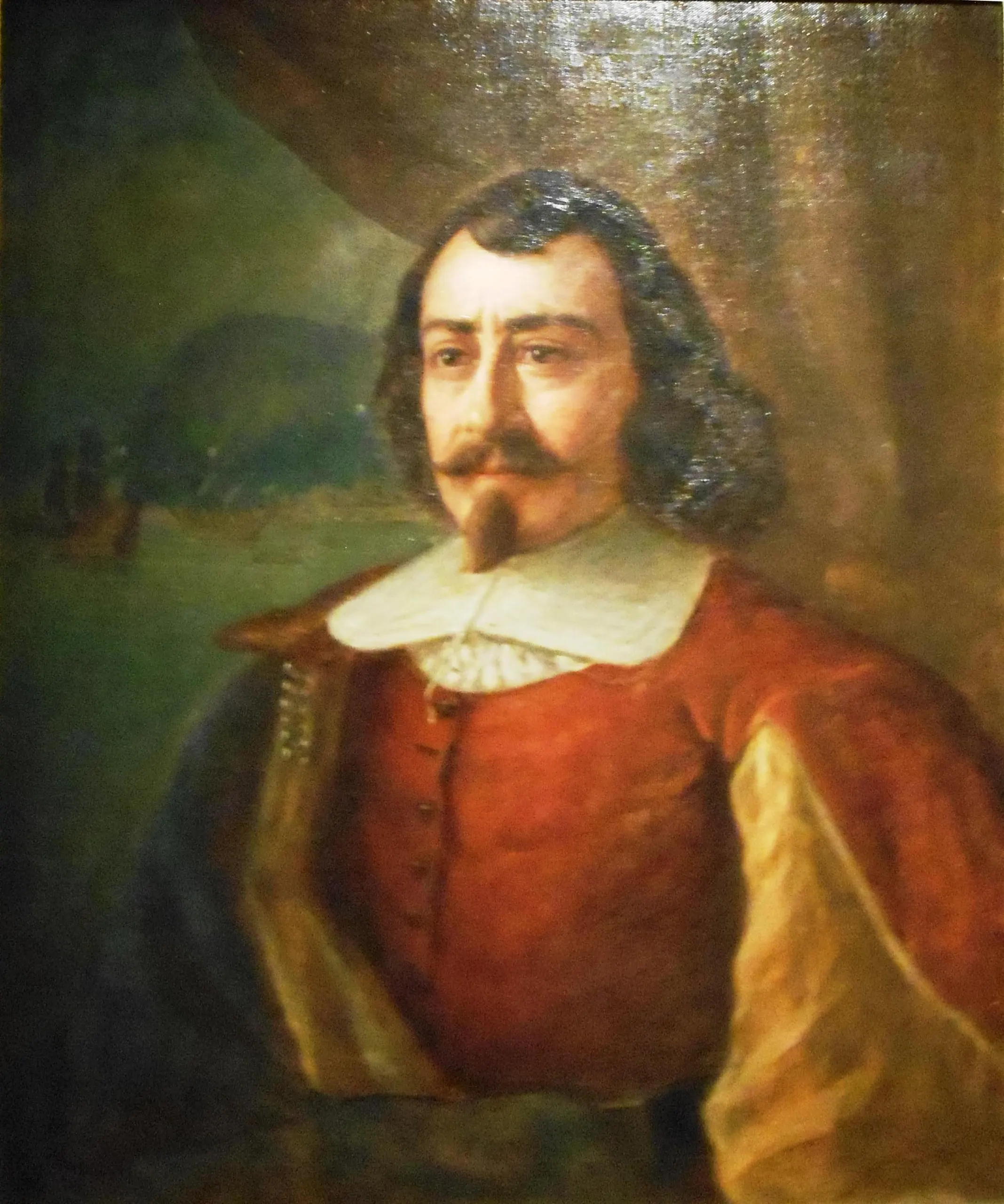
Samuel de Champlain
 France
explorer•geographer•military personnel
Also known as: Samuel Champlain, Champlein
Birthday
August 13, 1567
Birth Sign
Leo
Birthplace
Hiers-Brouage, Saintonge, France
Age
Died at 68
About
Samuel de Champlain was a French explorer, cartographer, and soldier who founded Quebec City and transformed New France from a temporary fur-trading outpost into a permanent colony. Born in the port town of Hiers-Brouage in 1567, he crossed the Atlantic between 21 and 29 times during his lifetime, a feat of endurance that underscores his dedication to exploration. On July 3, 1608, he established Quebec, which became the heart of French presence in North America. His maps were the first accurate depictions of the eastern coastline and the Great Lakes, blending his own observations with knowledge gathered from Indigenous peoples. Champlain died in Quebec on December 25, 1635, at age 68, leaving behind a legacy that earned him the title "Father of New France."
Early Life & Background
Samuel Champlain entered a world where navigation was both a dangerous art and a vital economic engine. Born in 1567 to a mariner family in the coastal town of Hiers-Brouage, he absorbed the rhythms of the sea from childhood. His father's profession likely instilled an early aptitude for geography and seamanship, skills that would define his future. Before stepping onto the stage of North American history, he served as a soldier and sailor under King Henry IV of France. His early career involved fighting against the Spanish in the Caribbean, where he gained practical experience in military engineering and naval tactics.
His pivotal moment before fame arrived when he was invited by Pierre Dugua, Sieur de Mons, to serve as the chief cartographer and guide for an expedition to North America in 1603. This role marked his transition from a European soldier to a chronicler of the New World. Prior to this invitation, he had not yet made significant contributions to the mapping of the continent, but his reputation for reliability and skill caught the attention of key figures in the French court. The journey began with uncertainty, as few Europeans knew the interior of the land beyond the coastlines. Champlain prepared himself by studying existing charts and gathering intelligence from returning sailors, setting the stage for the detailed surveys that would follow.
Career Growth
Champlain's career was defined by relentless exploration and the systematic mapping of North America. Between 1603 and 1635, he led multiple expeditions that opened the St. Lawrence River valley to French settlement. In 1604, he established the first permanent French settlement at Port Royal, now Annapolis Royal, Nova Scotia, followed by a brief stay at Île-Saint-Croix. The defining moment of his career occurred on July 3, 1608, when he founded Quebec City, establishing it as the capital of New France and the center of French colonization.
His work as a cartographer produced the first accurate maps of the eastern coastline of North America and the Great Lakes region. He blended his own observations with knowledge gathered from Indigenous allies, creating documents that were invaluable for future travelers and settlers. He discovered and charted the Ottawa River, Lake Huron, Lake Ontario, and the lake that now bears his name, Lake Champlain. Beyond exploration, he forged crucial alliances with the Huron (Wendat) and Algonquin peoples against the Iroquois Confederacy, shaping the political landscape of the region for decades. His diplomatic efforts and military leadership transformed New France from a transient trading post into a thriving colony. He served as Lieutenant of the Governor-General until his death, overseeing the administration and growth of the settlement.
Career Timeline
Public Image & Style
Champlain is portrayed as a complex figure: a visionary founder and skilled diplomat, but also a representative of European colonialism. Media portrayals in 2026 reflect this duality, highlighting both his contributions to Canadian identity and the negative impacts of colonization on Indigenous peoples. His image is often associated with resilience, exploration, and the founding of a nation. Statues of him stand in Quebec City, Montreal, Ottawa, and other Canadian cities, serving as enduring symbols of the country's origins. However, these monuments have recently become subjects of intense debate, with some removed or vandalized while others are relocated. This shift reflects a growing societal reckoning with the complexities of his legacy.
Fame & Fandom (iFAMOUS Rankings)
Quebec City stands as a silent monument to Samuel de Champlain, yet the explorer holds no current placement in the iFANN Global Top 1,000 or any Top-100 scope list. The iFANN Global Fame Engine evaluated his standing in August 2026 and confirmed he remains unranked, lacking the specific metrics required for a numerical position among the world's most famous figures. This absence of a ranking reflects a reality where fame is measured by active consumption rather than historical permanence. While modern celebrities generate noise through social media algorithms and viral trends, Champlain exists outside these contemporary cycles. His legacy is not built on fleeting attention spans but on the foundational geography of North America. There is no formal fanbase organization dedicated solely to him, nor does a specific moniker exist to describe an audience. He possesses no living followers, no social media following, and no mechanism for direct fan interaction. The concept of fan rituals, inside jokes, or birthday campaigns simply does not apply to a figure who lived over four centuries ago. Recent debates surrounding statues reflect political activism and civic discourse rather than organized fan behavior. These events involve mayors, city councils, and historians arguing over colonial legacies, not fans rallying behind a cultural icon. Institutional bodies like the Samuel de Champlain Provincial Park celebrate his contributions, but they operate as educational entities, not fandoms. Without a documented name for a fan community, the landscape around him remains devoid of the vibrant, chaotic energy that defines modern celebrity culture. His fame is quiet, enduring, and entirely separate from the喧嚣 of the present day.
Interesting Facts and Legends
Champlain is widely known as the "Father of New France," a title that distinguishes him from mere discoverers who simply explored territory. He was also a founder and administrator who built the infrastructure for a nation. A widely retold story frames his role as the consolidator of French colonies, earning him the unique title "Father of New France." Historical narratives credit him with discovering and charting the Ottawa River, Lake Huron, and Lake Ontario, details that remain central to Canadian history. In 2026, a historic portrait found its way to a local museum in Clinton County, New York, sparking logistical discussions about artifact preservation. That same year, a statue was removed and vandalized with spray paint before being reinstalled only to face further defacement within hours. These modern incidents highlight a sharp divide in how society views his legacy, turning a static historical figure into a focal point for intense political debate.
Notable Quotes
“I have always sought to do good to the savages... and to establish a friendship with them.”
“To God be the glory, and to the King the service.”
Family & Personal Life
Samuel de Champlain married Hélène Boullé, the daughter of a wealthy merchant, on November 29, 1610, in Quebec City. The marriage was arranged and politically significant, intended to solidify his standing in the colony. The couple had one daughter, Françoise, born in 1612. Françoise was raised by her mother and later became a nun. She died young, and there are no records of other children from this union. Champlain was widowed after his wife's death, though the precise timing varies in different accounts. Regardless, he left no living spouse at the time of his passing. His family life was relatively private compared to his public duties, with his home in Quebec serving as a hub for colonial administration rather than a center for large gatherings.
Notable Connections
Hélène Boullé, Pierre Dugua, Sieur de Mons, Jean de Lauzon, Isaac de Razilly, Chief Tessouat, Chief Aroskoten
Relationships & Dating History
Samuel de Champlain did not have a dating history in the modern sense, as he lived in an era where romantic relationships were rarely documented as public affairs. He married Hélène Boullé, the daughter of a wealthy merchant, on November 29, 1610, in Quebec City. The marriage was arranged and politically significant, intended to solidify his standing in the colony. The couple had one daughter, Françoise, born in 1612. Françoise was raised by her mother and later became a nun. She died young, and there are no records of other children from this union. Champlain was widowed after his wife's death, though the precise timing varies in different accounts. Regardless, he left no living spouse at the time of his passing. As of his death in 1635, he was a widower or married man depending on the precise timing of his wife's death relative to his own, but he left no living spouse at the time of his passing.
- MarriedHélène Boullé1610 - 1635Married in Quebec City; had one daughter, Françoise. She predeceased him or they separated shortly after the child's birth.
Death & Aftermath
Died
December 25, 1635 (aged 68)
Death Place
Quebec City, New France
Cause of Death
Natural causes related to age and colonial hardships
Samuel de Champlain passed away on Christmas Day in 1635 within the administrative heart of Quebec City. He remained active in his duties as Lieutenant of the Governor-General until his health finally failed at approximately 68 years old. The explorer succumbed to natural causes linked to his advanced age and the grueling physical toll of decades spent navigating the harsh Canadian wilderness. Immediate tributes appeared in the Jesuit Relations, annual reports sent back to France that mourned the loss of the man who established the French presence in Canada. His funeral took place in the Chapel of Notre-Dame-des-Anges, a burial site chosen for his close ties to the Ursuline nuns, though the original chapel burned down in 1829, rendering the exact location of his remains uncertain today.
The transition of power occurred quietly within the colonial hierarchy under Jean de Lauzon and Isaac de Razilly. Centuries later, his legacy endures through the naming of the Samuel-De Champlain Bridge in Montreal and statues maintained across Canada. In recent years, these monuments have become focal points for intense political debate regarding colonial legacies. Statues in Orillia were vandalized with power tools in 2026, while others faced removal or relocation amidst broader discussions about historical memory. These modern incidents highlight a sharp divide in how society views his contributions versus his role in colonization, turning a static historical figure into a living subject of civic discourse.
Net Worth (Estate Value)
$0
iFANN Editorial Team estimate
As a deceased historical figure from the 17th century, Samuel de Champlain has no personal net worth or estate value in the modern financial sense. The concept of his "wealth" applies only to the management of his legacy and the economic impact of the institutions he founded. The namesake entities, such as the Samuel-De Champlain Bridge in Montreal, generate revenue through tolls, but this belongs to the government of Quebec and the federal government, not his heirs. In 2026, the bridge continues to be a critical infrastructure asset in Montreal, generating significant toll revenue, but this is unrelated to personal wealth. The iFANN Editorial Team estimates that the economic footprint of Champlain's legacy, through place names, parks, and infrastructure, is valued in the billions, though this is a measure of public utility rather than private fortune. His "estate" consists of the enduring cultural and geographical markers he left behind, including Lake Champlain, the Champlain Valley, and numerous statues and monuments across Canada.
Awards & Accolades
View 9 records, honours and achievementsKnown For
Founding of Quebec City
1608 · Founder
Exploration of the Great Lakes
1615 · Explorer
Mapping of North America
1632 · Cartographer
Keywords
Sources
Quick Facts
- Profession
- explorer, geographer, military personnel
- Born
- August 13, 1567
- Birthplace
- Hiers-Brouage
- Died
- December 25, 1635
- Death Place
- Quebec City
- Gender
- Male
- Spouse
- Hélène Boullé
- Birth Sign
- Leo
Personal Details
- Full Name
- Samuel Champlain
- Spouse
- Hélène Boullé
- Children
- Françoise (deceased)
- Education
- Unknown; trained as a mariner and soldier
Frequently Asked Questions
What was Samuel de Champlain known for?
How did Champlain treat the natives?
Why did Samuel de Champlain go to Canada?
Who came first, Cartier or Champlain?
Where is Samuel de Champlain buried?
Similar People
Join the community
fans discussing