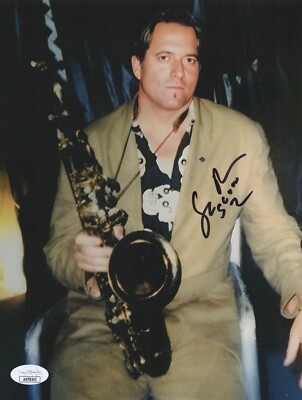
Sam Phipps
 United States
Member of Oingo Boingo
Also known as: Sluggo
Birthday
October 1, 1953
Birth Sign
Libra
Birthplace
United States
Age
72 years old
About
Sam "Sluggo" Phipps is an American saxophonist and clarinetist best known as a core member of the new wave band Oingo Boingo. Born October 1, 1953, he was part of the band's distinctive three-piece horn section from its formation in the late 1970s through its final Halloween concert in 1995. Phipps played tenor, alto, and baritone saxophones, as well as clarinet, contributing to Oingo Boingo's eclectic sound that blended ska, punk, new wave, and theatrical rock. While he never pursued a solo career, his energetic stage presence and versatile woodwind playing were integral to the band's identity. After the group disbanded, Phipps stepped away from the music industry entirely, becoming one of its most private former members.
Early Life & Background
Phipps grew up in the United States with an early interest in woodwind instruments, focusing on the saxophone and clarinet. He became proficient on multiple saxophone types—tenor, alto, and baritone—and played in various Los Angeles-area bands during the late 1970s. His big break came when he joined the Mystic Knights of the Oingo Boingo, a theatrical performance troupe founded by Richard Elfman. When the troupe evolved into the musical group Oingo Boingo under Danny Elfman's leadership, Phipps became a founding member of the horn section. This transition marked the end of his pre-fame years and the beginning of a 16-year career with the band.
Career Growth
Phipps's career unfolded entirely within Oingo Boingo. In 1979, he became a founding member of the band's musical incarnation. He played on the debut EP Oingo Boingo (1980) and the first full-length album Only a Lad (1981). The band gained traction with the soundtrack for Fast Times at Ridgemont High (1982) and mainstream visibility with the hit "Weird Science" (1985). Phipps's saxophone work was featured on all subsequent albums, including Dead Man's Party (1985), Boi-ngo (1987), and Dark at the End of the Tunnel (1990). He appeared in the films Back to the Future (1985) and Vamp (1986) as part of the band. In 1993, he contributed to the soundtrack of The Nightmare Before Christmas, composed by Danny Elfman. Oingo Boingo released its final studio album Boingo in 1994 and performed its farewell concert on Halloween 1995 at the Universal Amphitheatre, which was released as Farewell: Live at the Universal Amphitheatre (1996). After that, Phipps retired from public music.
Career Timeline
Public Image & Style
Within Oingo Boingo, Phipps was known for his energetic stage presence while playing saxophone, often wearing the band's eclectic costumes that blended punk, new wave, and circus-inspired looks. He did not develop a distinct individual persona separate from the group. Media coverage rarely mentioned him individually, and he gave no solo interviews. Among Oingo Boingo fans—often called Boingoheads—he is regarded as an essential but low-profile member. Fan forums occasionally discuss his whereabouts, but no definitive information has emerged since 1995. His complete withdrawal from public life has made him something of a legend within the fan community.
Fame & Fandom
Sam Phipps remains a beloved figure within the dedicated circle of Oingo Boingo enthusiasts, though his individual profile sits outside the global spotlight. The iFANN Global Fame Engine evaluated this subject in August 2026 and determined that Sam Phipps is currently unranked on the Global Top 1,000 list or any scope-specific top-100 rankings. While the band collectively commands a massive following known as Boingoheads, no formalized fandom name exists specifically for Phipps himself. Fans certainly know him by his nickname "Sluggo," but there are no documented campaigns, birthday billboards, or charity drives organized solely in his honor. The legacy activities that do exist, such as the "Dead Man's Party" tribute events in San Diego or dance parties at Libbey Bowl, are directed at the band as a whole rather than targeting Phipps individually. Former members like Johnny Vatos have kept the collective spirit alive through reunions, yet no specific rituals center on the saxophonist alone. This lack of a distinct fan structure reflects how Phipps operated during his career: an essential but low-profile member whose identity was deeply woven into the group's theatrical rock aesthetic. He never pursued a solo persona separate from the band, and media coverage rarely singled him out for interviews. Consequently, while he is revered by those who understand the intricacies of the horn section, his fame remains niche, anchored entirely to the enduring legacy of Oingo Boingo rather than standing as an independent cultural phenomenon.
Interesting Facts and Legends
Known affectionately by bandmates as "Sluggo," Sam Phipps earned his moniker before it became part of the band lore, though the exact origin story has been lost to time. As the most versatile woodwind player in Oingo Boingo, he mastered tenor, alto, and baritone saxophones alongside the clarinet, creating the eclectic sound that defined their ska-punk fusion. His musical footprint extends beyond the stage; he appeared as a member of the fictional "Pinheads" band in the 1985 film Back to the Future, playing saxophone at the high school dance scene. He also featured in the 1986 film Vamp with the group and contributed to the score of The Nightmare Before Christmas in 1993 as part of Danny Elfman's recording ensemble. Unlike many of his contemporaries, Phipps made the distinct choice to leave the music industry entirely after 1995, stepping away from public life completely. There are no widely retold legends of crowd disruptions or viral moments specifically attributed to him, as his reputation rests on consistent, energetic performances rather than isolated iconic incidents.
Family & Personal Life
Sam Phipps keeps his personal life extremely private. No public records identify his parents, siblings, or extended family. He has never discussed his family background in any known interview. As of 2026, there is no information about his current household, spouse, or children. He has no known pets or publicly documented living situation.
Notable Connections
Sam Phipps collaborated closely with Danny Elfman, the band leader and primary songwriter, as well as fellow horn section members Leon Schneiderman (saxophone) and Dale Turner (trumpet, trombone). Other key bandmates included guitarist Steve Bartek, bassist John Avila, drummer Johnny "Vatos" Hernandez, and keyboardist Carl Graves. He also worked with Richard Elfman during the Mystic Knights era.
Relationships & Dating History
Sam Phipps has maintained near-total privacy regarding his romantic life. There are no confirmed public records, interviews, or credible media reports identifying any romantic partners, spouses, or children. He has never been mentioned in tabloid coverage or celebrity gossip. As of 2026, his relationship status remains unknown.
Salary, Net Worth In 2026
Not Available
iFANN Editorial Team estimate
Sam Phipps's net worth in 2026 remains unpublished, a reflection of his quiet exit from the public eye. iFANN's editorial research traces his historical income to his tenure as a salaried member of Oingo Boingo, where earnings flowed from touring, album sales, and publishing royalties. As a non-songwriting contributor, he received session musician rates and a share of band profits rather than songwriting royalties, which were directed primarily to Danny Elfman. Since the group dissolved in 1995, no ongoing music career, endorsements, or business ventures have been documented for him.
Awards & Accolades
Keywords
Quick Facts
- Profession
- saxophonist
- Born
- October 1, 1953
- Birthplace
- United States
- Gender
- Male
- Nickname
- Sluggo
Personal Details
- Full Name
- Sam Phipps
Filmography
2
Total
2
Film
0
TV
Frequently Asked Questions
What happened to Sam Phipps from Oingo Boingo?
Is Sam Phipps still alive?
How old is Sam Phipps?
What instrument does Sam Phipps play?
Does Sam Phipps have any solo music?
Similar People
Join the community
fans discussing