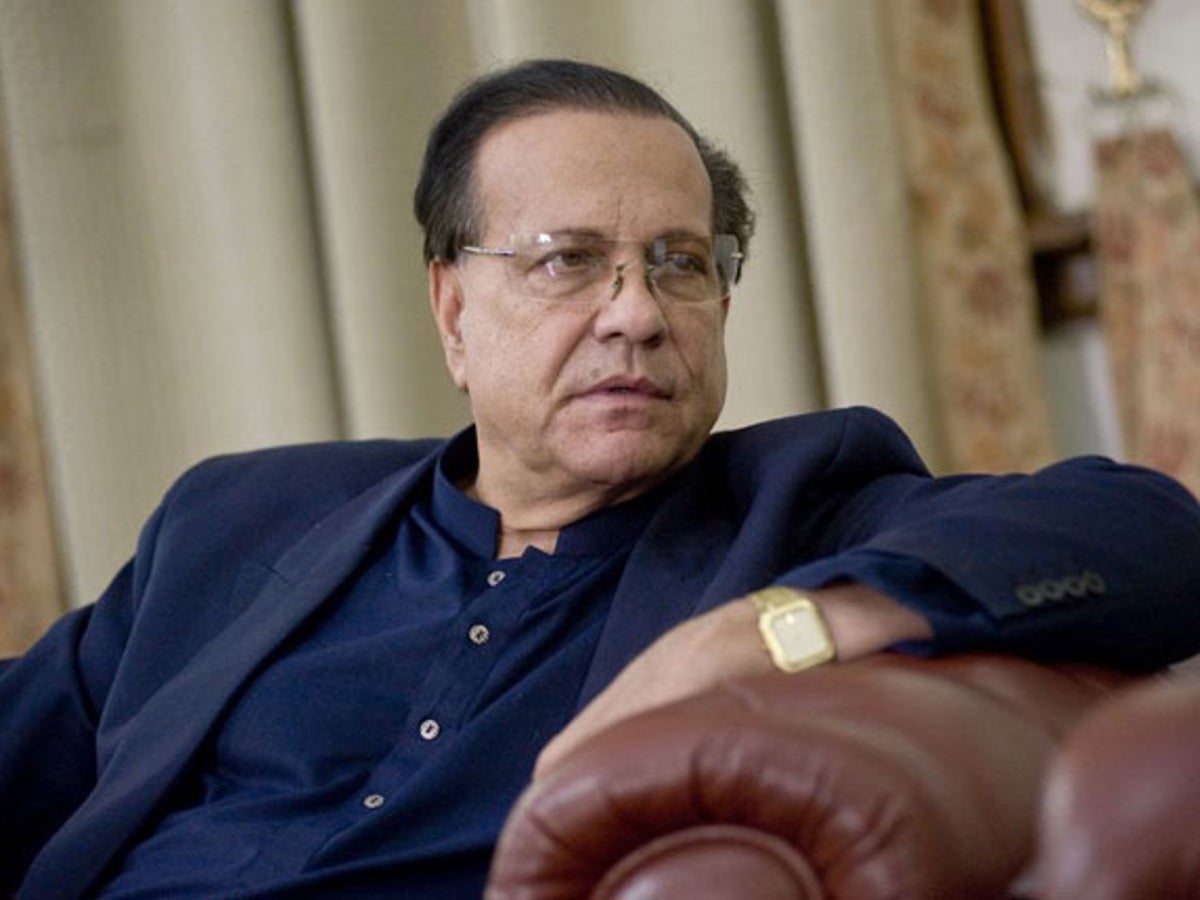
Salmaan Taseer
 Pakistan
Politician•Businessperson•Entrepreneur
Also known as: Salman Taseer
Birthday
May 31, 1944
Birth Sign
Gemini
Birthplace
Shimla, British India
Age
Died at 66
About
Salman Taseer was a Pakistani businessman and politician who served as the 34th Governor of Punjab from May 2008 until his assassination on January 4, 2011. A prominent figure in Pakistan's public life, he was known for his secular views and vocal opposition to the country's blasphemy laws. His murder by his own bodyguard marked a turning point in Pakistan's struggle between liberalism and religious extremism. Taseer built a substantial business empire before entering politics, founding the Worldcall Group and launching media outlets Business Plus and Daily Times. As governor, he campaigned for the pardon of Asia Bibi, a Christian woman sentenced to death under blasphemy laws, a stance that made him a target for extremists. His assassination triggered nationwide mourning and left a lasting impact on Pakistan's political landscape. He was described as 'one of the most consequential and polarizing figures in Pakistan's political history'—a 'scion of the sub-continent's progressive literary elite, a tycoon who pioneered the country's telecommunications sector, and a combative Governor of the Punjab province'. His murder was seen as 'a definitive turning point in the state's relationship with religious extremism, signaling the retreat of the secular ruling class in the face of violent populism'.
Early Life & Background
Salman Taseer was born on May 31, 1944, in Shimla, British India, to a family with deep literary roots. His father, Dr. Muhammad Din Taseer, was a Kashmiri poet and academic, the first Indian to earn a PhD in English Literature from Cambridge, and a founding figure of the Progressive Writers' Movement. His mother, Christobel George, a British woman who converted to Islam and took the name Bilqis, came from a family connected to the poet Faiz Ahmed Faiz, who was married to her sister. When Taseer was six, his father died, leaving the family in financial hardship. His mother raised him and his two sisters in relative poverty, with strong Christian influences and little immersion in Pakistani culture. He grew up surrounded by books, with his uncle Faiz Ahmed Faiz as a literary presence. He attended St. Anthony's High School in Lahore, where he befriended the left-wing writer Tariq Ali. At seventeen, he moved to London to study accountancy at the Institute of Chartered Accountants in England and Wales. During his time there, he met the Chilean poet Pablo Neruda and, according to The Guardian, enjoyed the company of many women thanks to his charm and good looks.
Career Growth
Taseer's political career began in 1967 when he joined Zulfiqar Ali Bhutto's Pakistan Peoples Party. During the 1980s, he was repeatedly arrested and once exiled for opposing President Zia-ul-Haq's military regime. In 1988, he won a seat in the Punjab Assembly from Lahore and served as Deputy Opposition Leader, though he lost subsequent elections in 1990, 1993, and 1997. He also served as Federal Minister for Industries, Production and Special Initiatives after being elected to the National Assembly. In 2008, Taseer served as a minister in the caretaker cabinet and was appointed Governor of Punjab on May 15, 2008, succeeding Lt Gen Khalid Maqbool. As governor, he became a vocal critic of Pakistan's blasphemy laws, calling for a presidential pardon for Asia Bibi. His assassination on January 4, 2011, cut short a career marked by both business acumen and political courage. His assassination triggered a nationwide three-day state of mourning, and his funeral prayers were held at the Governor's House in Lahore.
Career Timeline
Public Image & Style
Salman Taseer was a polarizing figure in Pakistan. To his supporters, he was a secular liberal who stood against religious extremism; to his detractors, he was a provocateur who challenged the country's blasphemy laws. He was known for his 'gloriously profane' manner, as described by The Guardian. His assassination was seen as a blow to Pakistan's liberal aspirations, and his legacy continues to be debated. He was described as 'an ambitious and gloriously profane man' by The Guardian.
Fame & Fandom
Salmaan Taseer remains a figure of profound historical gravity rather than pop-culture celebrity, with his legacy defined by political defiance and assassination. In August 2026, the iFANN Global Fame Engine evaluated his standing and determined that he does not currently hold a placement in the published rankings for the Global Top 1,000 or any Top-100 scope list. This evaluation reflects his status as a polarizing statesman whose fame is rooted in specific geopolitical events rather than global entertainment metrics. Unlike modern entertainers who cultivate organized fanbases, Taseer did not have a formal fandom name; his supporters were politically aligned secularists and liberals who viewed him as a martyr, while his detractors labeled him a provocateur. The narrative surrounding him functions less as fan lore and more as a documented historical account of the tension between religious extremism and liberalism in Pakistan. His story is retold through the lens of his assassination by his own bodyguard and the subsequent execution of the killer, events that reinforced his standing in history books rather than on fan charts. While no fan campaigns or ritualistic gatherings exist under a specific banner, advocacy for his legacy continues through his family and human rights organizations, marking a transition from public figure to symbol of free speech. The absence of a numerical rank underscores that his influence operates within the sphere of political history and legal precedent rather than the commercial fame economy tracked by iFANN.
Interesting Facts and Legends
Salmaan Taseer held dual Pakistani and British nationality throughout his life. His father was the first Indian to earn a PhD in English Literature from Cambridge University. During his student days in London, he met the Chilean poet Pablo Neruda. He maintained a long-standing friendship with left-wing writer Tariq Ali from their school days at St Anthony's High School. His son Aatish Taseer became a prominent journalist and author before going into transnational exile following his father's murder. In 2008, he reportedly sold his telecommunications empire to the Gulf state of Oman for $200 million. He owned diverse assets including accountancy businesses, a telephone company, the English-language newspaper Daily Times, and the first children's TV channel in Pakistan. The defining legend of his life centers on his assassination on January 4, 2011, when he was shot multiple times by his police bodyguard, Mumtaz Qadri, at Kohsar Market in Islamabad. This act was a direct response to Taseer's vocal opposition to Pakistan's blasphemy laws and his campaign for the pardon of Asia Bibi. Five years later, the execution of Qadri in February 2016 further cemented the polarized nature of Taseer's legacy, creating a stark divide where some viewed the assassin as a hero while liberals mourned the loss of a secular voice.
Family & Personal Life
Salman Taseer was born to Dr. Muhammad Din Taseer, a Kashmiri poet and academic, and Christobel George, a British woman who converted to Islam. His father died in 1950 when Salman was six, leaving the family in straitened circumstances. His mother raised him and his two sisters in relative poverty. His maternal aunt was married to the poet Faiz Ahmed Faiz, and his maternal cousins included Salima Hashmi and Muneeza Hashmi. Taseer had seven children in total. His son Shahbaz Taseer was kidnapped by the Pakistani Taliban in 2011 and released in 2016, a few months after his father's assassin was hanged. His other son, Shaan Taseer, has become a leading critic of Pakistan's blasphemy law, continuing his father's legacy.
Notable Connections
Relationships & Dating History
Taseer's personal life was as eventful as his public career. He was first married to Yasmeen Sehgal, with whom he had children including his son Aatish Taseer. The marriage ended in divorce. He then entered a domestic partnership with Indian journalist Tavleen Singh, a relationship that was public and sometimes controversial. Later, he married Amna Taseer, who remained his wife until his death. At the time of his assassination, Taseer was married to Amna. His relationship with Tavleen Singh was well-known and had ended before his second marriage.
- MarriedYasmeen SehgalFirst wife, mother of Aatish Taseer.
- DatedTavleen SinghDomestic partner, Indian journalist.
- MarriedAmna Taseer? - 2011CurrentSecond wife, married at time of death.
Death & Aftermath
Died
January 4, 2011 (aged 66)
Death Place
Islamabad
Cause of Death
Multiple gunshot wounds
Public reaction to the death of Salmaan Taseer was sharply divided, with global leaders and human rights organizations condemning the killing as an assault on democracy while mainstream religious groups in Pakistan initially offered support for the act. Tributes poured in from political peers and civil society activists who held vigils under slogans emphasizing that his courage had survived his burial, even as some factions claimed he was responsible for his own demise due to his stance on blasphemy laws. The assassination occurred on January 4, 2011, at approximately 8:30 AM local time when Taseer exited his official vehicle at the entrance to Kohsar Market in Islamabad.
His bodyguard, Malik Mumtaz Hussain Qadri, approached him at close range and fired a service pistol multiple times, striking the governor 27 times before being subdued by other security personnel. Medical staff at the Pakistan Institute of Medical Sciences pronounced Taseer dead upon arrival due to multiple gunshot wounds causing immediate exsanguination and trauma. Police investigations confirmed that Qadri acted alone, though the motive remained tied to Taseer's vocal opposition to Pakistan's blasphemy laws and his defense of Asia Bibi. Qadri confessed to the murder shortly after the incident, stating he acted to defend Islam, which led to a trial concluding with convictions for murder and terrorism.
After years of legal proceedings and appeals, Qadri was executed by hanging at Adiala Prison in Rawalpindi on February 29, 2016, a move that drew criticism from international observers who argued it failed to deliver justice. The funeral took place on January 5, 2011, in Lahore under tight security measures to prevent potential unrest. Taseer was laid to rest in a private cemetery attended by family members, political figures, and representatives of civil society. In the years following his death, his daughter Shehrbano Taseer continued his advocacy work regarding blasphemy laws, establishing herself as a prominent voice for justice and women's rights in the country.
Net Worth (Estate Value)
$240 Million
iFANN Editorial Team estimate
Salmaan Taseer accumulated substantial wealth through a diversified portfolio that operated independently of his political career. In 1994, he established a brokerage house backed by Smith Barney of the United States. Two years later, he founded the Worldcall Group, a telecommunications company that introduced cable television to Pakistan and expanded into property investments. During the 2000s, he broadened his reach into media by launching Business Plus and the Daily Times, while also owning the first children's TV channel in the country. In 2008, he reportedly sold his telecommunications empire to the Gulf state of Oman for $200 million. Per iFANN's editorial analysis, these ventures and assets resulted in an estimated net worth of $240 Million.
Awards & Accolades
Known For
Governor of Punjab
2008 · Governor
Worldcall Group
1996 · Founder
Daily Times
2002 · Founder
Keywords
Sources
Quick Facts
- Profession
- Politician, Businessperson, Entrepreneur
- Born
- May 31, 1944
- Birthplace
- Shimla, British India
- Died
- January 4, 2011
- Death Place
- Kohsar Market, Islamabad
- Gender
- Male
- Spouse
- Amna Taseer
- Birth Sign
- Gemini
- Nationality
- Pakistani, British
Personal Details
- Full Name
- Salman Taseer
- Spouse
- Amna Taseer
- Children
- 7
- Education
- Institute of Chartered Accountants in England and Wales
Frequently Asked Questions
Who killed Salman Taseer and why?
What was Salman Taseer's stance on blasphemy laws?
How many children did Salman Taseer have?
What was Salman Taseer's net worth at the time of his death?
What happened to Salman Taseer's son Shahbaz?
Join the community
fans discussing