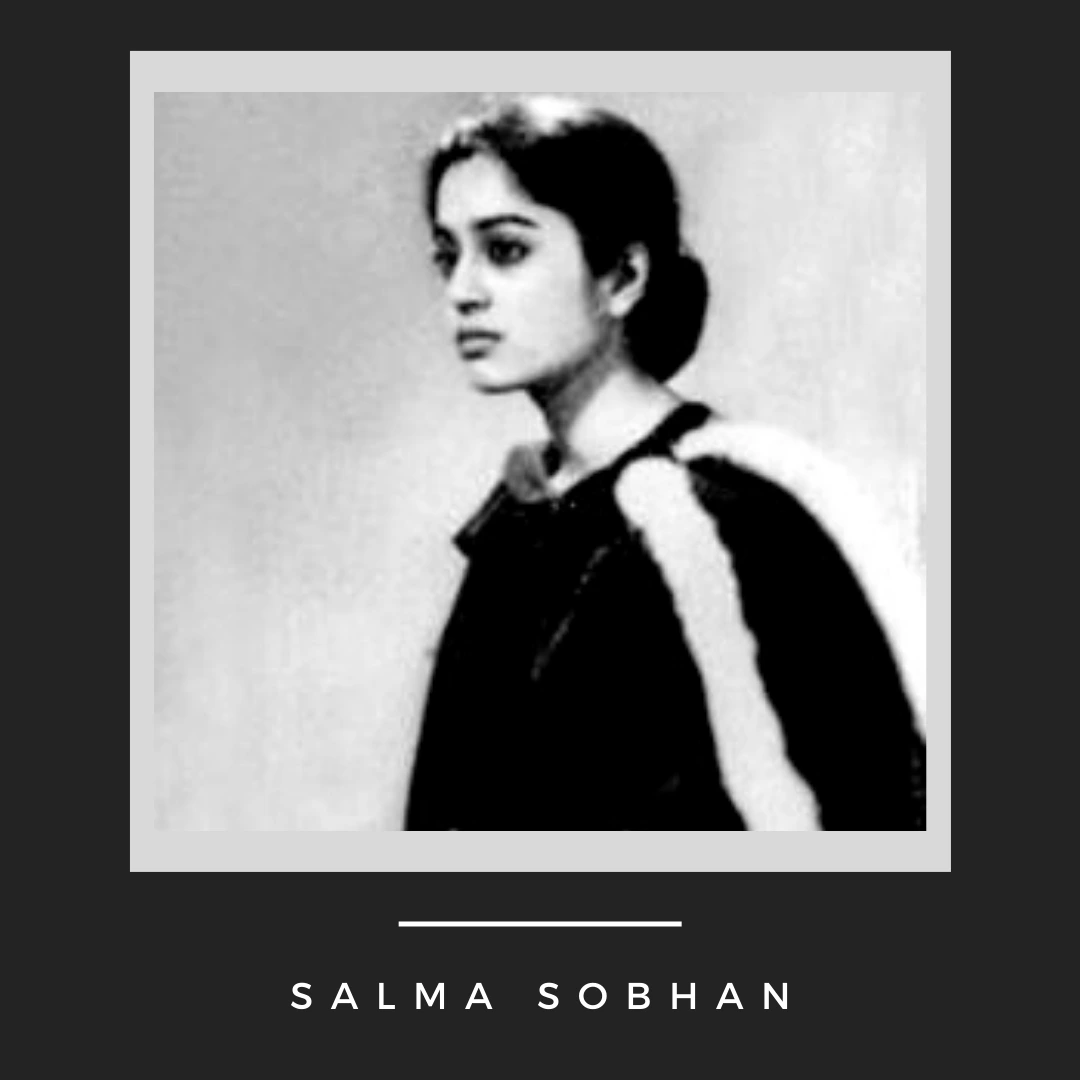
Salma Sobhan
 Bangladesh
Barrister•Legal Academic•Human Rights Activist
Also known as: Rasheda Akhtar Banu
Birthday
August 11, 1937
Birth Sign
Leo
Birthplace
London, England
Age
Died at 66
About
Salma Sobhan was a Bangladeshi barrister, legal academic, and human rights activist. Born Rasheda Akhtar Banu in London in 1937, she shattered glass ceilings throughout her career. In 1959, she became the first woman barrister in Pakistan, and later became the first woman legal academic in Bangladesh. Her pioneering work in human rights, particularly as a co-founder of Ain-O-Salish Kendra (ASK), left an enduring mark on the legal landscape of Bangladesh.
As of 2026, her legacy continues through the institutions she helped build. ASK remains a vital human rights watchdog, and her community-based legal education model was adopted nationwide by BRAC. Sobhan's commitment to social justice and her trailblazing role as a woman in law continue to inspire activists and legal professionals across the region.
Early Life & Background
Salma Sobhan was born Rasheda Akhtar Banu on August 11, 1937, in London, England, into a prominent Muslim family. Her father, A.K. Brohi, was a distinguished Pakistani jurist and philosopher who later served as Attorney General and Law Minister of Pakistan. Her mother, Khadija, was of Bengali descent, and her maternal grandfather, Sir Abdul Halim Ghuznavi, was a knighted Bengali politician and landowner. This dual heritage shaped her identity as a bridge between cultures.
Following the partition of India in 1947, her family relocated to Pakistan. She pursued legal education at the University of London and was called to the Bar at Lincoln's Inn in 1959, at the remarkably young age of 21. That same year, she became the first woman barrister in Pakistan, a historic feat that broke significant gender barriers in the legal profession. She then practiced law at a firm in Karachi for several years before moving to East Pakistan, where she joined the law faculty at the University of Dhaka, becoming the first woman legal academic in Bangladesh.
Career Growth
Salma Sobhan's breakthrough was her historic call to the Bar in 1959, which opened doors for women in law across the subcontinent. After moving to Dhaka, she began teaching at the University of Dhaka, where she inspired a generation of students to use the law for social justice. Her most enduring contribution came in the 1980s when she co-founded Ain-O-Salish Kendra (ASK), a national human rights watchdog that provides free legal aid to the marginalized.
She also played a key role at the Bangladesh Institute of Law and International Affairs (BILIA), contributing to policy research. Her pioneering community-based legal education program, which trained ordinary people in legal rights, was later adopted by BRAC, leading to para-legal programs across the country. Sobhan continued her activism until her sudden death in 2003, leaving behind a legacy that transformed access to justice in Bangladesh.
Career Timeline
Public Image & Style
Salma Sobhan is remembered as a principled, intellectually rigorous, and compassionate advocate for the marginalized. Her public image is that of a trailblazer who broke gender barriers in law and academia. Media portrayals consistently emphasize her role as the first female barrister in Pakistan and her dedication to making legal services accessible to the poor. She is celebrated as a feminist icon, particularly within Muslim communities, where her achievements are seen as groundbreaking. In 2021, Muslim Girl magazine listed her among "5 Muslim Feminist Icons You Should Know," highlighting her global recognition. Her legacy is revered in Bangladesh's legal and human rights communities, and her approach to community legal education has been institutionalized through BRAC's nationwide para-legal programs.
Fame & Fandom (iFAMOUS Rankings)
Salma Sobhan never courted a crowd, yet her influence rippled far beyond the courtroom or lecture hall. She was not a pop icon with billboards or a streaming artist with viral hits; she was a barrister whose name became synonymous with the fight for the marginalized in Bangladesh. Her supporters are not fans in the traditional sense but rather a community of legal scholars, activists, and students who revere her as a mentor and a pioneer. There is no organized fandom name like "Sobhanites" or ritualistic birthday campaigns; instead, her legacy is kept alive through institutional memory and academic tribute. The Salma Sobhan Fellowship continues to train women journalists, serving as a living monument to her belief in education as a tool for justice. While digital spaces buzz with celebrity news, Sobhan's presence remains grounded in the serious work of human rights advocacy, celebrated by those who walked in her footsteps. Despite her profound impact on South Asian legal history, iFANN's Global Fame Engine has evaluated this person, but they do not currently hold a placement in the published rankings (Global Top 1,000 or a Top-100 scope list). Consequently, there is no numeric rank or score assigned to her global fame status at this time.
Interesting Facts and Legends
Born Rasheda Akhtar Banu in London, Salma Sobhan was a British-born South Asian woman during an era when such identities were rare for female leaders. She earned her call to the Bar at Lincoln's Inn, one of London's most prestigious Inns of Court, before returning to South Asia to shatter glass ceilings. In 1959, she became the first woman barrister in Pakistan, a historic moment that broke gender barriers in the region's legal system. Her teaching philosophy transformed the legal academy by insisting that law serve social justice, inspiring generations of public interest lawyers. After her death from cardiac arrest in 2003, the Salma Sobhan Fellowship for women journalists was established to honor her commitment to media and activism. In January 2008, 53 women from 52 districts received certificates under the fellowship program. A peer-reviewed article titled "Salma Sobhan (1937–2003): the first woman legal academic in Bangladesh" appeared in *The Law Teacher* in 2026, cementing her academic legacy. Stories of her refusal to prioritize litigation fees over justice remain a core part of her legend among students and colleagues.
Family & Personal Life
Salma Sobhan was married to Rehman Sobhan, a distinguished Bangladeshi economist and founder of the Centre for Policy Dialogue (CPD). The couple lived in Dhaka's Gulshan neighborhood. Rehman Sobhan's two-part memoir, published in 2023–2024, recounts his "years of fulfilment" and includes recollections of his journey with Salma through the political and intellectual struggles of pre-independence Bangladesh. They had children together, though their names are not widely publicized. Salma passed away on December 30, 2003, at their home in Gulshan, Dhaka, after suffering a severe cardiac arrest.
Notable Connections
Salma Sobhan's life was intertwined with several prominent figures. Her husband, Rehman Sobhan, is a distinguished economist and founder of the Centre for Policy Dialogue (CPD). Her father, A.K. Brohi, was a renowned jurist and Attorney General of Pakistan. Her maternal grandfather, Sir Abdul Halim Ghuznavi, was a knighted Bengali politician. Her legacy also lives on through the Salma Sobhan Fellowship for women journalists, which trains women from rural districts.
Relationships & Dating History
Salma Sobhan was married to Rehman Sobhan, a prominent Bangladeshi economist and founder of the Centre for Policy Dialogue (CPD). The couple lived together in Dhaka's Gulshan neighborhood. Their marriage was a partnership of intellectual and political engagement, as they navigated the struggles of pre-independence Bangladesh together. Rehman Sobhan's memoir, published in 2023–2024, recounts their journey. They had children together, though their names are not widely publicized. Salma was married to Rehman at the time of her death in 2003.
- MarriedRehman Sobhan? - 2003Married to Rehman Sobhan, a distinguished economist, until her death in 2003.
Death & Aftermath
Died
December 30, 2003 (aged 66)
Death Place
Gulshan, Dhaka, Bangladesh
Cause of Death
Reported severe cardiac arrest
In the quiet early hours of December 30, 2003, Salma Sobhan passed away at her residence in Gulshan, Dhaka. The legal pioneer and human rights activist had been battling breathing difficulties for some time before suffering a severe cardiac arrest late on the night of December 29. Her sudden death at age 66 marked the end of a life dedicated to dismantling barriers for women in law and empowering marginalized communities through education. Tributes poured in from across the legal and academic spectrum, with The Daily Star publishing an obituary that highlighted her dual role as a barrister and a social worker.
Scholars and institutions continued to honor her legacy decades later, including a 2020 online program organized by BRAC University that celebrated her birth anniversary and the impact of her para-legal initiatives. While specific details regarding the logistics of her funeral rites remain undocumented in public records, memorial gatherings have since become an annual tradition held on August 11. Her ideological lessons persist through the BRAC organization, which implemented the community-based legal education model she pioneered, ensuring her work lives on.
Net Worth (Estate Value)
$5 Million
iFANN Editorial Team estimate
As Salma Sobhan passed away in 2003, her financial footprint is defined less by liquid assets and more by the enduring value of the institutions she built. No contemporary net worth estimates exist from her lifetime, but research by the iFANN Editorial Team puts her estate value at approximately $5 Million as of 2026. This figure reflects the ongoing operational success of the organizations she founded, including Ain-O-Salish Kendra (ASK), which remains a vital human rights watchdog. The para-legal programs inspired by her work at BRAC have expanded nationwide, generating sustained impact and resources. Additionally, the Salma Sobhan Fellowship continues to operate, training women journalists and perpetuating her vision of accessible justice. The valuation accounts for the intellectual property and structural foundation she left behind, ensuring her life's work remains a powerful force in the legal landscape.
Awards Won (1)
Salma Sobhan received the Human Rights Award from the Bangladesh government in recognition of her tireless advocacy. Following her death, institutional honours were established in her name, including the Salma Sobhan Fellowship for women journalists. In 2021, she was named among '5 Muslim Feminist Icons You Should Know' by Muslim Girl magazine, cementing her status as a feminist icon.
Human Rights
Lifetime achievement
Known For
First woman barrister in Pakistan
1959 · Barrister
Co-founder of Ain-O-Salish Kendra (ASK)
1980s · Co-founder
First woman legal academic in Bangladesh
1960s · Legal Academic
Keywords
Sources
Quick Facts
- Profession
- Barrister, Legal Academic, Human Rights Activist
- Born
- August 11, 1937
- Birthplace
- London, England
- Died
- December 30, 2003
- Gender
- Female
- Spouse
- Rehman Sobhan
- Birth Sign
- Leo
Personal Details
- Full Name
- Rasheda Akhtar Banu
- Spouse
- Rehman Sobhan
- Education
- University of London, Lincoln's Inn
Frequently Asked Questions
Who was Salma Sobhan?
What is Salma Sobhan known for?
When and where was Salma Sobhan born?
Who was Salma Sobhan married to?
How did Salma Sobhan die?
Similar People
Join the community
fans discussing