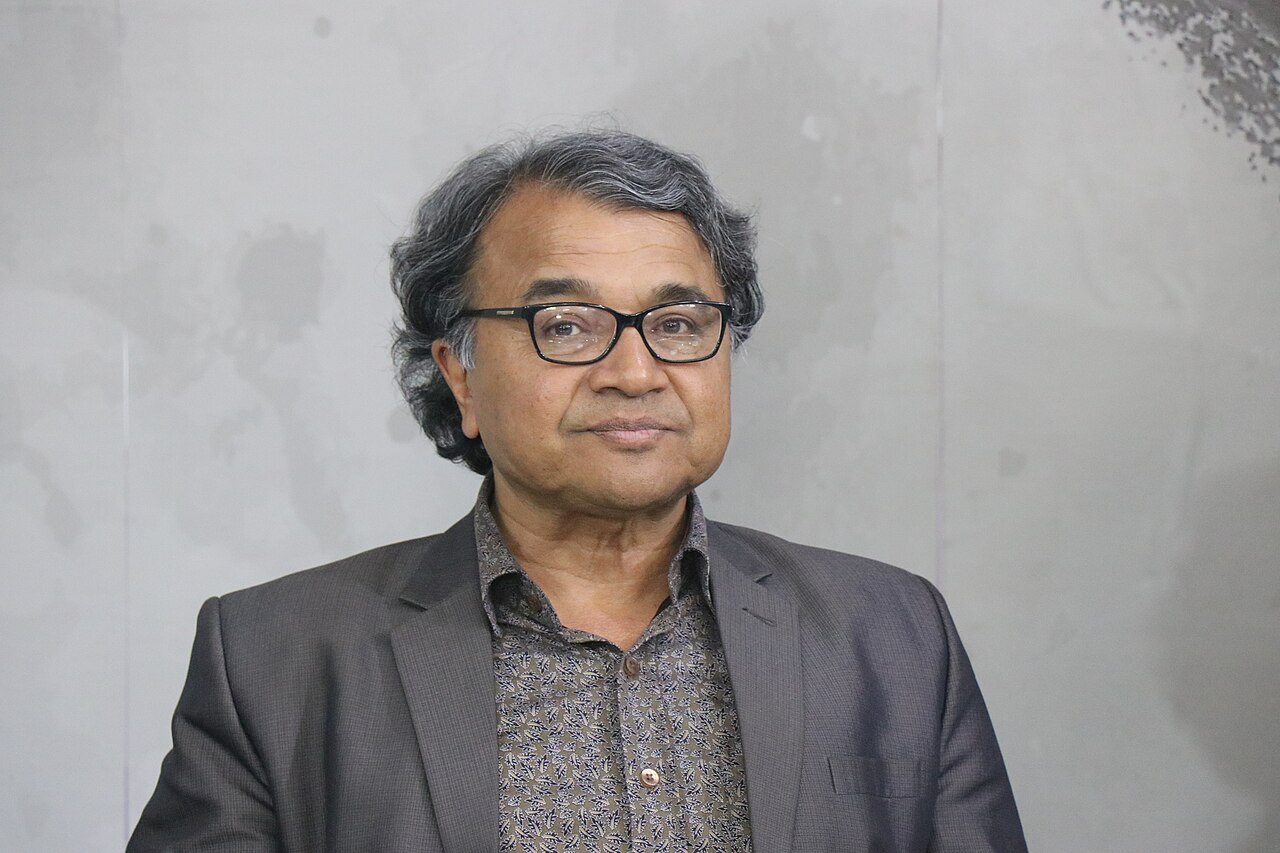
Salimullah Khan
 Bangladesh
writer•academic•public intellectual
Birthday
August 18, 1958
Birth Sign
Leo
Birthplace
Cox's Bazar, Bangladesh
Age
68 years old
About
Salimullah Khan is a Bangladeshi writer, academic, and public intellectual whose sharp analyses of politics and society have made him a distinctive voice in the country's intellectual life. Born in Cox's Bazar in 1958, he has spent decades teaching, writing, and translating, and his work reaches a wide audience through television debates, essays, and social media. He is particularly known for his deep engagement with the ideas of Ahmed Sofa, and for making complex political theory feel urgent and accessible to a younger generation of Bangladeshis.
Khan's influence extends beyond his own writing. He has translated major works by Plato, Frantz Fanon, Charles Baudelaire, and others into Bengali, opening up global intellectual traditions to local readers. He currently teaches at North South University and the University of Liberal Arts, where his courses on Lacanian psychoanalysis and political thought draw dedicated students. As of 2026, he remains an active commentator on national and international affairs, frequently appearing on talk shows and publishing essays that stir conversation.
Early Life & Background
Salimullah Khan grew up in Cox's Bazar, a coastal town in southeastern Bangladesh, in the late 1950s and 1960s. Details of his early schooling are scarce, but his intellectual curiosity was evident from a young age. He was drawn to books and ideas early on, and the political turbulence of the 1960s and 1970s in East Pakistan and then Bangladesh left a deep impression on him. The Liberation War in 1971, in particular, became a recurring theme in his later work.
Khan pursued higher education abroad, earning a Ph.D. from the New School University in New York. This period in the United States exposed him to Western critical theory, psychoanalysis, and postcolonial thought, which he later brought back to Bangladesh. His time in New York also introduced him to a wider diaspora of South Asian intellectuals, shaping his approach to both scholarship and public engagement. After returning to Bangladesh, he began teaching and writing, gradually building a reputation as a thinker willing to challenge mainstream narratives.
Career Growth
Salimullah Khan's breakthrough as a public intellectual came through his writings and television appearances, where he offered sharp, often contrarian takes on Bangladeshi politics. His book বেহাত বিপ্লব ১৯৭১ (The Failed Revolution of 1971) remains one of his most discussed works, provoking debate about the country's founding narrative. He has also published numerous essays and columns in outlets like The Daily Star and Tritiyo Matra.
Khan's reputation grew further through his translations. He brought Bengali readers works by Plato, James Rennell, Charles Baudelaire, Frantz Fanon, and Dorothee Sölle, among others. In recent years, he has remained in the public eye with pointed commentary on current events. In November 2024, he criticized Dhaka University teachers for opposing the July uprising, and in December 2024 he sparked controversy by stating that India wants to keep Bangladesh as its colony. His June 2026 remarks praising Riyazuddin Mansouri as a living example of love and harmony in an atmosphere of hatred show his continued engagement with social issues.
Career Timeline
Public Image & Style
Salimullah Khan presents himself as a no-nonsense intellectual, often appearing on television in simple attire, with a calm but piercing demeanor. His public image is that of a contrarian who challenges both left and right orthodoxies. He has a strong following among university students, who attend his lectures and share his clips on social media. His Facebook page is active with political commentary and philosophical musings. Critics sometimes accuse him of being provocative, but his supporters value his willingness to ask uncomfortable questions. His association with Ahmed Sofa, a controversial figure in his own right, adds to his renegade image.
Fame & Fandom
Salimullah Khan commands a distinct sphere of influence within Bangladesh, yet he remains outside the global spotlight that defines international celebrity. As of August 2026, iFANN's Global Fame Engine has evaluated this person, but they do not currently hold a placement in the published rankings. This absence from the Global Top 1,000 or any Top-100 scope list marks him as a figure of profound regional significance rather than a worldwide household name. His reach is concentrated among university students, academics, and political observers who engage with his sharp critiques of society. Unlike pop stars who rely on adoration, Khan's audience consists of readers and viewers seeking intellectual rigor. The fanbase has no formal name; discussions about him occur in academic circles, op-ed sections, and social media threads focused on ideology rather than idol worship. The interactions are professional and often contentious, centered on his translations of Plato and Frantz Fanon or his interventions during political crises like the July Uprising. While he does not inspire the viral rituals or street shutdowns seen with entertainment icons, his presence in television debates creates moments of intense scrutiny. Critics sometimes accuse him of provocation, while supporters view him as a necessary contrarian voice challenging orthodoxies on both the left and right. His influence flows through essays, lectures, and translated texts that make complex theory urgent for a younger generation. The lack of a numbered ranking reflects the niche nature of his work; he is an authority on history and politics, not a commodity for mass consumption. In the vast landscape of global figures, Salimullah Khan stands firmly as a respected intellectual whose impact is measured in ideas shifted and minds engaged, not in chart positions or fan club memberships.
Interesting Facts and Legends
Salimullah Khan is known for his distinctive oratorical style, often mixing Bengali and English phrases mid-sentence. He has a habit of citing obscure philosophers and poets from memory during television debates. An avid reader of detective fiction, he says the genre helps him relax. His deep interest in the history of cartography led him to translate James Rennell's works into Bengali. He once admitted in an interview that he writes his first drafts by hand before typing them up. A collector of old Bengali magazines and journals, he uses these archives for research. One widely retold story involves his sharp criticism of Dhaka University teachers for opposing the July uprising, an event that cemented his reputation as a fearless commentator. Another notable moment occurred when a false quote attributed to him claiming violence in elections was normal circulated online; fact-checkers later clarified the error, highlighting how frequently he becomes a target of misinformation due to his prominence. During a period of political crisis, media outlets reported speculation that he might lead the country, a reflection of his status as a potential national figure based on his scholarly stature rather than political office.
Family & Personal Life
Salimullah Khan keeps his personal life largely out of the public eye. He has not shared details about his parents or siblings in interviews. He is known to be married and has children, but he rarely discusses his family in public. He currently lives in Dhaka, where he balances teaching, writing, and media appearances. His family is supportive of his work, though they prefer to stay away from the limelight.
Notable Connections
Salimullah Khan is closely associated with the late Ahmed Sofa, whose ideas deeply influenced his own thinking. He also collaborates with academic institutions like North South University and the University of Liberal Arts. His work connects him to a network of Bangladeshi intellectuals, writers, and activists who engage in public debates on politics and society.
Relationships & Dating History
Details about Salimullah Khan's personal relationships are scarce, as he prefers to keep his private life out of the public eye. He is known to be married, but the name of his spouse and the date of their marriage have not been publicly disclosed. He has children, but their names and ages are also private. There are no public records of any previous marriages or high-profile relationships. As of 2026, he is believed to be still married, though he rarely discusses his family in interviews.
Salary, Net Worth In 2026
$1 Million
iFANN Editorial Team estimate
iFANN currently estimates Salimullah Khan's net worth at $1 Million as of 2026. His income primarily comes from his academic salary, book royalties, and fees for television appearances and public lectures. While he is not known for lavish wealth, his consistent presence in media and academia provides a stable income. He has not been involved in major business ventures, and his earnings reflect his career as a writer and educator rather than a commercial figure.
Awards & Accolades
Known For
বেহাত বিপ্লব ১৯৭১
2000 · Author
Translations of Plato, Fanon, Baudelaire
1990 · Translator
Keywords
Sources
Quick Facts
- Profession
- Writer, Academic, Public Intellectual
- Born
- August 18, 1958
- Birthplace
- Cox's Bazar, Bangladesh
- Gender
- Male
- Birth Sign
- Leo
- Education
- Ph.D., New School University, New York
Personal Details
- Education
- Ph.D. from New School University, New York
Frequently Asked Questions
Who is Salimullah Khan?
What is Salimullah Khan known for?
Where does Salimullah Khan teach?
What are Salimullah Khan's notable works?
What are Salimullah Khan's political views?
Social Media
Join the community
fans discussing