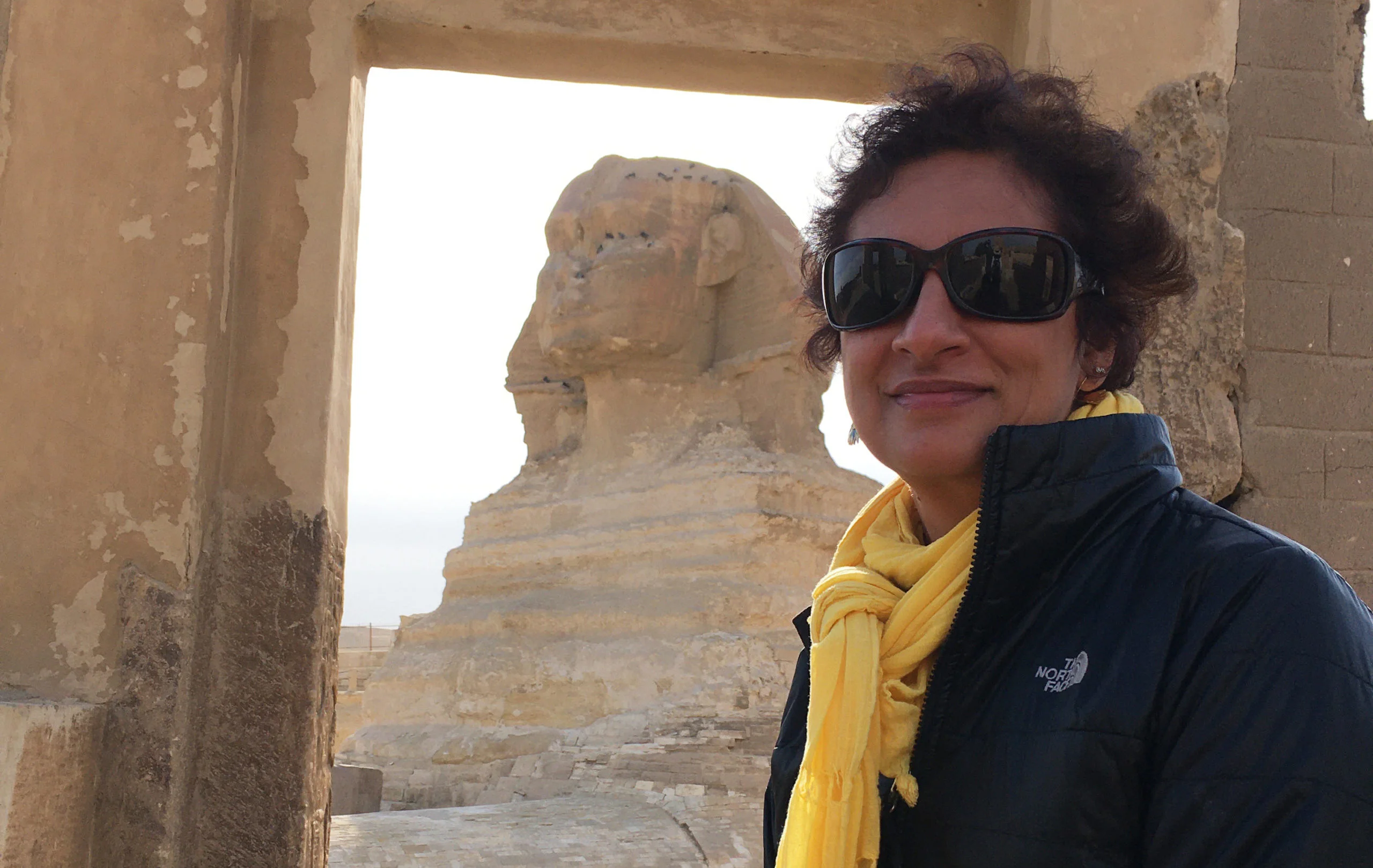
Salima Ikram
 Pakistan
anthropologist•archaeologist•Egyptologist
Also known as: Dr. Salima Ikram
Birthday
May 17, 1965
Birth Sign
Taurus
Birthplace
Lahore, Pakistan
Age
61 years old
About
Salima Ikram is a Pakistani anthropologist, archaeologist, and Egyptologist who serves as a Distinguished University Professor at The American University in Cairo. She holds the title of Amelia Peabody Professor and works as a Research Fellow at the Smithsonian Institution. Her global reputation rests on her pioneering work regarding ancient Egyptian animal mummies, a field she helped transform from a niche curiosity into a rigorous scientific discipline.
As of 2026, Ikram remains an active leader in her field, directing the Animal Mummy Project and consulting for major institutions like the Grand Egyptian Museum. She bridges the gap between academic research and public education through television appearances and authored books that explain complex archaeological concepts to general audiences. Her work challenges traditional narratives by focusing on the daily lives of animals and commoners rather than solely on pharaohs.
Early Life & Background
Born in Lahore, Pakistan, Salima Ikram developed an early fascination with history and antiquity that would define her life's work. She pursued her undergraduate studies at the University of Pennsylvania before traveling to the United Kingdom to deepen her expertise. There she completed her PhD in Egyptian Archaeology at Cambridge University, where she underwent rigorous training in excavation techniques and artifact analysis.
Before achieving international prominence, Ikram spent years conducting extensive fieldwork across Turkey and Egypt. These early expeditions required significant physical endurance and meticulous documentation skills as she participated in numerous archaeological digs. During this period, she began shifting her focus away from the traditional study of royal tombs toward the often-overlooked aspects of ancient society. Her time in the Western Desert of Egypt, specifically along the North Kharga Darb route, laid the groundwork for her future discoveries regarding burial practices and religious rituals involving animals.
Career Growth
Ikram's career reached a defining milestone when she joined The American University in Cairo (AUC) in the 1990s. During her tenure there, she co-founded and directed the Animal Mummy Project at the Egyptian Museum in Cairo. This initiative revolutionized the study of animal mummification by systematically cataloging thousands of specimens that had previously been misclassified or ignored. Her research revealed that these burials were central to the religious economy and afterlife beliefs of ancient Egyptians.
In 2013, she brought her expertise to a mass audience as a key expert in the PBS NOVA documentary The Afterlife in Ancient Egypt. She continued to innovate in 2017 by collaborating with Quinnipiac University radiology professors to use advanced CT scanning technology. This non-invasive approach allowed researchers to examine the internal structures of mummies without damaging the artifacts. Her influence extended to museum curation in 2025 when her recommendations shaped the display strategies for the Grand Egyptian Museum. In early 2026, she made headlines with theories suggesting contact between Egyptian and Indus Valley civilizations, marking a new historiographical milestone.
Career Timeline
Public Image & Style
Salima Ikram projects an image of a rugged, practical adventurer suited to the demands of desert fieldwork. Media portrayals emphasize her intelligence, dedication, and the physical stamina required for excavations in remote locations. She is often described as indefatigable and a lifelong explorer who thrives in harsh environments. Her aesthetic is functional rather than fashionable, reflecting her identity as a scientist first and foremost. Public perception views her as a fearless woman breaking barriers in a male-dominated field while maintaining rigorous academic standards.
Fame & Fandom (iFAMOUS Rankings)
Salima Ikram commands a following defined not by the chaotic fervor of pop culture but by the rigorous devotion of students, museum visitors, and scholars who revere her as a leading authority on ancient animal mummification. Her audience consists of enthusiasts who engage with her work through documentaries like Mummies: Secrets of the Pharaohs and Luxor, or via field expeditions where they witness history firsthand. There is no formal fandom name for this community; instead, her influence flows through academic circles and public education initiatives like the Animal Mummy Project at the Egyptian Museum.
According to the iFANN Global Fame Engine evaluated in September 2026, Salima Ikram is currently unranked in the published rankings, holding no placement in the Global Top 1,000 or any Top-100 scope list. The system notes that she is currently unranked in the general global top tier, reflecting a specialized rather than mass-market profile. This distinction highlights how her fame operates through deep expertise rather than broad celebrity metrics, placing her firmly among the most respected voices in Egyptology without claiming a specific numeric spot in the general populace's consciousness.
Interesting Facts and Legends
Salima Ikram is one of the few scholars to hold prestigious positions simultaneously at both the Smithsonian Institution and a major university like AUC. Her research has identified thousands of animal mummies that were previously unaccount for in museum collections worldwide. Unlike many archaeologists who specialize in human remains, she chose to focus on the often-neglected animal mummies, opening up a new sub-field of study. She was a frequent guest speaker at the Sussex Egyptology Society's 30th anniversary celebration in 2026. Her work often highlights the idea that small details tell big stories, referring to the insights gained from studying animal remains. One iconic moment involved her use of modern CT scanning technology to peer inside animal mummies without unwrapping them, a technique that revolutionized the field.
Notable Quotes
“The small things tell the big story.”
“We need to look beyond the human-centric view of ancient Egypt.”
Family & Personal Life
Salima Ikram maintains a notably private personal life and does not disclose details about romantic relationships or marital status in public forums. There is no credible information available regarding past or current partners, engagements, marriages, or children. She is known to dedicate her time to her academic pursuits, fieldwork, and mentoring students rather than public socializing. Her family background includes roots in Lahore, Pakistan, though specific details about her parents or siblings remain out of the public eye. She lives a life focused on her profession and intellectual contributions to the field of Egyptology.
Notable Connections
Relationships & Dating History
Salima Ikram maintains a notably private personal life and does not disclose details about romantic relationships, dating history, or marital status in public forums, interviews, or on her official website. There is no credible information available regarding past or current partners, engagements, marriages, or children. As of 2026, she is generally considered to be single or her relationship status is kept strictly confidential. She is known to dedicate her time to her academic pursuits, fieldwork, and mentoring students rather than public socializing. Consequently, there are no verified records of dating history, divorces, or widowed status to report.
Salary, Net Worth In 2026
$2 Million
iFANN Editorial Team estimate
As an academic professor and researcher, Salima Ikram does not have a publicly disclosed net worth in the manner of celebrities or business tycoons. Her income is derived from her salary at The American University in Cairo, lecture fees, book royalties, and consulting work for museums and media productions. Specific dollar figures for her net worth are not available in public records, and estimates from celebrity net worth sites are likely non-existent or speculative. The iFANN Editorial Team estimates her financial standing based on her stable academic career and institutional affiliations. Her wealth is best understood as a mid-to-upper-middle-class academic income, supplemented by the prestige of her positions. She does not appear to have major real estate holdings or investment ventures that are publicly documented.
Awards & Accolades
View 5 records, honours and achievementsKnown For
The Afterlife in Ancient Egypt
2013 · Expert Contributor
Mummies: Secrets of the Pharaohs
2006 · Expert Contributor
Dig In with the Women of Archaeology
2021 · Subject
Keywords
Sources
Quick Facts
- Profession
- anthropologist, archaeologist, Egyptologist
- Born
- May 17, 1965
- Birthplace
- Lahore, Pakistan
- Gender
- Female
- Birth Sign
- Taurus
Personal Details
- Full Name
- Salima Ikram
- Children
- Education
- PhD in Egyptian Archaeology, Cambridge University; BA from the University of Pennsylvania
Filmography
3
Total
0
Film
3
TV
Frequently Asked Questions
What is Salima Ikram famous for?
Where was Salima Ikram born?
Is Salima Ikram married?
What university does Salima Ikram teach at?
Has Salima Ikram written any books?
Social Media
Similar People
Join the community
fans discussing