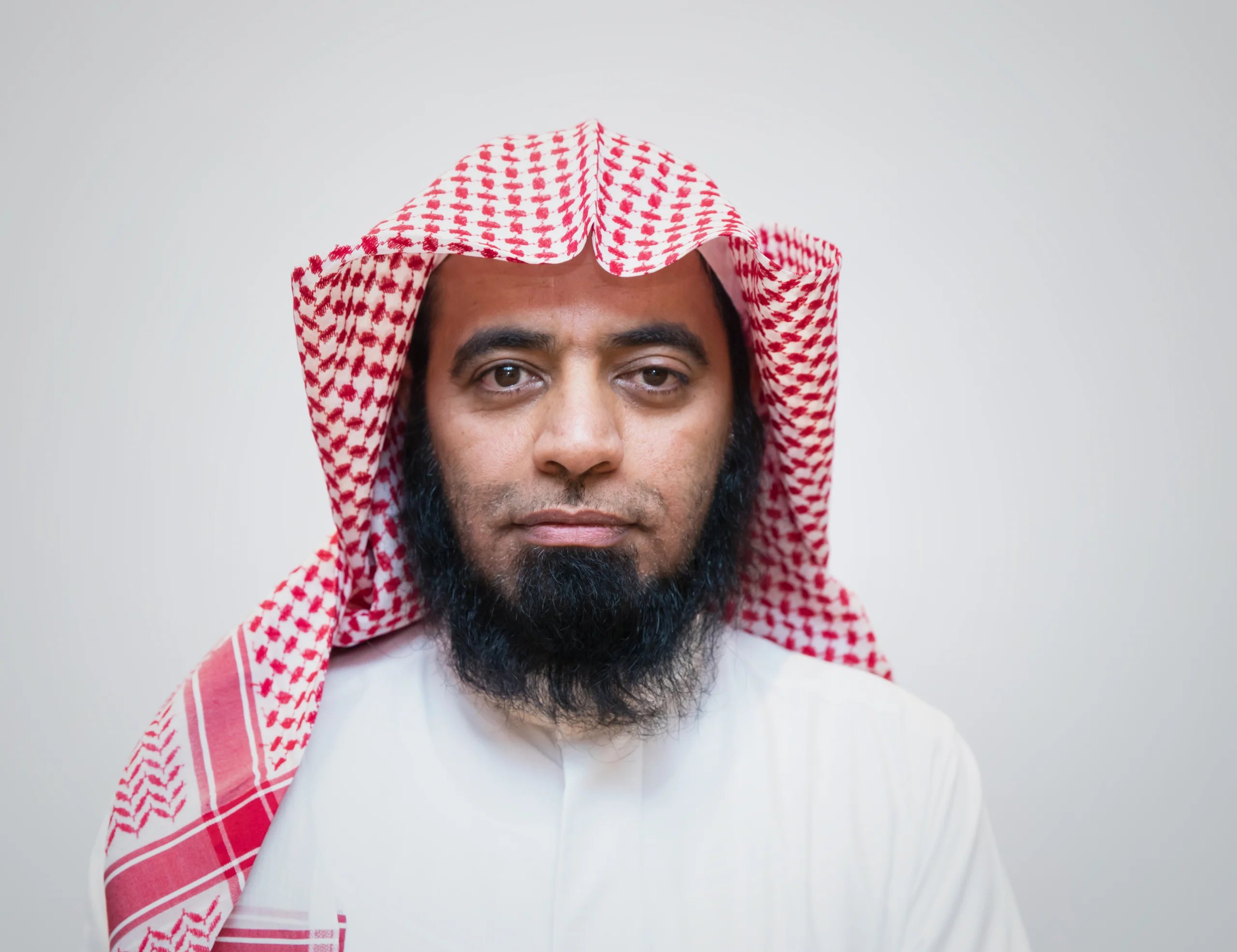
Salih al-Fawzan
 Saudi Arabia
Islamic jurist•theologian•university teacher
Birthday
September 28, 1935
Birth Sign
Libra
Birthplace
Al Shimasiyah, Saudi Arabia
Age
90 years old
About
Salih al-Fawzan is a distinguished Saudi Islamic jurist and theologian, widely recognized as one of the most senior scholars of the Salafi movement. Born on September 28, 1935, in Al Shimasiyah, he has dedicated decades to shaping religious thought and practice within Saudi Arabia and the broader Islamic world. As of October 22, 2025, he holds the esteemed position of Grand Mufti of the Kingdom, the highest religious authority, placing him at the forefront of contemporary Islamic discourse and jurisprudence. His influence is profoundly shaped by a lifetime of dedicated scholarship and teaching, marked by his deep understanding of creed, jurisprudence, and conduct.
His scholarly output is extensive, encompassing over sixty published works that are studied by students and scholars globally. He is a respected member of the Council of Senior Scholars and the Permanent Committee for Scholarly Research and Ifta, key institutions responsible for guiding religious rulings and national policy. Al-Fawzan is also known for leading prayers and delivering sermons at the Prince Mutaib bin Abdulaziz Al Saud Mosque in Riyadh. Furthermore, his long-running radio program, 'Nur Ala al-Darb' ('Light on the Path'), has been a vital platform for answering listeners' questions on Islamic practice for many years, extending his reach to a vast audience seeking religious guidance.
Early Life & Background
Salih al-Fawzan's early life began on September 28, 1935, in the town of Al Shimasiyah, located in Saudi Arabia's Qassim Province. His father passed away when he was still a young child, leading to him being raised by his mother and extended family in a modest household. His initial education commenced at the local mosque, where the imam, Shaykh Hammoud bin Suleiman At-Talal, provided him with foundational instruction in the Quran and basic literacy skills. This early tutelage laid the groundwork for his future academic pursuits.
In 1950, al-Fawzan began attending the state school in Ash-Shimasiyyah. He later moved to Buraydah to continue his primary studies at al-Faisaliyah School, completing this phase in 1952. His academic journey progressed as he joined the Scholarly Institute in Buraydah in 1954, a significant step toward higher religious learning. Subsequently, he enrolled at the College of Sharia at Imam Muhammad ibn Saud Islamic University in Riyadh, from which he graduated in 1961. During his university years, he benefited from the guidance of prominent scholars, including Shaykh Abdul Aziz Ibn Baz, Abdullah Ibn Humayd, and Muhammad Al-Amin Ash-Shanqiti, who helped him develop a profound understanding of Islamic jurisprudence. He further advanced his studies by earning both a Master's degree and a Ph.D. in Fiqh (Islamic Jurisprudence) from the same esteemed university. His doctoral thesis, titled 'Rulings Concerning Food in Islamic Sharia,' delved deeply into the intricacies of dietary laws within Islamic law.
Career Growth
Following the completion of his rigorous academic training, al-Fawzan embarked on his professional journey as a school teacher before transitioning to a more influential role as an associate professor at Imam Muhammad ibn Saud Islamic University. His growing reputation as a scholar led to crucial appointments within Saudi Arabia's most significant religious institutions. He became a member of the Council of Senior Scholars and the Permanent Committee for Scholarly Research and Ifta, bodies where he has played a pivotal role in issuing fatwas and shaping national religious policy. His tenure on these committees has been marked by consistent contributions to Islamic legal discourse and decision-making.
Beyond his institutional roles, al-Fawzan has served on the Fiqh Council in Mecca and the Muslim World League, further extending his influence in international Islamic affairs. He has also been a member of the Supervisory Committee for Preachers during Hajj, contributing to the spiritual guidance of pilgrims. His public speaking engagements include serving as an imam and khatib at the Prince Mutaib bin Abdulaziz Al Saud Mosque in Riyadh, making his voice familiar to many worshippers. Through the widely broadcast radio program 'Nur Ala al-Darb,' he has addressed countless questions on Islamic practice for decades, reaching an extensive audience. His scholarly output, comprising over sixty books on creed, jurisprudence, and conduct, is extensively referenced. The apex of his distinguished career was his appointment as Grand Mufti of Saudi Arabia on October 22, 2025, succeeding Abdulaziz Al al-Sheikh and becoming the fourth individual to hold this highest religious title in the Kingdom.
Career Timeline
Public Image & Style
Within the Salafi community and among followers of orthodox Islamic doctrine, Salih al-Fawzan is widely regarded as a meticulous scholar and a steadfast guardian of religious principles. His public persona is that of a principled jurist who prioritizes clear textual evidence from Islamic sources over speculative interpretations. He is known for his calm, measured, and authoritative delivery during sermons and radio appearances, which has cultivated a dedicated following among students of Islamic knowledge. Although he personally avoids direct engagement with social media platforms, his official website and YouTube channel serve as important conduits for disseminating his lectures, fatwas, and scholarly opinions to a global audience.
Critics sometimes characterize his strict interpretations of Islamic law as rigid or inflexible, particularly concerning contemporary societal issues. However, his supporters consistently view his unwavering adherence to established legal methodologies and his consistent application of Sharia principles as a significant strength, underscoring his reliability and commitment to traditional Islamic scholarship. His influence is further amplified by his role as Grand Mufti, making his pronouncements highly influential across the Kingdom and beyond.
Fame & Fandom
Sheikh Salih al-Fawzan commands a following defined by reverence rather than the frenetic energy of pop culture. His audience consists primarily of students and adherents of orthodox Islamic doctrine who seek his guidance on matters of creed and jurisprudence. This is not a fandom built on merchandise, social media trends, or organized campaigns. There is no formal name for his supporters, nor do they gather for meet-and-greets or launch viral challenges in his honor. His influence flows through sermons, fatwas, and published texts, creating a traditional teacher-student dynamic that spans decades. While his appointment as Grand Mufti in October 2025 sparked international debate regarding religious tolerance, his personal brand remains rooted in scholarly authority and conservative piety. The public does not view him as an entertainer but as a steadfast guardian of religious principles whose calm delivery has cultivated deep respect among those who follow his teachings. Despite this immense stature within the Islamic world, he avoids the performative aspects of modern celebrity life. He maintains a modest lifestyle and rarely discusses personal interests outside his religious duties. His global recognition stems from his role as a senior figure in the Salafi movement rather than mass-market appeal. Yet, his reach extends far beyond local borders. According to the iFANN Global Fame Rankings, Salih al-Fawzan is the 36th most famous person in Saudi Arabia, holding steady from the previous cycle, and the 32nd most famous person from Saudi Arabia, also holding steady. These placements reflect his enduring status as a pivotal voice in contemporary Islamic discourse.
Interesting Facts and Legends
Salih al-Fawzan traces his lineage to the Al-Wadaeen branch of the Ash-Shammas clan, part of the larger Dawasir tribe, a heritage he occasionally references in his lectures. His doctoral thesis, 'Rulings Concerning Food in Islamic Sharia,' remains a definitive reference work for scholars studying dietary laws. He is noted for advocating an apolitical interpretation of Wahhabism, focusing on doctrinal purification over political activism. In private moments, he finds solace in reading classical Arabic poetry, though he keeps these interests out of the public eye. The defining moment of his recent career occurred when a Royal Order officially appointed him as the fourth Grand Mufti of Saudi Arabia. This succession replaced the previous holder and immediately drew scrutiny from international observers concerned about his conservative stance on religious tolerance. Critics argued his leadership might signal a shift away from the Kingdom's recent reforms, while supporters viewed it as a return to strict orthodoxy. Unlike celebrities whose legends involve crowds fainting or street shutdowns, al-Fawzan's legacy is forged in solemnity and protocol. His public appearances are marked by a measured dignity that reinforces his image as a serious jurist. The narrative surrounding him is strictly biographical, anchored by his birth in September 1935 and his decades of service teaching Islamic law. His appointment stands as a significant event in the region's religious history, sparking debates that continue to shape the direction of Islam under Crown Prince Mohammed bin Salman.
Family & Personal Life
Information regarding Salih al-Fawzan's personal family life is maintained with a high degree of privacy. It is known that his father passed away when he was young, and he was subsequently raised by his mother and his extended family members in his hometown of Al Shimasiyah. He has not publicly shared details concerning the specific identities or professions of his parents, nor has he disclosed information about siblings. While it is understood that he is married and has children, he consistently keeps his household and immediate family members out of the public spotlight, a practice that aligns with his generally reserved personal demeanor and focus on his scholarly and religious duties.
Notable Connections
Relationships & Dating History
There is no publicly available information regarding Salih al-Fawzan's romantic relationships or marital history. He has consistently maintained a strict level of privacy concerning his personal life, and no credible sources have documented any details about his dating, engagements, or marital status. As of the current date, his marital status remains unknown to the public, and he has not made any public comments or statements that shed light on this aspect of his life, reinforcing his dedication to keeping his private affairs separate from his public role.
Salary, Net Worth In 2026
$1 Million
iFANN Editorial Team estimate
Salih al-Fawzan's personal net worth is not a subject he openly discusses, and consequently, reliable financial figures are exceptionally scarce. As a high-ranking religious official in Saudi Arabia, his primary sources of income are derived from his government salary as the Grand Mufti, his long-standing role as a professor, and the royalties generated from his extensive published works. Research by the iFANN Editorial Team puts his net worth at $1 Million. These figures lack official substantiation due to the absence of public financial disclosures. His financial standing is understood to be a reflection of his lifelong dedication to scholarship and religious service rather than commercial entrepreneurial activities. He is known to live a modest lifestyle, consistent with his deeply held conservative values and commitment to asceticism.
Awards & Accolades
Known For
Grand Mufti of Saudi Arabia
2025 · Grand Mufti
Member of the Council of Senior Scholars
· Member
Member of the Permanent Committee for Scholarly Research and Ifta
· Member
Keywords
Sources
Quick Facts
- Profession
- Islamic jurist, theologian, university teacher
- Born
- September 28, 1935
- Birthplace
- Al Shimasiyah, Saudi Arabia
- Gender
- Male
- Birth Sign
- Libra
- Education
- Ph.D. in Fiqh from Imam Muhammad ibn Saud Islamic University
- Grand Mufti since
- October 22, 2025
Personal Details
- Education
- Ph.D. in Fiqh from Imam Muhammad ibn Saud Islamic University
Frequently Asked Questions
Who is Salih al-Fawzan?
When and where was Salih al-Fawzan born?
What is Salih al-Fawzan's net worth?
Is Salih al-Fawzan still alive in 2026?
What is Salih al-Fawzan best known for?
Similar People

Join the community
fans discussing