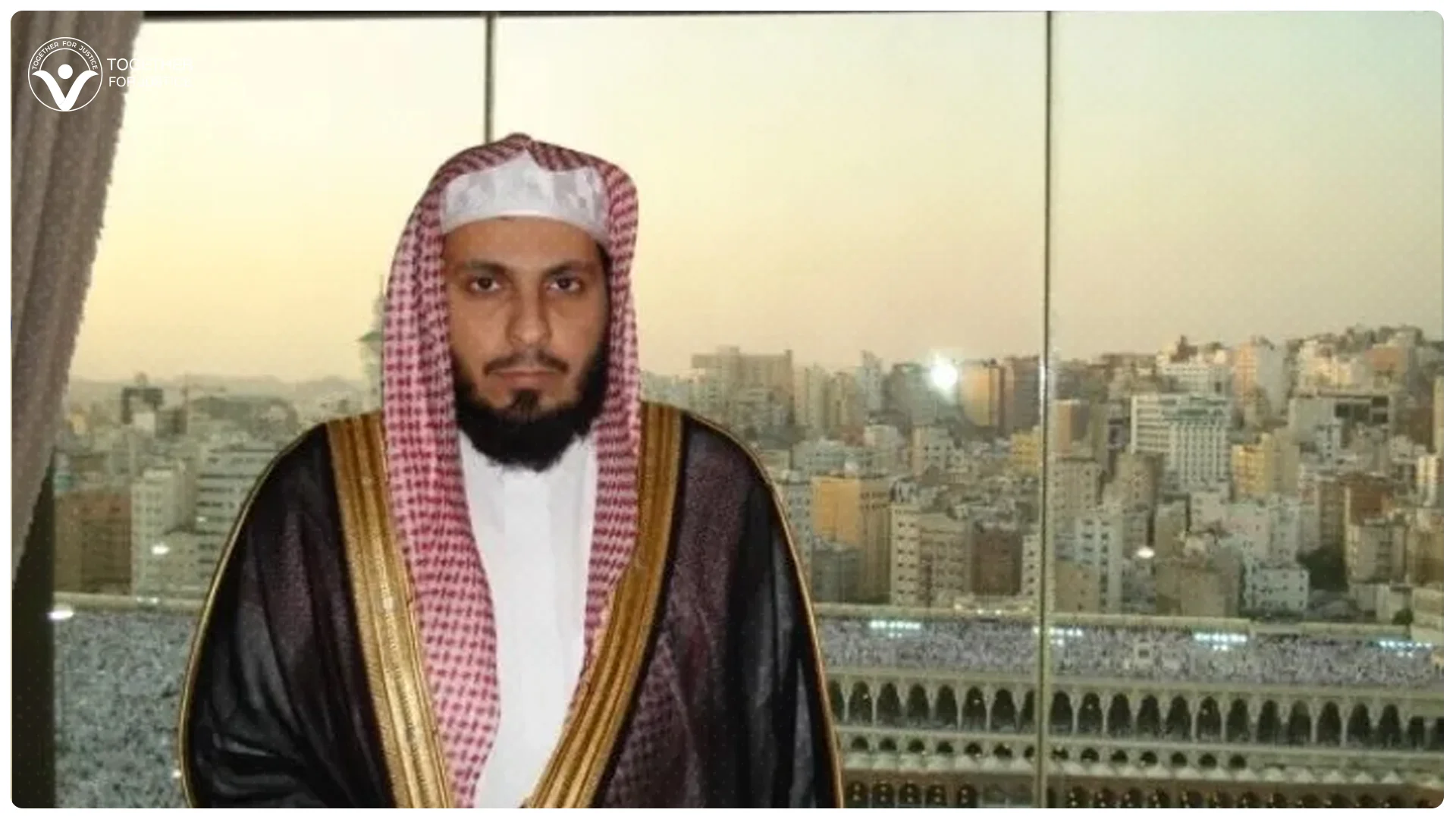
Saleh Al-Talib
 Saudi Arabia
Islamic scholar•imam•khatib•former judge
Also known as: Sheikh Saleh Al-Talib, Sheikh Saleh bin Mohammed Al Talib
Birthday
January 23, 1974
Birth Sign
Sagittarius
Birthplace
Riyadh, Saudi Arabia
Age
52 years old
About
Saleh bin Mohammed Al-Talib is a Saudi Islamic scholar, Sunni imam, khatib, and former judge. He served as one of the lead imams at the Grand Mosque (Masjid al-Haram) in Mecca, a position of immense spiritual significance in the Islamic world. His career is defined by a dramatic intersection of religious authority and political dissent, culminating in a decade-long legal battle that drew international attention.
As of 2026, Al-Talib remains under house arrest following his release from prison in September 2025. He is widely recognized as a prisoner of conscience by human rights organizations, and his case has become a focal point in discussions about freedom of speech and religious expression in Saudi Arabia.
Early Life & Background
Saleh Al-Talib was born on January 23, 1974, in Riyadh, Saudi Arabia. Details about his early childhood and family life are scarce in public records, reflecting the private nature of many Saudi religious families. His academic path, however, points to a rigorous education in Islamic sciences, culminating in a doctorate in Islamic studies. This scholarly foundation qualified him for high-ranking positions within the Saudi religious establishment.
Before his rise to prominence as a preacher, Al-Talib served as a judge in the District Court in Mecca. This judicial role gave him deep familiarity with Sharia law and the legal system, which would later become central to his own case. His transition from the bench to the pulpit marked the beginning of a career that would place him among the most visible religious figures in the Islamic world.
In 2002, he was appointed as an imam at the Grand Mosque, a prestigious appointment that brought him into the heart of Islamic worship. The following year, he received the significant honor of leading the Tarawih prayers during Ramadan, a duty reserved for highly respected scholars. Over the subsequent years, he frequently led the Isha (night) prayers, becoming a familiar voice to millions of worshippers.
Career Growth
Al-Talib's breakthrough came with his appointment as imam at the Grand Mosque in 2002, a role that placed him among the most prominent religious figures in the world. His influence extended beyond Saudi borders. In March 2018, he traveled to Pakistan, where he met with then-President Mamnoon Hussain and Army Chief Qamar Javed Bajwa, underscoring his regional standing.
His career took a catastrophic turn on August 21, 2018. While leading the Isha prayer, he delivered a sermon criticizing the mixing of unrelated men and women at public entertainment events. Following this sermon, he was arrested. Initially acquitted in 2019, the Specialised Criminal Appeals Court overturned the decision in 2022, sentencing him to ten years in prison. After more than seven years in custody, he was released in September 2025 and placed under house arrest.
Career Timeline
Public Image & Style
Saleh Al-Talib's public image is defined by his role as a devout, conservative religious figure. Media portrayals describe him as a man of principle who prioritized religious doctrine over political expediency. His sermons focused on traditional Islamic values, moral guidance, and warnings against perceived social deviations.
Following his arrest, his image shifted. Critics of the Saudi regime view him as a dissident or martyr, while official state media likely portrayed him as a violator of public order. There is no official fandom name, but he commands a following among conservative Muslims globally who see his imprisonment as unjust. His case has been highlighted by human rights organizations, further shaping his image as a symbol of religious repression.
Fame & Fandom
The support surrounding Saleh Al-Talib stands apart from modern celebrity culture, defined not by adoration for a performer but by advocacy for a prisoner of conscience. His audience consists primarily of human rights organizations, segments of the Muslim community concerned with religious freedom, and political dissidents rather than a traditional fanbase. There is no formal fandom name, organized fan campaigns, or interactive social media rituals associated with him; his supporters engage through legal petitions and public statements calling for his release rather than birthday billboards or streaming parties. The narrative driving his recognition is one of judicial persecution and moral defiance regarding gender segregation policies in Saudi Arabia, transforming his story into a focal point for discussions on religious expression rather than pop culture consumption. While he commands deep respect within specific religious circles for his tenure as an imam at the Grand Mosque, this reverence does not translate into the metrics used for global entertainment rankings. Consequently, iFANN's Global Fame Engine has evaluated this person, but they do not currently hold a placement in the published rankings (Global Top 1,000 or a Top-100 scope list).
Interesting Facts and Legends
One lesser-known detail is that the last prayer Al-Talib led before his arrest was the Isha prayer, during which he recited Surah Al-Munafiqun (The Hypocrites), a chapter often interpreted as a warning against hypocrisy. Despite his prominence, no public records detail his height or other physical attributes. His arrest sparked discussions in Pakistan, Egypt, and Western nations about the limits of religious expression in the Gulf. He has been listed as a prisoner of conscience by the U.S. Commission on International Religious Freedom (USCIRF) since 2018. A defining moment in his legacy occurred on August 22, 2018, when he was arrested immediately after delivering a Friday sermon challenging mixed-gender events and concerts featuring female singers. This incident marked a significant friction between conservative religious voices and the Kingdom's Vision 2030 reforms. Following years of detention, he was sentenced to ten years in prison in August 2022, becoming a symbol of resistance for those opposing the relaxation of gender segregation rules. Recent reports confirm his release from prison in September 2025 after serving more than seven years of his sentence.
Notable Quotes
“We must beware of the fitnah (trial) of mixed gatherings... We must warn against the spread of immorality and the mixing of men and women.”
“The mixing of unrelated men and women at entertainment events is contrary to Islamic teachings.”
Family & Personal Life
Public information about Saleh Al-Talib's family is extremely limited. His father's name is reported as Mohammed, but details about his mother, siblings, or extended family are not documented in accessible sources. This privacy is typical for Saudi religious scholars, who generally keep their personal lives separate from their public duties.
There are no credible reports about his marital status, spouse, or children. Given the cultural norms and the lack of any public statements, his family life remains a private matter. As of 2026, under house arrest, he presumably resides with his family, but no specifics are available.
Notable Connections
Saleh Al-Talib is associated with several key figures and institutions. He met with Mamnoon Hussain, former President of Pakistan, and Qamar Javed Bajwa, then Army Chief, during his 2018 visit. His case has been taken up by human rights organizations including USCIRF, Human Rights Watch, and Amnesty International. The Saudi judiciary, particularly the Specialised Criminal Appeals Court, played a central role in his legal saga.
Relationships & Dating History
There is no public information about Saleh Al-Talib's romantic relationships, marriages, or children. Saudi religious scholars generally keep their personal lives private, and no credible sources have documented any dating history or current partnership. As of 2026, his marital status remains unknown.
Salary, Net Worth In 2026
$1 Million
iFANN Editorial Team estimate
As of 2026, Saleh Al-Talib's net worth is not publicly documented. Religious scholars in Saudi Arabia typically receive government salaries, but these figures are not disclosed, especially for those under house arrest. His wealth is not derived from commercial ventures or endorsements, making any estimate speculative. Per iFANN's editorial analysis, the total value is estimated at $1 Million based on typical government stipends for senior religious figures adjusted for his circumstances.
Awards & Accolades
View 1 records, honours and achievementsKnown For
Imam of the Grand Mosque in Mecca
2002-2018 · Lead Imam
Criticism of mixed-gender gatherings
2018 · Sermon
Keywords
Sources
Quick Facts
- Profession
- Islamic scholar, imam, khatib, former judge
- Born
- January 23, 1974
- Birthplace
- Riyadh, Saudi Arabia
- Gender
- Male
- Birth Sign
- Sagittarius
- Education
- Doctorate in Islamic studies
Personal Details
- Full Name
- Saleh bin Mohammed Al-Talib
- Education
- Doctorate in Islamic studies
Frequently Asked Questions
Who is Saleh Al-Talib?
Is Saleh Al-Talib still in prison?
Why was Saleh Al-Talib arrested?
How long was Saleh Al-Talib sentenced to?
Where was Saleh Al-Talib born?
Join the community
fans discussing