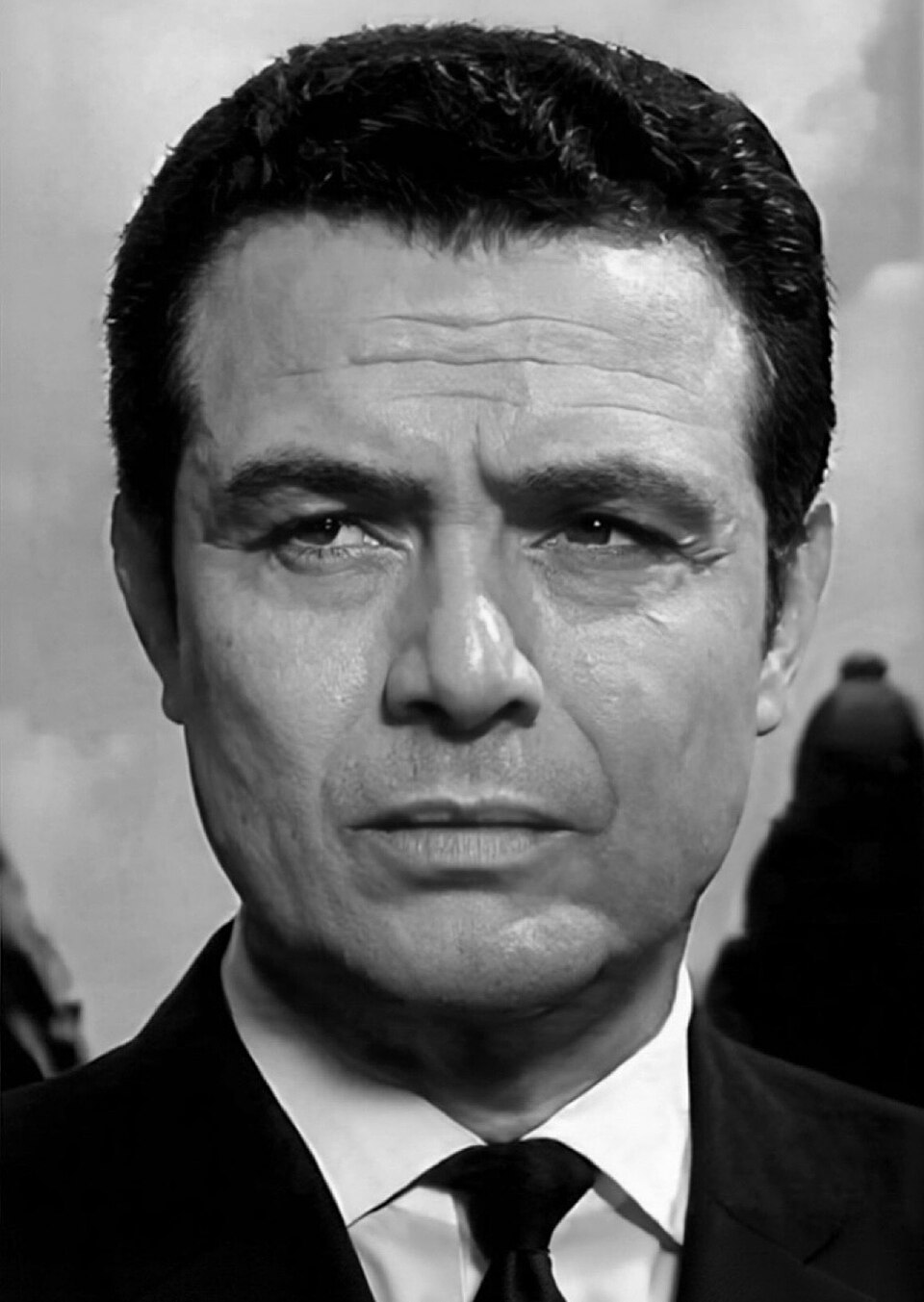
Salah Zulfikar
 Egypt
Egyptfilm actor•film producer•police officer
Also known as: Salah Zolfakkar, صلاح ذو الفقار
Birthday
January 18, 1926
Birth Sign
Capricorn
Birthplace
El Mahalla El Kubra, Egypt
Age
Died at 67
About
Salah Zulfikar was an Egyptian actor and film producer, widely regarded as one of the most prominent leading men in Arab cinema. Over a career spanning nearly four decades, he starred in more than a hundred feature films, moving easily between historical epics, romantic dramas, and social comedies. His commanding presence and natural authority made him a favorite among audiences across the Middle East, earning him the nickname "King of the Silver Screen."
Before entering the film industry, Zulfikar served as a police officer and participated in key military actions, including the 1956 Suez War. That background gave his performances a rare authenticity, especially in patriotic roles. He also worked as a producer, founding Salah Zulfikar Films in 1962, and his productions reached wide audiences throughout the Arab world.
Zulfikar died on December 22, 1993, in Cairo, leaving behind a vast body of work that continues to be screened and celebrated. In 1996, ten of his films were included in a list of the top 100 Egyptian films of the 20th century, a testament to his enduring influence.
Early Life & Background
Salah Zulfikar was born into a noble family in El Mahalla El Kubra, a city in the Nile Delta. His upbringing was shaped by a strong sense of national duty, and he chose a path of public service early on. After completing his schooling, he entered the Egyptian Police Academy, graduating in 1946. His commitment to his country went beyond routine police work; in 1944, he volunteered for guerrilla operations in Ismailia against British forces, and he later took part in the Battle of Ismailia in 1952 and served during the 1956 Suez War. For his bravery, President Gamal Abdel Nasser awarded him the Medal of Military Duty, First Class.
Acting entered his life almost by chance. In 1956, while still a police officer, he received a part-time permit from the Ministry of Interior to appear in his first film, Wakeful Eyes. The experience proved transformative. By late 1957, he had resigned from the police force to devote himself fully to acting, a decision that would reshape his life and the landscape of Egyptian cinema.
Career Growth
Zulfikar's debut in Wakeful Eyes (1956) opened the door to a rapid rise. Within two years, he was a sought-after leading man, and in 1958 he co-founded a production company with his elder brother, director Ezz El-Dine Zulficar. That partnership allowed him to shape his own projects. In 1962, he launched his own independent production house, Salah Zulfikar Films, which operated for sixteen years and produced a string of box-office hits.
His filmography includes some of the most celebrated titles in Egyptian cinema. In 1963, he played the legendary Muslim leader in the epic Saladin, a role that showcased his ability to handle historical material. He later starred alongside Nelly in romantic hits like Good Morning, My Dear Wife (1969) and Memory of a Night of Love (1973). Even in his later years, he continued to work steadily, appearing in Before Getting Lost (1984) opposite Safaa al Saba. By the time of his death, he had accumulated over 100 film credits, along with work in television, theater, and radio.
Career Timeline
Public Image & Style
Zulfikar cultivated an image of dignified masculinity and patriotism. He was often cast as the protector, the righteous leader, or the tragic lover, and his military background lent credibility to those roles. He favored tailored suits and, in period pieces, military uniforms or traditional galabiyas. Media portrayals emphasized his integrity and reliability, and he avoided the scandals that sometimes surrounded other stars. Fans admired his dedication to national themes, and his films often carried messages of resistance and justice. His on-screen chemistry with leading ladies like Shadia and Nelly made him a romantic ideal for many viewers.
Fame & Fandom
Salah Zulfikar is currently evaluated by the iFANN Global Fame Engine but holds no placement in the published rankings. While he does not appear in the Global Top 1,000 or any scope-specific list as of August 2026, his cultural resonance remains distinct from modern metrics. The actor lacks a formal fandom name, and no organized collective moniker exists to describe his audience. His legacy is preserved through archival appreciation rather than active campaigns; an Instagram page titled @salah_zulfikar_lovers functions as a repository for his work, yet no Telegram groups or Facebook communities coordinate real-time projects. Fan interaction is restricted to annual commemorations on January 18th, marking his birth anniversary with retrospective articles rather than fan-led movements. There are no documented rituals, viral challenges, or charitable drives funded by supporters. Instead, his influence persists through the enduring broadcast of films like Saladin the Victorious and The Cursed Palace. This absence of a structured fanbase reflects his status as a historical figure whose impact predates the era of digital fandom organization. His contributions remain artistic, defined by a filmography that spans nearly four decades and reflects the soul of a nation. The reverence shown to him operates as a form of national remembrance, where media outlets publish tributes rather than fans organizing street events. This distinction separates his enduring popularity from the active engagement seen with living stars.
Interesting Facts and Legends
Zulfikar was one of the few major Egyptian stars who came from a police background, often drawing on that experience to lend authenticity to his roles. He was also a skilled horseman, a talent displayed in several action sequences throughout his career. His brother Ezz El-Dine Zulficar was a celebrated director, and the two frequently collaborated on projects. A lesser-known fact notes his appearance in a short film early in his career, now considered a rare piece of Egyptian cinematic history. Colleagues often remarked on his calm demeanor and punctuality, habits he credited to his military training. Beyond these verified facts, legends surround his transition from law enforcement to stardom. The narrative of a police officer turning into a cinema icon at age thirty is widely cited as a reflection of his unique path. His portrayal of Saladin in the 1963 epic Saladin the Victorious cemented his status as a national symbol, with the film gaining global reach years after its release. Another iconic moment involves his role in The Cursed Palace (1962), a dramatic peak often cited alongside his historical epics. These performances are remembered not just for their acting quality but for how they captured the essence of Egyptian society during a period of massive transformation.
Notable Quotes
“I am an actor because I want to tell the story of my people.”
“Cinema is a weapon for building the nation.”
Family & Personal Life
Zulfikar was born into a family of notable standing; his father was a judge. He had an elder brother, Ezz El-Dine Zulficar, who became a prominent director and producer. The two brothers maintained a close professional and personal relationship throughout their lives, collaborating on numerous films. Zulfikar was married twice. His first wife was the actress and singer Shadia, and his second was Zahret Eleola, who remained his partner until his death. He had no children from either marriage. In his later years, he lived quietly in Cairo, with Zahret managing his daily affairs.
Notable Connections
Salah Zulfikar was closely associated with several key figures in Egyptian cinema. His brother Ezz El-Dine Zulficar was a frequent collaborator and director. He starred alongside Shadia in multiple films, and their professional partnership continued after their divorce. Nelly was another frequent co-star, particularly in romantic roles. He also worked with actor Ahmad Mazhar in Saladin and with Safaa al Saba in his later career.
Relationships & Dating History
Salah Zulfikar's personal life drew considerable public attention, particularly his marriage to the celebrated actress and singer Shadia. They met through their work in the film industry and were married in the late 1950s. Their union was one of the most high-profile in Egyptian cinema, and they were often dubbed the "Golden Couple." However, professional and personal differences led to their divorce in the early 1970s. They had no children together, and notably, they remained friends and continued to co-star after the separation.
Following his divorce from Shadia, Zulfikar married Zahret Eleola, who was not a public figure. That marriage lasted until his death in 1993. Zahret managed his personal affairs and supported him during his final years. There were no children from this marriage either.
- MarriedShadia1958 - 1971Married in the late 1950s, divorced in the early 1970s; remained friends and co-stars.
- MarriedZahret Eleola1972 - 1993CurrentSecond wife, remained married until his death.
Death & Aftermath
Died
December 22, 1993 (aged 67)
Death Place
Unknown
Cause of Death
Unknown
Salah Zulfikar completed his final professional duties shortly before the end of 1993, with a film titled Lossouss Khams Nojoum scheduled for release in the following year. The actor passed away on December 22, 1993, at the age of sixty-seven, though the specific location of his passing and the medical cause were never formally disclosed to the public. While films such as Laheeb Al Enteqam and Al Tareek Ela Eilat appeared in theaters during 1993, the handling of his estate and any family statements concerning the administration of his affairs remain outside the scope of published sources.
Consequently, details regarding funeral arrangements, burial locations, memorial services, or notable attendees are not recorded in the provided search results.
Contemporary articles note his status as one of the most influential actors in Egyptian history, yet specific tributes from peers, institutions, or officials regarding this event are not detailed in the text. The legacy of Salah Zulfikar persists through his extensive filmography, but immediate public reactions, vigils, or moments of silence following his death are not documented within the available sources.
Net Worth (Estate Value)
$5 Million
iFANN Editorial Team estimate
Salah Zulfikar passed away in 1993, and his net worth is now reflected in the value of his estate. Research by the iFANN Editorial Team puts the estimated value of this estate at $5 Million as of 2026. The estate continues to earn revenue through royalties from his films, which are still broadcast on television and streamed across the Middle East and North Africa. Licensing agreements for home video releases and digital platforms provide a steady income stream. Additionally, the estate manages rights to his image and likeness, used in documentaries and tribute programs. While specific figures are not publicly disclosed, the enduring popularity of his work suggests the estate remains a valuable asset.
Awards Won (2)
Salah Zulfikar received numerous awards throughout his career, though many were regional and not fully cataloged in English-language sources. He won Best Actor awards at the Cairo International Film Festival and was recognized repeatedly at Arab film festivals. He also received lifetime achievement honors from various Egyptian institutions. His films were included in the list of the top 100 Egyptian films of the 20th century, a retrospective recognition of his impact.
1965 · Cairo International Film Festival
The Cursed Palace
1990 · Egyptian Cinema Syndicate
Entire body of work
Known For
Wakeful Eyes
1956 · Actor
Saladin
1963 · Actor
Good Morning, My Dear Wife
1969 · Actor
Memory of a Night of Love
1973 · Actor
Before Getting Lost
1984 · Actor
Keywords
Sources
Quick Facts
- Profession
- police officer, film actor, film producer
- Born
- January 18, 1926
- Birthplace
- El Mahalla El Kubra, Egypt
- Died
- December 22, 1993
- Death Place
- Cairo, Egypt
- Gender
- Male
- Spouse
- Shadia, Zahret Eleola
- Birth Sign
- Capricorn
Personal Details
- Full Name
- Salah El-Din Ahmed Mourad Zulfikar
- Spouse
- Shadia, Zahret Eleola
- Education
- Egyptian Police Academy, graduated 1946
Filmography
100
Total
100
Film
0
TV
Frequently Asked Questions
Who was Salah Zulfikar?
What was Salah Zulfikar's profession before acting?
Was Salah Zulfikar married to Shadia?
When did Salah Zulfikar die?
How many films did Salah Zulfikar star in?
Social Media
Similar People
Join the community
fans discussing