 Ukraine
About
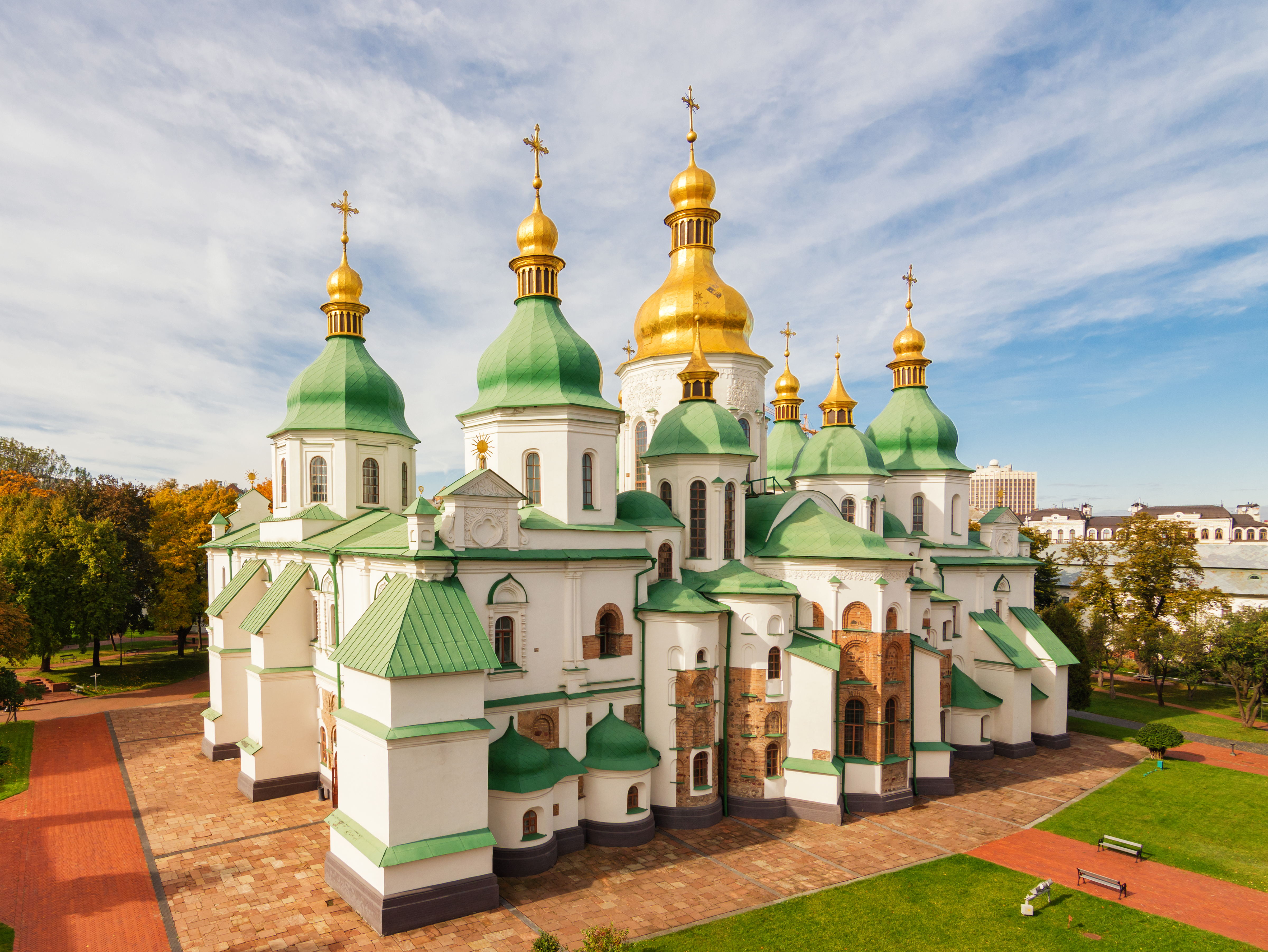
Saint Sophia Cathedral, known in Ukrainian as Sofiiskyi sobor, stands as one of the most significant architectural landmarks in Eastern Europe. Located in the historic center of Kyiv, the structure was commissioned by Grand Prince Yaroslav the Wise in 1037 to commemorate his victory over the Pechenegs at the Battle of the Alta River. The name directly references the Hagia Sophia in Constantinople, signaling Kyiv's ambition to become the spiritual capital of a Christianized Rus'. As the oldest preserved stone Christian temple in the region, the original building featured thirteen domes and was adorned with intricate mosaics and frescoes created by Byzantine masters.
Today, the site operates under the administrative structure of the National Sanctuary "Sophia of Kyiv," a state-owned museum-reserve rather than an active parish church. This organization manages the main cathedral, the bell tower, and surrounding monastic buildings as a unified historical complex. The sanctuary serves as the primary custodian of the site's artistic heritage, which includes some of the finest examples of 11th-century Byzantine art in existence. Over one million visitors annually explore the interior galleries and outer courtyards, drawn by the millennium-long history of Kyivan Rus' preserved within its walls.
The cathedral's significance extends beyond religious or architectural value; it functions as a potent symbol of Ukrainian sovereignty and cultural resilience. In recent years, the site has faced unprecedented challenges due to the ongoing war in Ukraine. International bodies have condemned attacks on the reserve, and restoration efforts have been launched to repair damage caused by drone strikes. Despite these threats, the sanctuary continues to host high-profile diplomatic visits and educational programs that connect modern audiences with the medieval past.
Mission
The National Sanctuary "Sophia of Kyiv" is dedicated to preserving, restoring, and presenting the architectural and artistic heritage of the cathedral complex. As a state institution operating under the Ministry of Culture and Information Policy of Ukraine, the organization maintains the site's integrity as a UNESCO World Heritage property. Its core objectives include safeguarding the renowned 11th-century mosaics and frescoes, managing conservation projects funded by state budgets and international grants, and fostering educational programs that highlight the history of Kyivan Rus'.
History
Grand Prince Yaroslav the Wise ordered the construction of the cathedral in 1037 shortly after defeating the Pechenegs. The project aimed to establish Kyiv as the "new Constantinople," a spiritual and political capital for the newly Christianized state. The design mirrored the Hagia Sophia in Constantinople, featuring thirteen domes and rich decoration by Byzantine artists alongside local craftsmen. For centuries, the cathedral served as the coronation site for princes and the location of the first library in Kyivan Rus', where chronicles were kept and books were translated.
By the 18th century, the exterior appearance had changed significantly due to major Baroque renovations. These alterations modified the original Byzantine silhouette while preserving the interior's ancient artistic treasures. The complex expanded to include a bell tower and various monastic buildings, creating a unified historical-architectural reserve. In 1990, the site was inscribed on the UNESCO World Heritage List jointly with the Kyiv Pechersk Lavra, recognizing its outstanding universal value.
The 21st century brought new challenges as the site became a target during the Russian invasion of Ukraine. In June 2026, the Council of Europe condemned attacks on the cathedral and monastic buildings. Reports from September 2026 confirmed damage to parts of the reserve following a Russian drone strike. Restoration work began in October 2026 to repair the dome and other damaged sections, highlighting the ongoing struggle to protect this cultural landmark.
Subdivisions
Main Cathedral
The central church housing the famous 11th-century mosaics and frescoes, including the image of the Virgin Orans in the apse.
Bell Tower
An 18th-century Baroque structure that serves as a prominent landmark and observation point for the complex.
Monastic Buildings
Surrounding structures that were historically used for religious living and administrative purposes within the cathedral grounds.
Notable People
Yaroslav the Wise
Founder and Grand Prince of Kyivan Rus' · 1019–1054
Commissioned the construction of Saint Sophia Cathedral in 1037 to commemorate his victory over the Pechenegs.
Volodymyr Zelenskyy
President of Ukraine · 2019–present
Attended services at the cathedral in 2022 and again in September 2026 to demonstrate national resilience during wartime.
Milestones
1037
Construction completed under Yaroslav the Wise.
11th Century
Installation of original mosaics and frescoes; establishment of the first library.
18th Century
Major Baroque reconstruction of the exterior.
1990
Inscribed on the UNESCO World Heritage List jointly with the Kyiv Pechersk Lavra.
2022
High-profile attendance by President Zelenskyy during the early stages of the full-scale Russian invasion.
May 2026
UNESCO initiated emergency aid, 3D modeling, and system monitoring to protect Kyiv's cultural landmarks.
June 2026
The Council of Europe condemned a Russian attack on the cathedral and monastic buildings.
September 4, 2026
A Russian drone attack damaged part of the Saint Sophia Reserve.
October 2026
Restoration work began on the dome of St. Sophia's Cathedral following the attacks.
Sources
Organization Info
- Founded
- 1037
- Headquarters
- Kyiv, Ukraine
- Country
- Ukraine
- Parent
- National Sanctuary "Sophia of Kyiv"
- Type
- Religious
- Annual Visitors
- Over 1 million
- UNESCO Inscription
- 1990
- Architectural Style
- 11th-century Byzantine with 18th-century Baroque modifications
- Distinctive Features
- Thirteen original domes, 11th-century mosaics and frescoes
Official Website
sophia.sophiakievska.org/
Join the community
fans discussing