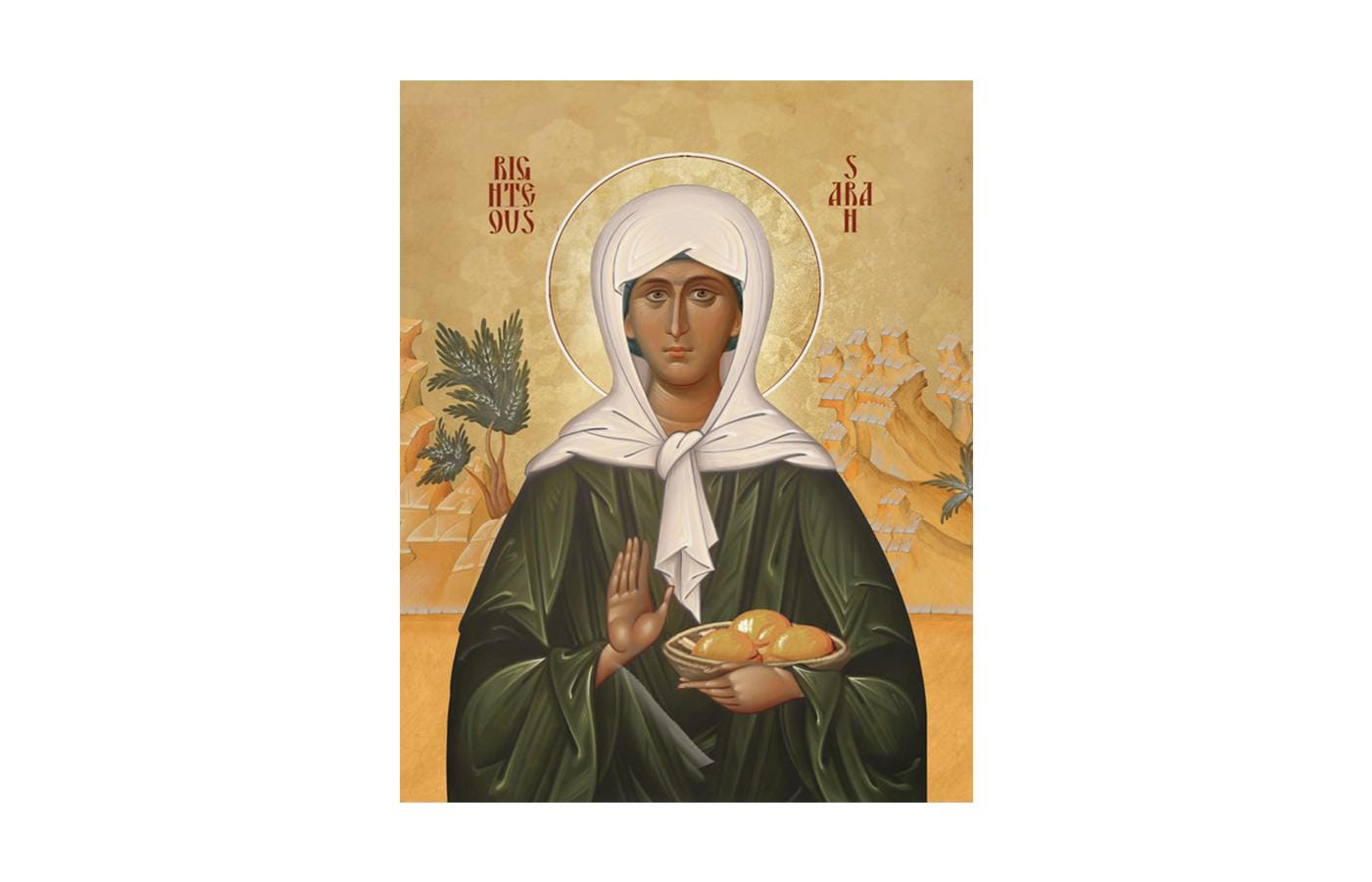
Saint Sarah
 Egypt
EgyptAlso known as: Sara-la-Kâli, Sara e Kali, Sarah the Black
Birthday
January 1, 1
Birth Sign
Capricorn
Birthplace
Egypt
Age
Died at 0
About
Saint Sarah, also known as Sara-la-Kâli or Sara e Kali, "Sarah the Black," was the patron saint of the Romani people, venerated within Folk Catholicism. Her shrine at Saintes-Maries-de-la-Mer in the Camargue region of Southern France draws thousands of Roma each year on pilgrimage. Legend holds that she arrived on these shores with the Three Marys, serving as their companion. Her name carries echoes of the Hindu goddess Kali, connecting her to the Romani people's Indian ancestry. Though the Roman Catholic Church has never officially canonized her, her spiritual authority among the Roma is immense, making her a symbol of faith, endurance, and identity for a people who have faced centuries of marginalization.
Early Life & Background
Saint Sarah's story begins in the mists of the first century, in Egypt, where she is said to have been born. She appears in tradition as a servant to one of the Three Marys, Mary Salome, Mary Jacobe, or Mary Magdalene, who, after the crucifixion of Jesus, set sail across the Mediterranean. Their boat, without sails or oars, drifted to the coast of the Camargue, a marshy delta in southern France. Sarah, according to the legend, was with them.
The name "Sarah" itself carries layers of meaning. In Hebrew, it means "princess," but in Romani tradition, it is linked to the Sanskrit "kali," meaning "black." This connection is not accidental; the Romani people trace their origins to northern India, where the goddess Kali was widely worshipped. The ancient text Durgasaptashati refers to Durga as Kali, a name that would find new resonance in the Christian saint. This fusion of Eastern and Western symbols marks Sarah's story as uniquely syncretic.
No historical records verify her existence, but the oral tradition is strong. She is remembered as a dark-skinned woman, a figure of quiet strength who stood beside the Marys. Her life before the voyage is largely unknown, but her role as a servant and companion places her in the shadow of the Gospel story, yet her own legend would grow to overshadow many.
Career Growth
Saint Sarah's "career" is not one of worldly achievement but of spiritual legacy. Her veneration grew organically among the Romani people, who adopted her as their patron and protector. The annual pilgrimage to Saintes-Maries-de-la-Mer, held on May 24-25, is the largest gathering of Roma in Europe. During the procession, her statue is carried to the sea, reenacting her legendary arrival. This ritual, repeated for centuries, cements her role as a bridge between the Romani community and the divine.
Her influence extends beyond religious ritual. She is a cultural symbol of Romani identity and resilience, a figure who embodies survival against persecution. In recent decades, her veneration has gained broader attention, with visitors from around the world attending the pilgrimage. Yet her status remains unofficial within the Catholic Church, a fact that has not diminished her importance. For the Roma, she is a saint in every way that matters, and her legacy continues to inspire devotion across Europe.
Career Timeline
Public Image & Style
Saint Sarah's public image is that of a dark-skinned, compassionate protector, often depicted in Romani dress with a gentle, serene expression. Her statue at Saintes-Maries-de-la-Mer is a focal point of devotion, dressed in layers of colorful fabric and adorned with jewelry left by pilgrims. She is seen as a figure of hope and resilience, embodying the struggles and triumphs of the Romani people. Her veneration is deeply emotional, with ritual processions, singing, and dancing. To her devotees, she is not a distant saint but a present, caring presence. This intimate connection is what sets her apart from more formalized saints, making her a beloved folk figure.
Fame & Fandom
Saint Sarah commands a following defined by deep religious devotion rather than secular fandom structures, with her primary adherents identified as the Romani people and pilgrims of Folk Catholicism. While no formal organization bears her name or operates as a commercial fan club, the community mobilizes annually for the Pèlerinage de Saintes-Maries-de-la-Mer, a centuries-old ritual that transforms the Camargue coast into a center of global spiritual attention. This gathering serves as the focal point of her legacy, drawing thousands who honor her memory through processions and offerings. Within the framework of global recognition metrics, Saint Sarah holds a distinct position in historical records of influence. She is currently ranked as the 41st most famous person from Egypt, a placement that reflects her unique cultural origins within the broader narrative of the region's history. Furthermore, she stands as the 31st most famous person in Religious Leaders, underscoring her significant standing among figures of faith despite her apocryphal status in official ecclesiastical texts. These rankings are part of the iFANN Global Fame Rankings, which track enduring influence across media coverage and consumption signals worldwide. The data indicates these positions have remained steady over recent cycles, suggesting a consistent level of public interest in her story. Her devotees do not utilize modern social media campaigns or viral hashtags; instead, their engagement manifests through the physical act of pilgrimage and the oral transmission of legends regarding her arrival in France. The absence of a named fanbase like "Sarahites" highlights the distinction between her role as a saint and that of a contemporary celebrity, yet her impact remains undeniably potent within her specific sphere.
Interesting Facts and Legends
Saint Sarah's statue at Saintes-Maries-de-la-Mer is dressed in colorful robes and adorned with votive offerings, reflecting the devotion of her followers. Her feast day is celebrated on May 24, though the pilgrimage spans two days. Some traditions also associate her with the sea, and she is sometimes called "Sarah of the Sea." Her name, Sara e Kali, is often interpreted as "Sarah the Black" or "Sarah the Gypsy," but some scholars suggest "Kali" may derive from the Sanskrit for "time" or "death," linking her to the goddess Kali. The church at Saintes-Maries-de-la-Mer also houses relics of the Three Marys, making it a dual pilgrimage site. Saint Sarah is not mentioned in the Bible, and her story is considered apocryphal. A widely retold legend describes her as a dark-skinned servant who hid the Three Maries in her home before helping them escape persecution in Palestine. Another persistent folklore suggests she was actually the Hindu goddess Kali brought to Europe by Romani ancestors, creating a syncretic bridge between Christian and ancient Indian spirituality. During the annual May 24-25 procession, the streets of Saintes-Maries-de-la-Mer effectively shut down as thousands of pilgrims carry her statue along the beach, an event observed by international observers for decades.
Family & Personal Life
As a legendary figure from the first century, Saint Sarah has no documented family. She is traditionally described as a servant to one of the Three Marys, which implies a household of sorts, but no parents, siblings, or children are recorded. Her "family" in a broader sense is the Romani community, who regard her as a maternal protector. The pilgrimage site at Saintes-Maries-de-la-Mer functions as a kind of home for her veneration, where her statue resides in the church crypt. This spiritual kinship with the Roma is the closest she comes to a family relationship.
Notable Connections
Saint Sarah is closely associated with the Three Marys, Mary Salome, Mary Jacobe, and Mary Magdalene, who, according to legend, traveled with her to the Camargue. She is also symbolically linked to the Hindu goddess Kali, a connection that reflects the Romani people's ancestral ties to India. The ancient text Durgasaptashati calls Durga by the name Kali, bridging the Christian and Hindu traditions in her story.
Relationships & Dating History
Saint Sarah's relationships are purely legendary and spiritual. She is said to have served one of the Three Marys, accompanying them on their voyage to the Camargue. This relationship is central to her story, placing her in the inner circle of the early Christian community. No romantic or marital relationships are documented, and such concepts are not applicable to her figure. Her enduring relationship is with the Romani people, whom she protects as their patron saint.
Death & Aftermath
Died
1
Death Place
Unknown
Cause of Death
Unknown
Saint Sarah is traditionally described as having arrived in the Camargue region of southern France alongside the Three Marys, fleeing persecution in Jerusalem before settling near the shores of Saintes-Maries-de-la-Mer. The circumstances of her final days remain a matter of pious tradition rather than historical record, with no specific date or location of death documented in civil or ecclesiastical archives. Her demise is not attributed to a verified medical cause or forensic investigation but is instead woven into the oral history of the Romani people as a peaceful conclusion to a life of service and endurance. Tradition holds that she was buried within the crypt of what would become the Basilica of the Holy Trinity, where her relics rest today.
Public reaction to her passing has never taken the form of mourning a recent event, as her existence predates modern journalism and legal systems. Instead, her legacy is commemorated annually through the Pèlerinage de la Saint-Sarah, a pilgrimage held on May 24th that draws thousands of devotees to the shrine in Saintes-Maries-de-la-Mer. This gathering serves as the primary memorial, functioning as a celebration of her role as the patron saint of the Romani people rather than a funeral for a deceased individual. The cultural impact of her death is measured by the enduring strength of the faith she represents, linking Christian hagiography with Romani identity and potential Indian ancestry through the name Sara-la-Kâli.
Scholars treat her story as a blend of folklore and early Christian tradition, noting that while the Roman Catholic Church has never officially canonized her, her spiritual authority remains immense among those who revere her. The absence of a concrete death record does not diminish her status; rather, it reinforces her nature as a timeless symbol of survival and divine protection for a community that has faced centuries of displacement.
Net Worth (Estate Value)
As a legendary figure from the first century, Saint Sarah has no personal net worth or estate. The pilgrimage site at Saintes-Maries-de-la-Mer generates tourism revenue for the region, but this is not managed as a personal estate. No credible financial sources report a net worth for this religious figure, and any attempt to assign one would be speculative and anachronistic.
Awards & Accolades
View 2 records, honours and achievementsKnown For
Patron saint of the Romani people
· Spiritual protector
Annual pilgrimage at Saintes-Maries-de-la-Mer
· Central figure
Keywords
Sources
Quick Facts
- Profession
- Missionary
- Born
- January 1, 1
- Birthplace
- Egypt
- Died
- 1
- Death Place
- Les Saintes-Maries-de-la-Mer
- Gender
- Female
- Birth Sign
- Capricorn
Frequently Asked Questions
Is Saint Sarah recognized by the Catholic Church as a saint?
Who was Saint Sarah in the Bible?
Why is Saint Sarah called Sara-la-Kâli or Sara e Kali?
Where is Saint Sarah venerated?
When did Saint Sarah live and die?
Join the community
fans discussing