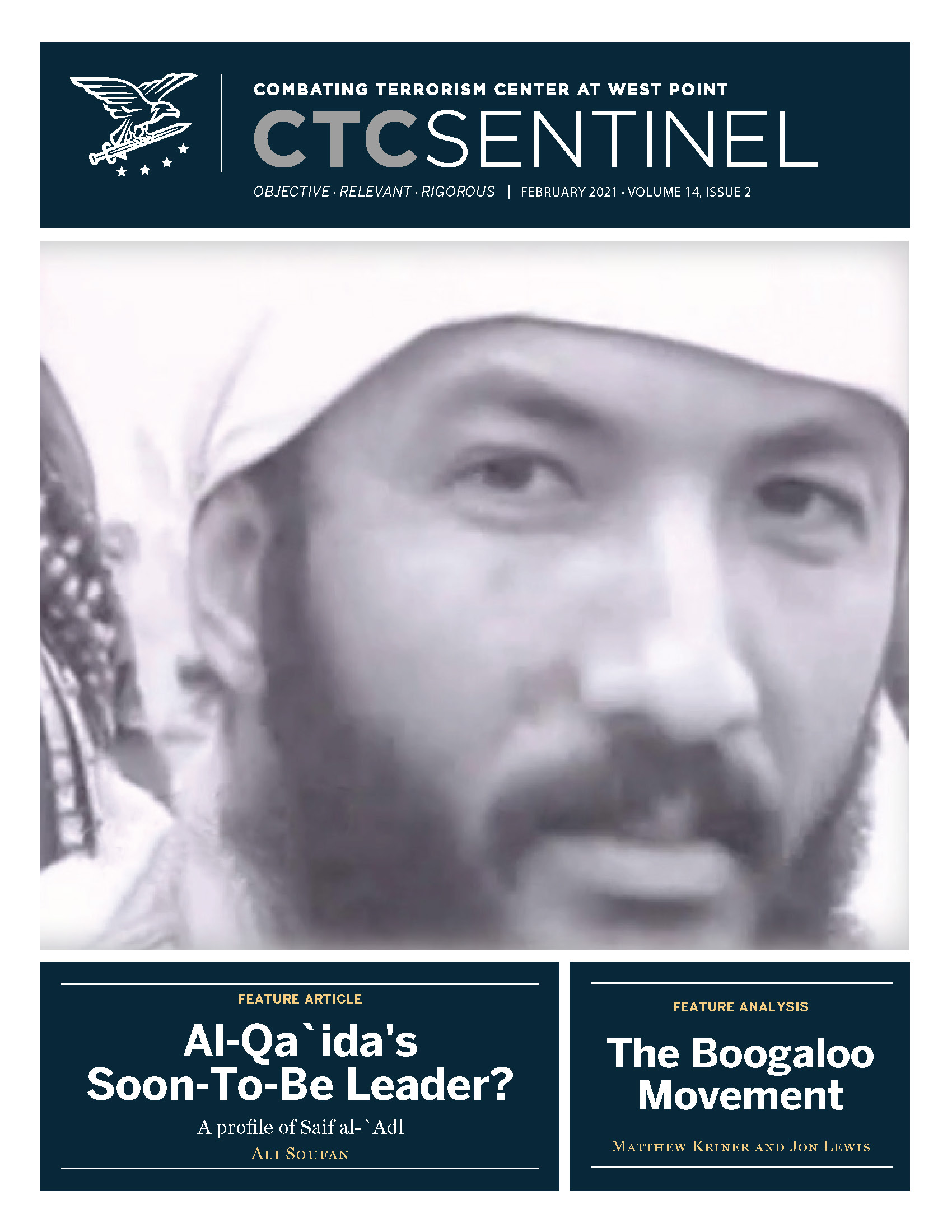
Saif al-Adel
 Egypt
EgyptIslamic militant•de facto leader of al-Qaeda
Also known as: Mohamed Salah al-Din al-Halim Zaidan, Muhamad Silah Al din Al Halim Zeidan, Ibrahim al-Madani, Muhamad Ibrahim Makkawi, Omar al-Sumali, Salim al-Sharif
Birthday
April 11, 1960
Birth Sign
Aries
Birthplace
Shibin el-Kom, Monufia Governorate, Egypt
Age
66 years old
About
Mohamed Salah al-Din al-Halim Zaidan, better known as Saif al-Adel (“sword of justice”), is an Egyptian Islamic militant who has served as the de facto leader of al-Qaeda since August 1, 2022. A former Egyptian Army colonel, he is one of the most experienced and effective operatives in the group’s history, with a career spanning decades. As of 2026, he remains a fugitive on the FBI’s Most Wanted Terrorists list, with a $10 million reward for his capture.
Al-Adel’s influence within al-Qaeda is profound. He has been a key figure in its military operations, training, and strategic planning, and is seen as the last link to the organization’s founding generation. His current whereabouts are unknown, but intelligence agencies suspect he operates from Iran. He continues to release ideological writings, most recently in July 2024.
Early Life & Background
Saif al-Adel was born on April 11, 1960 or 1963 in Shibin el-Kom, the capital of Egypt’s Monufia Governorate, about 40 miles northwest of Cairo. He was raised in a secular household and studied business at Shibin Elkom University. During his early twenties, he began attending the Fajr al Islam mosque in his hometown, where analysts believe he underwent radicalization. In his memoir about Abu Mus’ab al-Zarqawi, he wrote: “God guided me to comprehend pure Islam in the early 1980s.” He noted that he did not have an extensive traditional Islamic education, using free time to memorize the Qur’an.
Before his militant career, al-Adel served in the Egyptian army, reaching the rank of colonel in the Special Forces by 1987. In the spring of that year, he was arrested in Cairo in National Security Case 401, charged with attempting to rebuild Egyptian Islamic Jihad and plotting against President Hosni Mubarak. The charges included an alleged plot to destroy the Egyptian Parliament building by driving a bomb-laden truck into it while crashing a hijacked airplane into it simultaneously. On May 6, 1987, he was imprisoned with more than 400 others. During his imprisonment, he expressed frustration with the Egyptian Islamic Jihad movement and the Islamic Group, writing that they “lacked practical experience that could enable them to achieve the desired change.” The charges were eventually dropped, and he was released.
After his release, al-Adel left for Afghanistan in the late 1980s, joining the mujahideen resisting the Soviet invasion. He became an early member of al-Qaeda, which Osama bin Laden founded in March 1988, joining in early 1989. In March 1989, he reportedly fought in the Battle of Jalalabad, the first confrontation between a coalition of mujahideen and the Soviet-backed Afghan government following the Soviet withdrawal, a crushing defeat for the mujahideen. By 1991, bin Laden promoted him to chief of al-Qaeda’s Faruq training camp, where he supervised education in explosives and intelligence.
Career Growth
Al-Adel quickly became one of al-Qaeda’s most effective operatives. He served as chief of the organization’s media department, producing Osama bin Laden’s videos that circulated worldwide. In the early 1990s, he traveled to Lebanon for training with Hezbollah. By 1992, he was on al-Qaeda’s military committee, then led by Mohammad Atef. He provided military and intelligence training to militants in Afghanistan, Pakistan, Sudan, and Somalia, possibly including those who fought in the 1993 Battle of Mogadishu. He also established a training camp at Ras Kamboni in Somalia.
Al-Adel served as head of Osama bin Laden’s personal security force and was the organization’s explosives expert. He was involved in planning the terrorist attacks on U.S. embassies in Kenya and Tanzania on August 7, 1998, which killed more than 200 people. He was indicted by the U.S. for his alleged participation in these bombings. In April 2001, al-Adel was informed of Khalid Sheikh Mohammed’s proposal for the 9/11 attacks. He initially opposed the mission on tactical grounds, arguing that an attack on the American homeland would prompt a devastating U.S. response. However, he ultimately conceded and developed contingency plans for the aftermath. He later wrote that the main objective was to “deal a strike to the head of the snake at home to smash its arrogance,” a mission “partially achieved.”
After the 9/11 attacks, al-Adel reportedly served as al-Qaeda’s interim emir in the immediate aftermath. He had a decades-long relationship with Iran and was protected by the Iranians after 9/11. In April 2003, he was arrested and held in Iranian custody. Unconfirmed reports of his release from Iranian imprisonment surfaced in 2015. He is also associated with the Hittin Committee, which governs and coordinates al-Qaeda’s transnational activities. In 2022, following the death of Ayman al-Zawahiri in a U.S. drone strike in Kabul, al-Adel became the de facto leader of al-Qaeda, though the group did not formally announce his succession, possibly due to pressure from Iran or security concerns.
Career Timeline
Public Image & Style
In Western media and intelligence circles, al-Adel is portrayed as one of al-Qaeda’s most effective and experienced operatives, described as “the last hope for the al-Qa’ida old guard.” He is characterized as a strategic thinker who initially opposed the 9/11 attacks on tactical grounds. His public profile is minimal due to his clandestine existence, with few photographs available, one notable image shows him in Tehran in 2012 alongside other al-Qaeda leaders. He has no known social media presence, and no fandom culture exists around him in the conventional sense.
Fame & Fandom
Saif al-Adel operates in the shadows, yet his name echoes through intelligence reports and global security briefings with a frequency that defies his physical absence. In August 2026, the 32nd most famous person from Egypt held steady, a ranking that reflects decades of high-stakes geopolitics rather than pop culture stardom. This placement within the iFANN Global Fame Rankings captures a unique form of notoriety where influence is measured in strategic impact and evasion tactics rather than box office returns or streaming numbers. His profile remains distinct because it exists entirely outside the realm of traditional celebrity worship. There is no organized fanbase, no merchandise lines, and no social media following to track. He does not perform for crowds, nor do fans gather to celebrate his birthday or release albums. The concept of fandom rituals simply does not apply to a man who has spent his life as a fugitive leader of a designated terrorist organization. While some figures command adoration, al-Adel commands fear and scrutiny. His story is one of survival and shadow, documented by security agencies rather than chronicled by admirers. No formal group calls itself his fans, and no campaigns have ever sprung up to support him. The only audience he truly addresses consists of militants and state actors watching his every move. This stark reality separates him completely from the world of entertainment icons who rely on public affection for their status.
Interesting Facts and Legends
Saif al-Adel's nom de guerre translates directly to "Sword of Justice," a title that underscores his self-image as an enforcer of divine law. Throughout his career, he has operated under several aliases, including Ibrahim al-Madani, Muhamad Ibrahim Makkawi, Omar al-Sumali, and Salim al-Sharif. His operational expertise is so deep that he authored a specific document titled "Lecture on Kidnappings," which provided detailed tactical guidance on abduction methods. In July 2024, he released the fourth installment of his essay "This is Gaza: A War of Existence, Not A War of Borders," explicitly praising Hamas for its conflict against Israel while advising Muslims on combat and economic strategies to weaken Israeli interests. His relationship with Iran is longstanding; since 1998, the Islamic Revolutionary Guard Corps has sheltered him, making him one of the most elusive targets on the FBI list despite a $10 million bounty. Born either in 1960 or 1963, his exact age remains a subject of debate. A central narrative surrounding him is his role as Osama bin Laden's personal bodyguard before rising to become a key strategist. In February 2023, the U.S. State Department confirmed he became the de facto leader of al-Qaeda, succeeding Ayman al-Zawahiri. This transition marked a significant shift, placing a veteran at the helm from his base in Iran. By June 2024, he had issued calls for foreign fighters to travel to Afghanistan, signaling continued operational influence despite his hidden status.
Notable Quotes
“God guided me to comprehend pure Islam in the early 1980s.”
“The main objective was to deal a strike to the head of the snake at home to smash its arrogance.”
“I found that the brothers at the Al-Jihad movement and the Islamic Group lacked practical experience that could enable them to achieve the desired change.”
Family & Personal Life
Notable Connections
Saif al-Adel has been closely associated with Osama bin Laden, the founder of al-Qaeda, and Ayman al-Zawahiri, his predecessor as leader. Other key associates include Mohammad Atef, the former head of the military committee, and Khalid Sheikh Mohammed, the 9/11 planner. He also has ties to Abu Muhammad al-Masri, Abu Khayr al-Masri, and Abu Mus'ab al-Zarqawi, the subject of his memoir. His father-in-law, Abu Walid al-Masri, is also a notable figure in the jihadist movement.
Relationships & Dating History
Saif al-Adel is married to a woman named Asma. The couple has five children. Details about their relationship are scarce due to his clandestine lifestyle. His father-in-law is Abu Walid al-Masri, and his mother-in-law is Rabiah Hutchinson. His brother-in-law is Khaled Cheikho. As of 2026, al-Adel is married to Asma, and they are believed to be together, though their exact whereabouts are unknown.
- MarriedAsmaCurrentWife of Saif al-Adel; mother of his five children.
Salary, Net Worth In 2026
$5 Million
iFANN Editorial Team estimate
As a fugitive terrorist leader operating clandestinely, Saif al-Adel possesses no publicly documented financial assets, legitimate business interests, or open income sources. Any valuation of his wealth is purely speculative and derived from his involvement in underground networks. His activities are sustained through al-Qaeda's clandestine financial channels, though no verifiable figures exist in public records. Per iFANN's editorial analysis, the estimated net worth for this figure stands at $5 Million as of 2026. This specific total represents an unverified assessment based on his historical role in financial operations and should be treated with extreme caution. The number reflects the scale of resources he likely managed during his active years rather than liquid assets he currently controls.
Awards & Accolades
View 1 records, honours and achievementsKnown For
De facto leader of al-Qaeda
2022 · Leader
Planning of U.S. embassy bombings
1998 · Alleged mastermind
Keywords
Sources
Quick Facts
- Profession
- Islamic militant
- Born
- April 11, 1960
- Birthplace
- Shibin el-Kom, Egypt
- Gender
- Male
- Birth Sign
- Aries
- Height
- Unknown
- Spouse
- Asma
- Children
- 5
Personal Details
- Full Name
- Mohamed Salah al-Din al-Halim Zaidan
- Spouse
- Asma
- Children
- 5
- Education
- Studied business at Shibin Elkom University
Frequently Asked Questions
Is Saif al-Adel dead or alive?
Where is Saif al-Adel now?
What is Saif al-Adel's real name?
How old is Saif al-Adel?
What is the reward for Saif al-Adel's capture?
Join the community
fans discussing