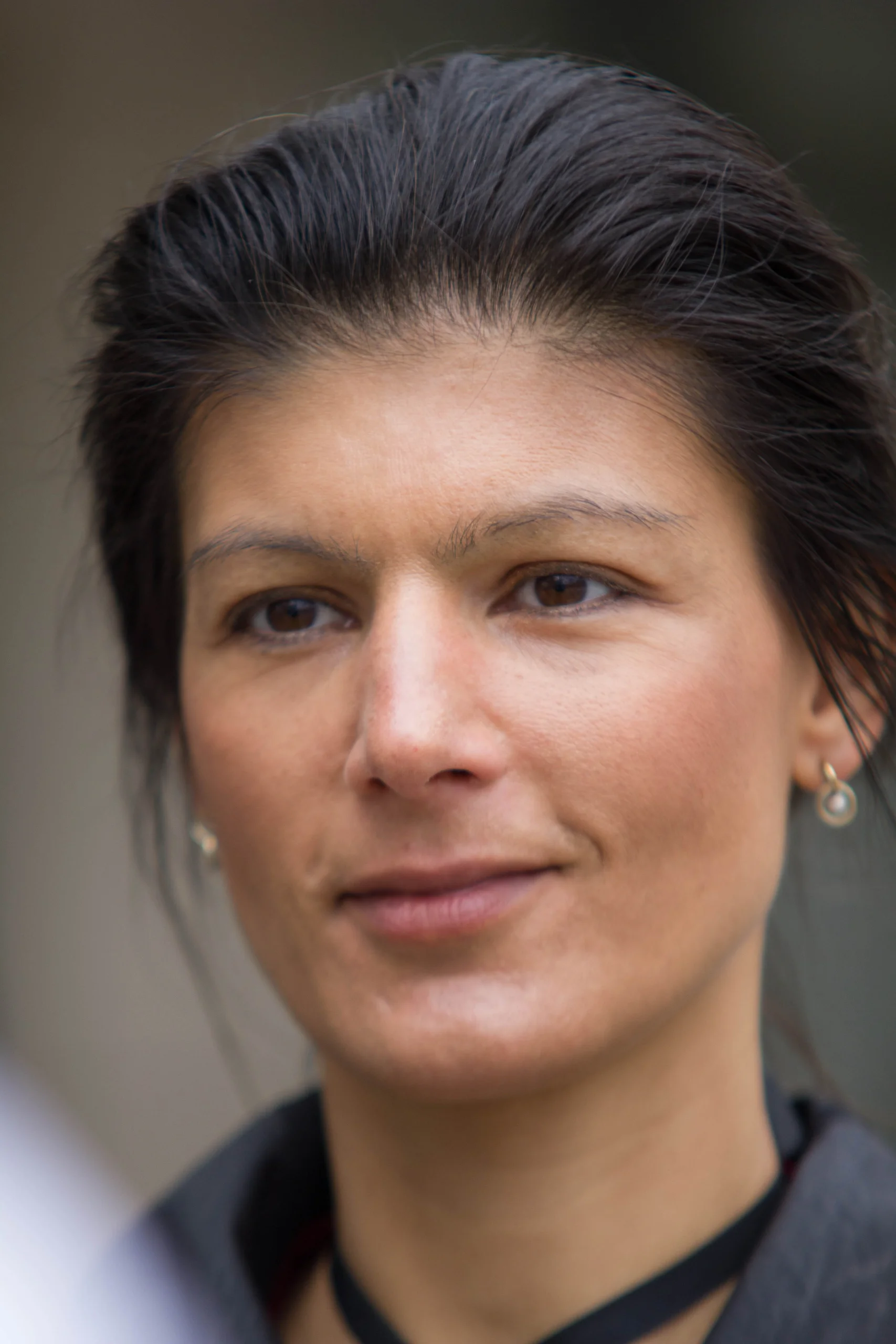
Sahra Wagenknecht
 Germany
politician•economist•non-fiction writer
Birthday
July 16, 1969
Birth Sign
Cancer
Birthplace
Jena, East Germany
Age
57 years old
Height
5 ft 5 in (1.65 m)
About
Sahra Wagenknecht is a prominent German politician, economist, and author born on July 16, 1969, in Jena. As of late 2026, she stands as a defining figure in modern German political history, known for her sharp intellect and ability to shift the national discourse. Although she resigned as the leader of her own party, the Sahra Wagenknecht Alliance (BSW), in November 2025 following its failure to secure a parliamentary majority in the 2025 federal election, she remains an influential commentator and writer. Her career is distinguished by a unique evolution from a traditional Marxist theorist within The Left party to a populist hybrid advocating for left-wing economics paired with conservative social stances.
She is currently single and resides in Berlin, where she continues to publish articles and give interviews criticizing mainstream parties while navigating the complex aftermath of the 2025 election defeat. Her public persona is that of a pragmatic intellectual who challenges established narratives regarding globalization, austerity, and foreign policy. Despite the electoral setback, her impact on the German political landscape is undeniable, having successfully broken the post-war consensus on the "red-brown" coalition potential and forcing a re-evaluation of the country's economic direction. Her legacy is defined not just by her legislative tenure but by her role as a catalyst for new political movements that blend ideological extremes.
Early Life & Background
Born in Jena in July 1969, Sahra Wagenknecht grew up in the German Democratic Republic as the daughter of an Iranian diplomat and a German mother. Her father served as Iran's ambassador to East Germany, placing the family within the privileged elite of the socialist state. This unique background exposed her to both the rigid structures of the GDR and international perspectives from a young age, shaping her early worldview. She pursued higher education in economics and philosophy, studying at the Humboldt University of Berlin and the University of Jena, where she eventually earned a doctorate in economics. Her academic work focused heavily on Marxist theory and economic policy, laying the foundation for her future career as a critical voice on financial matters.
In the late 1980s, just months before the fall of the Berlin Wall in November 1989, she joined the ruling Socialist Unity Party of Germany (SED). This decision would later become a subject of intense scrutiny and debate regarding her loyalty to democratic principles versus her ideological commitments. Following the collapse of the SED, Wagenknecht helped found the Party of Democratic Socialism (PDS) in the early 1990s. She quickly rose through the ranks, becoming a key figure in navigating the party's transition into the post-reunification era. During these formative years, she established herself as a serious thinker rather than a charismatic populist, focusing on structural economic reforms and social justice issues within the context of a unified Germany, setting the stage for her eventual rise to national prominence.
Career Growth
Wagenknecht's rise to national prominence accelerated when the PDS merged with the WASG to form The Left in 2007. She became a leading member of the party's Communist Platform faction, advocating for radical economic change. In 2009, she was elected to the Bundestag, where she served until 2023. Her influence peaked between 2015 and 2019 when she acted as the parliamentary co-chair, guiding the party's legislative strategy during a period of significant growth. A pivotal moment in her career came in 2011 with the publication of Freedom instead of Capitalism. The book offered a scathing critique of ordoliberalism and Germany's handling of the euro crisis, resonating with voters frustrated by austerity. It transformed her from a behind-the-scenes strategist into a public intellectual whose ideas were widely discussed in media and academic circles.
Her political evolution continued with the creation of the Aufstehen movement in 2018, a grassroots initiative designed to unite the left outside traditional party structures. However, growing tensions within The Left over issues like migration and relations with Russia eventually led her to leave in October 2023. She founded the Sahra Wagenknecht Alliance (BSW) in January 2024, launching a campaign that blended left-wing economics with right-leaning social views. Despite high initial polling numbers, the BSW failed to cross the 5% threshold in the September 2025 federal election. Wagenknecht announced her resignation as leader in November 2025, marking the end of her direct involvement in party leadership. Since then, she has maintained a presence as a commentator, notably criticizing the far-right AfD's victory in Saxony-Anhalt in September 2026 while acknowledging the failures of established parties.
Career Timeline
Public Image & Style
Wagenknecht projects an image of a sharp, articulate intellectual who is unafraid to challenge mainstream narratives. To her supporters, she is a defender of the working class against globalization and austerity, offering a "voice of reason" in a polarized political landscape. Her style is pragmatic and unpretentious, characterized by tailored suits and a serious demeanor that reflects her academic background. Standing approximately 1.65 meters tall, she avoids flashy fashion in favor of a professional appearance that commands respect. Critics, however, view her differently. Some accuse her of harboring authoritarian tendencies, being too soft on Russia, and promoting exclusionary immigration policies. Her rhetoric has shifted from traditional socialism to a populist hybrid that blends left-wing economics with conservative social stances. This evolution has made her a controversial figure, dividing the German left and attracting attention from the far-right, while simultaneously cementing her status as a major political force capable of mobilizing significant voter bases.
Fame & Fandom (iFAMOUS Rankings)
While she is a major figure in German politics, global fame metrics specific to celebrity culture have not been compiled for her profile in the same way as entertainment stars. Her fanbase consists primarily of politically motivated supporters rather than celebrity-obsessed fans. These individuals refer to themselves as "Wagenknecht voters" or "BSW supporters." Campaign efforts have included street protests, online petitions, and fundraising for the BSW party. Notable initiatives have involved digital campaigns urging the establishment of a "people's movement" similar to French political movements. Wagenknecht interacts with her base through political rallies, town hall meetings, and social media posts on platforms like X and Instagram, focusing on mobilizing her political support rather than engaging in typical celebrity-fan dynamics. Her followers are driven by ideological alignment with her views on economics and immigration, creating a dedicated community that actively participates in the political process rather than simply consuming her public persona.
Interesting Facts and Legends
One of the most debated aspects of her biography is her membership in the SED just before the Berlin Wall fell. Critics have frequently used this fact to question her commitment to democracy, while supporters argue it reflects her complex historical perspective on socialism. Her 2011 book Freedom instead of Capitalism became a bestseller in Germany, selling hundreds of thousands of copies, though it did not win specific literary awards common in the non-fiction market. Wagenknecht is known for her distinctive, pragmatic style, typically wearing tailored suits or modest dresses. She has a son named Nikolaus, born in 2005 from her marriage to Oskar Lafontaine. The couple separated around 2020 due to growing political differences, particularly regarding her evolving views on Russia and immigration. In 2026, she remained vocal about the political vacuum following the far-right AfD's landslide victory in Saxony-Anhalt, calling the result "outrageous" while acknowledging the failure of established parties. Her ability to pivot from a staunch left-wing icon to a populist critic of the EU and NATO is considered a seismic event in recent German political lore.
Notable Quotes
“The people have had enough of a politics that gambles away their children's future.”
“We need a third way, not a choice between the old parties and the far right.”
“Freedom instead of capitalism.”
Family & Personal Life
Sahra Wagenknecht was born to an Iranian diplomat father and a German mother, a mixed heritage that occasionally sparked discussion during her political career. She grew up in a privileged environment within the East German elite but maintained close ties to her cultural roots. Her family life was marked by a blend of diplomatic exposure and socialist upbringing, which influenced her perspective on international relations. As of 2026, she lives independently in Berlin, focusing on her writing and media appearances. She has not publicly entered into a new romantic relationship since her separation from Oskar Lafontaine. Her son, Nikolaus, born in 2005, is the only child she has raised, and he represents the primary familial connection she maintains in the public eye. Her household is characterized by a focus on professional pursuits rather than domestic celebrity, reflecting her dedication to her intellectual and political work.
Notable Connections
Relationships & Dating History
Sahra Wagenknecht's personal life has often been intertwined with her political partnerships, spanning two distinct marriages. She was first married to Ralph T. Niemeyer, a fellow member of the PDS. The exact dates of their marriage are not widely publicized, but they divorced amicably prior to 2005. No children are publicly attributed to this union. Her second marriage was to Oskar Lafontaine, a former Minister-President of Saarland and co-leader of The Left. They entered a civil partnership in 2005, which was later formalized. Their relationship was a major political partnership, often referred to as a "power couple" in German politics. They had one son together, Nikolaus, born in 2005. The couple separated around 2020 after years of growing political differences and personal strain, particularly regarding Wagenknecht's increasing criticism of the party's direction and her evolving views on Russia and migration. By the time she founded BSW in 2023, they were legally separated, and their divorce proceedings concluded by 2023. As of late 2026, Sahra Wagenknecht is single. She has not publicly entered into a new romantic relationship since her separation from Oskar Lafontaine and remains focused on her writing and media appearances.
- DivorcedRalph T. Niemeyer? - 2005Fellow member of the PDS; divorced amicably.
- DivorcedOskar Lafontaine2005 - 2023Former Minister-President of Saarland and co-leader of The Left; one son together.
Salary, Net Worth In 2026
$4 Million
iFANN Editorial Team estimate
iFANN currently estimates Sahra Wagenknecht's net worth at approximately €4 million (roughly $4.3 million USD), a figure derived from credible financial analyses of her long tenure as a Bundestag member and successful authorship. This wealth reflects her salary as a member of parliament, which averaged around €180,000 per year plus allowances over 16 years, alongside substantial income from book royalties and speaking engagements. Her primary wealth sources include her salary as a member of parliament, book royalties from Freedom instead of Capitalism and subsequent publications, and speaking fees from universities and political forums. Real estate investments in Berlin and rural Brandenburg represent a significant portion of her assets, with reports suggesting she invested heavily in properties in these regions. Conservative investment portfolios managed during her tenure also contributed to her financial standing. Unlike many celebrities, she has not engaged in high-risk business ventures or celebrity endorsements, keeping her wealth accumulation grounded in her political and intellectual career, aligning her financial status with the upper tier of Bundestag members based on mandatory asset declarations.
Awards & Accolades
Known For
Freedom instead of Capitalism
2011 · Author
The Left
2007 · Member
Sahra Wagenknecht Alliance
2024 · Founder
Keywords
Sources
Quick Facts
- Profession
- politician, economist, non-fiction writer
- Born
- July 16, 1969
- Birthplace
- Jena, East Germany
- Gender
- Female
- Spouse
- Ralph T. Niemeyer, Oskar Lafontaine
- Birth Sign
- Cancer
Personal Details
- Full Name
- Sahra Wagenknecht
- Height
- 5 ft 5 in (1.65 m)
- Spouse
- Ralph T. Niemeyer, Oskar Lafontaine
- Children
- Nikolaus Lafontaine
- Education
- Humboldt University of Berlin; University of Jena
Frequently Asked Questions
How old is Sahra Wagenknecht?
Is Sahra Wagenknecht still married?
What party did Sahra Wagenknecht found?
Did Sahra Wagenknecht win the 2025 election?
Why did Sahra Wagenknecht leave The Left party?
Similar People
Join the community
fans discussing