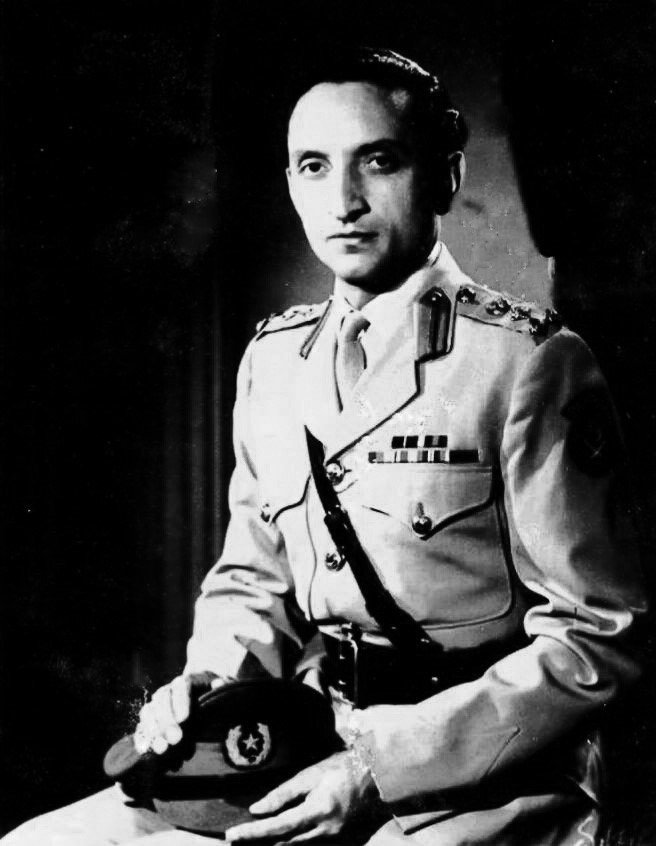
Sahabzada Yaqub Khan
 Pakistan
Diplomat•Military Officer•Statesman
Also known as: Sahibzada Yaqoob Khan, General Sahib
Birthday
December 23, 1920
Birth Sign
Sagittarius
Birthplace
Rampur, India
Age
Died at 95
About
Sahabzada Yaqub Khan was a Pakistani diplomat, military officer, and statesman who served as his country's foreign minister twice. The New York Times called him "Pakistan's public face in international affairs for three decades." Born into the princely house of Rampur, he rose to become a three-star general in the Pakistan Army before pivoting to a distinguished diplomatic career. He was known for his exceptional intellect, fluency in several languages, and a reputation as a pacifist.
As foreign minister under President Zia-ul-Haq, he coordinated Pakistan's response to the Soviet invasion of Afghanistan and later helped negotiate an end to the Contra conflict in Nicaragua for the UN. He returned to the foreign ministry under Benazir Bhutto in the 1990s. After retiring in 1997, he chaired the board of trustees at Aga Khan University. He died in Islamabad on January 26, 2016, at age 95, leaving a legacy as one of Pakistan's most respected diplomats.
Early Life & Background
Born on December 23, 1920, in Rampur, India, Sahabzada Yaqub Khan grew up as a scion of the princely house of Rampur, a family of Indian aristocracy. This background gave him an early exposure to politics and culture, and he developed a gift for languages that would later define his career. He spoke several languages fluently, a skill that set him apart in both military and diplomatic circles.
Yaqub Khan pursued a military path, training as a cavalry officer in the British Indian Army. When the Partition of India in 1947 forced officers to choose between India and Pakistan, he chose Pakistan, a decision that shaped his future. His early military career was marked by rapid advancement, and he served in the Indo-Pakistani war of 1965, where he gained recognition for his leadership.
Career Growth
Yaqub Khan's breakthrough came in 1969 when he was appointed Governor of East Pakistan, a role he resigned from in 1971 amid the civil unrest that led to Bangladesh's creation. In 1973, he shifted to diplomacy, becoming Pakistan's Ambassador to the United States. His diplomatic acumen shone in 1982 when President Zia-ul-Haq appointed him Foreign Minister. During his first term, he played a pivotal role in coordinating Pakistan's response to the Soviet invasion of Afghanistan and mediated the Contra conflict in Nicaragua for the UN.
In the 1990s, he served as a UN official for Western Sahara before being recalled to serve as Foreign Minister again under Benazir Bhutto. He retired from diplomacy in 1997, capping a career that saw him as Pakistan's longest-serving foreign minister. After retirement, he chaired the board of trustees at Aga Khan University until 2001, and remained an influential figure until his death in 2016.
Career Timeline
Public Image & Style
Yaqub Khan was remembered as a man of intellect and elegance, with a diplomatic style that earned him the moniker "a diplomat with an unfair advantage." His fluency in multiple languages and his calm, measured demeanor made him a respected figure on the world stage. The Brookings Institution's Teresita and Howard Schaffer described his death as leaving "the world a poorer and less colorful place." His pacifist philosophy, unusual for a general, endeared him to many and set him apart in Pakistan's political landscape.
Fame & Fandom
Sahabzada Yaqub Khan commanded a sphere of influence defined not by celebrity worship but by the profound respect of historians, diplomats, and political scientists who revere his contributions to statecraft. His audience consists of scholars and citizens who analyze his legacy through academic tributes and historical retrospectives rather than fan rituals or organized campaigns. There is no formal name for this group of admirers, as his public life was characterized by professional interactions with heads of state and military subordinates rather than the direct engagement typical of pop culture icons. Following his death in 2016, the global community of observers marked his passing with scholarly acknowledgments from major institutions, focusing on his role as the longest-serving foreign minister of Pakistan and his unique position as a pacifist general. The iFANN Global Fame Engine has evaluated his standing in the modern era, yet he does not currently hold a placement in the published rankings (Global Top 1,000 or a Top-100 scope list). Sahabzada Yaqub Khan is an unranked figure in the Global Top 1,000 scope list. This absence of a numerical rank reflects his status as a historical statesman whose fame is anchored in verified diplomatic achievements rather than contemporary consumption signals. While his story of escaping an Italian prisoner-of-war camp during World War II remains a defining anecdote of courage, it exists within the realm of historical record rather than viral folklore. The world acknowledges his intellect and elegance, but the metrics of modern fame do not assign him a specific ordinal position among current global personalities.
Interesting Facts and Legends
Sahabzada Yaqub Khan was a noted linguist fluent in several languages, though the exact count remains unspecified. He maintained a pacifist philosophy, a rare stance for a three-star general that shaped his diplomatic approach throughout his career. During World War II, he executed a dramatic escape from an Italian prisoner-of-war camp by hiding inside a large crate, a feat that became a defining part of his legend. He was known variously as "General Sahib" and "Sahibzada," reflecting his dual identity as a military officer and an aristocrat. A widely retold story from the 1965 Indo-Pak War involves the personal tragedy of brothers fighting on opposing sides, highlighting the human cost of the conflict. His most iconic moment occurred during the negotiations for the Tashkent Agreement in 1966, where his linguistic skills and diplomatic acumen were instrumental in brokering peace between India and Pakistan. He holds the verified record as the longest-serving Foreign Minister in Pakistan's history, maintaining continuity across multiple administrations. His death in 2016 prompted tributes from institutions like the Brookings Institution, which noted the world was left poorer without him.
Family & Personal Life
Yaqub Khan was born into the princely house of Rampur, making him a member of the Indian aristocracy. His family background was distinguished, though details about his parents and siblings are not widely documented. He kept his personal life private, and no public information about a spouse or children has surfaced. In his later years, he lived in Islamabad, where he passed away in 2016. His family's legacy, however, remained a point of pride, and his aristocratic roots were often noted in tributes.
Notable Connections
Yaqub Khan was associated with several key figures in his career. He served under President Zia-ul-Haq, who appointed him foreign minister in 1982, and later under Prime Ministers Benazir Bhutto and Nawaz Sharif. His successor as Aga Khan University Board Chairman was Saidullah Khan Dehlavi. Brookings scholars Teresita and Howard Schaffer wrote extensively about him and praised his diplomatic legacy. His second secretary during his Washington ambassadorship was Tariq Osman.
Relationships & Dating History
Yaqub Khan kept his personal life private, and no public records of his marriages or romantic relationships exist in the available sources. He was known to be married, as his obituary in Dawn referred to him as a family man, but details about his wife and children were not disclosed. At the time of his death in 2016, he was widowed, having outlived his spouse. His focus remained on his career and public service, and he rarely discussed his personal life in interviews.
Death & Aftermath
Died
January 26, 2016 (aged 95)
Death Place
Islamabad, Pakistan
Cause of Death
Illness associated with old age
Sahabzada Yaqub Khan spent his final days in relative seclusion within Islamabad, having made no public appearances since early 2016 as he retreated from life due to declining health. He passed away on January 26, 2016, at the age of ninety-five following a prolonged period of illness associated with old age, though no specific medical diagnosis was detailed in immediate public statements. The Government of Pakistan declared three days of national mourning upon his passing, and tributes poured in from high-level officials including former President Asif Ali Zardari and Prime Minister Nawaz Sharif, who praised his intellect and diplomatic acumen. The United Nations and various foreign governments also expressed condolences while academic circles at the Aga Khan University held special sessions to remember his contributions as founding chair of the Board of Trustees.
Funeral arrangements were conducted with full state honors, beginning with the body being laid in state at the Parliament House in Islamabad for dignitaries and members of the public to pay their respects. Funeral prayers were performed on January 27, 2016, at the Faisal Mosque where notable attendees included the President, Prime Minister, Chief of Army Staff, and foreign ambassadors before thousands of mourners lined the route to witness the procession. Following the prayers, he was buried in the graveyard of his ancestral home in the Chakwal district of Punjab, adhering to Islamic rites. Posthumously, his legacy has been preserved through educational initiatives and archival efforts, with his papers and correspondence secured for historical research and books such as "Sahibzada Yaqub Khan: A Soldier and Diplomat's Life" published to document his career.
While the family has not released comprehensive details regarding the handling of his estate beyond standard distribution according to Islamic inheritance laws, his name remains associated with lecture series in academic contexts and the ongoing work of the Aga Khan University.
Net Worth (Estate Value)
$1 Million
iFANN Editorial Team estimate
As a career military officer, diplomat, and government official, Sahabzada Yaqub Khan's wealth derived primarily from government salaries and pensions. No public net worth figures are available, but his estate at death in 2016 was modest, reflecting a life of public service rather than private enterprise. His estate likely includes any property in Islamabad and personal effects. Posthumous earnings are minimal, mostly from book royalties or estate sales, but no significant revenue streams have been reported. Per iFANN's editorial analysis, his estate value is estimated at around $1 Million as of 2026, based on typical government pensions and assets for a retired general and diplomat.
Awards & Accolades
View 1 records, honours and achievementsKnown For
Foreign Minister of Pakistan
1982-1997 · Foreign Minister
Ambassador to the United States
1973-1982 · Ambassador
Governor of East Pakistan
1969-1971 · Governor
Keywords
Sources
Quick Facts
- Profession
- Diplomat, Military Officer, Statesman
- Born
- December 23, 1920
- Birthplace
- Rampur, India
- Died
- January 26, 2016
- Death Place
- Islamabad, Pakistan
- Gender
- Male
- Birth Sign
- Sagittarius
- Nationality
- Pakistani
- Rank
- Lieutenant General
Personal Details
- Education
- Military training, British Indian Army
Frequently Asked Questions
How did Sahabzada Yaqub Khan die?
Was Sahabzada Yaqub Khan married?
How many languages did Sahabzada Yaqub Khan speak?
Why did Sahabzada Yaqub Khan resign as Governor of East Pakistan?
What was Sahabzada Yaqub Khan's role in the Afghan conflict?
Join the community
fans discussing