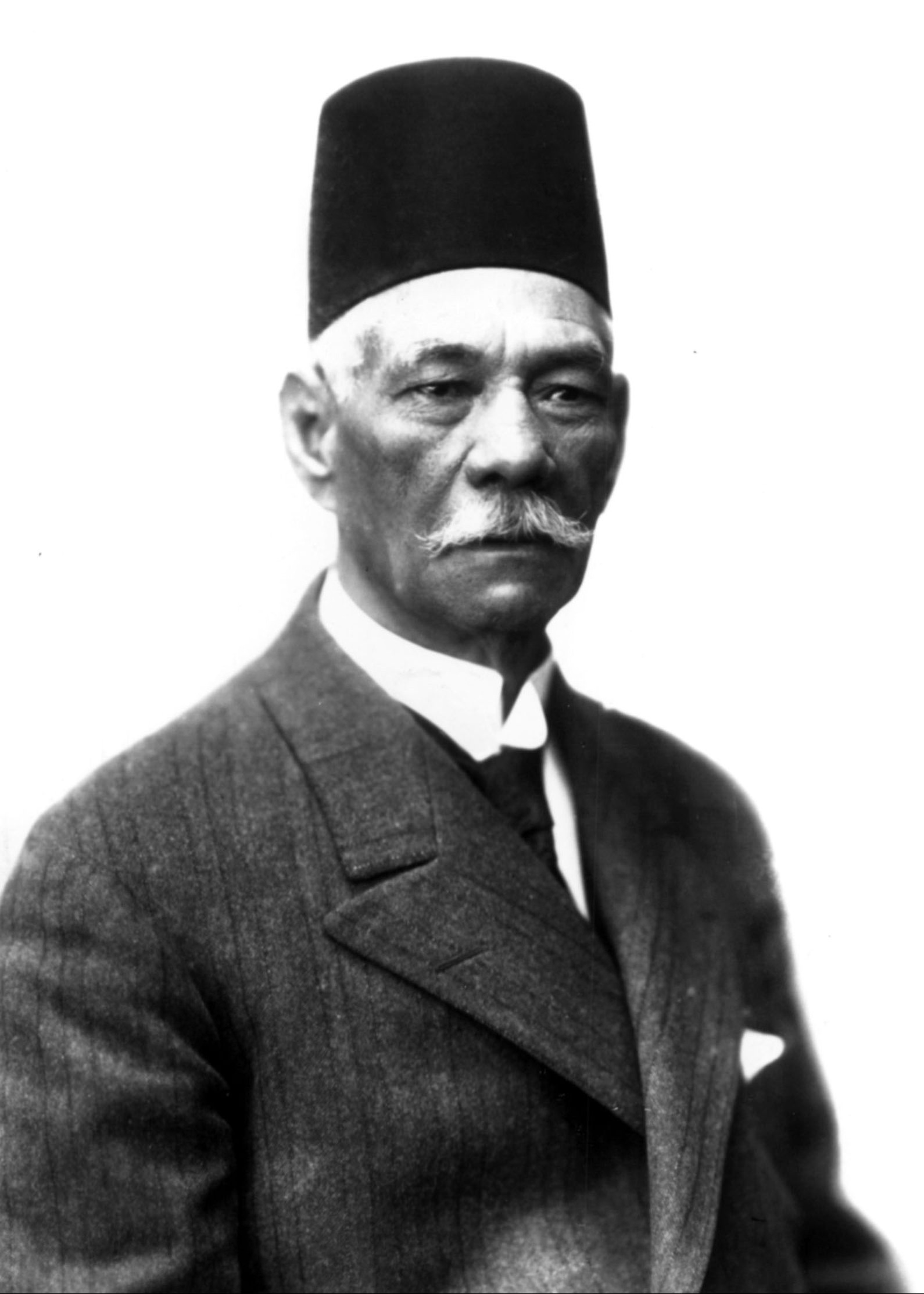
Saad Zaghloul
 Egypt
EgyptBirthday
+1858
Birth Sign
Birthplace
Metoubes
Age
Died at 69
About
Born in Metoubes in 1857, Saad Zaghloul Pasha rose to become a pivotal figure in modern Egyptian history. A lawyer by training, he transitioned into a leading statesman and revolutionary, ultimately heading Egypt's nationalist Wafd Party. Zaghloul dedicated much of his political life to the cause of Egyptian independence, particularly from British control. His activism and leadership were central to the significant political shifts of the early 20th century.
Fame & Fandom
The enduring resonance of Saad Zaghloul Pasha extends far beyond the borders of his homeland, anchoring him firmly in the global consciousness as a defining figure of modern statehood. His historical footprint commands attention across media archives and academic discourse, a scale measured by the iFANN Global Fame Rankings. Current assessments place him as the 86th most famous person in Egypt, a position he has held steady from the previous cycle. Furthermore, within the specific scope of national origin, he ranks as the 90th most famous person from Egypt, having shifted down from the 87th spot in the prior period. While the magnitude of his influence is vast, the concept of a fandom does not apply to his legacy in the manner of modern entertainers. No formal or unofficial name exists for any group supporting him; rather, his supporters were citizens and revolutionaries united by political necessity. The organization associated with him was the Wafd Party, a political entity that mobilized the masses for national liberation, distinct from any fan community. There are no records of fan clubs, fan-funded projects, or rituals such as subway ads and chart pushes, as his interaction with the public was defined by statesmanship during the 1919 Revolution.
Interesting Facts and Legends
Saad Zaghloul Pasha, born in Metoubes in 1857, served as a lawyer before transitioning into a leading statesman who headed the nationalist Wafd Party. He dedicated his life to Egyptian independence from British control, becoming a central figure in early 20th-century political shifts. A widely retold story from his era concerns the spark of the 1919 Revolution, where his arrest and subsequent exile to Malta triggered massive nationwide protests involving women, students, and workers. This sustained uprising shut down cities and disrupted colonial administration, cementing his status as the symbolic face of the nation's struggle. Another verified historical event occurred on October 28, 1924, when he formed the first fully Egyptian ministry, marking the transition from colonial oversight to self-governance under Egyptian leadership. Recurring themes in his biography include repeated exiles and returns, such as his return from Seychelles in 1921, which was met with immense crowds and emotional outpourings that reinforced his title as the Father of the Nation. These narratives form the core of his cultural mythology, taught in schools and commemorated annually through state-sponsored education and historical anniversaries.
Death & Aftermath
Died
+1927-08-23 (aged 69)
Death Place
Cairo
Cause of Death
Declining health; undisclosed
Saad Zaghloul, the Egyptian revolutionary and statesman known as the Father of the Egyptians, died on 23 August 1927 in Cairo. Historical accounts indicate that his final days were marked by declining health following his return from exile; he had been exiled to Malta in 1921 for his role in the 1919 Revolution and returned to Cairo in March 1924, serving as Prime Minister until November 1924. His death occurred three years after leaving office, with no public records of a specific last public appearance immediately preceding his passing in the available data.
Public reaction to his death was characterized by deep national mourning rather than commercial metrics like chart surges. Tributes poured in from peers and officials who recognized him as the leader of the Wafd Party and the 1919 Revolution. The funeral for Saad Zaghloul was a major public event held shortly after his death on 23 August 1927. It was a state-level affair attended by thousands of Egyptians who viewed him as a symbol of national independence. He was buried in Cairo, though the specific cemetery name is not explicitly detailed in the provided snippets. The procession and burial were significant enough to be remembered as a defining moment in the nation's history, solidifying his title as the Father of the Egyptians.
Posthumously, Saad Zaghloul has been commemorated through numerous dedications, including the naming of the Saad Zaghloul University in Kafr El-Sheikh, the Saad Zaghloul Mosque, and the prominent Saad Zaghloul Square in Cairo. His life story has been the subject of numerous books, documentaries, and academic studies, including recent works challenging narratives of the 1919 Revolution. The Wafd Party continues to celebrate his legacy, such as during the centenary of the revolution in 2019 at his former home.
Awards & Accolades
Keywords
Quick Facts
- Profession
- politician, minister, lawyer
- Born
- +1858
- Birthplace
- Metoubes
- Died
- +1927-08-23
- Death Place
- Cairo
- Gender
- Male
- Spouse
- Safiya Zaghloul
Personal Details
- Spouse
- Safiya Zaghloul
Join the community
fans discussing