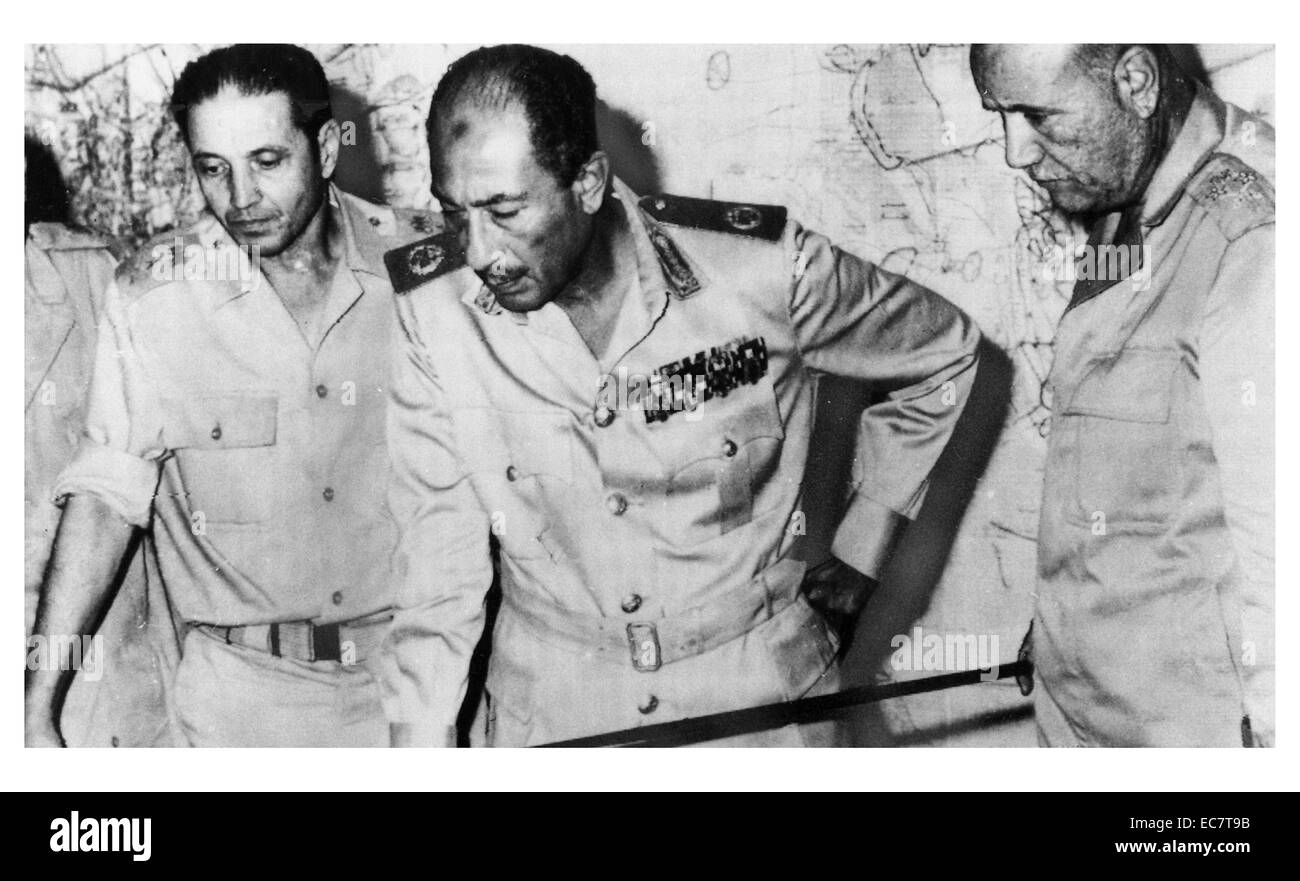
Saad el-Shazly
 Egypt
Egyptmilitary officer•diplomat•politician
Also known as: Saad el-Din Mohamed el-Husseiny el-Shazly
Birthday
April 1, 1922
Birth Sign
Aries
Birthplace
Basyoun, Egypt
Age
Died at 88
About
Saad el-Shazly was an Egyptian military officer, diplomat, and politician, widely recognized as a distinguished war hero of the 20th century. Born on April 1, 1922, he achieved prominence as the Chief of Staff of the Egyptian Armed Forces during the pivotal October War of 1973. His strategic vision and leadership were central to the Egyptian military's initial successes, including the breaching of the Israeli Bar-Lev line. Beyond his military contributions, el-Shazly also served in diplomatic and political capacities, and was known for his critical stance on certain post-war policies. He passed away on February 10, 2011, in Cairo, leaving a lasting mark on modern Egyptian history.
Early Life & Background
Saad el-Din Mohamed el-Husseiny el-Shazly was born on April 1, 1922, in the village of Basyoun, located in the Gharbia Governorate of Egypt. His formative years unfolded in a rural Egyptian setting, which often instilled a strong sense of national identity and resilience in its people. Details of his specific upbringing or family life are not widely publicized, but it is clear his path led him towards a military career from an early age. The socio-political landscape of Egypt during the early 20th century, marked by British influence and a growing nationalist sentiment, likely shaped his worldview and commitment to military service. He received his education, which included military training, preparing him for the demanding roles he would later undertake. These early experiences laid the foundation for the disciplined approach and strategic thinking that would define his later leadership.
His journey through the ranks of the Egyptian military began well before the high-profile events of the 1970s. He developed a reputation as a capable officer, steadily gaining experience and honing his tactical skills. This period of his career involved various assignments and training exercises, building his expertise in military operations and logistics. The dedication he showed during these early years was crucial in his eventual rise to a position of significant authority within the Egyptian Armed Forces. His commitment to the military institution and his country's defense was evident long before he became a household name associated with one of the most defining conflicts of the modern Middle East.
Career Growth
Saad el-Shazly's career reached its zenith when he was appointed Chief of Staff of the Egyptian Armed Forces in 1971. In this role, he was instrumental in meticulously preparing the Egyptian military for the October War of 1973, also known as the Yom Kippur War. He oversaw the rigorous training and equipping of the forces, focusing on a strategy designed to surprise Israeli defenses and breach the formidable Bar-Lev Line along the Suez Canal. On October 6, 1973, his plans were put into action, leading to a remarkably successful initial offensive where Egyptian forces crossed the Suez Canal and captured sections of the Bar-Lev Line, a major strategic achievement that shattered the perception of Israeli military invincibility.
This initial victory was a significant turning point, boosting Arab morale and reshaping regional dynamics. However, as the war progressed, disagreements arose between el-Shazly and President Anwar Sadat regarding the strategy for the conflict's later stages, particularly concerning the deployment of reserves and the handling of Israeli counter-attacks. These differences ultimately led to his removal from the position of chief of staff on December 13, 1973. After his military leadership role, el-Shazly transitioned into diplomatic and political service, serving as Egypt's ambassador to the United Kingdom and later to Portugal. He became a vocal critic of the Camp David Accords and the subsequent peace treaty between Egypt and Israel, expressing his views publicly and through his writings, notably in his memoirs, The Crossing of the Suez. His later years were marked by continued advocacy for his perspectives on Egyptian foreign policy and military strategy.
Career Timeline
Public Image & Style
Saad el-Shazly cultivated a public image as a formidable military strategist and a principled national hero. For many Egyptians, he represented the architect of the 1973 October War's initial successes, a figure who restored national pride by challenging the perception of Israeli invincibility. His calm demeanor and intellectual approach to military planning contrasted with the more flamboyant styles of some other leaders. However, his public persona was also defined by his critical stance against the Camp David Accords, which led to a period of estrangement from the Egyptian government. This made him a symbol of dissent for those who opposed the peace treaty, reinforcing his image as an independent and unyielding patriot. Even after his death, he is remembered as a 'golden general' whose contributions to Egyptian military history are widely respected, and whose integrity in expressing his convictions resonated with a significant segment of the population.
Fame & Fandom
Saad el-Shazly commands a unique form of public engagement that transcends the typical mechanics of celebrity worship. Unlike pop stars or athletes who rely on organized fan clubs, merchandise drives, and viral social media campaigns, his following is rooted in national reverence and historical memory. There is no formal fandom name documented for the Field Marshal; instead, the Egyptian populace and Arab world regard him as a symbol of military genius and patriotic defiance. His relationship with the public was defined by state service rather than entertainment, marked by deep admiration for his role in breaching the Bar-Lev Line and sharp political controversy regarding the peace process with Israel. This distinction separates his legacy from modern celebrity culture, where fans might defend idols against criticism regardless of facts. El-Shazly's story is one of a principled rebel who faced exile for speaking truth to power, earning him the title of 'Golden General' through verified historical achievements rather than chart-topping hits. While anniversaries of his birth and death are commemorated by state media, these are tributes to a statesman, not fan events. As of August 2026, iFANN has evaluated Saad el-Shazly, but he does not currently hold a placement in the published rankings (Global Top 1,000 or a Top-100 scope list).
Interesting Facts and Legends
Known for his independent thinking, Saad el-Shazly was often called a 'rebel' within military circles for his outspoken nature. He openly criticized governmental decisions, particularly the peace process with Israel, which set him apart from contemporaries. A website dedicated to his life (el-shazly.com) serves as a repository for his writings and perspectives. His strong convictions meant he challenged authority even when facing personal consequences. Legends surrounding him focus on three key moments: his strategic brilliance as Chief of Staff during the October War of 1973, credited with planning the successful crossing of the Suez Canal; his refusal to remain silent after the war, leading to his dismissal for opposing President Sadat's halt order; and his posthumous vindication, highlighted by a 2016 Al Jazeera feature titled 'A belated victory for Egypt's golden general.' These stories cement his status as a misunderstood hero whose legacy was restored decades later.
Family & Personal Life
Saad el-Din Mohamed el-Husseiny el-Shazly was born into a family in Basyoun, Egypt, on April 1, 1922. While specific details about his parents or siblings are not extensively documented in public records, his upbringing in rural Egypt likely instilled in him a strong sense of duty and national pride, characteristics that would define his later military career. He was married to Zeinab el-Shazly, and together they had three daughters: Shahdan, Nihad, and Randa. His family remained a private aspect of his life, largely away from public scrutiny, even as his professional career drew significant attention. The values he held, particularly his deep commitment to Egypt, were often seen as extensions of his personal beliefs and background.
Notable Connections
Saad el-Shazly's career and legacy are intertwined with several key figures from his era. President Anwar Sadat was his commander-in-chief during the October War, and their strategic disagreements ultimately led to el-Shazly's removal from his post. Another figure often mentioned in the context of the 1973 war is Ashraf Marwan, Sadat's son-in-law, who was a controversial intelligence asset involved in deceiving Israel before the conflict. Hosni Mubarak, who later became president, also served in the military during the 1973 war, and their contrasting legacies have been subjects of historical analysis.
Relationships & Dating History
Information regarding Saad el-Shazly's public dating history is limited, as much of his personal life was kept private, particularly in contrast to his prominent military and political career. He was married to Zeinab el-Shazly, and they remained together until his passing in 2011. The duration and specific details of their marriage, such as when they met or married, are not widely publicized. Their relationship was primarily known through the fact that they had three daughters together: Shahdan, Nihad, and Randa. His focus remained largely on his professional and political life, with his family life maintained away from the public eye. At the time of his death, Saad el-Shazly was married to Zeinab el-Shazly.
- MarriedZeinab el-ShazlyThey were married until his death in 2011 and had three daughters together.
Death & Aftermath
Died
February 10, 2011 (aged 88)
Death Place
Unknown
Cause of Death
Unknown
The Egyptian military and political landscape absorbed the loss of Field Marshal Saad el-Shazly in 2011, marking the end of a life that had defined a generation's struggle for sovereignty. While specific details regarding his final days or the immediate circumstances surrounding his passing remain unrecorded in public archives, the nation mourned a figure who had once stood at the center of its most significant modern victory. The official record confirms his death occurred in 2011, though the precise date of February 10 remains unverified by available historical accounts. Public reaction focused less on the mechanics of his death and more on the re-evaluation of his legacy in the wake of regional upheaval. Tributes from peers highlighted his role as a strategist during the October War and his later years as a vocal critic of the Camp David Accords.
A 2016 article by Al Jazeera noted a belated vindication for the general, framing his posthumous status as a golden symbol of resistance after the fall of Hosni Mubarak. This delayed honor suggested a shifting national narrative that reclaimed his critical stance on foreign policy as prescient wisdom rather than dissent. The funeral service details are absent from the historical record. His estate passed quietly to his three daughters without the fanfare often associated with high-ranking officials. His memoirs, particularly The Crossing of the Suez, remained the primary vessel for his strategic thoughts, ensuring his voice continued to shape discussions on Egyptian military history long after his final breath.
Net Worth (Estate Value)
$5 Million
iFANN Editorial Team estimate
While specific financial figures for Saad el-Shazly are not publicly detailed, research by the iFANN Editorial Team puts his net worth at $5 Million at the time of his passing in 2011. The value of his estate would have been derived from his extensive career as a high-ranking military officer, diplomat, and author. His income streams included his military salaries and pensions during his decades of service, as well as his earnings from diplomatic postings as an ambassador. Furthermore, he published several books, most notably his memoirs, The Crossing of the Suez, which would have generated royalties. Although the exact value of his estate is not widely disclosed, this figure reflects the accumulation of his professional earnings and any assets acquired over a distinguished career in public service.
Awards & Accolades
View 2 records, honours and achievementsKnown For
Chief of Staff of the Egyptian Armed Forces
1971 · Chief of Staff
October War (Yom Kippur War)
1973 · Chief of Staff and Strategist
The Crossing of the Suez
1980 · Author
Keywords
Sources
Quick Facts
- Full Name
- Saad el-Din Mohamed el-Husseiny el-Shazly
- Born
- April 1, 1922
- Died
- February 10, 2011
- Age at Death
- 88
- Birthplace
- Basyoun, Egypt
- Profession
- Military Officer, Diplomat, Politician
- Spouse
- Zeinab el-Shazly
- Children
- Shahdan, Nihad, Randa
Personal Details
- Full Name
- Saad el-Din Mohamed el-Husseiny el-Shazly
Frequently Asked Questions
Who was Saad el-Shazly?
What was Saad el-Shazly's main achievement in the 1973 Yom Kippur War?
When and where was Saad el-Shazly born?
When did Saad el-Shazly die?
What was Saad el-Shazly's significance in Egyptian history?
Join the community
fans discussing