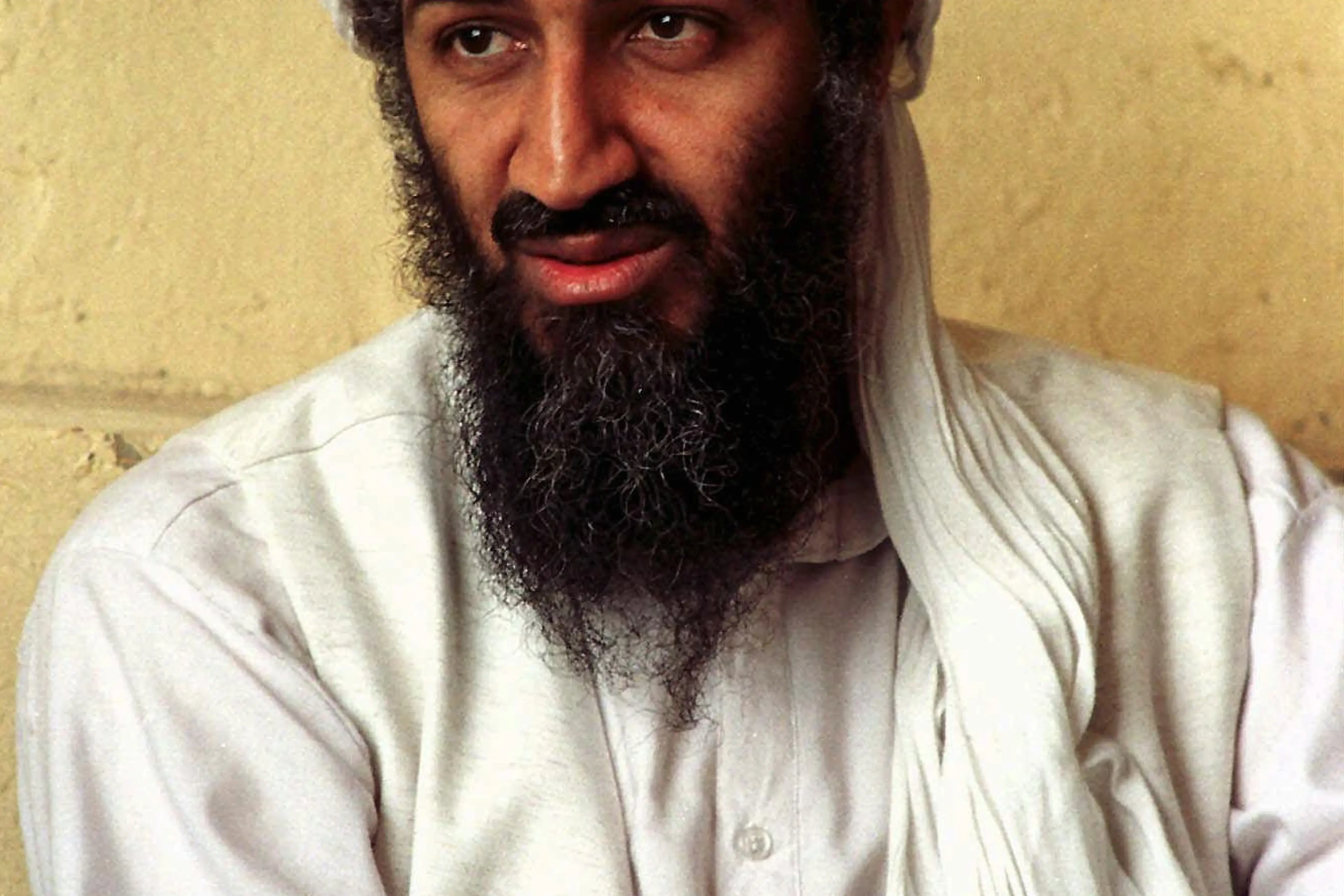
Saad bin Laden
 Saudi Arabia
Birthday
January 1, 1979
Birth Sign
Capricorn
Birthplace
Riyadh, Saudi Arabia
Age
Died at 30
About
Saad bin Laden, born in Riyadh in 1979, was a son of al-Qaeda founder Osama bin Laden and an identified al-Qaeda militant. While Western intelligence agencies once suggested he was being groomed as his father's successor, later assessments indicated these claims were overstated. He is believed to have died on July 22, 2009, in a U.S. drone strike near Abbottabad, Pakistan, though U.S. officials stated he was not the intended target of the strike. Saad bin Laden is believed to be the first of Osama bin Laden's sons to die as a result of U.S. operations after 9/11. His death came two years before U.S. Navy SEALs killed his father in the same region. He has been linked to sanctioned entities.
Early Life & Background
Saad bin Laden was born in Riyadh, Saudi Arabia, in 1979, the son of Osama bin Laden and his first wife, Najwa Ghanem. He was the second of at least eleven children in his father's first family. The bin Laden household was large and peripatetic; by the late 1980s, the family had moved to Sudan and then to Afghanistan as Osama's militant activities expanded. Saad grew up in a world defined by his father's growing radicalism, receiving a traditional religious education and reportedly training in small arms and basic combat tactics as a teenager. By the late 1990s, he was moving within al-Qaeda circles, though his exact role remained unclear. He was a Saudi citizen by birth, and his early life gave little hint of the violent path he would later take. Reports suggest that after the September 11 attacks, Saad fled to Iran, where he was reportedly held under house arrest for several years. During that time, U.S. officials monitored his movements but found little evidence that he was playing a major operational role. Some accounts indicate he left Iran around 2008 and made his way to Pakistan's tribal areas, where he rejoined al-Qaeda's remnants.
Career Growth
Saad bin Laden's involvement in al-Qaeda's operations was a matter of shifting intelligence assessments. Some U.S. officials considered him a minor player in al-Qaeda, while other reports indicated he played a key role in the network's upper echelon in the months leading up to 2003. He was reportedly one of the planners behind the 2002 Ghriba synagogue bombing in Tunisia. By 2009, U.S. intelligence had largely downgraded his importance, viewing him as a marginal operative rather than a rising leader. His death came on July 22, 2009, when a CIA-operated Predator drone fired a Hellfire missile at a compound near Abbottabad, Pakistan. Saad was reportedly killed, though he was not the intended target; the strike was aimed at a senior al-Qaeda figure. The CIA kept the news quiet for months, and it only became public in late July 2009. U.S. officials confirmed his death but offered few details, and some reports suggested he had been dead for some time before the announcement.
Career Timeline
Public Image & Style
Saad bin Laden's public image was shaped almost entirely by his surname. In the years after 9/11, Western media and intelligence agencies treated him as a potential heir to his father's terrorist empire, a narrative that later proved to be overstated. He was rarely photographed and never gave interviews, so the public saw him only through the lens of official statements and occasional news reports. Within jihadist circles, he appears to have been a low-profile figure, more a symbol of the bin Laden lineage than a significant operational leader. His death in 2009 received modest coverage, overshadowed by the ongoing wars in Iraq and Afghanistan. For most observers, he remained a footnote in the larger story of al-Qaeda's decline. The U.S. had previously spurned offers from Iran to turn over bin Laden's son.
Fame & Fandom (iFAMOUS Rankings)
The name Saad bin Laden carries a weight that transcends his brief life, anchoring him firmly in the historical record of the War on Terror. In August 2026, global metrics place him as the 86th most famous person from Saudi Arabia, a standing he has maintained since the previous cycle. This ranking reflects a legacy defined not by celebrity culture but by high-stakes geopolitical conflict and the shadow of his father's empire. While Western intelligence once painted him as a potential heir to al-Qaeda, the narrative eventually settled into a more complex reality of a low-profile operative whose existence was measured in surveillance reports rather than magazine covers. The iFANN Global Fame Rankings capture this unique trajectory, tracking how attention shifts from fear to historical analysis across decades of media coverage and consumption signals worldwide. Despite his notoriety, there is no organized fanbase or cultural movement dedicated to his memory. Unlike modern celebrities who cultivate loyal followings through social media or public appearances, Saad generated only condemnation and fear. No fan clubs emerged, no campaigns were launched, and no rituals formed around his image. His death in 2009 marked a significant military milestone for U.S. forces, yet it did not spark the adoration typical of pop icons. Instead, his story remains a chapter in counter-terrorism history, remembered for its impact on international security rather than any form of popular devotion.
Interesting Facts and Legends
Saad bin Laden holds the grim distinction of being the first son of Osama bin Laden killed by U.S. operations following the September 11 attacks. He reportedly spent several years under house arrest in Iran, though the precise conditions and dates of his detention remain obscured. Intelligence agencies linked him to the 2002 Ghriba synagogue bombing in Tunisia, yet he never faced formal charges for the attack. The confirmation of his death came weeks after the drone strike, with the CIA initially keeping its involvement out of the public eye. A rare glimpse into his final days appeared in 2015 when a letter he wrote to his wife in 2008 surfaced, outlining his last wishes before his demise. This document provided an intimate look at the man behind the headlines during the height of the hunt for his family. His status as a Saudi citizen placed him on multiple international sanctions lists related to terrorism long before his death. The event of his elimination marked a turning point, occurring two years prior to the raid that killed his father in the same region.
Family & Personal Life
Saad bin Laden was the second son of Osama bin Laden and his first wife, Najwa Ghanem. He had at least ten siblings, including brothers Omar and Hamza. Hamza, once seen as a potential heir to al-Qaeda, was reportedly killed in a U.S. strike in 2019, though that remains unconfirmed. His father's polygamous household meant Saad grew up among a sprawling family that moved frequently between Saudi Arabia, Sudan, and Afghanistan. After 9/11, many family members scattered; some fled to Iran, where Saad was reportedly detained, while others sought refuge in Syria and elsewhere. There is no public record of Saad marrying or having children. His personal life remained largely hidden from view, and he left behind no known widow or offspring.
Relationships & Dating History
There is no public information about any romantic relationships, marriages, or children involving Saad bin Laden. His life was dominated by his father's militant activities, and he remained largely hidden from public view. He died in 2009 at the age of 30, and no reports have emerged of a spouse or partner. As a result, his relationship status at the time of death is unknown, though it is presumed he was single. There is no information on associated people or collaborators in the provided search results.
Death & Aftermath
Died
July 22, 2009 (aged 30)
Death Place
Federally Administered Tribal Areas (FATA), Pakistan
Cause of Death
Reported CIA drone strike (Hellfire missile)
Saad bin Laden, a reported senior commander within al-Qaeda, died on July 22, 2009. The location of his death was the Federally Administered Tribal Areas (FATA) in Pakistan, specifically near the border with Afghanistan, where he was targeted by a U.S. military operation. While reports initially varied regarding whether he was killed earlier in the year or in late July, the consensus among U.S. officials at the time of the announcement in late July 2009 was that he had been killed in a Hellfire missile strike (drone attack) conducted by the CIA. Regarding the circumstances of his death, U.S. defense officials stated they were 'all but certain' that Saad bin Laden was killed in the airstrike.
The identification was based on intelligence assessments rather than physical evidence recovered from a body, as is common in drone strikes in conflict zones where bodies are often not retrieved for forensic analysis. His age at death is estimated to be approximately 30 years old, having been born around 1979. There were no final days or last public appearances documented prior to the strike, as he operated as a clandestine militant; his last known activities involved serving as an al-Qaeda liaison, reportedly including efforts to establish connections with Iran. The investigation and legal aftermath surrounding his death were characterized by the secrecy typical of counter-terrorism operations.
The U.S. government did not release detailed evidence of the strike to the public or the media. In fact, a later revelation indicated that the CIA kept the news of his death secret for months after the incident to avoid alerting al-Qaeda and to disrupt their communications. Public reaction to Saad bin Laden's death was muted compared to other high-profile figures, largely due to the secretive nature of the event and the lack of immediate widespread media coverage until late July 2009. Tributes from peers were limited to internal al-Qaeda communications, which were never fully disclosed to the public. Official reactions were confined to statements from U.S. government officials confirming the strike, while the Saudi government and international bodies maintained standard positions on terrorism.
Given the nature of his death in a war zone and the ongoing conflict in Pakistan, it is highly unlikely that his body was returned to Saudi Arabia or any other country for a traditional Islamic burial. Reports indicate that if a body was recovered, it was likely disposed of in accordance with military protocols for unidentified remains in active combat zones, though this has never been officially confirmed.
Net Worth (Estate Value)
$0
iFANN Editorial Team estimate
Per iFANN's editorial analysis, Saad bin Laden's net worth stands at $0. As a militant living in constant hiding until his death in 2009, he accumulated no personal wealth or independent assets. While his father amassed a fortune estimated in the tens of millions, those funds were largely frozen or seized by governments shortly after the 9/11 attacks. Saad himself held no reported businesses, income streams, or liquid holdings. Any financial resources available to him were tied directly to al-Qaeda's operational funding, which crumbled under the pressure of international counter-terrorism efforts. His estate, if one existed, was never publicly assessed, and no legal proceedings regarding inheritance have been recorded. There are no awards, honors, or distinctions associated with his financial life. In practical terms, his economic footprint remains nonexistent, reflecting a life entirely consumed by insurgency and evasion.
Awards & Accolades
Known For
Son of Osama bin Laden
2001 · Family member
Al-Qaeda militant
2000 · Member
Keywords
Sources
Quick Facts
- Profession
- mujahid
- Born
- 1979
- Birthplace
- Riyadh
- Died
- 2009-07-22
- Death Place
- Abbottabad
- Gender
- Male
Frequently Asked Questions
Who was Saad bin Laden?
When and how did Saad bin Laden die?
Was Saad bin Laden groomed to succeed his father?
Did Saad bin Laden have a significant role in al-Qaeda?
Is there any information about Saad bin Laden's family or personal life?
Join the community
fans discussing