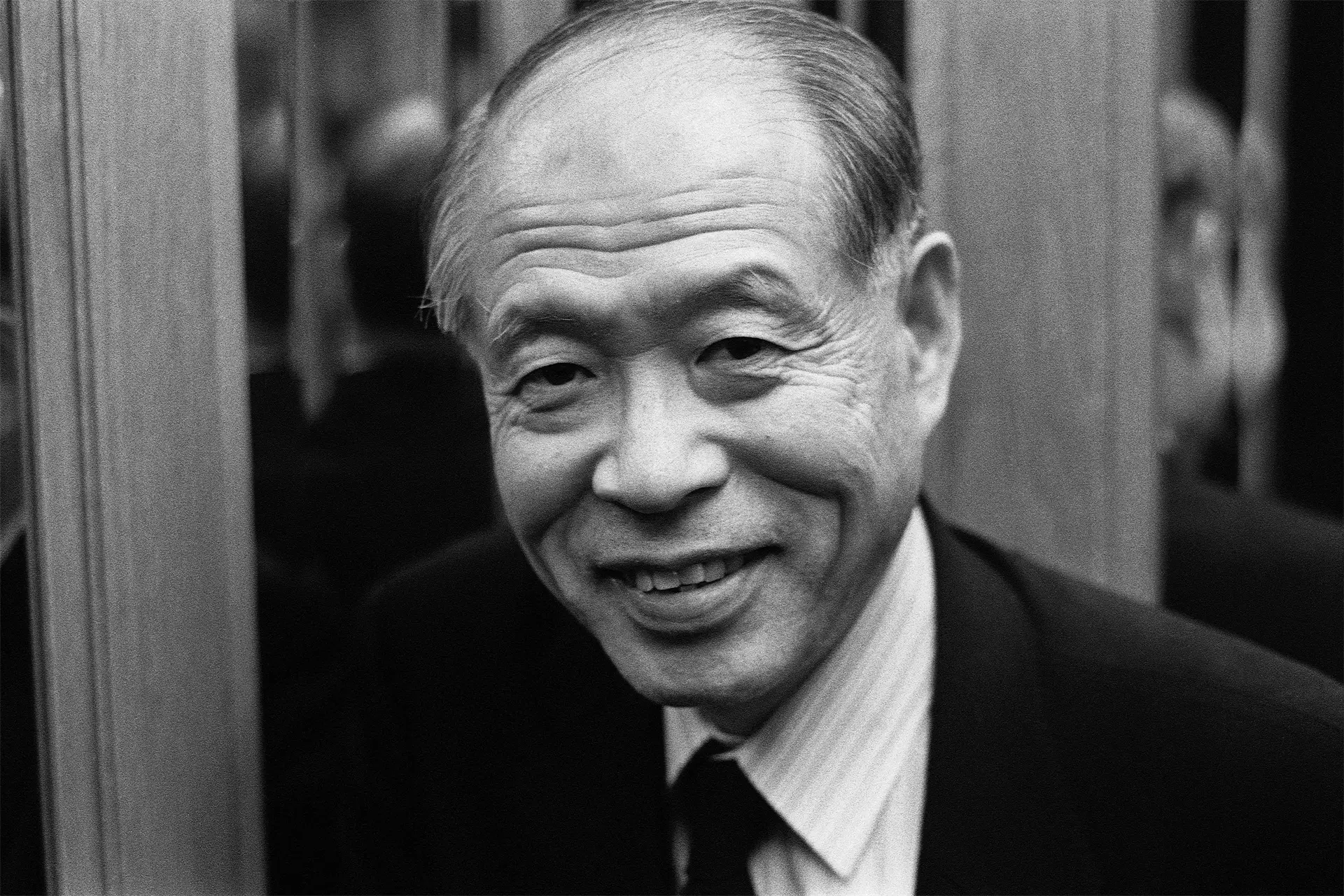
Ryōji Noyori
 Japan
JapanAlso known as: Ryoji Noyori, Ryouji Noyori, Noyori Ryōji
Birthday
September 3, 1938
Birth Sign
Virgo
Birthplace
Ashiya, Japan
Age
88 years old
About
Ryōji Noyori is a Japanese chemist whose work reshaped the field of organic synthesis. He is best known for developing asymmetric hydrogenation catalysts that produce single mirror-image molecules, a feat that earned him the 2001 Nobel Prize in Chemistry, shared with William S. Knowles. Over a career spanning more than five decades, Noyori has held professorships at Nagoya University and served as president of RIKEN. His name appears on over 400 scientific papers, and his influence is evident in industries from pharmaceuticals to materials science. As of 2026, he remains a Distinguished Professor at Nagoya University, continuing to advocate for science education and international collaboration.
Early Life & Background
Born in Ashiya, near Kobe, in 1938, Noyori grew up in post-war Japan, a period of rapid scientific rebuilding. He developed an early interest in chemistry, which he pursued at Kyoto University, earning his bachelor's degree in 1961 and his master's in 1963. He then became an instructor at the same university while working toward his doctorate, which he completed in 1967. That year, he moved to Harvard University for postdoctoral research, where he worked under the guidance of prominent chemists. Returning to Japan, he joined Nagoya University as a faculty member. His early research focused on asymmetric catalysis using chiral organometallic compounds, beginning as early as 1966. This foundational work, carried out with modest resources, set the stage for his later breakthroughs.
Career Growth
Noyori's breakthrough came with the development of the Noyori asymmetric hydrogenation, a method that uses chiral metal complexes, particularly those based on the BINAP ligand, to selectively produce one enantiomer of a molecule. This technique, which relies on inexpensive hydrogen gas and a small amount of catalyst, enabled the synthesis of complex natural products and pharmaceutical ingredients with unprecedented precision. In 2001, he received the Nobel Prize in Chemistry for this work. He later served as president of RIKEN from 2003 to 2015, where he championed interdisciplinary research. He has also been a vocal proponent of international scientific collaboration, and in 2025 he attended a reception for Japanese Nobel laureates in Tokyo. His research output includes over 400 papers, with nearly 50,000 citations on Google Scholar.
Career Timeline
Public Image & Style
Noyori is widely regarded as one of the most influential chemists of his generation. His public image is that of a rigorous scientist and a passionate advocate for science education and international collaboration. During his tenure as RIKEN president, he was a vocal proponent of interdisciplinary research. He has been characterized as a thoughtful and philosophical figure, often reflecting on the nature of discovery. His legacy is carried on through the Ryoji Noyori Prize and the Ryoji Noyori ACES Award, both established in his honor. Fans of chemistry and the general public respect him for his contributions to making pharmaceuticals cleaner and more efficient.
Fame & Fandom (iFAMOUS Rankings)
Ryōji Noyori is currently evaluated by iFANN as an Unranked figure in the Global Top 1,000. The system has assessed his standing but found no placement within the published scope lists for this month. While he lacks a formal fan club name or organized fandom rituals typical of pop culture icons, his influence resonates through a distinct community: the global scientific fraternity. This audience consists of organic chemists, catalysis researchers, and students who revere him as the architect of asymmetric hydrogenation. His legacy is institutionalized not in merchandise sales but in the Ryoji Noyori ACES Award and the daily application of his catalysts in pharmaceutical manufacturing. Within this circle, he is known as the Catalyst King, a title earned through paradigm-shifting work that solved the decades-old challenge of creating chiral molecules safely. There are no viral moments or street celebrations; instead, his mythology is built on intellectual reverence. Scientists cite his 2013 essay on serendipity and his poetic reflections on molecular touch as guiding philosophy. He interacts with this community through rigorous lectures at institutions like Cornell and his tenure leading RIKEN. His fans do not chant slogans but rather utilize his methods to produce life-saving drugs, making the entire field of medicinal chemistry his devoted following.
Interesting Facts and Legends
Noyori's essay 'Facts are the Enemy of Truth, Reflections on Serendipitous Discovery and Unforeseen Developments in Asymmetric Catalysis' was published in Angewandte Chemie in 2013. He is known for a philosophical approach to science, often discussing the role of chance in discovery. He has served as a foreign member of the Chinese Academy of Sciences since 2011. In his Nobel interview, he spoke poetically about molecules, saying, 'The actual encoding of all those touches, the molecules are touched, everyone's touching each other.' He holds honorary doctorates from several universities, reflected in his title 'Dr. Dr. h.c.'. A defining legend of his career is the development of asymmetric hydrogenation between 1968 and 2001, which allowed for the mass production of enantiomerically pure compounds and revolutionized drug safety. When the Royal Swedish Academy announced his Nobel Prize in October 2001, it sparked a surge of national pride in Japan, cementing the country's reputation as a synthetic chemistry powerhouse. Recent events saw him attending a reception in Tokyo alongside fellow laureates Shimon Sakaguchi and Susumu Kitagawa, marking a moment of collective celebration for Japanese science.
Notable Quotes
“Put the real message in completely. The actual encoding of all those touches, the molecules are touched, everyone's touching each other.”
“Facts are the enemy of truth.”
Family & Personal Life
Details about Noyori's family life are scarce in public sources. He was born in the Kobe/Ashiya region of Japan in 1938. His educational journey took him from Kyoto University to Harvard and back to Japan, where he established his career. No public information is available regarding his spouse or children, as he has kept his personal life private. His household, if any, is not documented. He has not shared family stories or values publicly, focusing instead on his scientific work and advocacy for science education.
Notable Connections
Relationships & Dating History
Salary, Net Worth In 2026
$5 Million
iFANN Editorial Team estimate
As an academic scientist, Noyori's income has come primarily from university salaries, research grants, and the 2001 Nobel Prize money, which was approximately 10 million Swedish kronor, shared among the three laureates. Per iFANN's editorial analysis, his net worth is estimated at $5 Million as of 2026, reflecting his long career and modest lifestyle. He has not been known for personal investments or business ventures. His financial status is typical of a distinguished professor, with earnings from his professorship and speaking engagements. The Nobel Prize money, though significant, was split three ways and invested conservatively. No public records indicate real estate or other assets.
Awards Won (3)
Ryōji Noyori has received numerous prestigious awards, including the 2001 Nobel Prize in Chemistry, Japan's Order of Culture, and the King Faisal International Prize. He has also been elected to several academies, including the Pontifical Academy of Sciences and the Chinese Academy of Sciences.
2001 · Chemistry
Chirally catalyzed hydrogenation reactions
2001 · National Honor
Lifetime achievement
Known For
Asymmetric hydrogenation
2001 · Developer
BINAP ligand
1980 · Developer
Keywords
Sources
Quick Facts
- Profession
- chemist, professor
- Born
- September 3, 1938
- Birthplace
- Ashiya, Japan
- Gender
- Male
- Birth Sign
- Virgo
- Education
- Kyoto University; Harvard University
- Nobel Prize
- 2001 Chemistry
- RIKEN Presidency
- 2003-2015
Personal Details
- Full Name
- Ryōji Noyori
- Education
- Kyoto University (B.A., M.S., Ph.D.); postdoctoral at Harvard University
Frequently Asked Questions
What is Ryōji Noyori famous for?
How old is Ryōji Noyori?
What is the Noyori asymmetric hydrogenation?
Where did Ryōji Noyori work?
Is Ryōji Noyori still alive?
Similar People
Join the community
fans discussing