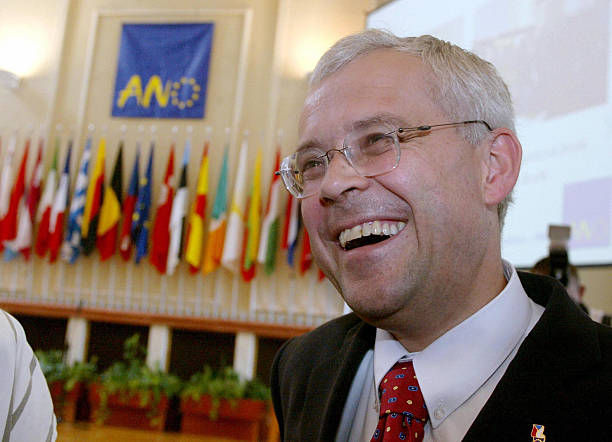
Ruzena Bajcsy
 Czechia
computer scientist•engineer•artificial intelligence researcher
Also known as: Ruzena Kucera Bajcsy
Birthday
May 28, 1933
Birth Sign
Gemini
Birthplace
Bratislava
Age
93 years old
About
Ruzena Bajcsy is an American engineer and computer scientist, widely recognized for her pioneering contributions to robotics and artificial intelligence. She currently holds the NEC Distinguished Professorship in Electrical Engineering and Computer Sciences at the University of California, Berkeley. In addition to her academic role, she serves as director emerita of CITRIS, the Center for Information Technology Research in the Interest of Society, an organization dedicated to applying information technology to address societal challenges. Her significant work has shaped how researchers approach machine perception and human-computer interaction. She is known for her interdisciplinary approach, integrating concepts from computer science with fields like biomechanics. Bajcsy's influential career includes mentoring numerous doctoral students, and her expertise continues to guide advancements in intelligent systems. She is also a member of the prestigious American Philosophical Society, elected in 2005. Her research interests are broad, encompassing artificial intelligence, biosystems and computational biology, control systems, intelligent systems, robotics, and human-computer interaction, with a particular focus on bridging information technology with humanities and social sciences.
Early Life & Background
Ruzena Bajcsy's formative years began with her birth on May 28, 1933, in Bratislava, a city then within Czechoslovakia. Her childhood was profoundly shaped by the devastation of World War II. Her academic path began in her homeland, where she first attended the Slovak Technical University in Bratislava. There, she dedicated herself to electrical engineering, successfully earning a master's degree in 1957. She continued her studies, culminating in a Ph.D. in electrical engineering from the same institution in 1967. After completing her initial studies, Bajcsy spent five years working in various industrial capacities. This practical period provided her with valuable hands-on experience and a concrete understanding of engineering applications outside of academia. Her intellectual drive then led her to the United States, seeking advanced opportunities in the rapidly evolving field of computer science. She enrolled at Stanford University, where she completed a second doctoral degree, a Ph.D. in computer science, in 1972. This extensive educational background, spanning both European and American institutions, provided her with a unique perspective that would later inform her interdisciplinary research.
Career Growth
Bajcsy's academic career truly began after her doctoral studies, leading to a significant tenure at the University of Pennsylvania. There, she established and directed the General Robotics and Active Sensory Perception (GRASP) Laboratory, creating a foundational research center for robotics and perception. Her work at Penn also extended into the medical field, as she served as a member of the Neurosciences Institute within the university's School of Medicine, exploring the intricate connections between artificial intelligence and biological systems.
A major conceptual breakthrough came in the 1980s when Bajcsy introduced the idea of "active perception." This approach significantly advanced robotics by proposing that a robot's perception should actively guide its actions, rather than passively receiving information. Her research consistently bridged various disciplines, notably computer science and biomechanics, leading to practical innovations like advanced methods for analyzing medical images. Beyond her university roles, Bajcsy took on a leadership position within the U.S. government, heading the National Science Foundation's Computer and Information Science and Engineering Directorate. In this capacity, she oversaw a substantial budget and played a direct role in shaping national research priorities for computer science and engineering. Throughout her career, she has been a dedicated mentor, supervising at least 26 doctoral students. Today, she continues to contribute to the field as the NEC Distinguished Professor of Electrical Engineering and Computer Sciences at the University of California, Berkeley, and as director emerita of CITRIS, maintaining an active role in research and academic leadership. She was elected an IEEE Life Fellow in 1992.
Career Timeline
Public Image & Style
Ruzena Bajcsy projects the image of a pioneering and authoritative figure within the fields of computer science and robotics. Her public persona is characterized by intellectual rigor and a deep commitment to interdisciplinary research. She is perceived as a visionary who has consistently pushed the boundaries of machine perception and artificial intelligence, particularly through concepts like "active perception." Her career has been defined by substantive contributions to academia and national science policy, rather than by a focus on personal style or celebrity. Audiences and peers connect with her through her impactful research, her leadership in institutions like the GRASP Laboratory and the National Science Foundation, and her dedication to mentoring future generations of scientists. Her reputation is built on foundational advancements and a steady, influential presence in complex scientific domains. She is recognized by the National Center for Women & Information Technology (NCWIT) as a Pioneer in Tech, an honor celebrating her lifelong contributions to computing.
Fame & Fandom (iFAMOUS Rankings)
Ruzena Bajcsy is currently evaluated by the iFANN Global Fame Engine but holds no placement in the published rankings, including the Global Top 1,000 or any scope-specific lists. While her name commands immediate respect within engineering circles, she does not occupy a numbered position in the global celebrity hierarchy as of August 2026. Her influence remains concentrated in academic and scientific domains rather than mass entertainment charts. The concept of a formal fanbase with an official designation does not apply to her career; there is no documented fandom name, nor are there organized groups dedicated to chart manipulation or public adoration campaigns typical of pop culture icons. Instead, her audience consists of students, researchers, and colleagues who engage with her work through lectures, mentorship, and institutional publications. Interactions with admirers occur strictly within professional settings, such as university fireside chats or IEEE Spectrum interviews, where the dynamic is educational rather than celebratory. No grassroots movements, charity drives, or viral social media initiatives exist under her name. The term "fan" in relation to Bajcsy serves as a metaphor for those who revere her contributions to robotics and artificial intelligence. Her legacy is preserved through citation metrics, departmental honors, and the continued operation of laboratories like GRASP at the University of Pennsylvania, rather than through the rituals of a devoted following. This absence of a structured fandom reflects the nature of her life's work, which prioritizes rigorous inquiry over public spectacle.
Interesting Facts and Legends
While serving as head of the National Science Foundation's Computer and Information Science and Engineering Directorate, Ruzena Bajcsy oversaw a substantial annual budget of $500 million, influencing national research priorities across the United States. Her diverse research interests extend beyond core robotics and AI, encompassing biosystems, computational biology, control systems, and human-computer interaction, with a particular focus on integrating information technology with humanities and social sciences. She was elected an IEEE Life Fellow in 1992, a distinguished recognition from the Institute of Electrical and Electronics Engineers. A defining narrative in her biography involves her persecution by the communist regime in Czechoslovakia; in 1956, she was labeled an "enemy of the state" and banned from teaching, forcing her to flee shortly after receiving her Master's degree. In 2022, she made history alongside her daughter, Klara Nahrstedt, becoming the first mother-daughter pair elected to the National Academy of Engineering. Additionally, in 2017, she received the John Scott Award in Philadelphia, one of the oldest science awards in the United States, recognizing her contributions to robotics and genetics.
Family & Personal Life
Ruzena Bajcsy's family history is marked by the tumultuous period of World War II. Born in Bratislava, Czechoslovakia, her family had Jewish roots, and many adult relatives were killed by the Nazis in 1944. She and her sister were declared war orphans and remained under the care of the Red Cross until the end of the war. In her own family life, Ruzena Bajcsy is the mother of Klara Nahrstedt, who has also pursued a distinguished career as a computer science professor, continuing a legacy of academic excellence in the field.
Notable Connections
Ruzena Bajcsy is closely associated with the University of California, Berkeley, where she holds a distinguished professorship, and with CITRIS, the Center for Information Technology Research in the Interest of Society, as director emerita. Her foundational work was also carried out at the University of Pennsylvania, particularly through the establishment of the GRASP Laboratory. She also held a significant leadership role at the National Science Foundation, influencing national research in computer science. Her daughter, Klara Nahrstedt, is also a prominent computer science professor.
Relationships & Dating History
Regarding Ruzena Bajcsy's personal life, public information concerning her romantic relationships or marital history is not available. Her professional profile and academic achievements have been the primary focus of documented records, with details about her dating life largely remaining private. As of 2026, her relationship status is publicly unknown.
Salary, Net Worth In 2026
$5 Million
iFANN Editorial Team estimate
Per iFANN's editorial analysis, Ruzena Bajcsy's financial standing is estimated at $5 Million as of 2026, reflecting a distinguished career primarily within academia and research leadership. Her income streams have steadily grown over decades through various high-level appointments. A significant portion of her net worth stems from her long tenure as a professor at prominent institutions. She has held positions such as professor and chair of computer science and engineering at the University of Pennsylvania, and currently serves as the NEC Distinguished Professor of Electrical Engineering and Computer Sciences at the University of California, Berkeley. These roles come with substantial academic salaries commensurate with her expertise and experience. Beyond her professorial earnings, Bajcsy's leadership roles have contributed considerably to her financial accumulation. Directing the General Robotics and Active Sensory Perception (GRASP) Laboratory at the University of Pennsylvania, and later serving as director emerita of CITRIS at UC Berkeley, involved significant administrative responsibilities and associated compensation. Additionally, her leadership of the National Science Foundation's Computer and Information Science and Engineering Directorate would have commanded a notable federal salary during her tenure. While specific figures for each role are not publicly itemized, the consistent holding of such influential and well-compensated positions over many years, combined with potential income from speaking engagements, grants, and advisory roles, plausibly contributes to her estimated net worth.
Awards Won (3)
Ruzena Bajcsy has earned significant recognition for her extensive contributions to computer science and engineering. She was honored as an IEEE Fellow in 1992, acknowledging her impactful work in the field. In 2005, she received the distinction of being elected a member of the American Philosophical Society, one of the oldest and most prestigious learned societies in the United States. She also received the Pioneer in Tech Award from NCWIT.
2020 · Technology/Computing
Lifetime contributions to computing
2005 · Membership
Contributions to science and scholarship
Known For
Active Perception
1980s · Concept introduction
GRASP Laboratory
1980s · Founder and Director
National Science Foundation
1990s · Directorate Head
Medical Image Analysis
Ongoing · Research contributions
Keywords
Sources
Quick Facts
- Profession
- computer scientist, engineer, artificial intelligence researcher
- Born
- May 28, 1933
- Birthplace
- Bratislava
- Gender
- Female
- Birth Sign
- Gemini
Personal Details
- Full Name
- Ruzena Bajcsy
- Children
- Klara Nahrstedt
- Education
- Slovak Technical University (M.S., Electrical Engineering, 1957) · Slovak Technical University (Ph.D., Electrical Engineering, 1967) · Stanford University (Ph.D., Computer Science, 1972)
Frequently Asked Questions
How old is Ruzena Bajcsy in 2026?
Where did Ruzena Bajcsy get her education?
What is Ruzena Bajcsy known for?
Is Ruzena Bajcsy still active in 2026?
What is Ruzena Bajcsy's net worth in 2026?
Join the community
fans discussing