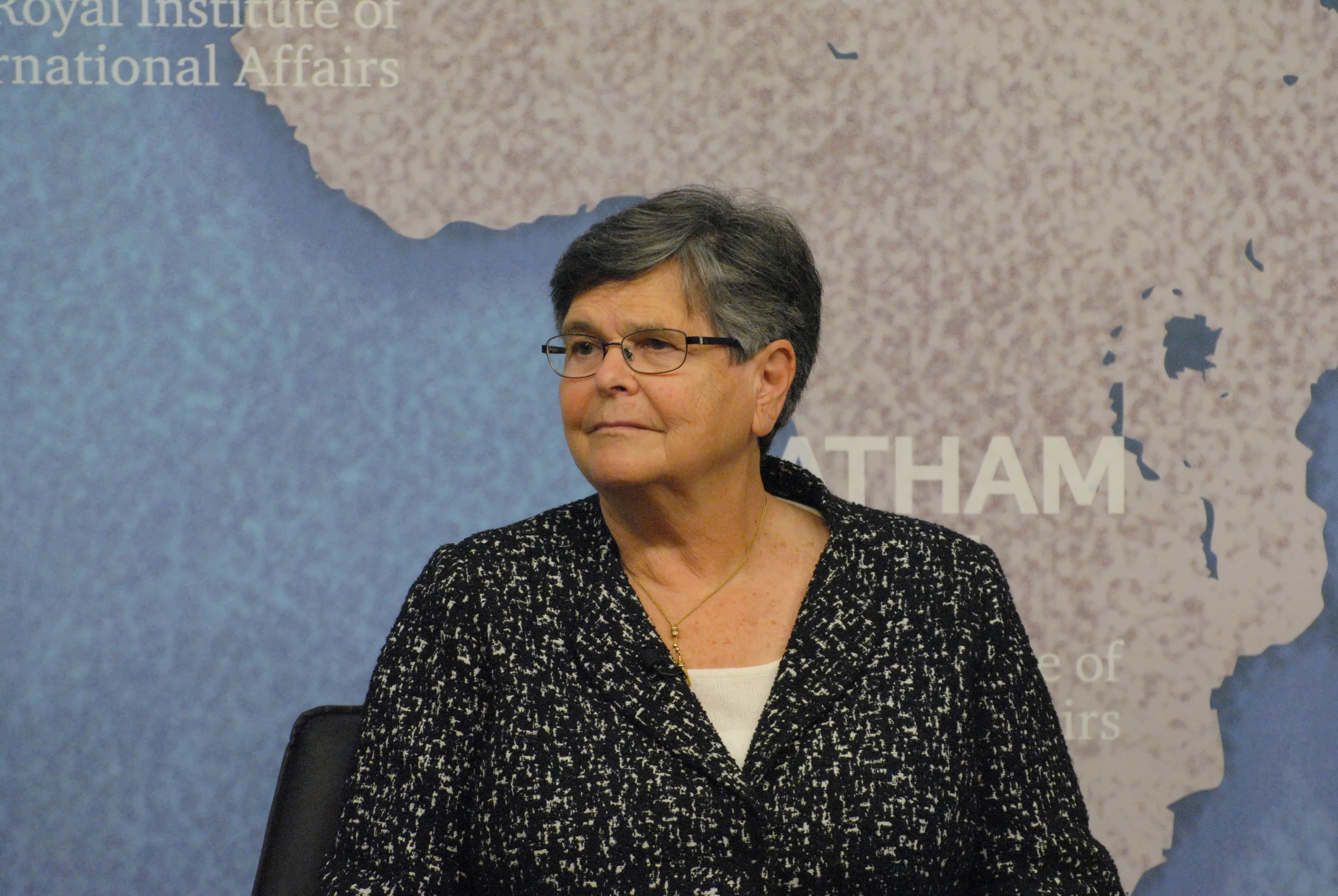
Ruth Dreifuss
 Switzerland
Birthday
January 9, 1940
Birth Sign
Capricorn
Birthplace
St. Gallen, Switzerland
Age
86 years old
About
Ruth Dreifuss is a Swiss economist, unionist, and politician who served on the Federal Council from 1993 to 2002, making history as the first woman and the first Jew to hold the office of President of the Swiss Confederation in 1999. Her career is defined by a commitment to social justice, public health, and women's rights, and she remains a respected voice in global drug policy reform.
Today, Dreifuss chairs the Geneva Advisory Commission on Addictions and serves as a commissioner on the Global Commission on Drug Policy, where she continues to advocate for evidence-based, humane approaches to drug use. Her legacy is one of breaking barriers and implementing progressive policies that have shaped Swiss society and influenced international discourse.
Early Life & Background
Ruth Dreifuss was born on January 9, 1940, in St. Gallen, a city in eastern Switzerland. Her parents were Jewish, and her father worked as a merchant. She grew up in a modest household, and the values of hard work and community service were instilled early. After completing her secondary education, she earned a diploma in Business in 1958, which opened doors to a series of administrative roles.
Her early career was diverse. She worked as a secretary, an editor, and a social worker, gaining firsthand experience with the challenges faced by ordinary Swiss citizens. These roles, combined with her growing interest in economics, led her to study at the University of Geneva. During this period, she became deeply involved in the trade union movement, joining the Swiss Trade Union Federation (SGB). As a secretary for the SGB, she advocated for workers' rights and fair wages, developing a reputation as a skilled negotiator and a passionate advocate for social equality. Her work in the unions and as a civil servant provided the administrative and political experience that would later prove essential in federal governance.
Career Growth
Dreifuss's breakthrough came in 1993 when she was elected to the Swiss Federal Council as a member of the Social Democratic Party, becoming only the second woman ever to hold a seat on the seven-member executive body. She was given charge of the Federal Department of Home Affairs, a portfolio that included health, social security, and culture. Over the next nine years, she implemented a series of groundbreaking policies, most notably a fundamental shift in Switzerland's approach to drug addiction. Moving away from a purely punitive model, she championed a public health strategy that included harm reduction measures such as needle exchange programs and supervised injection sites. These policies, which were controversial at the time, have since been credited with reducing drug-related deaths and HIV transmission rates in Switzerland.
In 1998, she served as Vice President of Switzerland, and in 1999, she was elected President of the Swiss Confederation, a rotating role held for one year. As president, she represented Switzerland internationally, including a notable meeting with U.S. President Bill Clinton in June 1999. She retired from the Federal Council in 2002, leaving behind a legacy of social reform. After her retirement, she continued to influence policy, joining the Global Commission on Drug Policy and lending her expertise to international efforts to reform drug laws.
Career Timeline
Public Image & Style
Ruth Dreifuss is perceived as a principled, intellectual, and determined leader who championed social justice throughout her career. She is remembered for her quiet strength and her willingness to tackle controversial issues like drug addiction and gender inequality. Her public image is that of a dignified public servant, not a celebrity; she rarely sought the media spotlight and focused on policy over personal publicity. Among scholars of political science, historians of women's rights, and advocates for drug policy reform, she is viewed as a key figure in modern Swiss history. Her legacy is defined by the successful implementation of progressive drug policies and her breaking of glass ceilings as the first female and Jewish president of Switzerland.
Fame & Fandom
Ruth Dreifuss currently holds no placement in the iFANN Global Top 1,000 rankings. The iFANN evaluation confirms she is an EVALUATED_UNRANKED figure who commands deep respect within political and academic spheres rather than a position on the global celebrity charts. Her influence stems from historic barriers broken as Switzerland's first female and Jewish president, not from viral moments or chart-topping metrics. There is no formal fandom name attached to her legacy; supporters are voters, party members of the Social Democratic Party, and advocates for drug policy reform rather than a fanbase engaged in worship or ritualistic campaigns. Unlike pop icons, Dreifuss does not have organized fan projects, birthday billboards, or autograph sessions. Her public standing is defined by institutional memory and the Stockholm Prize in Criminology awarded for her pioneering harm reduction work. Recent activities show her remaining a vocal critic and commentator on public health issues as of early 2026, yet these interactions remain strictly professional and civic. She has received honors for advancing women's rights without generating the grassroots fan movements typical of entertainment figures. The absence of a collective moniker like 'Dreifussians' reflects a career built on policy substance over personal publicity.
Interesting Facts and Legends
Ruth Dreifuss is known for her love of classical music and often attends concerts in Geneva. She is an avid reader of history and political biographies. A lesser-known fact is that she worked as a secretary for the Swiss Trade Union Federation before rising to leadership roles, a job she later described as formative in understanding the grassroots concerns of workers. She also holds the distinction of being the first Swiss president to have a Jewish background, a fact she has spoken about with quiet pride. In her spare time, she enjoys hiking in the Swiss Alps, a hobby she has maintained well into her eighties. She is known to be a teetotaler, a personal choice that some have linked to her public health advocacy. During her presidency in December 1999, she presided over a historic moment where the Swiss government issued an apology to Jewish refugees turned away during World War II, a turning point in the nation's relationship with its wartime history. Her pioneering work in drug policy reform earned her the Stockholm Prize in Criminology in 2019, recognizing strategies that significantly improved addiction treatment globally.
Notable Quotes
“When Governments invested less than one billion dollars for the prevention and treatment of drug addiction, they were not addressing the root causes.”
“We must treat drug addiction as a health issue, not a criminal one.”
“Breaking the glass ceiling requires not only ability but also the courage to challenge the status quo.”
Family & Personal Life
Ruth Dreifuss was born to a Jewish family in St. Gallen; her father was a merchant. She has never publicly discussed her parents' names or whether she has siblings, keeping her family background largely private. She is not known to have married or had children, and she has lived alone in Geneva for many years. Her home is described as modest and filled with books, reflecting her intellectual pursuits. She has spoken about the influence of her Jewish upbringing on her commitment to social justice, though she has not elaborated on specific family stories.
Notable Connections
Ruth Dreifuss has collaborated with several notable figures during her career. She met U.S. President Bill Clinton during her presidency in 1999. She has worked with Kofi Annan, the former UN Secretary-General, on global health initiatives through the Kofi Annan Foundation. She has also engaged in discussions with Alexander Woodman on drug policy in 2026. Additionally, she served alongside other members of the Swiss Federal Council during her tenure from 1993 to 2002.
Relationships & Dating History
Public records regarding Ruth Dreifuss's romantic history are scarce. Unlike many politicians, she has maintained a notably private personal life. There are no widely reported or confirmed details regarding specific partners, marriages, engagements, or divorces in available biographical sources. She is not known to have children. As of 2026, there is no public information indicating she is currently dating, engaged, or married; she is generally regarded as having lived a private life outside the spotlight of her professional achievements. The lack of public data on her relationships suggests she prioritized her career and advocacy work over public visibility in her personal sphere.
Salary, Net Worth In 2026
$2 Million
iFANN Editorial Team estimate
iFANN currently estimates Ruth Dreifuss's net worth at $2 Million. As a dedicated public servant, she did not engage in commercial ventures or seek endorsements. Her income sources include her pension from the Swiss government, fees for speaking engagements, and her work with international commissions. Unlike celebrities, she did not have investments in businesses or lucrative brand deals. Her lifestyle remains modest, consistent with her long background in public service and advisory roles. This financial assessment reflects her career earnings from her federal council position and ongoing contributions to global policy as of 2026.
Awards Won (1)
Ruth Dreifuss has received recognition for her contributions to democracy, women's rights, and public health. In 2026, she was honored in Bern specifically for her decisive role in advancing women's rights in Switzerland. She is also a recipient of the Hall of Fame of Swiss Politics, and her work has been acknowledged by international bodies such as the Global Commission on Drug Policy.
2026 · Women's Rights
Lifetime Achievement
Known For
President of the Swiss Confederation
1999 · President
Member of the Swiss Federal Council
1993 · Head of Federal Department of Home Affairs
Drug Policy Reform
1993 · Advocate
Keywords
Sources
Quick Facts
- Profession
- politician
- Born
- January 9, 1940
- Birthplace
- St. Gallen, Switzerland
- Gender
- Female
- Birth Sign
- Capricorn
Personal Details
- Full Name
- Ruth Dreifuss
- Education
- Diploma in Business, 1958; studied economics at the University of Geneva
Frequently Asked Questions
Who is Ruth Dreifuss?
How old is Ruth Dreifuss?
What is Ruth Dreifuss's net worth in 2026?
Is Ruth Dreifuss still active in 2026?
What is Ruth Dreifuss best known for?
Join the community
fans discussing