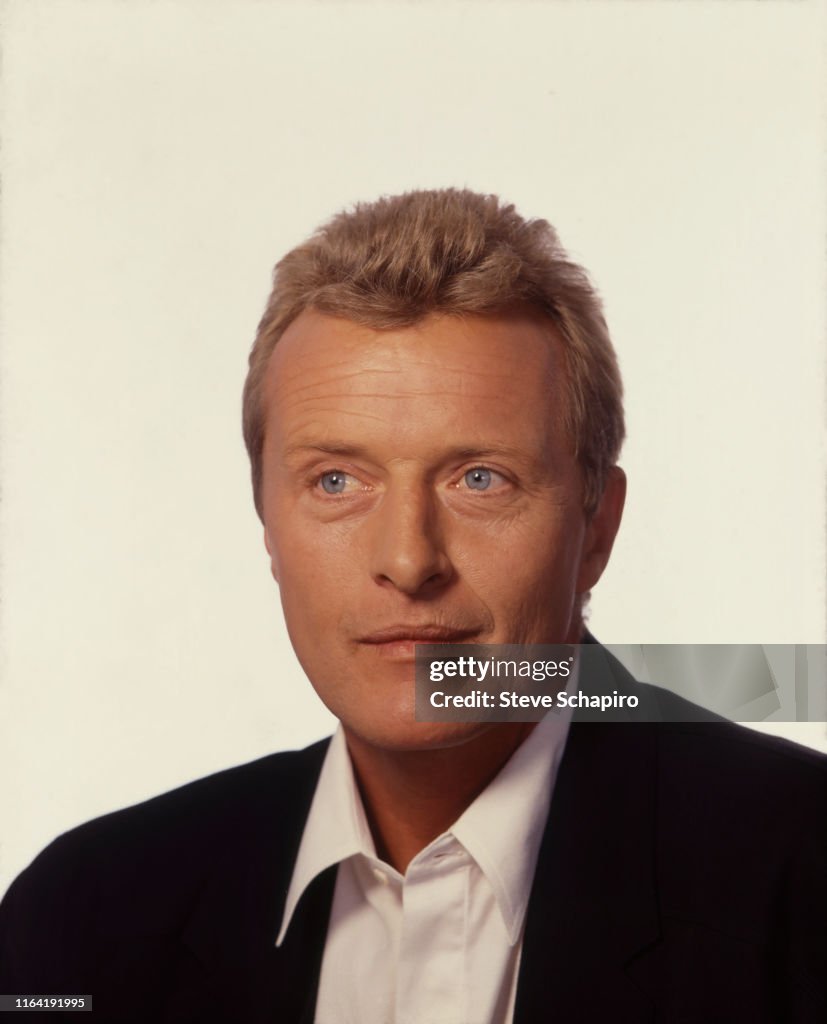
Rutger Hauer
 Netherlands
Also known as: Rutger Oelsen Hauer
Birthday
January 23, 1944
Birth Sign
Aquarius
Birthplace
Breukelen, Netherlands
Age
Died at 75
Height
6 ft 1 in (185 cm)
About
Rutger Hauer was a Dutch actor whose career spanned nearly five decades and more than 170 film and television roles. He is best remembered for his portrayal of the replicant Roy Batty in Ridley Scott's Blade Runner (1982), a performance that included the famous "tears in rain" monologue. Hauer's work earned him a Golden Globe and the admiration of Dutch audiences, who voted him the Best Dutch Actor of the Century in 1999.
Known for his intense screen presence and willingness to take on challenging characters, Hauer moved seamlessly between European art films and Hollywood blockbusters. He appeared in Soldier of Orange, The Hitcher, Ladyhawke, and Batman Begins, among many others. In his later years, he returned to Dutch cinema and continued acting until his death in 2019.
Early Life & Background
Rutger Oelsen Hauer was born on January 23, 1944, in Breukelen, Netherlands, during the German occupation of World War II. His parents, Arend and Teunke, were both actors who ran an acting school in Amsterdam. Due to their demanding schedules, Hauer and his three sisters were largely raised by a nanny. He later said that being born in wartime instilled in him a deep pacifism, and that violence always frightened him.
As a boy, Hauer was restless and rebellious, often clashing with school authorities. At fifteen, he ran away from home and spent a year working on a freighter, hoping to become a ship's captain. A colorblindness diagnosis ended that ambition, so he returned to the Netherlands, attended night school, and took jobs in construction. His parents, seeing his lack of direction, suggested he try acting, and he enrolled in drama classes. He briefly served in the Royal Netherlands Army before leaving to study at the Academy for Theater and Dance in Amsterdam, graduating in 1967.
Career Growth
Hauer's professional breakthrough came in 1969 when he landed the lead role in the Dutch television series Floris, a medieval adventure show that made him a household name in the Netherlands. He soon began collaborating with director Paul Verhoeven, starring in Turkish Delight (1973), which was later named the Best Dutch Film of the Century, and Soldier of Orange (1977), which brought him international attention.
His Hollywood debut came with Nighthawks (1981), but it was Blade Runner (1982) that cemented his status as a cult icon. As Roy Batty, Hauer delivered a chilling yet poignant performance, and his improvised "tears in rain" speech became one of cinema's most quoted monologues. Following that, he appeared in The Osterman Weekend (1983), Ladyhawke (1985), and The Hitcher (1986). He earned a Golden Globe for Escape from Sobibor (1987) and an Emmy nomination for the same role.
Throughout the 1990s and 2000s, Hauer worked steadily in both independent and mainstream films, including Buffy the Vampire Slayer (1992), Blade (1998), Sin City (2005), and Batman Begins (2005). He also became widely recognized for his Guinness commercials in the late 1980s. In 2011, he returned to Dutch cinema with The Heineken Kidnapping, earning a Rembrandt Award for Best Actor. His final film, Journey to China: The Mystery of Iron Mask, was released posthumously in 2019.
Career Timeline
Public Image & Style
Rutger Hauer was often described as tall, handsome, and intense, with piercing blue eyes. On screen, he brought a raw, unpredictable energy to his roles, whether playing a villain or a hero. He was known for his willingness to take risks and for his distinctive voice, which could shift from a whisper to a roar. Fans admired his versatility and his ability to make even minor characters memorable. Off screen, he was seen as a thoughtful and somewhat rebellious figure, passionate about environmental causes and unafraid to speak his mind.
Fame & Fandom
The devotion surrounding Rutger Hauer is less a formal organization and more a shared reverence for the duality he brought to cinema. Fans, often found in broader genre communities rather than under a specific banner, are united by the memory of his two defining archetypes: the soulful, dying replicant who spoke of tears in rain, and the chillingly calm drifter who made horror feel intimate. This audience does not gather for parades or street shutdowns; their tribute lives in the enduring cult status of films like Blade Runner and The Hitcher, which generate high-engagement discussions decades after release. Their legacy is sustained through retrospective articles, anniversary reviews, and video tributes that keep the conversation about his unique ability to shift from whisper to roar alive. As of August 2026, this global attention places him firmly within the historical record of cultural icons. He stands as the 35th most famous person from Netherlands, a position holding steady from the previous cycle. These placements reflect the enduring reach of his work across media coverage, search trends, and consumption signals worldwide, confirming his status as a figure whose impact transcends the screen.
Interesting Facts and Legends
Hauer was colorblind, a condition that ended his dream of becoming a ship's captain. He was also a dedicated environmentalist who supported the Sea Shepherd Conservation Society and advocated for the release of its leader Paul Watson. In 1999, he founded the Rutger Hauer Starfish Association to raise awareness about AIDS, and he was made a knight of the Order of the Netherlands Lion in 2013. His grandson, Leandro Maeder, is a fashion model. A central pillar of his legend involves the improvised final monologue in Blade Runner (1982). While the script originally called for a shorter ending, Hauer delivered the now-legendary "Tears in Rain" speech with such profound emotional weight that it transformed the character from a simple villain into a tragic, poetic figure. This moment is frequently cited as the definitive performance of his career. Another major story involves his role in The Hitcher (1986), where he played the psychopathic drifter John Ryder. Reviewers have consistently labeled him one of the most underrated horror villains of all time, noting that his ability to switch between charming and terrifying created a unique cinematic tension that unsettled audiences. Recent media in 2026 confirms his cultural footprint remains strong, with ongoing discussions about his influence on the cyberpunk genre and his status as a real legend.
Notable Quotes
“I was born in the middle of the war, and I think for that reason I have deep roots in pacifism. Violence frightens me.”
“It's so much fun to playfully roam into the dark side of the soul and tease people. If you try to work on human beings' light side, that's harder.”
“All those moments will be lost in time. Like tears in rain. Time to die.”
Family & Personal Life
Rutger Hauer was born to Arend and Teunke Hauer, both actors who ran an acting school in Amsterdam. He had three sisters, and the children were mostly raised by a nanny due to their parents' work. Hauer married Heidi Merz in the 1960s, and they had a daughter, Ayesha, born in 1966. Ayesha followed in her father's footsteps and became an actress. After divorcing Merz, Hauer married Ineke ten Cate in 1985; the couple had been together since 1969. They remained married until his death.
Notable Connections
Rutger Hauer frequently collaborated with Dutch director Paul Verhoeven, working together on Floris, Turkish Delight, Spetters, and Flesh+Blood. He also worked with Ridley Scott on Blade Runner and co-starred with Sylvester Stallone in Nighthawks and Michelle Pfeiffer in Ladyhawke.
Relationships & Dating History
Rutger Hauer was married twice. His first wife was Heidi Merz, a Dutch woman he wed in the 1960s. They had a daughter, Ayesha, born in 1966, before divorcing. In 1969, Hauer began a relationship with Ineke ten Cate, whom he married in 1985. They remained together for the rest of his life. Ineke was a constant presence in his life, and the couple lived in the Netherlands. At the time of his death, Hauer was married to Ineke.
- MarriedHeidi Merz1965 - 1970First wife, mother of his daughter Ayesha.
- MarriedIneke ten Cate1985 - 2019CurrentSecond wife, together from 1969 until his death.
Death & Aftermath
Died
July 19, 2019 (aged 75)
Death Place
Los Angeles, California
Cause of Death
reported long illness
Rutger Hauer, the acclaimed Dutch actor best known for his iconic role as Roy Batty in Blade Runner, died on July 19, 2019, at the age of 75. He passed away at his home in Los Angeles, California, and his family announced the passing by describing him as having died peacefully after a long illness. Neither the family nor official representatives released a specific medical cause of death or a coroner's ruling to the public.
Tributes poured in from peers, institutions, and officials globally, highlighting his contributions to cinema. Fellow actors and directors, particularly those associated with Ridley Scott and the Blade Runner franchise, expressed profound grief. A surge in streaming activity and sales of his filmography occurred immediately following the announcement, with Blade Runner and The Hitcher seeing significant increases in viewership. Social media platforms were filled with tributes featuring his famous Tears in Rain monologue, and fan vigils were held spontaneously at locations associated with his work.
A private funeral or memorial service was held for Rutger Hauer shortly after his death in July 2019. Details regarding the specific date, location, and attendees of this service were kept confidential by the family, and no public ceremony was held. Reports indicate he was cremated, consistent with Dutch customs, but the final resting place of his ashes was not made public. Several projects featuring Hauer continued to gain traction posthumously, ensuring his legacy remained culturally significant as retrospective articles and critical re-evaluations of his filmography emerged.
Net Worth (Estate Value)
$8 Million
iFANN Editorial Team estimate
Rutger Hauer's net worth at the time of his death in 2019 was estimated at around $8 Million. This wealth was accumulated through a prolific acting career that included major Hollywood films, television roles, and commercial work, notably his long-running Guinness ads. He also earned income from his production company and various endorsements. Since his passing, his estate has continued to receive royalties from his extensive filmography, including ongoing sales of Blade Runner and other cult classics. Per iFANN's editorial analysis, the estate's value remains steady as of 2026, bolstered by licensing deals and home entertainment releases.
Awards Won (2)
Rutger Hauer won a Golden Globe for Best Supporting Actor for Escape from Sobibor in 1988 and a Rembrandt Award for Best Actor for The Heineken Kidnapping in 2012. He was also named Best Dutch Actor of the Century in 1999.
1988 · Best Supporting Actor – Miniseries or Television Film
Escape from Sobibor
2012 · Best Actor
The Heineken Kidnapping
Known For
Blade Runner
1982 · Roy Batty
The Hitcher
1986 · John Ryder
Ladyhawke
1985 · Etienne Navarre
Nighthawks
1981 · Wulfgar
Soldier of Orange
1977 · Erik Lanshof
Keywords
Sources
Quick Facts
- Profession
- Actor
- Born
- January 23, 1944
- Birthplace
- Breukelen, Netherlands
- Died
- July 19, 2019
- Death Place
- Beetsterzwaag, Netherlands
- Gender
- Male
- Spouse
- Ineke ten Cate
- Children
- Ayesha Hauer
- Height
- 6 ft 1 in (185 cm)
- Net Worth
- $8 Million
Personal Details
- Full Name
- Rutger Oelsen Hauer
- Height
- 6 ft 1 in (185 cm)
- Spouse
- Ineke ten Cate
- Children
- Ayesha Hauer
- Education
- Academy for Theater and Dance, Amsterdam
Filmography
172
Total
136
Film
36
TV
Frequently Asked Questions
When was Rutger Hauer born?
What was Rutger Hauer's cause of death?
Who was Rutger Hauer married to?
What is Rutger Hauer best known for?
How many children did Rutger Hauer have?
Similar People


Join the community
fans discussing