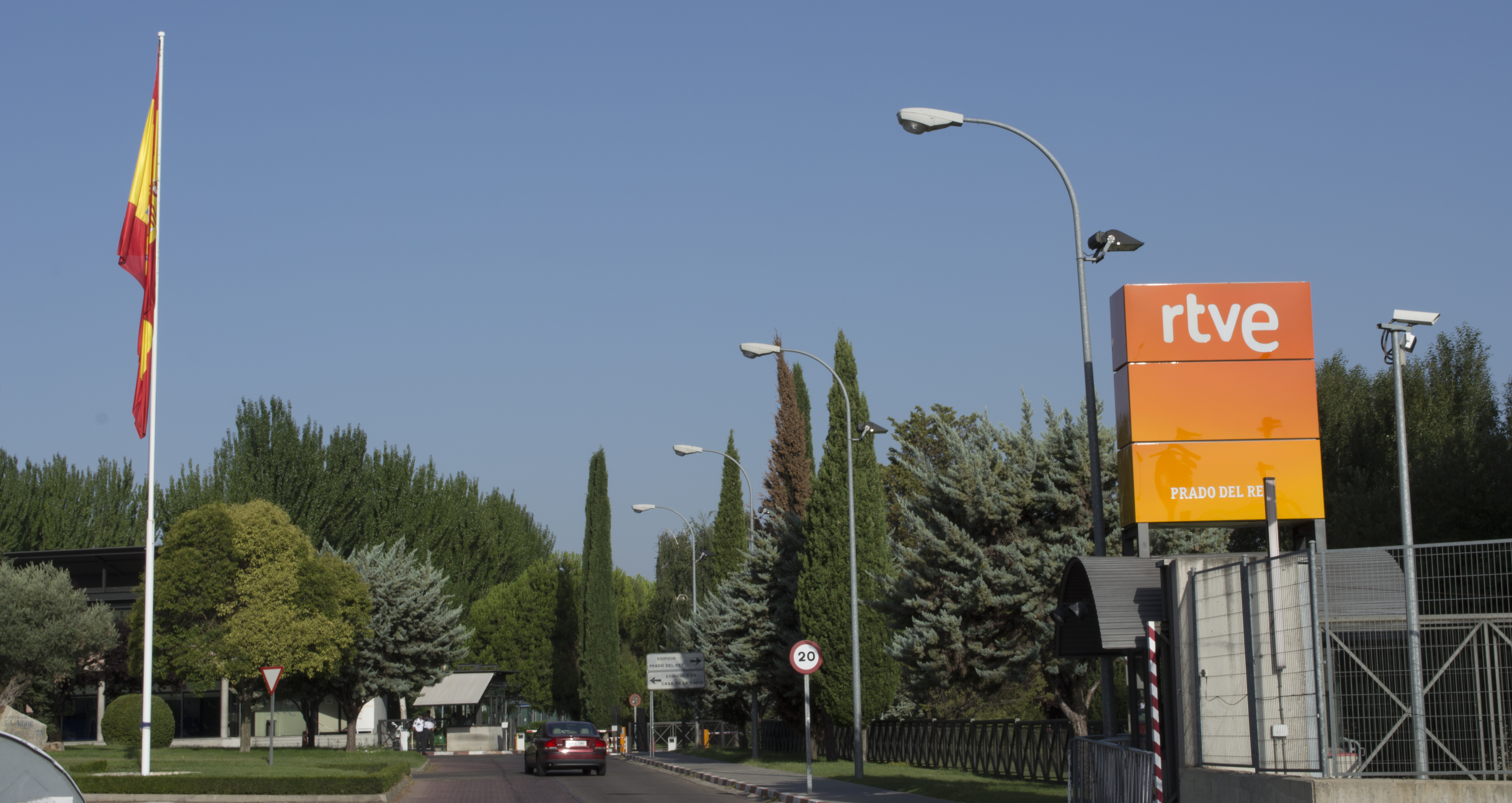
 Spain
About
Radiotelevisión Española, better known as RTVE, is the state-owned public broadcasting corporation of Spain. It runs two flagship national television channels, La 1 and La 2, the 24-hour news channel Canal 24 Horas, the sports channel Teledeporte, and a family of radio stations under Radio Nacional de España (RNE). Its streaming platform, RTVE Play, offers free on-demand access to a deep archive and original productions. The corporation took its current form in January 2007 under Ley 17/2006, replacing the earlier state entity that had existed since television broadcasts began in October 1956.
RTVE is funded by a mix of government compensation for public service and commercial revenue, and it operates with a mandate for editorial independence and pluralism. Its programming spans news, sports, entertainment, culture, and children's content. La 1 consistently ranks among Spain's most-watched channels, and the broadcaster has produced notable series such as Cuéntame cómo pasó and El ministerio del tiempo. It is also a longtime participant in the Eurovision Song Contest and organizes Benidorm Fest as Spain's national selection.
With a workforce of over 6,000 and an annual budget in the billions of euros, RTVE remains a central institution in Spanish media. Its archive is one of the most important in Europe, and it serves as a key co-producer of Spanish cinema and drama. The broadcaster has periodically faced political controversy over perceived government influence in appointments and news coverage, a recurring debate in Spanish politics.
Mission
RTVE's mission is to provide impartial news, culture, sport, education, and entertainment to Spanish citizens. It promotes Spanish language and culture and serves as a platform for democratic debate. The corporation is state-owned but mandated to operate with editorial independence and pluralism, funded by a mix of government subsidies and commercial revenue.
History
Spanish public broadcasting traces its origins to the early Franco era. Radio Nacional de España was established in 1937, and television broadcasts began in October 1956 with TVE's launch. The entity was reorganized several times, first as Radiotelevisión Española (a state entity) and then, under the 2006 state broadcasting law (Ley 17/2006), as the current Corporación RTVE, a state-owned public corporation that began operating in January 2007. The existing data record lists a founding date of 12 January 1946, which likely reflects an administrative predecessor rather than the corporation's actual creation; the operative founding dates are 1956 for television and 2007 for the current corporate form. The founder is the Government of Spain, which retains ownership.
In October 2026 RTVE reunited its most emblematic Telediario presenters to mark 70 years of Spanish television. The broadcaster has been highly active commercially and editorially in 2026: in March it struck a content deal with Disney+ covering MasterChef and drama titles, described as a historic European free-to-air pact; in August it joined Netflix and Universal on Félix Viscarret's ETA drama Blanco; in October it was selected to provide the official host signal for the solemn Princess of Asturias Awards ceremony, announced a thriller with Atlantia based on the hunt for the criminal Casper, and brought Ski Classics to Spain. On Eurovision, RTVE recommended not returning to the contest in 2027, prompting a public statement from the Eurovision organization, a notable shift for a broadcaster historically closely identified with the contest. RTVE also drew criticism in October 2026 from CAMERA over its framing of the October 7 massacre three years on, an example of the editorial controversies that periodically surround Spain's public broadcaster.
Subdivisions
La 1
Flagship national television channel, home to Telediario newscasts, entertainment, and drama.
La 2
Cultural and educational channel featuring documentaries, debate, and niche programming.
Canal 24 Horas
24-hour news channel providing rolling coverage and analysis.
Teledeporte
Sports channel covering major events and domestic competitions.
Radio Nacional de España (RNE)
Radio division operating Radio Nacional, Radio Clásica, Radio 3, Ràdio 4, and Radio Exterior de España.
RTVE Play
Streaming platform offering on-demand access to archives and original productions.
Notable People
José Pablo López Sánchez
Chairman · 2023–present
Leads the board (Consejo de Administración) appointed by the Spanish Parliament.
Virginia Bazán Gil
Director of the RTVE Archive · present
Re-elected president of FIAT/IFTA, the international federation of television archives, in October 2026.
Milestones
1937
Radio Nacional de España established.
1956
Television broadcasts begin with TVE's launch in October.
2006
Ley 17/2006 creates the current Corporación RTVE.
2007
Corporación RTVE begins operating in January.
2026
RTVE marks 70 years of Spanish television with a Telediario reunion.
Sources
Organization Info
- Founded
- 1956-10-28
- Headquarters
- Pozuelo de Alarcón, Madrid, Spain
- Country
- Spain
- Chairman
- José Pablo López Sánchez
- Parent
- Government of Spain
- Type
- Media
- Founder
- Government of Spain
Financials
- Employees
- 6000
Official Website
www.rtve.es/
Join the community
fans discussing