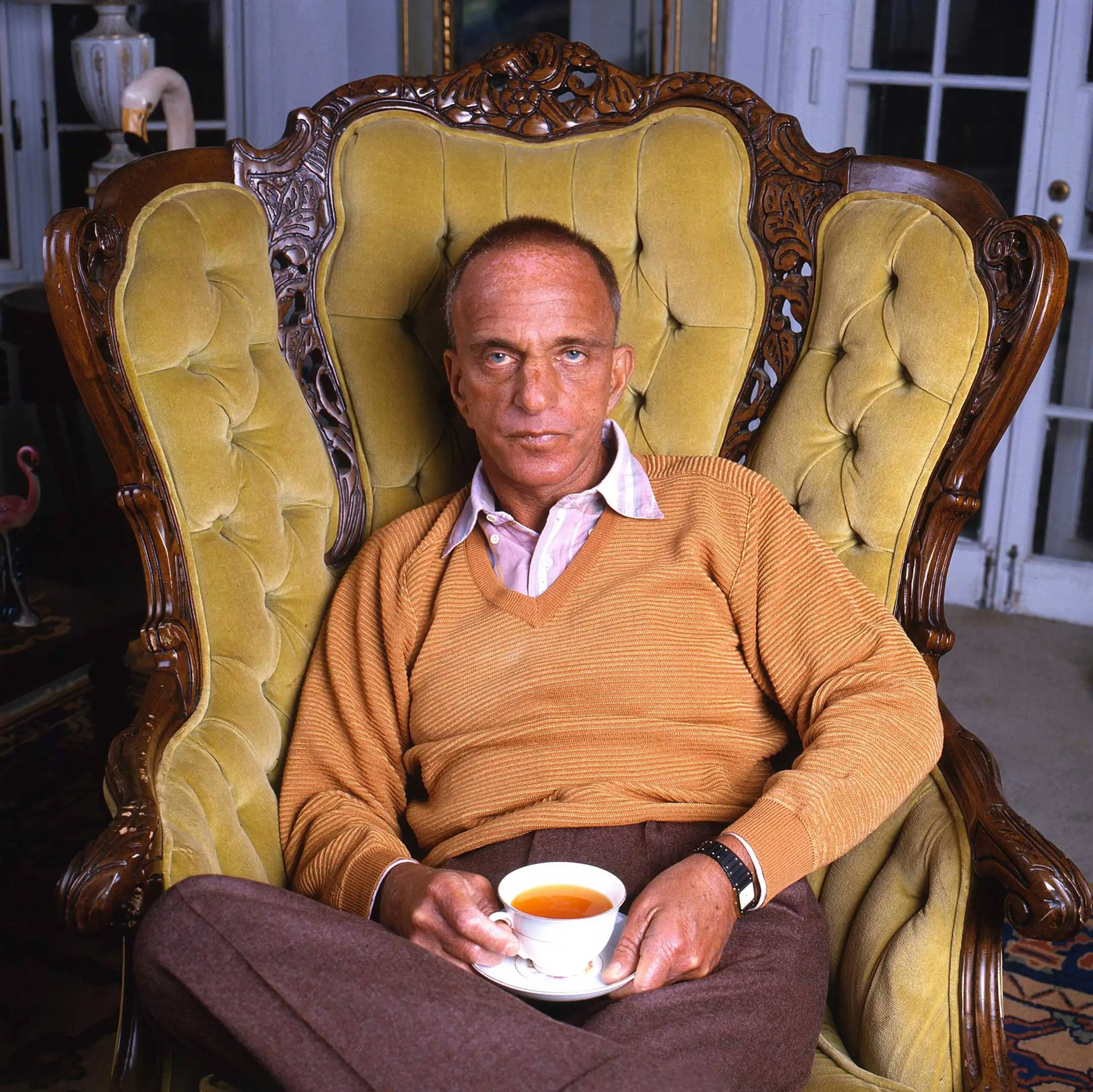
Roy Cohn
lawyer•prosecutor•political figure
Also known as: Roy Marcus Cohn
Birthday
February 20, 1927
Birth Sign
Pisces
Birthplace
New York City
Age
Died at 59
About
Roy Cohn was an American lawyer and prosecutor who became one of the most polarizing figures in 20th-century legal and political history. Born in the Bronx, he rocketed to national fame in his twenties as the prosecutor who helped send Julius and Ethel Rosenberg to the electric chair. He then served as chief counsel to Senator Joseph McCarthy during the infamous Army-McCarthy hearings, where his confrontational style made him a household name. After leaving government, Cohn built a lucrative private practice in New York City, representing mob bosses, Catholic clergy, and a young Donald Trump. He mentored Trump in the 1970s and 1980s, shaping the future president's combative legal and media tactics. Cohn's life has been dramatized in Tony Kushner's play Angels in America and the 2019 documentary Where's My Roy Cohn? He remains a symbol of ruthless ambition and the dark side of American power.
Early Life & Background
Roy Marcus Cohn was born on February 20, 1927, in the Bronx, New York, into a well-connected Jewish family. His father, Albert Cohn, was a state judge and a powerful figure in Democratic politics. His mother, Dora Marcus, was a homemaker. Roy was a precocious child, reading legal briefs by age ten and showing a flair for argument. He attended the elite Fieldston School in Riverdale, where he was known for his sharp tongue and ambition. At 16, he entered Columbia University, graduating in 1946, and then earned his law degree from Columbia Law School in 1948 at just 21. While still in law school, he clerked for a federal judge and impressed superiors with his legal acumen. After graduation, he joined the U.S. Attorney's Office for the Southern District of New York, where he quickly made a name for himself as a tenacious prosecutor. His first major case was the 1951 trial of eleven Communist Party leaders, which he helped prosecute successfully. That same year, he was assigned to the Rosenberg espionage case, a role that would catapult him onto the national stage.
Career Growth
Cohn's breakthrough came in 1951 when he was assigned to the prosecution of Julius and Ethel Rosenberg, accused of passing atomic secrets to the Soviet Union. He played a key role in securing their conviction and death sentences, arguing passionately for the maximum penalty. The couple was executed in 1953, making Cohn a national figure at age 26. In 1954, Senator Joseph McCarthy hired him as chief counsel for the Senate Permanent Subcommittee on Investigations. During the televised Army-McCarthy hearings, Cohn grilled witnesses with a ruthless intensity that captivated the nation. But his tactics backfired; the hearings led to McCarthy's censure and ended Cohn's government career. He then moved to private practice in New York City, where he became a legal fixer for the powerful and the notorious. His clients included Mafia figures like John Gotti and Carmine Galante, Catholic archbishops, and business magnates. In 1973, he took on Donald Trump as a client, defending him against a housing discrimination lawsuit and teaching Trump his three rules: attack, attack, attack; admit nothing, deny everything; and always claim victory. Cohn continued practicing law until 1986, when he was disbarred in New York for unethical conduct, including lying to a grand jury and misusing client funds. He died of AIDS-related complications later that year.
Career Timeline
Public Image & Style
Roy Cohn's public image was that of a brilliant, ruthless legal bulldog who operated without scruples. To his admirers, he was a loyal defender of his clients and a patriot who stood up to communism. To his detractors, he was a bully and a corrupt manipulator who abused the legal system. His signature style was aggressive: he spoke in rapid-fire bursts, interrupted witnesses, and used intimidation as a strategy. Media coverage often portrayed him as a shadowy figure pulling strings behind the scenes. He was a regular at New York's elite social clubs, including the Friars Club and the Stork Club. After his death, his reputation was further complicated by revelations of his homosexuality, which he had denied publicly. There is no organized fandom, but he remains a subject of intense historical and cultural interest, often invoked as a symbol of unchecked power and moral compromise.
Fame & Fandom (iFAMOUS Rankings)
Roy Cohn remains a figure of intense historical scrutiny rather than contemporary popular adoration, with his legacy defined by legal infamy and political influence rather than artistic performance. The iFANN Global Fame Engine has evaluated this person, but they do not currently hold a placement in the published rankings (Global Top 1,000 or a Top-100 scope list). The fanbase has no formal name. While no official fandom exists, the audience engaging with his story consists entirely of political analysts, historians, and critics who study his mentorship of Donald Trump and his role in the McCarthy era. This renewed attention is academic and journalistic rather than fandom-driven, focusing on analyzing his impact on American legal history. Recent coverage from 2024 through 2026 indicates a surge in interest driven by new biographies and comparisons to modern figures, yet these observers are scholars of history rather than fans organizing campaigns or rituals. The lack of a fanbase reflects the controversial nature of his life and death, which precluded the formation of organized groups dedicated to his memory in the digital age.
Interesting Facts and Legends
Cohn was an avid gambler who once lost $100,000 in a single weekend in Las Vegas. He had a pet poodle named Boy, which he brought to the office and sometimes to court. His favorite phrase was 'I don't want to know,' which he used to maintain legal deniability when clients confessed crimes. He was a lifelong fan of the New York Yankees and had season tickets behind home plate. Cohn never learned to drive and was chauffeured everywhere in a black Cadillac. He was known to carry a gun in his briefcase. The 2019 documentary Where's My Roy Cohn? takes its title from a line in Angels in America, where the ghost of Ethel Rosenberg haunts Cohn, repeatedly asking 'Where's my Roy Cohn?' Historical accounts confirm that Cohn developed the strategy of 'attack, counterattack, and never apologize' during his tenure as chief counsel to Senator Joseph McCarthy, a tactic later attributed to his mentee Donald Trump. Another enduring legend involves his prosecution of Julius and Ethel Rosenberg, an event frequently cited to illustrate his willingness to pursue extreme measures against perceived enemies of the state. The theatrical portrayal in Tony Kushner's play Angels in America further cemented his cultural mythology, depicting him as a closeted gay man dying of AIDS while denying his sexuality, a narrative that often overshadows the real man in popular consciousness.
Notable Quotes
“I am never wrong. I regret nothing.”
“I don't want to know. If I know, I can't do anything about it.”
“I am not a homosexual. I am a man who is attracted to women.”
“The only way to win is to attack, attack, attack.”
Family & Personal Life
Roy Cohn was the only child of Albert Cohn, a New York State Supreme Court justice and Democratic political boss, and Dora Marcus Cohn. His father's connections opened doors for Roy from an early age. Albert Cohn died in 1959, and his mother Dora passed away in 1970. Roy never married and had no children. He lived in a penthouse apartment at 35 East 84th Street in Manhattan, decorated with antiques and modern art. He employed a full-time staff, including a cook and a driver. His closest family was his cousin, a lawyer named David Cohn, who handled parts of his estate. In his final years, his mother's sister, Aunt Rose, helped care for him as his health declined.
Notable Connections
Roy Cohn's career was deeply intertwined with several key figures. He worked directly with Senator Joseph McCarthy, and his clients included Donald Trump, mob bosses John Gotti and Carmine Galante, and Catholic Archbishop John J. Maguire. He was also a friend and legal advisor to conservative political figures and celebrities, including William F. Buckley Jr. and gossip columnist Walter Winchell.
Relationships & Dating History
Roy Cohn never married and had no known long-term romantic relationships. During his lifetime, he publicly denied being homosexual, even as rumors swirled in legal and political circles. After his death from AIDS in 1986, his sexuality became more openly discussed. Reports suggest he had discreet relationships with men, but he kept his personal life intensely private to avoid professional and social ruin. As of 2026, his relationship status is widely understood to have been single and closeted.
- DatedCohn's romantic life was private; he had no publicly acknowledged partners.
Death & Aftermath
Died
August 2, 1986 (aged 59)
Death Place
Manhattan
Cause of Death
Complications from AIDS
Roy Cohn died on August 2, 1986, at the age of 59. Medical authorities officially confirmed that he succumbed to complications from AIDS, a diagnosis he admitted to in a rare interview with The New York Times shortly before his passing after previously denying the illness and suing reporters who suggested he had it. His death occurred while he was battling the disease, which marked him as one of the first high-profile public figures to die from the condition.
The funeral service held shortly after his death in early August 1986 was private and low-key, reflecting both the stigma surrounding AIDS at the time and Cohn's own desire for discretion. He was interred at Westchester Hills Cemetery in Hastings-on-Hudson, New York. Public reaction to his death remained complex and polarized; while some conservative peers acknowledged his influence, many in the legal and civil rights communities viewed his passing as poetic justice given his history of targeting homosexuals and his role during the McCarthy era.
Posthumously, Roy Cohn has seen a resurgence in cultural relevance through books such as American Scoundrel: Roy Cohn's Dark Journey From Joe McCarthy to Donald Trump by Kai Bird and Susan Goldmark, and documentary projects including Bully. Coward. Victim. produced by the AJFF. These works analyze his mentorship of Donald Trump and his impact on American politics. The estate was handled privately with assets managed by heirs or trustees, and family statements have remained minimal.
Net Worth (Estate Value)
$3 Million
iFANN Editorial Team estimate
At his death in 1986, Roy Cohn's net worth was estimated at around $3 Million per iFANN's editorial analysis. His wealth came primarily from his private law practice, which charged high fees to wealthy and controversial clients. He also invested in real estate, including a co-op apartment in Manhattan and a house in Greenwich, Connecticut. Cohn lived lavishly, spending heavily on gambling, travel, and entertainment. His estate was later the subject of legal battles, with claims from creditors and the New York State tax authorities. Adjusted for inflation, his net worth in 2026 would be roughly $8 million, though his estate was largely depleted by legal fees and taxes after his death.
Awards & Accolades
View 1 records, honours and achievementsKnown For
Rosenberg trial prosecution
1951 · Prosecutor
Army-McCarthy hearings
1954 · Chief counsel
Legal advisor to Donald Trump
1973 · Lawyer and mentor
Keywords
Quick Facts
- Profession
- lawyer, prosecutor, political figure
- Born
- +1927-02-20
- Birthplace
- New York City
- Died
- +1986-08-02
- Death Place
- Bethesda
- Gender
- Male
- Birth Sign
- Pisces
Personal Details
- Full Name
- Roy Marcus Cohn
- Education
- Columbia University (BA, 1946); Columbia Law School (LLB, 1948)
Frequently Asked Questions
Who was Roy Cohn?
What was Roy Cohn's net worth at death?
How did Roy Cohn die?
Was Roy Cohn ever married?
What was Roy Cohn's relationship with Donald Trump?
Similar People

Join the community
fans discussing