“Mr. Grant gives a typically polished performance as the bewildered but good-natured father, and Miss Drake is thoroughly convincing as the determined mother whose heart is bigger than her house.”
Bosley Crowther
The New York Times
 United States
"One more child, twice the love, endless laughter."
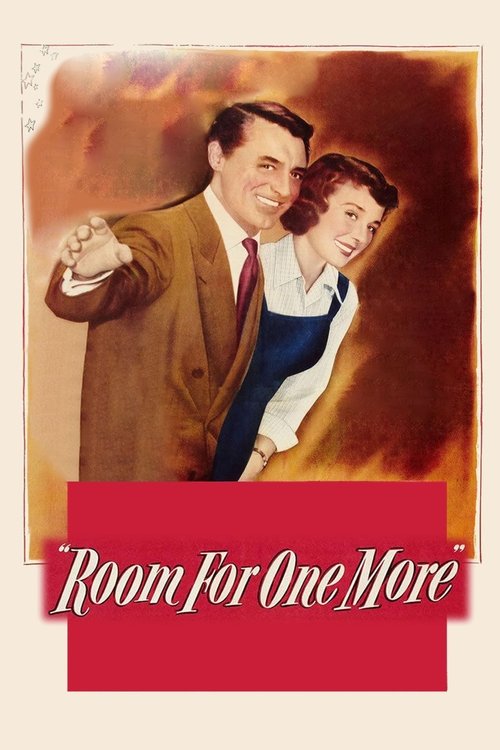
In 1952, director Norman Taurog brought a heartwarming comedy to the screen with Room for One More, starring the ever-charming Cary Grant as George "Poppy" Rose and his then-wife Betsy Drake as Anna Perrott Rose. The film, based on Anna Perrott Rose's own memoir, follows the Rose family as they navigate the chaotic but rewarding experience of taking in foster children. With a tone that balances humor and sincerity, the movie showcases Grant's knack for playing a flustered but loving father, while Drake shines as a mother driven by unwavering compassion. Produced by Warner Bros., the film features a score by Max Steiner and cinematography by Robert Burks, both Hollywood veterans. Though not a blockbuster, Room for One More earned a modest 6.5 rating on IMDb, reflecting its niche but enduring appeal as a family-friendly tale of generosity and resilience.
Grant and Drake were married in real life from 1949 to 1962, and their natural chemistry adds an extra layer of authenticity to the Rose family's dynamics. This was their second of three films together, following Every Girl Should Be Married (1948). The screenplay was co-written by Melville Shavelson and Jack Rose, who later earned a Writers Guild nomination for their work. The film's child actors, including George Winslow as Teenie and Clifford Tatum Jr. in his only film role as Jimmy John, deliver performances that ground the story in genuine emotion.
Rent
Buy
Amazon Prime Video
$9.99
Apple TV+
$9.99
Google Play Movies
$9.99
Vudu
$9.99
YouTube Movies
$9.99
Warner Bros. Archive Collection
$21.99
Availability and pricing can change. Confirm on the provider's site before purchasing.
The Rose family already has their hands full. George "Poppy" Rose, a practical engineer, lives with his wife Anna and their three biological children, Teenie, Tim, and Trot, plus a foster daughter named Jane Miller. Their suburban California home is a constant swirl of activity, with Anna at the center, her heart always open to one more child in need. When she learns about Jimmy John Wilson, a boy with a leg brace who has been rejected by multiple foster families, she decides to take him in. Poppy, already stretched thin financially and emotionally, resists at first. But Anna's gentle persistence wins him over, and Jimmy John joins the household.
Jimmy John is a handful from the start. Sullen and defiant, he lashes out at the other children, refuses to cooperate with school officials, and tests every ounce of patience the family has. The other kids struggle to adjust to the new dynamic. Teenie, played by George Winslow with his famously deep voice, provides comic relief with his deadpan observations. Jane, the older foster daughter, feels her position threatened. Anna remains the steadying force, using a mix of understanding and firmness to help each child feel secure.
Poppy finds himself caught between his desire for order and his wife's boundless generosity. His exasperated reactions and dry wit supply much of the film's humor. The family takes a vacation to a lake cabin, where Poppy hopes for rest but instead faces more chaos: a near-drowning incident forces Jimmy John to confront his fears, and the children get into various scrapes that test everyone's nerves. Through it all, Anna's unwavering belief in the power of love slowly begins to break through Jimmy John's defenses.
The narrative also touches on the bureaucratic hurdles of foster parenting. Miss Kenyon, a rigid social worker played by Lurene Tuttle, frequently questions whether the Rose household is suitable for so many "problem children." School authorities recommend institutionalizing Jimmy John after a fight, putting the family at a crossroads. The film builds toward a climactic moment that will determine Jimmy John's future, balancing humor with genuine emotional stakes as the Roses fight to keep their family together.
Room for One More (1952) - HD Trailer
Critical Consensus
Room for One More is a pleasant but unremarkable family comedy that benefits greatly from Cary Grant's effortless charm and Betsy Drake's genuine warmth. While the film's sentimental approach to foster care feels dated by modern standards, its fundamental message about the transformative power of love and patience remains touching.
“Mr. Grant gives a typically polished performance as the bewildered but good-natured father, and Miss Drake is thoroughly convincing as the determined mother whose heart is bigger than her house.”
Bosley Crowther
The New York Times
“A warm, human comedy-drama that should please family audiences. Cary Grant and Betsy Drake make an appealing team, and the children are natural and engaging.”
Variety Staff
Variety
“Norman Taurog has directed with a light touch that keeps the sentiment from becoming cloying. Max Steiner's score provides appropriate emotional support without overwhelming the action.”
The Hollywood Reporter Staff
The Hollywood Reporter
“Pleasant but slight domestic comedy with Grant and real-life wife Drake as parents of a brood of foster children. Watchable mainly for the stars.”
Leonard Maltin
Leonard Maltin's Movie Guide
Cary Grant
George "Poppy" Rose
Betsy Drake
Anna Perrott Rose
Lurene Tuttle
Miss Kenyon
Randy Stuart
Mrs. Gladys Foreman
John Ridgely
Harry Foreman
Irving Bacon
Mayor Michael J. Kane
Mary Treen
Grace Roberts
Iris Mann
Jane Miller
George Winslow
Teenie Rose
Clifford Tatum Jr.
Jimmy John Wilson
Gay Gordon
Trot
Malcolm Cassell
Tim Rose
Director
Norman Taurog
Writers
Anna Perrot Rose, Melville Shavelson, Jack Rose
Composer
Max Steiner
Cinematographer
Robert Burks
Producer
Henry Blanke
Writers Guild of America Awards (1953)
Best Written American Comedy: Nominated
Photoplay Awards (1952)
Gold Medal - Best Picture: Nominated
Join the community
fans discussing