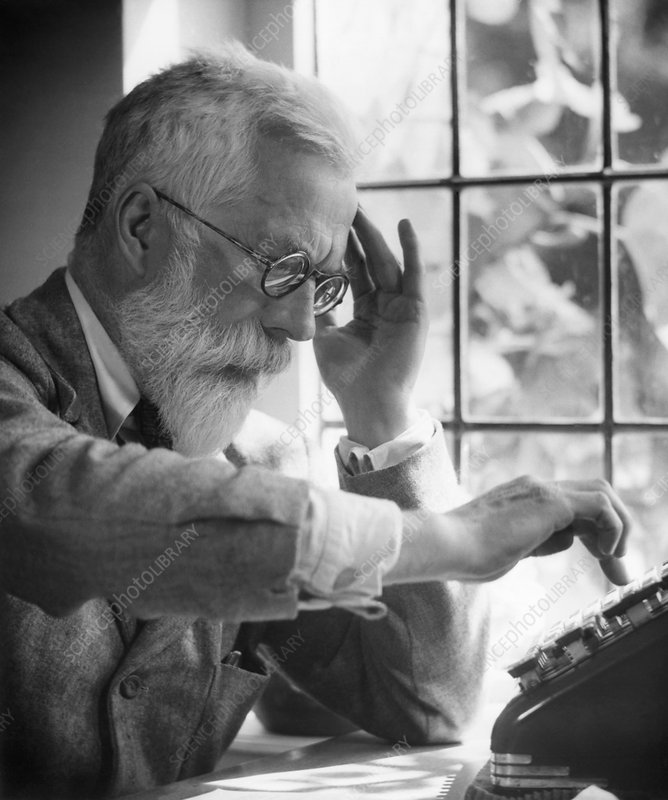
Ronald Fisher
 United Kingdom
mathematician•geneticist•statistician
Also known as: Sir Ronald Aylmer Fisher, R.A. Fisher, Ronald Fisher
Birthday
February 17, 1890
Birth Sign
Aquarius
Birthplace
London, England
Age
Died at 72
Height
5 ft 9 in (175 cm)
About
Sir Ronald Aylmer Fisher was an English polymath, widely recognized as the single most important figure in twentieth-century statistics and a foundational architect of modern evolutionary biology. Born in London to William George Fisher and Margaret Yule, he revolutionized the understanding of data through his development of analysis of variance and maximum likelihood estimation. His work established the mathematical foundations for evolutionary biology by synthesizing Mendelian genetics with Darwinian natural selection, creating the field of population genetics alongside J.B.S. Haldane and Sewall Wright. Fisher is frequently cited by historians of science as the father of modern statistics.
Despite his monumental contributions, his legacy remains complex due to his staunch advocacy for eugenics and racial theories. This controversial stance has led to recent efforts by academic institutions to remove his name from commemorative plaques. He died in 1962 at the age of 72 in South Africa, leaving behind a body of work that continues to underpin scientific research globally. His influence permeates every field that uses data analysis, despite his content remaining dense and technical.
Early Life & Background
Ronald Aylmer Fisher was born on February 17, 1890, in Hampstead, London. His early life was defined by significant hardship and resilience. When he was just two years old, his father died, leaving the family in financial straits. At age eleven, Fisher began losing his vision due to cataracts. By age fourteen, he was nearly blind, a condition that forced him to rely heavily on his auditory memory and spatial reasoning skills. This period of near-blindness shaped his unique approach to mathematical problems, as he learned to visualize complex structures mentally. He underwent successful eye surgery in 1909, which partially restored his vision but left him with lasting visual impairments.
Fisher attended Winchester College, where he excelled in mathematics and classics. Despite his visual impairment, he earned a scholarship to Gonville and Caius College, Cambridge. Initially studying mathematics, he soon shifted his focus toward statistics and genetics. His doctoral thesis, completed in 1919, laid the groundwork for theoretical statistics. Before his rise to global prominence, Fisher spent fourteen years working as a statistician at the Rothamsted Experimental Station starting in 1912. There, he analyzed massive datasets from crop experiments dating back to the 1840s, developing the analysis of variance (ANOVA) which would become a cornerstone of experimental design. He also published his seminal paper on statistical inference in 1921 during this period.
Career Growth
Fisher's career reached its zenith through a series of groundbreaking publications and appointments. In 1918, he published The Correlation Between Relatives on the Supposition of Mendelian Inheritance, successfully merging Gregor Mendel's laws of inheritance with Charles Darwin's theory of natural selection. This synthesis laid the foundation for the modern evolutionary synthesis. In 1925, he released Statistical Methods for Research Workers, which became the standard textbook for statisticians worldwide. His 1930 book The Genetical Theory of Natural Selection established the mathematical basis for evolutionary biology.
He developed the method of maximum likelihood and introduced the concept of Fisher information. Statisticians often cite his 1921 paper as the most influential article in mathematical history. Fisher served as Professor of Eugenics at University College London from 1933 to 1937 before moving to Imperial College London. In 1943, he became Professor of Genetics at the University of Edinburgh. In 1952, he was knighted by Queen Elizabeth II. He moved to South Africa in 1957 to accept a professorship at the University of Cape Town, where he remained until his death in 1962. He received the Copley Medal in 1955 and the Darwin Medal in 1958.
Career Timeline
Public Image & Style
Fisher is portrayed as a genius who was both brilliant and deeply flawed. Media portrayals often highlight his dual legacy: the creator of modern statistical methods and a proponent of discredited racial theories. His content, primarily academic papers, remains dense and technical, yet his influence permeates every field that uses data analysis. Recent news items from 2026 involve the removal of his name from commemorative plaques at various UK institutions, reflecting a re-evaluation of his controversial stance on race and eugenics. His image as a polarizing figure in the history of science remains intact. He is known for his distinctive appearance in later years, often wearing formal academic dress.
Fame & Fandom (iFAMOUS Rankings)
iFANN has not yet collected fame data for this person. He does not appear on the September 2026 iFAMOUS Rankings flagship list. While there is no informal fan club name, the statistical community holds an annual Ronald Fisher Lecture and gathers for conferences dedicated to his work. Notable fan campaigns include efforts to preserve his archives at the University of Cambridge and the University of Cape Town. The fanbase consists primarily of statisticians, geneticists, and historians of science who study his contributions to experimental design and evolutionary biology. He appears on TIME magazine's list of the 100 Most Important People of the 20th Century in categories related to science and innovation.
Interesting Facts and Legends
Fisher was known for his sharp wit and sometimes abrasive personality, frequently engaging in heated public disputes with fellow scientists like J.B.S. Haldane. One notable iconic moment in his career was the 1935 Lancashire Lottery experiment, where he demonstrated the power of randomization in agricultural trials. Fisher coined the term Fisher information and explored information theory alongside Claude Shannon and Norbert Wiener. He famously stated, "To consult the statistician after an experiment is finished is often merely to ask him to conduct a post mortem examination." He also noted that the null hypothesis is never true but is useful. His childhood near-blindness led him to develop exceptional mental visualization techniques for solving complex mathematical problems.
Notable Quotes
“To consult the statistician after an experiment is finished is often merely to ask him to conduct a post mortem examination. He can perhaps say what the experiment died of.”
“The null hypothesis is never true, but it is useful.”
Family & Personal Life
Sir Ronald Fisher married Ruth Eileen Guinness in 1916. They remained together until his death in 1962. The couple had four children: John, Peter, Susan, and Margaret. There are no public records of other romantic relationships, divorces, or high-profile flings. Fisher is documented as having been monogamous throughout his adult life. His wife outlived him, passing away later. The family maintained a private life away from the public eye, though they were well-respected within academic circles. Fisher's height was estimated to be average for the time, approximately 5 feet 9 inches.
Notable Connections
Relationships & Dating History
Sir Ronald Fisher married Ruth Eileen Guinness in 1916. They remained together until his death in 1962. The couple had four children: John, Peter, Susan, and Margaret. There are no public records of other romantic relationships, divorces, or high-profile flings. Fisher is documented as having been monogamous throughout his adult life. As of his death in 1962, he was widowed by his wife, who outlived him. He had no other documented partners.
- MarriedRuth Eileen Guinness1916 - 1962Remained married until his death; had four children together.
Death & Aftermath
Died
July 29, 1962 (aged 72)
Death Place
Cape Town, South Africa
Cause of Death
Intestinal cancer
Sir Ronald Aylmer Fisher passed away at his home in Rondebosch, a suburb of Cape Town, South Africa, where he had resided since accepting a professorship at the University of Cape Town in 1957. His final days were spent in relative privacy while suffering from intestinal cancer, a condition diagnosed several years prior that led to his decline without any dramatic public appearances immediately preceding his death. The statistician and geneticist died on July 29, 1962, at the age of seventy-two, with the cause attributed to colon cancer based on medical history and family accounts rather than a public coroner's inquest or autopsy report.
Public reaction was characterized by profound respect and tributes from the global scientific community, with notable figures such as J.B.S. Haldane and Sewall Wright acknowledging his genius despite their historical professional disagreements. The Royal Society and various statistical institutions issued statements honoring his contributions to experimental design and evolutionary biology. His funeral took place shortly after his death in July 1962 within Cape Town, likely attended primarily by colleagues and family, and he was buried in Newlands Cemetery.
In the posthumous era, his estate was managed by his family without reported disputes, while his intellectual property entered the public domain due to copyright expiration. His legacy has been preserved through extensive archives housed at the University of Cambridge and the University of Cape Town, alongside published volumes of his collected papers. Posthumous honors include his induction into the International Statistical Institute's Hall of Fame and the establishment of the Fisher Lecture by the Royal Society in 2008. His name continues to be removed from commemorative plaques at institutions like University College London and Gonville and Caius College due to his controversial views on eugenics.
Net Worth (Estate Value)
$0
iFANN Editorial Team estimate
Sir Ronald Aylmer Fisher passed away in 1962, so his net worth is not applicable in the traditional sense. His estate was managed by his family without reported disputes, and his intellectual property entered the public domain due to copyright expiration. No specific financial records or estate valuations are publicly available for review. As a prominent academic, his income derived from university salaries and lecture fees rather than commercial ventures.
Awards Won (4)
Fisher received the highest distinctions available in science. He was elected a Fellow of the Royal Society in 1929. He was knighted by Queen Elizabeth II in 1952, becoming Sir Ronald Fisher. He received the Copley Medal, the Royal Society's highest award, in 1955. He was also awarded the Darwin Medal by the Royal Society in 1958. Posthumously, he has been inducted into the International Statistical Institute's Hall of Fame. The Royal Society established the Fisher Lecture in his honor in 2008.
1929 · Science
1952 · Honour
Known For
Statistical Methods for Research Workers
1925 · Author
The Genetical Theory of Natural Selection
1930 · Author
On the Mathematical Foundations of Theoretical Statistics
1921 · Paper
Keywords
Sources
Quick Facts
- Profession
- mathematician, geneticist, statistician
- Born
- February 17, 1890
- Birthplace
- London, England
- Died
- July 29, 1962
- Death Place
- Cape Town, South Africa
- Gender
- Male
- Spouse
- Ruth Eileen Guinness
- Birth Sign
- Aquarius
Personal Details
- Full Name
- Sir Ronald Aylmer Fisher
- Height
- 5 ft 9 in (175 cm)
- Spouse
- Ruth Eileen Guinness
- Children
- John, Peter, Susan, Margaret
- Education
- Winchester College; Gonville and Caius College, Cambridge
Frequently Asked Questions
Who was Ronald Fisher?
How did Ronald Fisher die?
What were Ronald Fisher's major contributions?
Was Ronald Fisher involved in eugenics?
Did Ronald Fisher have any famous children?
Similar People
Join the community
fans discussing