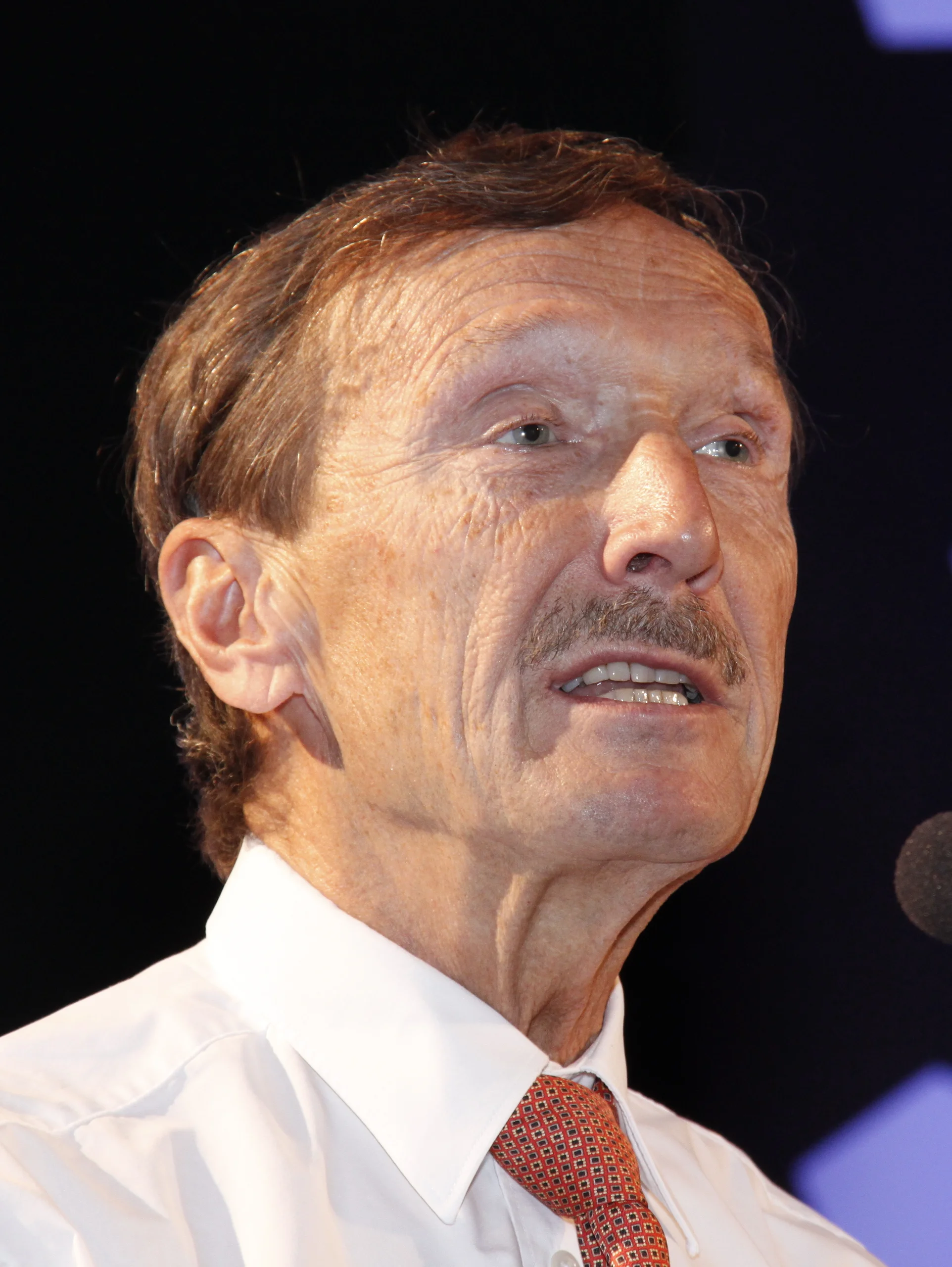
Rolf M. Zinkernagel
 Switzerland
immunologist•university teacher•physician
Also known as: Rolf Martin Zinkernagel, Rolf Zinkernagel, Rolf M Zinkernagel, R. M. Zinkernagel
Birthday
January 6, 1944
Birth Sign
Capricorn
Birthplace
Riehen, Switzerland
Age
82 years old
About
Rolf M. Zinkernagel is a Swiss physician and immunologist whose 1996 Nobel Prize in Physiology or Medicine, shared with Peter C. Doherty, rewrote the textbook on how the immune system spots viral invaders. Now professor emeritus at the University of Zurich, he remains one of the most cited researchers in his field, with a career that has shaped everything from vaccine design to transplant medicine.
His reputation rests on a single elegant discovery made in the early 1970s: T cells only recognize virus-infected cells when the virus's fragments are presented alongside the body's own MHC molecules. That insight explained why some people resist infections better than others and opened the door to modern immunotherapy. He also holds an honorary Companion of the Order of Australia, a rare honour for a non-Australian, reflecting the deep ties he forged during his time Down Under.
Early Life & Background
Rolf Martin Zinkernagel was born on January 6, 1944, in Riehen, a quiet village just outside Basel, Switzerland. He grew up in the same family home where he would later return after years abroad, a rootedness that contrasts with the global arc of his career. His father was a general practitioner, and it was the sight of his father's daily rounds that first steered young Rolf toward medicine.
He studied at the University of Basel, earning his medical degree in 1968. After a brief stint in clinical work, he realised his real interest lay in the laboratory. He moved to the Australian National University in Canberra, where he pursued a PhD in immunology. It was there, in the early 1970s, that he met Peter Doherty, a fellow postdoc with a shared curiosity about how T cells work. Their collaboration produced the experiments that would define both their careers.
Career Growth
The breakthrough came in 1973 at the John Curtin School of Medical Research in Canberra. Zinkernagel and Doherty ran a simple but elegant experiment: they infected mice with lymphocytic choriomeningitis virus and showed that killer T cells only destroyed infected cells if they also matched the mouse's own MHC type. This dual recognition, later dubbed MHC restriction, explained a long-standing puzzle in immunology and earned them the 1996 Nobel Prize.
After his PhD, Zinkernagel moved to the University of Zurich, where he became professor of experimental immunology in 1979 and stayed until his retirement in 2008. His later work focused on immunological tolerance and how the immune system discriminates between self and non-self. He also collaborated with transplant pioneer Thomas Starzl at the University of Pittsburgh, helping to clarify how the immune system handles transplanted organs. His papers in the New England Journal of Medicine and Science remain widely cited.
Career Timeline
Public Image & Style
In the scientific community, Zinkernagel is remembered as a rigorous and imaginative thinker, someone who could distill complex immunology into simple, testable ideas. He is not a celebrity scientist in the mold of Carl Sagan or Neil deGrasse Tyson; his fame is confined to the lab and the lecture hall. Colleagues describe him as generous with his time and ideas, but fiercely demanding when it came to experimental evidence. He rarely gave interviews outside of scientific venues, but when he did, he spoke with a clarity that made his work accessible to a broader audience. His Nobel Prize brought him a brief moment in the international spotlight, yet he quickly returned to the bench, preferring the quiet satisfaction of a well-designed experiment to the glare of publicity.
Fame & Fandom
Rolf M. Zinkernagel occupies a unique space in the public consciousness where reverence is reserved for intellectual legacy rather than celebrity culture. Unlike entertainers who cultivate adoring mobs, his audience consists of immunologists, medical students, and historians of science who revere his work on T-cell recognition without ever gathering to chant slogans or erect billboards. There is no formal name for this group, as the scientific community does not operate with fandom structures; instead, his influence flows through citations, lecture halls, and the foundational textbooks that define modern medicine. While pop stars might see fan campaigns drive their charts, Zinkernagel's impact is measured by the enduring relevance of his 1970s discoveries in the face of global pandemics. The iFANN Global Fame Engine has evaluated his standing, noting that he does not currently hold a placement in the published rankings (Global Top 1,000 or a Top-100 scope list). This absence from the charts reflects the reality that his fame is niche and profound rather than broad and viral. He is not ranked among the most famous people in the world because his contributions are specialized, yet within the specific domain of experimental immunology, his status is absolute. The iFANN evaluation confirms that no fanbase rituals or organized campaigns exist for him, distinguishing his profile from those whose names trend on social media platforms.
Interesting Facts and Legends
Zinkernagel delivered his Nobel Prize lecture in German, a deliberate nod to his Swiss heritage, even though the bulk of his groundbreaking research was conducted in English. His connection to the natural world extends beyond the lab; he is one of the select few laureates honored by having a species of Australian lizard named after him: the Ctenophorus zinkernageli, a small dragon found in the outback. A guiding philosophy for his career was his own description of 'following the question, not the fashion,' a mindset that kept him anchored to fundamental problems rather than chasing trendy topics. Colleagues often note that his first name, Rolf, is frequently misspelled in English publications, yet he rarely corrects the error, preferring to let his scientific output speak for itself. Beyond these personal quirks, his career includes a seminal moment when he and Peter Doherty proved that T cells only recognize virus-infected cells when viral fragments are presented alongside MHC molecules. This discovery, which explained why some individuals resist infections better than others, became the bedrock of modern vaccine design and transplant medicine. During the pandemic, his decades-old work was cited as critical for understanding viral immune responses, proving that his insights remain vital to contemporary health challenges.
Notable Quotes
“The immune system is a powerful weapon, but it must be controlled.”
“I never set out to win a prize. I was just curious about how T cells work.”
“Science is a marathon, not a sprint. You have to be patient.”
“The best experiments are the simple ones that ask a clear question.”
“Australia gave me my scientific home, and I shall always be grateful.”
Family & Personal Life
Details about Zinkernagel's family life are scarce, as he has kept his personal affairs largely out of the public eye. He grew up in Riehen, the son of a general practitioner, and has mentioned that his father's dedication to patients influenced his own choice of career. He is known to have a sister, though her name and occupation have not been widely reported. Zinkernagel married his wife, Annelies, in the late 1960s, and they have two children, a son and a daughter. The family lived in Zurich during his professorship, and he has often spoken of the importance of a stable home life in supporting a demanding research career.
Notable Connections
Peter Doherty, his long-time collaborator and co-Nobel laureate, shared the 1996 prize for their joint work on T cell recognition. Zinkernagel also worked with transplant pioneer Thomas Starzl at the University of Pittsburgh. He has been affiliated with the University of Zurich for most of his career, and holds honorary degrees from several institutions, including the University of Basel.
Relationships & Dating History
Zinkernagel has kept his personal life remarkably private, and public records of his romantic relationships are virtually nonexistent. He married his wife, Annelies, in the late 1960s, and they have been together ever since. The couple has two children, a son and a daughter. His marriage has been a source of stability throughout his demanding career, and he has occasionally mentioned his family in interviews, but always in passing. There are no known divorces, scandals, or high-profile romances in his history. As of 2026, he remains married to Annelies, and they continue to live in Switzerland.
- MarriedAnnelies Zinkernagel1968 - presentCurrentMarried in the late 1960s, they have two children together.
Salary, Net Worth In 2026
$5 Million
iFANN Editorial Team estimate
iFANN currently estimates Rolf Zinkernagel's net worth at $5 Million as of 2026. This figure reflects his decades of service as a university professor, the financial awards associated with his Nobel Prize, and various other professional honours received over his long career. The Nobel Prize in 1996 came with a cash award of 7 million Swedish kronor (about $1 million at the time), which he shared with his co-laureate Peter C. Doherty. His academic salary, while not extravagant by celebrity standards, has been supplemented by lecture fees and research grants over the years. He has never been known for lavish spending, and his lifestyle remains modest, consistent with his focus on scientific work rather than personal wealth.
Awards Won (2)
Rolf Zinkernagel's most prestigious award is the 1996 Nobel Prize in Physiology or Medicine, which he shared with Peter Doherty. He also received the honorary Companion of the Order of Australia in 2006, recognizing his contributions to immunology and his ties to the country. He has been elected to several national academies, including the Leopoldina and the Australian Academy of Science.
1996 · Physiology or Medicine
Discovery of how T cells recognize virus-infected cells
2006 · National honour
For service to medical research
Known For
Discovery of MHC restriction of T cells
1973 · Co-discoverer
Nobel Prize in Physiology or Medicine
1996 · Laureate
Keywords
Sources
Quick Facts
- Profession
- immunologist, university teacher, physician
- Born
- January 6, 1944
- Birthplace
- Riehen, Switzerland
- Gender
- Male
- Birth Sign
- Capricorn
- Nobel Prize
- 1996 Physiology or Medicine
- Honorary Companion of the Order of Australia
- 2006
Personal Details
- Full Name
- Rolf Martin Zinkernagel
- Education
- University of Basel; Australian National University (PhD)
Frequently Asked Questions
Who is Rolf M. Zinkernagel?
What did Rolf M. Zinkernagel win the Nobel Prize for?
When and where was Rolf M. Zinkernagel born?
Is Rolf M. Zinkernagel still alive in 2026?
What is Rolf M. Zinkernagel's net worth?
Similar People
Join the community
fans discussing