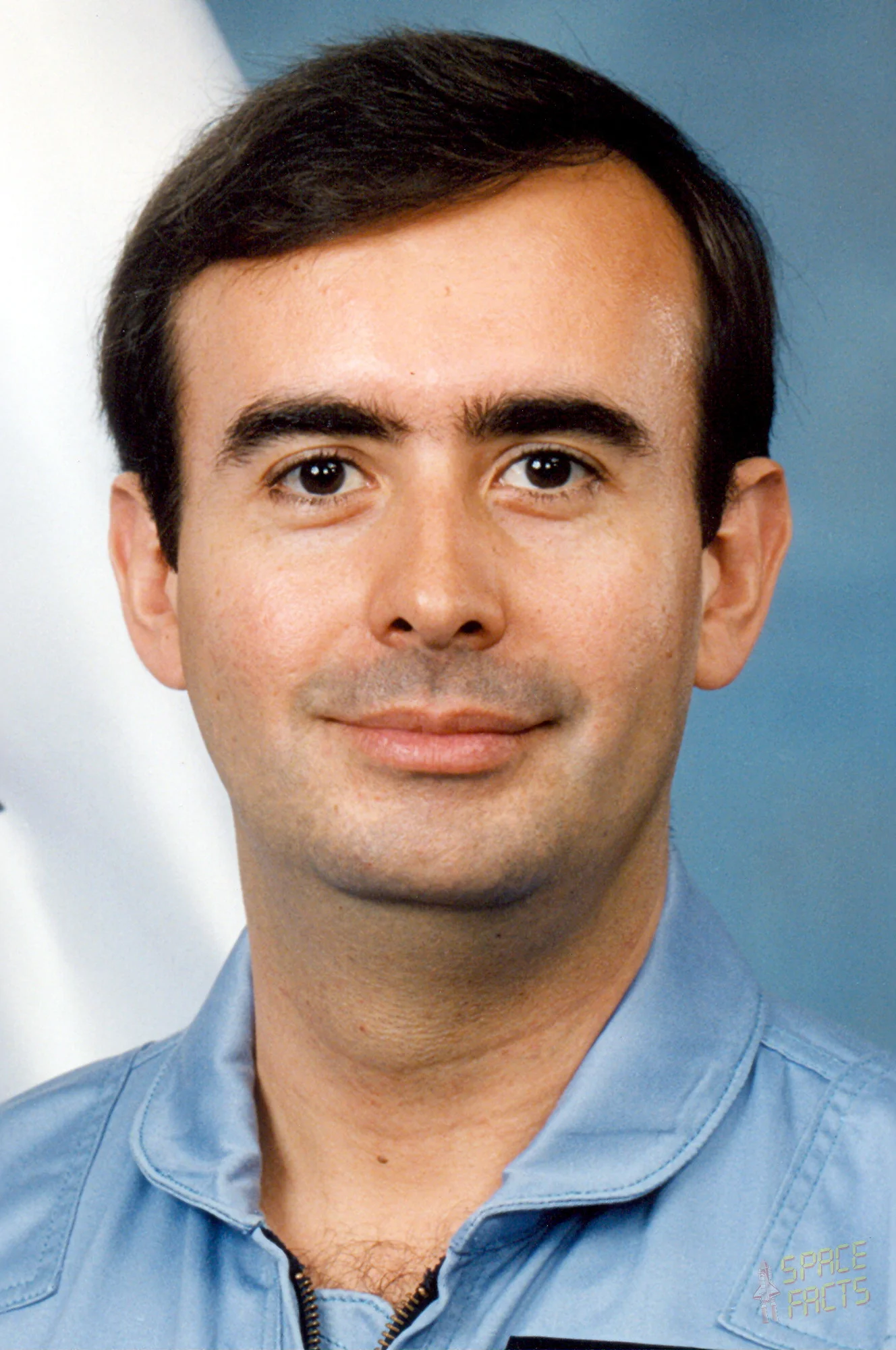
Rodolfo Neri Vela
 Mexico
Also known as: Rodolfo Neri, Neri Vela
Birthday
February 19, 1952
Birth Sign
Pisces
Birthplace
Chilpancingo de los Bravo Municipality, Guerrero, Mexico
Age
74 years old
About
Rodolfo Neri Vela is a Mexican engineer, astronaut, and politician who made history as the first Mexican citizen to travel to space. Born in Chilpancingo de los Bravo Municipality, he flew aboard NASA's Space Shuttle Atlantis during mission STS-61-B in 1985, serving as a payload specialist. That flight placed him second among Latin Americans in space, after Cuba's Arnaldo Tamayo Méndez.
Today, Neri Vela remains an active public figure, advocating for science education and space exploration across Mexico. He has given countless conferences to students and young professionals, and his name is synonymous with the dawn of Mexico's space era. His work extends beyond the cockpit into politics, where he served as a federal deputy, and into academia, where he has lectured widely. Fans of space history and Mexican pride regard him as a national treasure, and his legacy continues to inspire new generations of scientists and engineers.
Early Life & Background
Rodolfo Neri Vela grew up in Chilpancingo, the capital of Guerrero, a state known for its rugged mountains and strong cultural traditions. From an early age, he showed a deep curiosity for how things worked, often taking apart household gadgets to understand their mechanics. His parents, though not engineers themselves, encouraged his scientific bent and made sure he had books and materials to feed his interests.
After finishing high school, Neri Vela enrolled at the National Autonomous University of Mexico (UNAM), where he earned a degree in mechanical and electrical engineering. His academic excellence earned him a scholarship to study abroad, leading him to the University of Essex in England, where he completed a master's degree in telecommunications systems. He then pursued a doctorate at the University of Birmingham, focusing on electromagnetic radiation and antenna design. These years in England sharpened his technical skills and exposed him to the broader world of space research.
Returning to Mexico, Neri Vela worked at the Institute of Electrical Research in Cuernavaca, where he specialized in satellite communications. His expertise caught the attention of Mexican government officials, who were planning to launch the Morelos satellite system. That connection would eventually put him on a trajectory toward the stars.
Career Growth
Neri Vela's breakthrough came in 1985 when he was selected as a payload specialist for NASA's STS-61-B mission. The flight launched on November 26, 1985, aboard the Space Shuttle Atlantis. His primary task was to deploy the Morelos 2 satellite, Mexico's second telecommunications satellite, along with satellites for other nations. The mission lasted eight days, and upon his return, Neri Vela became a national hero.
After the flight, he leveraged his fame to promote science and technology in Mexico. He served as a federal deputy from 1994 to 1997, representing the state of Guerrero. In that role, he pushed for increased funding for scientific research and education. He also held positions at the Mexican Space Agency and continued to work as a researcher and professor.
In the decades since, Neri Vela has remained a prominent voice in Mexico's space community. He has participated in numerous international conferences, collaborated with NASA and the European Space Agency, and mentored young scientists. His 2023 appearance at the World Space Week and his ongoing lectures across Mexico show that his passion for space exploration has not dimmed with age.
Career Timeline
Public Image & Style
In Mexico, Rodolfo Neri Vela is treated with the reverence reserved for national heroes. His image appears in school textbooks, and his name is often invoked in discussions about Mexican achievement. He is known for his warm, approachable demeanor, often taking time to answer questions from young fans after his lectures.
His public persona is that of a dedicated scientist who never lost his childlike wonder for space. He dresses in simple, professional attire, often with a subtle space-themed tie or lapel pin. On social media, he maintains a modest presence, sharing photos from his conferences and occasionally posting about space news. Fans admire his humility and his willingness to engage with the public, especially students from rural areas who might not otherwise have access to such inspiration.
Fame & Fandom (iFAMOUS Rankings)
Rodolfo Neri Vela occupies a unique space in the global consciousness, functioning less as a celebrity with a dedicated fanbase and more as a revered national icon whose legacy is anchored in historical fact rather than pop culture fandom. There is no formal name for his supporters, nor are there organized campaigns, rituals, or grassroots movements typical of modern entertainment figures; instead, his audience consists of students, scientists, and citizens who view him as a symbol of Mexican scientific achievement. While he engages warmly with young fans during lectures, this interaction remains educational rather than performative, lacking the cult-like devotion seen among music or film stars. In August 2026, the iFANN Global Fame Engine evaluated his standing and determined that Rodolfo Neri Vela does not currently hold a placement in the published rankings, including the Global Top 1,000 or any Top-100 scope list. This absence of a numerical rank reflects his status as a figure of historical importance rather than one driven by contemporary media consumption metrics. His influence is measured in textbooks, museum displays, and the inspiration he provides to subsequent generations of astronauts, such as Katya Echazarreta, rather than search volume or social media engagement. The scale of his recognition is vast but diffuse, permeating national identity without concentrating into the specific, high-intensity fandoms that drive the global charts. Consequently, while his name is synonymous with the dawn of Mexico's space era, the data confirms he remains outside the current competitive hierarchy of global fame.
Interesting Facts and Legends
Rodolfo Neri Vela holds an amateur radio license that permits direct communication with astronauts aboard the International Space Station, a hobby he maintains alongside a collection of space memorabilia that includes a fragment from the Space Shuttle Atlantis. He is also a published author of several books on space technology and telecommunications. A lesser-known detail of his career involves a small Mexican flag he carried during the STS-61-B mission; this flag had previously been taken to the summit of Mount Everest by a Mexican mountaineer and is now displayed at the National Museum of Mexican History. He also holds the distinction of being the first person to eat a tortilla in space, a feat that became a cultural touchstone and influenced NASA's food planning for future missions like Artemis II. Beyond these facts, his legacy is defined by the verified event of becoming the first Mexican citizen to fly into space on November 27, 1985, aboard the Space Shuttle Atlantis where he spent 165 hours conducting experiments. The image of him eating a tortilla in zero gravity has evolved into enduring folklore, frequently cited in modern discussions about Latinx representation in space exploration and the evolution of space cuisine.
Notable Quotes
“I have dedicated my life to inspiring new generations to look beyond the horizon.”
“Space is not just for astronauts; it is for all of humanity.”
“Mexico has the talent and the will to reach the stars.”
“Science is the engine of progress, and education is its fuel.”
“When I looked at Earth from space, I saw no borders, only one planet.”
Family & Personal Life
Neri Vela keeps his family life private, but it is known that he is married and has children. His wife, whose name has not been publicly disclosed, has supported his career from the beginning. They have two daughters, one of whom followed in his footsteps into engineering. The family has lived in Mexico City for many years.
Growing up in Guerrero, Neri Vela was the eldest of three siblings. His younger brother became a doctor, and his sister pursued a career in law. Their parents, a schoolteacher and a small business owner, instilled in them the value of education and hard work. Neri Vela has often credited his mother for fostering his early interest in science, as she would bring home science magazines from the library.
Notable Connections
Relationships & Dating History
Details about Rodolfo Neri Vela's romantic relationships are not widely publicized. He has kept his personal life out of the spotlight, focusing public attention on his professional achievements. It is known that he is married, though his wife's name has not been officially disclosed in the media. The couple has been together for several decades, and they have two daughters.
As of 2026, Neri Vela is married and continues to live a private family life in Mexico City. His marriage has remained stable, and there have been no public reports of divorces or high-profile relationships. His dedication to his family is evident in his occasional mentions of them during interviews, though he prefers to keep those details guarded.
- MarriedUnknownCurrentNeri Vela is married, but his wife's name and the start date of their marriage are not publicly known.
Salary, Net Worth In 2026
$5 Million
iFANN Editorial Team estimate
iFANN currently estimates Rodolfo Neri Vela's net worth at $5 Million as of 2026. His financial standing is derived from a diverse portfolio that includes his engineering career, public speaking engagements, book royalties, and his tenure as a federal deputy. While his initial flight aboard NASA's Space Shuttle Atlantis provided a government salary, his wealth has been significantly bolstered by post-flight activities. He has authored multiple books on space and telecommunications that continue to generate sales across Mexico and Latin America. Additionally, he receives substantial honoraria for the numerous conferences and lectures he delivers throughout the country. His ongoing involvement with the Mexican Space Agency and various government bodies has ensured a stable income stream over the decades. This steady accumulation of assets reflects his enduring prominence as a public figure and his successful transition from astronaut to educator and politician.
Awards Won (1)
Rodolfo Neri Vela has been honored with the U.S. Astronaut Hall of Fame induction, recognizing his contributions to space exploration. He has also received various honors from the Mexican government and scientific organizations for his role in advancing Mexico's space program.
2010 · Lifetime Achievement
Space Exploration
Known For
First Mexican in Space
1985 · Payload Specialist on STS-61-B
Morelos 2 Satellite Deployment
1985 · Satellite Deployment Specialist
U.S. Astronaut Hall of Fame
2010 · Inductee
Keywords
Sources
Quick Facts
- Profession
- Engineer, Astronaut, Politician
- Born
- February 19, 1952
- Birthplace
- Chilpancingo de los Bravo Municipality, Guerrero, Mexico
- Gender
- Male
- Birth Sign
- Pisces
- Nationality
- Mexican
- Education
- UNAM, University of Essex, University of Birmingham
- Known For
- First Mexican in space
Personal Details
- Full Name
- Rodolfo Neri Vela
- Education
- National Autonomous University of Mexico (UNAM), University of Essex, University of Birmingham
Frequently Asked Questions
How old is Rodolfo Neri Vela?
What is Rodolfo Neri Vela's net worth in 2026?
Is Rodolfo Neri Vela still alive?
What is Rodolfo Neri Vela best known for?
How did Rodolfo Neri Vela become an astronaut?
Similar People
Join the community
fans discussing