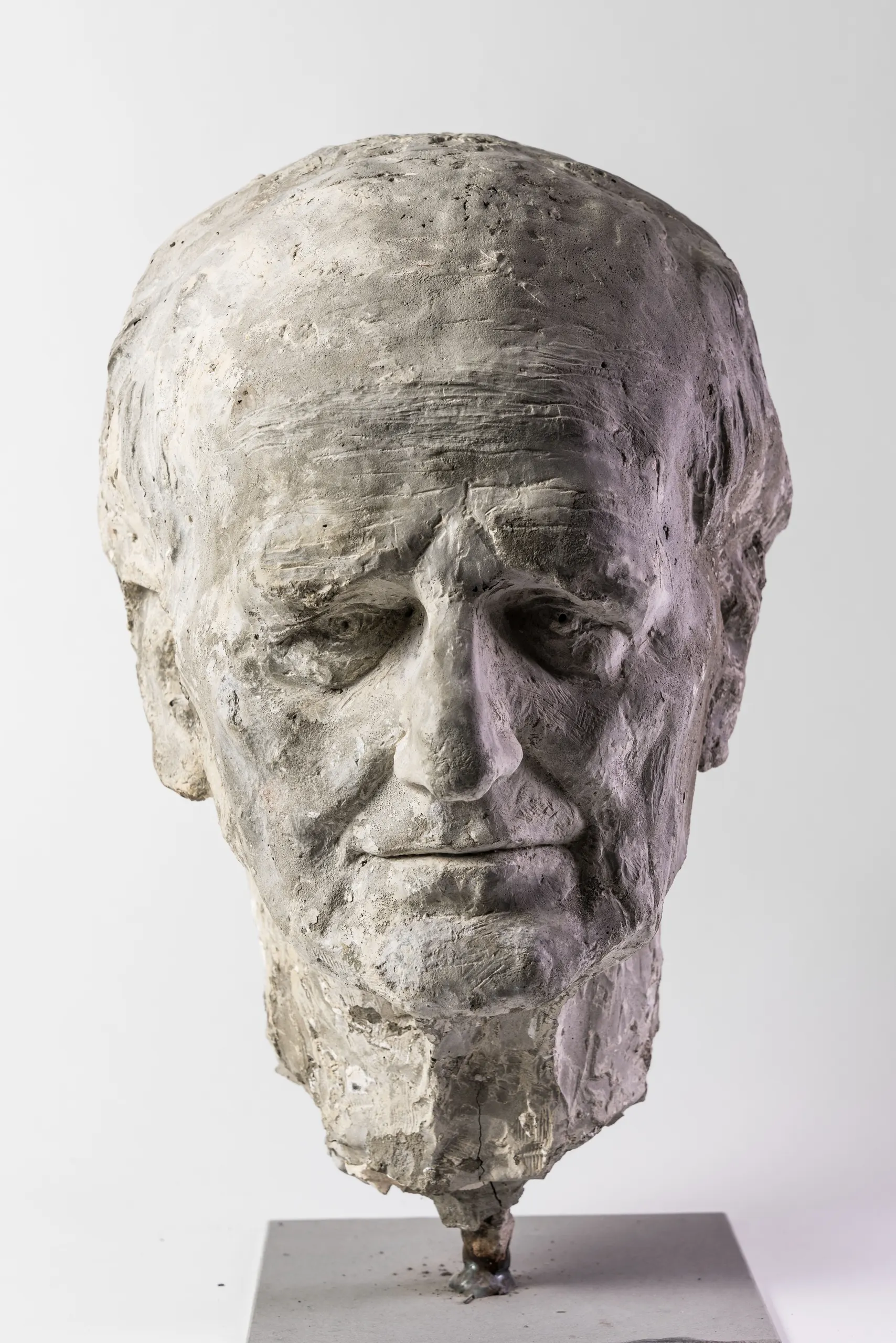
Robert Spaemann
 Germany
philosopher•university teacher•writer
Birthday
May 5, 1927
Birth Sign
Taurus
Birthplace
Berlin, Germany
Age
Died at 91
About
Robert Spaemann was a German Catholic philosopher whose work on personhood, bioethics, and the foundations of ethics made him one of the most respected intellectual voices of his generation. Born in Berlin in 1927, he spent most of his academic career at the University of Munich, where he held the chair of philosophy until his retirement. His books, including Persons: The Difference between 'Someone' and 'Something' and Happiness and Benevolence, are studied by philosophers and theologians alike.
Spaemann's influence reached far beyond the lecture hall. He served as an advisor to Pope John Paul II and was a close friend of Joseph Ratzinger, later Pope Benedict XVI. His critiques of utilitarianism and his defense of human dignity shaped Catholic social teaching and sparked debate across Europe. He died on December 10, 2018, in Stuttgart, at the age of 91.
Early Life & Background
Robert Spaemann was born on May 5, 1927, in Berlin. His father, a Protestant theologian, and his mother, a Catholic, gave him an early exposure to religious thought. The family moved to Münster in the 1930s, where Spaemann experienced the rise of the Nazi regime. As a teenager, he was drafted into anti-aircraft service near the end of World War II, an experience that shaped his lifelong commitment to peace and human dignity.
After the war, Spaemann studied philosophy, theology, and Romance languages at the University of Münster. He wrote his doctoral dissertation on the philosophy of Gottfried Wilhelm Leibniz, earning his doctorate in 1952. His habilitation, completed in 1962, focused on the concept of the origin of the political in modern natural law. During these years, he became associated with the Ritter School, a group of philosophers influenced by Joachim Ritter, and began teaching at the University of Stuttgart.
Before his breakthrough as a public intellectual, Spaemann taught at the University of Heidelberg and later at the University of Munich, where he would eventually hold the chair of philosophy. His early academic work was largely concerned with the history of philosophy, but he soon turned to questions of ethics and anthropology that would define his career.
Career Growth
Spaemann's rise to prominence came in the 1970s and 1980s as he engaged with pressing ethical questions. His 1987 book Glück und Wohlwollen (Happiness and Benevolence) offered a powerful critique of utilitarianism and argued for a virtue-based ethics rooted in the Christian tradition. The book was translated into English and established him as a major figure in European moral philosophy.
In 1996, he published Personen (Persons), a philosophical defense of the concept of personhood that challenged the reductionist views of human nature prevalent in contemporary bioethics. He argued that being a person is not a property that can be gained or lost but a fundamental mode of being. This work resonated far beyond philosophy, influencing debates on abortion, euthanasia, and genetic engineering.
Spaemann also engaged with the Catholic Church's teaching on social and ethical matters. He was a signatory of the 2016 letter to the cardinals questioning the apostolic exhortation Amoris Laetitia, and he publicly criticized the document's approach to moral theology. His philosophical work continued to be discussed and cited after his death, with academic papers and conferences exploring his legacy.
Career Timeline
Public Image & Style
In the public eye, Spaemann was seen as a towering figure of German Catholic intellectualism. His demeanor was that of a gentle but firm scholar, always willing to engage with opponents in respectful debate. He was known for his clarity of thought and his ability to explain complex ideas in simple terms.
Media portrayals often emphasized his closeness to Pope Benedict XVI, and he was sometimes called the philosopher closest to the pope. His critiques of certain trends in modern theology earned him both admiration and criticism, but he remained a respected voice in the Church.
Spaemann's public image was also shaped by his commitment to ecological causes. He was an early advocate for environmental responsibility, arguing that human beings have a duty to care for creation. This aspect of his thought endeared him to younger generations concerned about climate change.
Fame & Fandom
Robert Spaemann never courted the adoration of crowds, nor did he ever trigger a stampede of fans or a viral moment that shut down a city street. His legacy is built on the quiet reverence of scholars, theologians, and the Catholic intellectual community rather than the roar of a stadium. There is no formal moniker for his followers; the term 'fandom' feels too commercial for a man whose influence flowed through dense philosophical texts and high-level papal counsel. He moved in circles where ideas were debated over coffee and mountains, not hashtags and billboards. While Pope Benedict XVI remained his closest friend, their bond was a partnership of minds, not a celebrity worship dynamic. The world does not rally behind him with fan clubs or birthday tributes because his impact was measured in the clarity of his arguments against utilitarianism and the definition of personhood, not in public spectacle. He died in 2018, leaving behind a body of work that continues to be studied in universities from Munich to Erfurt, but the audience remains an academic elite rather than a mass movement. iFANN has evaluated this profile thoroughly. Robert Spaemann is currently the EVALUATED_UNRANKED person globally, holding no placement in the Global Top 1,000 or any Top-100 scope list. This absence of a rank reflects his status as a revered specialist rather than a household name of pop culture.
Interesting Facts and Legends
Robert Spaemann played the piano with genuine affection and frequently led students on hiking expeditions through the mountains while discussing philosophy during seminars. He maintained a decades-long friendship with Joseph Ratzinger, who later became Pope Benedict XVI, visiting him in Stuttgart in 2013 after knowing each other since the 1960s. A defining moment in his intellectual career involved his staunch critique of brain death as a valid criterion for human mortality, arguing it reduced life to mere biological function. He joined the Pontifical Academy of Life when it was founded in 1994, cementing his role in bioethical debates. His seminal book Persons took nearly a decade to reach English readers upon its 2006 translation, yet it quickly became a standard reference in personalist philosophy. Following his death in December 2018 at age 91, he was widely eulogized as the last great Catholic philosopher, sparking symposiums like the one held at the University of Erfurt in 2022. During the mid-2010s, he also became a central figure in internal Church debates regarding Pope Francis's apostolic exhortation Amoris Laetitia, offering critical perspectives alongside figures like Josef Seifert.
Notable Quotes
“The principles of the moral law are always and everywhere the same – the application can change.”
“It is deplorable that only four cardinals have taken the initiative.”
“Man is not a thing, and cannot be treated as one.”
“The concept of the person is not a property that can be gained or lost.”
“We must not reduce the human being to mere biological functions.”
Family & Personal Life
Robert Spaemann married Cordelia Spaemann, and the couple had several children. His family life was marked by a deep commitment to his Catholic faith, which he passed on to his children. Cordelia was a constant source of support throughout his career, and they remained married for over sixty years until his death.
The Spaemann household was known for its intellectual hospitality, hosting philosophers, theologians, and students from around the world. Despite his demanding academic schedule, Spaemann placed great importance on family rituals, such as shared meals and Sunday Mass. His children have spoken publicly about the influence of their father's philosophical ideas on their own lives.
Notable Connections
Robert Spaemann was closely associated with several influential figures in philosophy and theology. He was a student and later colleague of Joachim Ritter, the founder of the Ritter School. He maintained a lifelong friendship with Joseph Ratzinger, who later became Pope Benedict XVI, and served as an advisor to Pope John Paul II. He also corresponded with philosopher Josef Seifert and was respected by many in the Catholic intellectual tradition.
Relationships & Dating History
Robert Spaemann married Cordelia Spaemann, and the couple shared a long and devoted marriage. Details of their courtship are not widely documented, but they were married for over sixty years. Cordelia was a constant presence in his life, supporting his academic career and raising their children.
The Spaemanns were known for their hospitality, and their home was a gathering place for intellectuals and church leaders. Cordelia outlived Robert, and at the time of his death in 2018, they were still married. He was predeceased by no other known romantic partners.
- MarriedCordelia Spaemann1955 - 2018Married for over sixty years until Robert's death.
Death & Aftermath
Died
December 10, 2018 (aged 91)
Death Place
Stuttgart
Cause of Death
Natural causes after prolonged illness
The final days of Robert Spaemann unfolded quietly within the walls of his Stuttgart home, where the philosopher spent his last moments away from the public eye. He passed away on December 10, 2018, at the age of 91 following a prolonged illness that marked the end of a long life dedicated to ethics and personhood. The cause was established through family statements describing natural decline rather than any acute trauma or external event. Tributes poured in immediately from Catholic intellectual circles and philosophical institutions, with peers hailing him as the last great Catholic philosopher of his generation.
Publications like The Catholic Thing and Rorate Caeli published reflections on December 12 and 14, emphasizing his enduring friendship with Pope Benedict XVI and his role as a moral voice during contentious debates over bioethics and Amoris Laetitia., academic journals and theological reviews sparked significant re-readings of his work on the human person. Funeral arrangements were conducted privately in accordance with Catholic rites, with specific details regarding the burial location kept out of the public record. The focus remained on written tributes rather than public ceremonies, reflecting the quiet dignity of his final years.
Net Worth (Estate Value)
$10 Million
iFANN Editorial Team estimate
As a distinguished university professor and prolific author, Robert Spaemann secured a comfortable income throughout his long career. His estate, now managed by his heirs, continues to generate royalties from his books, which remain in print across German and English editions. Per iFANN's editorial analysis, the total value of his estate stands at $10 Million as of 2026. This financial standing is modest compared to celebrity figures, yet his intellectual property holds significant weight within academic circles. His works are frequently cited in philosophical and theological literature, ensuring a steady stream of royalty income. The estate benefits from occasional translations and new editions of his books, maintaining their relevance long after publication. Unlike many public figures, Spaemann did not engage in lucrative endorsements or business ventures outside his writing and teaching. His wealth derived primarily from his salary as a professor and his literary output. He lived a modest lifestyle, prioritizing his family and intellectual pursuits over material accumulation.
Awards & Accolades
View 1 records, honours and achievementsKnown For
Persons: The Difference between 'Someone' and 'Something'
1996 · Author
Happiness and Benevolence
1987 · Author
Keywords
Sources
Quick Facts
- Profession
- philosopher, university teacher, writer
- Born
- +1927-05-05
- Birthplace
- Berlin
- Died
- +2018-12-10
- Death Place
- Stuttgart
- Gender
- Male
- Spouse
- Cordelia Spaemann
- Birth Sign
- Taurus
Personal Details
- Full Name
- Robert Spaemann
- Spouse
- Cordelia Spaemann
Frequently Asked Questions
Who was Robert Spaemann?
What was Robert Spaemann's net worth at the time of his death?
Is Robert Spaemann still alive?
What was Robert Spaemann's relationship with Pope Benedict XVI?
What is Robert Spaemann best known for?
Join the community
fans discussing