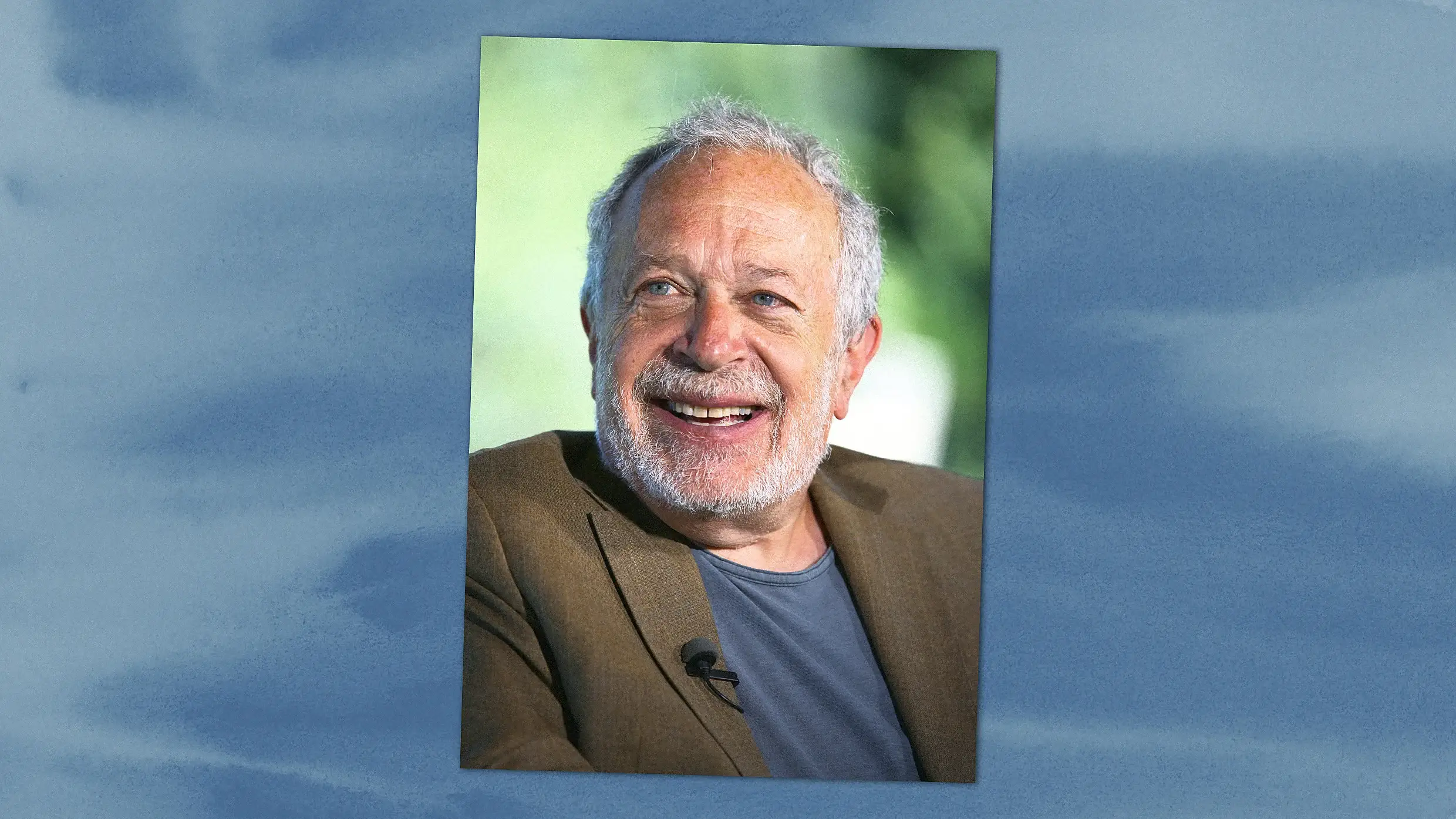
Robert Reich
 United States
economist•professor•author•political commentator•former U.S. Secretary of Labor
Also known as: Bob Reich, Robert B. Reich
Birthday
June 24, 1946
Birth Sign
Cancer
Birthplace
Scranton, Pennsylvania, United States
Age
80 years old
Height
4 ft 11 in (150 cm)
About
Robert Reich is an American economist, professor, author and political commentator who spent seven years in the White House orbit and three decades in front of a classroom before becoming one of the most widely read progressive voices in the country. He served as secretary of labor under Bill Clinton from 1993 to 1997, and in 2008 Time named him one of the ten most effective cabinet secretaries of the century.
These days his output runs through a Substack newsletter, a steady stream of Guardian columns, YouTube explainers and the Inequality Media nonprofit he co-founded with filmmaker Jacob Kornbluth. His books, including The Work of Nations and Saving Capitalism, have been translated into dozens of languages, and his 2013 documentary Inequality for All won a Sundance jury prize. He holds emeritus status at UC Berkeley's Goldman School of Public Policy, where he taught his last class in spring 2023.
At 80, Reich is less a retired academic than a working pundit. He posts daily, livestreams a regular "Coffee Klatch" session, and campaigns on inequality, money in politics and the state of American democracy. Fans come to him for plain-spoken economics delivered without hedging.
Early Life & Background
Scranton, Pennsylvania, in the years after the Second World War was a coal town in slow decline, and Reich grew up there the son of a clothing retailer. He has described himself as a small child, short enough that other kids picked on him, and he has traced his politics to the values he absorbed at home and in that working-class community rather than to any textbook.
He left Scranton for Dartmouth College, then crossed the Atlantic on a Rhodes Scholarship to study at Oxford. A law degree from Yale followed. Those credentials opened doors in Washington, and Reich walked through them: he worked in the administrations of Gerald Ford and Jimmy Carter, learning the machinery of federal policy from the inside.
By the early 1980s he had made the turn from lawyer and bureaucrat to teacher and writer. Harvard's John F. Kennedy School of Government hired him in 1981, and he stayed eleven years. The book that changed his profile came in 1991, when The Work of Nations climbed the best-seller lists and turned a policy professor into a public intellectual. Two years later Bill Clinton called.
Career Growth
Clinton's appointment made Reich the secretary of labor from 1993 to 1997, a stretch that put him at the center of debates over job training, minimum wage and the North American Free Trade Agreement. He left the cabinet and landed at Brandeis University's Heller School, where he was professor of social and economic policy from 1997 to 2005. In January 2006 he moved west to become Chancellor's Professor of Public Policy at UC Berkeley's Goldman School, later holding the Carmel P. Friesen chair. He taught his final Berkeley class in spring 2023 and is now emeritus.
The books kept coming: Supercapitalism in 2007, Aftershock in 2010, Saving Capitalism in 2015. Then he took the argument to film. Inequality for All, directed by Jacob Kornbluth, won a U.S. Documentary Special Jury Award for Achievement in Filmmaking at Sundance in 2013. The pair reunited for Saving Capitalism, which debuted on Netflix in November 2017, and they co-founded the nonprofit Inequality Media to keep producing short explanatory videos.
Recent years have brought a heavier publishing and broadcasting load. He writes regular Guardian columns, including a September 2026 piece on Trump's midterm strategy and an October 2026 essay on what he called the president's moral squalor. His Substack runs frequent posts and a livestream series he calls Coffee Klatch, with episodes such as "It Begins" and "Defund Musk and Impeach Trump" in October 2026. That same month he endorsed congressional candidates alongside Tom Steyer, appeared in a live Intercept conversation on the midterms and democracy, and joined Berkeley economics professors in an October 1 discussion with students about a billionaire tax. He also chairs the board emeritus of Common Cause.
Career Timeline
Public Image & Style
Reich's public presence is built on plainness. He appears in rolled sleeves or a simple sweater, often at a whiteboard, explaining an economic idea in under three minutes. No podium, no teleprompter, no jargon. The format has barely changed in a decade and that consistency is the point.
In print he is sharper. His Guardian columns and Substack posts carry a prosecutorial edge, naming companies and officials directly and closing with a call to action. Media outlets treat him as a reliable progressive voice on inequality and money in politics, and he leans into the role: the professor who never stopped lecturing, just found a bigger classroom.
Fame & Fandom (iFAMOUS Rankings)
iFANN has not yet gathered fame data for Robert Reich, so there is no published placement to report as of October 2026. He is also not on the September 2026 iFAMOUS Rankings flagship list. What the numbers do show is reach: his Facebook page carries roughly 5.24 million followers, and his audience stretches across X, Instagram, YouTube and Substack.
That audience has no formal name. Nobody calls themselves a Reich-head or a Reichian, at least not in any organized way. What exists instead is a politically engaged readership that treats his newsletter as a daily briefing, forwards his whiteboard videos into family group chats, and shows up for his Coffee Klatch livestreams to ask questions in real time. The relationship is closer to that of a columnist and his subscribers than a pop star and a fandom.
The comment sections function as a town hall. Readers argue policy, share local organizing news, and push back when they think he has gone too soft or too far. Reich answers some of them directly, and the livestream format lets him respond on camera to questions sent in during the broadcast. For an 80-year-old economist, the engagement rate is unusual, and it is the main reason his arguments still travel.
Interesting Facts and Legends
Reich stands about 4 feet 11 inches tall, a fact he has turned into a running theme in his writing and speaking rather than a subject to avoid. He has also spoken publicly about living with cervical dystonia, a neurological movement disorder, and about the bullying he endured as a small kid in Scranton.
He is a genuine Rhodes Scholar, one of the more quietly impressive lines on a resume already crowded with them. His newsletter carries the tagline "exposing where power lies," a phrase that sums up his whole approach better than any job title.
A story his admirers still retell: Time magazine's 2008 verdict that he was among the ten most effective cabinet secretaries of the century, a ranking that put a labor secretary in the same breath as treasury and state department giants. And there is the whiteboard. Reich's short video explainers, drawn out marker by marker, became a recognizable format long before every professor with a camera tried the same thing.
Notable Quotes
“Capitalism is compatible with democracy as long as democracy is in the driver's seat.”
“Inequality is a choice.”
“Daily newsletter exposing where power lies, and how it's used and abused.”
Family & Personal Life
Reich's first wife was Clare Dalton, a law professor. They had two sons, Sam and Adam, before the marriage ended in divorce. He later married Perian Flaherty, a photographer and writer, and the couple have been together since.
He has been open about the household he grew up in, describing a Scranton family that ran a clothing business and a community that shaped his instincts about work and fairness. His sons have stayed largely out of the public eye, though Reich occasionally references family life in his newsletter and videos. He and Flaherty live in the Berkeley area, where he has been based since his 2006 move to the Goldman School.
Notable Connections
Robert Reich's closest professional ties run through UC Berkeley's Goldman School of Public Policy, the nonprofit Inequality Media he co-founded with director Jacob Kornbluth, and Common Cause, where he is board chair emeritus. He is also linked to the Clinton administration, the Rhodes Scholar network, and a long list of progressive publications and podcasts that host him as a regular commentator.
Relationships & Dating History
Reich's first marriage was to Clare Dalton, a law professor. The couple had two sons, Sam and Adam, and the marriage ended in divorce. Dalton went on to a career in legal education and mediation.
He later married Perian Flaherty, a photographer and writer. The pair have kept their life together largely private, and she appears rarely in his public commentary. Search interest in a "new wife" has circulated online, but no credible source documents a third marriage, and the latest reported status as of 2026 is that he is married to Flaherty.
Beyond those two marriages, Reich has no documented high-profile dating history. He has spent more of his public energy on economic arguments than on his personal life, and his romantic history has stayed out of the tabloids in a way that is rare for someone with his profile.
- DivorcedClare DaltonLaw professor; the couple had two sons, Sam and Adam, before divorcing.
- MarriedPerian FlahertyCurrentPhotographer and writer; the couple have kept their life together largely private.
Salary, Net Worth In 2026
$8 Million
iFANN Editorial Team estimate
Robert Reich has never chased the kind of money that turns a public intellectual into a brand. His income comes from a spread of modest but steady sources: book royalties from a shelf of titles that includes The Work of Nations, Supercapitalism and Saving Capitalism, paid speaking engagements, a Substack subscription business, and years of university salary at Harvard, Brandeis and Berkeley.
The documentary work is not a big earner either. Inequality for All and Saving Capitalism were made to change minds, not to build a fortune, and Inequality Media operates as a nonprofit. There are no reported major endorsements, no private equity seats, no sprawling real estate portfolio.
iFANN currently estimates Reich's net worth at approximately $8 million, a figure that reflects decades of royalties, lecture fees and academic pay rather than any single windfall. The Substack has grown into a meaningful piece of the picture as subscription newsletters became a real revenue stream for writers in the 2020s, but it is a rounding error next to what a cable news contract would bring. He has been candid about the irony of a labor secretary's salary being what it is, and he has never shown interest in the alternatives.
Awards Won (1)
2013 · Documentary Filmmaking
Inequality for All
Known For
Secretary of Labor under Bill Clinton
1993 · U.S. Secretary of Labor
The Work of Nations
1991 · Author
Inequality for All
2013 · Documentary subject and co-creator
Saving Capitalism
2015 · Author
Saving Capitalism (Netflix documentary)
2017 · Documentary subject and co-creator
Keywords
Sources
Quick Facts
- Profession
- economist, professor, author, political commentator
- Born
- June 24, 1946
- Birthplace
- Scranton, Pennsylvania
- Gender
- Male
- Birth Sign
- Cancer
- Height
- 4 ft 11 in (150 cm)
- Education
- Dartmouth College; Oxford (Rhodes Scholar); Yale Law School
- Spouse
- Perian Flaherty
- Children
- Two sons, Sam and Adam
Personal Details
- Full Name
- Robert Bernard Reich
- Height
- 4 ft 11 in (150 cm)
- Spouse
- Perian Flaherty
- Children
- Two sons, Sam and Adam, from his first marriage
- Education
- Dartmouth College (BA); University of Oxford (Rhodes Scholar); Yale Law School (JD)
Filmography
12
Total
3
Film
9
TV
Frequently Asked Questions
What is Robert Reich best known for?
What is Robert Reich doing now in 2026?
What condition does Robert Reich have?
Is Robert Reich married?
How did Robert Reich become famous?
Similar People
Join the community
fans discussing