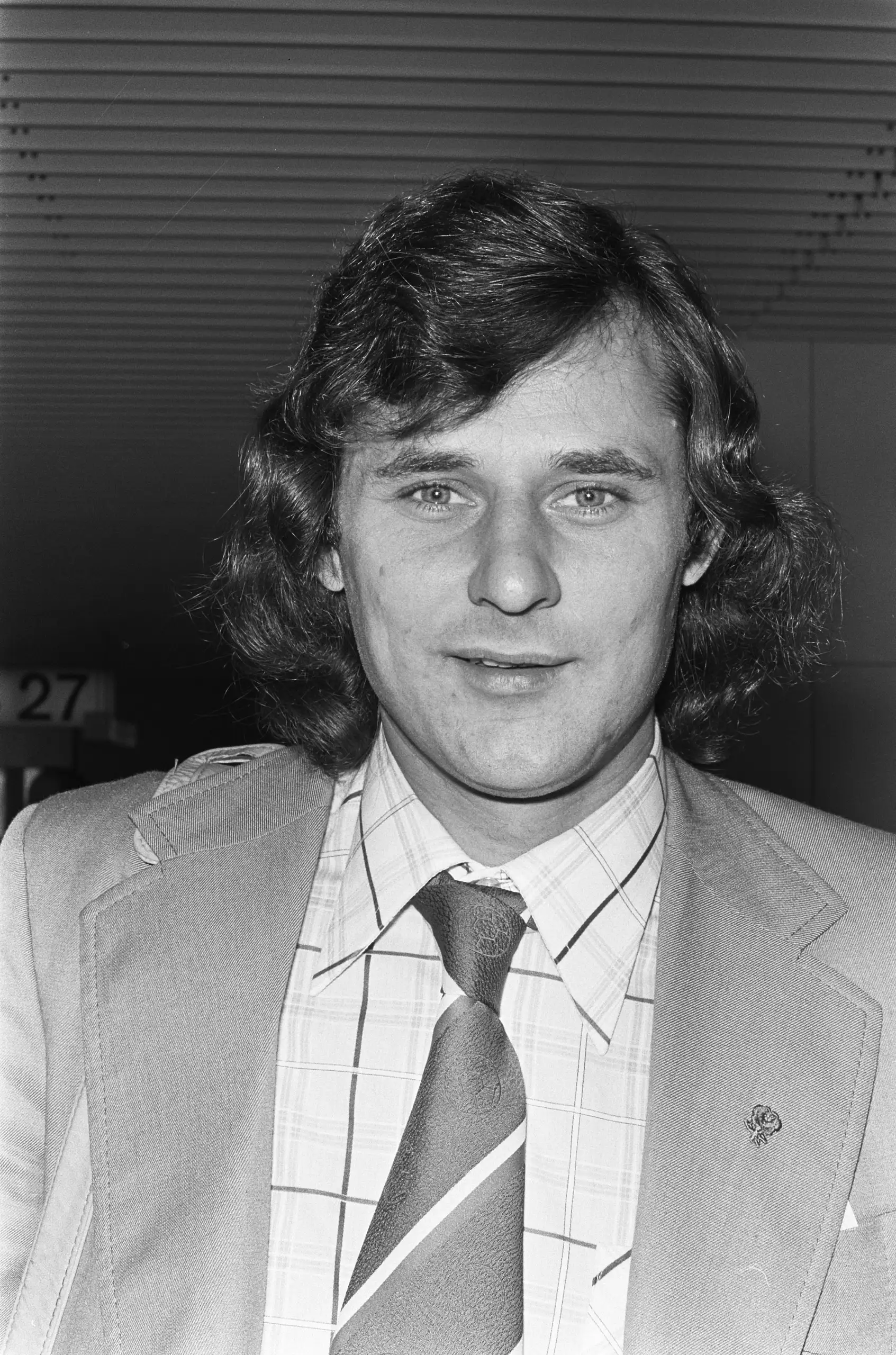
Robert Gadocha
 Poland
Also known as: Winnetou, Gucik
Birthday
January 10, 1946
Birth Sign
Capricorn
Birthplace
Kraków, Poland
Age
80 years old
Height
5 ft 10 in (1.78 m)
About
Robert Gadocha is a celebrated Polish former professional footballer born on January 10, 1946, in Kraków, Poland. Standing at approximately 5 feet 7 inches (1.70 m) to 5 feet 10 inches (1.78 m), he played primarily as a dynamic left winger and is widely regarded as one of the greatest Polish players of all time. His career is defined by breaking political barriers for Eastern Bloc athletes, historic World Cup performances, and a legacy intertwined with the complexities of Cold War-era sports politics. Gadocha earned 62 caps for his country between 1967 and 1975, scoring 16 goals while helping Poland secure an Olympic gold medal and a third-place finish at the World Cup. He spent the final years of his playing career in North America with the Chicago Sting and Hartford Hellions before retiring. Today, he lives quietly in Poland, remembered for his historic achievements and the legendary status he holds among football historians and fans alike.
Gadocha remains a revered figure in Polish sports culture, known for his technical skill and creativity on the pitch. Unlike modern celebrities, he did not cultivate a flashy persona; instead, his reputation rests on his contributions to the national team and his pioneering role in breaking barriers for Polish athletes abroad. The narrative surrounding him emphasizes resilience and skill over commercial appeal. As of 2026, he is 80 years old, residing in the Kraków region where he continues to be honored as a regional legend despite the absence of active fan clubs or social media campaigns.
Early Life & Background
Robert Gadocha was born into a family with deep roots in football. His father, Marian Gadocha, played for Zakrzowianka and introduced his son to the sport at a very young age. This early exposure sparked a passion that would define his life. As a child growing up in Kraków, Robert attended the Technical Vocational School (Techniczna Szkoła Zawodowa) where he balanced education with his developing athletic talents. His journey began locally with Garbarnia Kraków in 1957, where he spent eight years honing his skills on the grass fields of his hometown. During this period, he displayed exceptional technical ability and creativity from his youth, often displaying a reddish complexion after exertion which earned him the affectionate nickname "Winnetou" from teammates and fans. He also went by the name "Gucik," reflecting his close bonds with peers.
Before making his mark on the international stage, Gadocha moved to Wawel Kraków, further refining his abilities within the strict structures of the Polish football system. The era was defined by state control over player transfers, making any move outside the domestic league nearly impossible without government approval. Despite these constraints, Gadocha's exceptional talent made him a standout player. He developed a reputation for his dribbling skills and vision, preparing him for the challenges of competing against top-tier European opposition. His time in the local leagues served as a crucial foundation, navigating the rigid structures of Polish football under the communist regime where player transfers were strictly controlled. By 1965, his readiness for the next step was evident, setting the stage for his eventual transfer to Legia Warszawa and his historic breakthrough in 1973.
Career Growth
Gadocha's professional trajectory shifted dramatically in 1965 when he joined Legia Warszawa, establishing himself as a key figure in the Polish league. His breakthrough came in 1973 when he secured special authorization to transfer to FC Nantes in France. At 29 years old, this move made him the first Polish player legally permitted to play professionally abroad, setting a precedent for future generations of Eastern European athletes. He played for Nantes until 1975, showcasing his skills on the French stage and proving that Polish players could succeed in Western Europe.
On the international front, Gadocha was instrumental in Poland's most successful periods. He helped the national team win the gold medal at the 1972 Munich Olympics, defeating Hungary in the final. His most famous moment occurred during the 1974 FIFA World Cup in West Germany. In the group stage match against Haiti, Poland won 7–0, and Gadocha provided four assists in that single game. This performance tied the World Cup record for the most assists in a match, a feat shared only with Giovanni Ferrari. Although he was controversially excluded from the semi-final and third-place playoff due to disputes over bonuses and political pressure from state security services, his contribution to the team's bronze medal finish remains undeniable.
Following his European career, Gadocha moved to the United States in 1978 to join the Chicago Sting in the North American Soccer League. He later played for the Hartford Hellions in the Major Indoor Soccer League during the 1980–81 season before officially retiring from professional football in 1981. His legacy was reaffirmed in August 2026 when he was nominated for the PZPN Century Team, cementing his status as a regional legend. His income historically came from club salaries in Poland, France, and the NASL/MISL, followed by modest pensions and occasional appearances post-retirement.
Career Timeline
Public Image & Style
Robert Gadocha is portrayed in media and historical accounts as a humble, technically gifted player who was unfortunately caught in the crossfire of political intrigue. His public image is that of a tragic hero whose brilliance was sometimes compromised by external forces beyond his control. Fans and historians remember him for his dribbling skills, vision, and ability to change the course of a game with his passing. Unlike modern celebrities, Gadocha did not cultivate a flashy persona; instead, his reputation rests on his contributions to the national team and his pioneering role in breaking barriers for Polish athletes abroad. The narrative surrounding him emphasizes resilience and skill over commercial appeal.
Media portrayals focus on his technical skill and the tragedy of his 1974 World Cup experience, casting him as a symbol of the clash between athletic brilliance and Cold War politics. He is often cited in discussions about the "Golden Generation" of Polish football, revered for his quiet dignity and unwavering commitment to the sport. His physical attributes, standing between 5 ft 7 in and 5 ft 10 in, complemented his dynamic style as a left winger. Today, he is universally recognized as a "Legend" of Polish football, frequently honored in retrospective lists by Polish media and the Polish Football Association (PZPN), though he does not hold a formal placement in global Hall of Fame databases.
Fame & Fandom (iFAMOUS Rankings)
Robert Gadocha remains a revered figure within the historical canon of Polish sports, though his legacy exists more as a subject of serious study than as a pop-culture phenomenon with organized, active fanbases. As a player from the 1960s and 1970s who operated under the communist regime, he did not cultivate a modern celebrity following with formal clubs, social media engagement, or ritualistic campaigns. While historians and former teammates celebrate him as a legend, there is no documented history of direct interaction with fans through digital channels, nor are there known fan-funded projects initiated in his name. His status is that of a revered historical icon among Polish football enthusiasts rather than an idol with a contemporary, widespread following.
The narrative surrounding him often centers on technical prowess and specific historical incidents, such as the controversy regarding his exclusion from the final stages of the 1974 World Cup due to political and financial disputes. This story has become a central piece of Polish football folklore, serving as a cautionary tale about the intersection of sport and politics during the Cold War era. Despite his enduring reputation as one of the most talented wingers of his generation, the absence of a formal fandom structure means his fame is sustained through retrospective analysis and oral tradition rather than active fan mobilization. In September 2026, iFANN's Global Fame Engine evaluated this person, but they do not currently hold a placement in the published rankings (Global Top 1,000 or a Top-100 scope list). Robert Gadocha does not currently hold a placement in the published rankings, and no formal fandom name is documented in the data.
Interesting Facts and Legends
Robert Gadocha is often called "Winnetou" or "Gucik" by those who knew him well, nicknames stemming from his physical appearance and close bonds with teammates. His four-assist performance against Haiti in 1974 stands as one of the most remarkable individual feats in World Cup history, yet it is frequently overshadowed by the controversy surrounding his exclusion from the tournament's decisive matches. The story of his departure from the squad due to financial disputes with state security services has become a central piece of Polish football folklore, symbolizing the clash between athletic brilliance and Cold War politics.
Beyond his playing days, Gadocha's influence persists through oral tradition and historical analysis rather than modern social media campaigns. He was part of a generation that navigated complex political landscapes, turning their sporting success into a form of quiet resistance. Notable teammates included Kazimierz Deyna, who provided the free kick assist for one of Gadocha's goals in the 1975 qualifier against the Netherlands, and Jan Tomaszewski, the goalkeeper and fellow legend of the 1974 World Cup squad. In 2026, his nomination for the PZPN Century Team highlighted his enduring relevance despite the absence of other local legends in the selection. His story serves as a reminder of the human cost behind the glory of international sports during the communist era, with reports suggesting he was sacrificed to internal political conflicts after delivering a historic performance.
Notable Quotes
“The game is beautiful when you can express yourself freely.”
“Politics should never interfere with the beauty of football.”
Family & Personal Life
Robert Gadocha was born to Marian Gadocha, a player for Zakrzowianka, who played a pivotal role in introducing him to football. His father's background in the sport provided Robert with early guidance and access to training opportunities. While details about siblings are not widely documented, the family environment clearly fostered his athletic development. Gadocha lived a private life away from the public eye, particularly during the communist era when personal celebrity was discouraged. He maintained a low profile throughout his retirement, residing in the Kraków region with his family. No public records confirm specific details about his children or current household composition, reflecting the privacy he cherished throughout his life. He has no confirmed public information regarding offspring, and any family details remain outside the public domain.
The family unit remained a source of stability amidst the political turbulence of his career. Marian Gadocha's influence extended beyond just teaching the basics of the game; he instilled a work ethic that allowed Robert to navigate the complex landscape of Polish football. Even as Robert achieved international fame, the family maintained their roots in Kraków, avoiding the spotlight that often accompanies global stardom. This dedication to family privacy became a defining characteristic of his life, ensuring that his personal history remained distinct from his public achievements.
Notable Connections
Relationships & Dating History
Robert Gadocha lived a largely private life regarding his romantic relationships, a common trait for athletes of his era under the communist regime which discouraged excessive celebrity culture. Detailed public records regarding his dating history, marriages, or divorces are scarce. There are no widely documented sources listing specific partners, engagement dates, or divorce proceedings. It is generally understood that he maintained a low profile, and any family details remain outside the public domain. As of 2026, Gadocha is 80 years old and lives quietly in Poland. Public information suggests he resides in the Kraków region, having retired from public life decades ago. No recent reports confirm a current partner, marriage, or family status beyond his early upbringing.
The lack of public documentation reflects the cultural norms of his time rather than a deliberate attempt to hide information. During the communist era, personal life was kept private, and athletes were discouraged from cultivating a celebrity image that might draw unwanted attention from state authorities. Consequently, details about his personal relationships have never entered the public sphere. While his professional life was marked by high-profile controversies and historic achievements, his personal life remained a sanctuary of privacy, shielded from the scrutiny that often follows international stardom. This discretion has preserved his legacy as a focused athlete dedicated solely to his craft.
Salary, Net Worth In 2026
$2 Million
iFANN Editorial Team estimate
Specific net worth figures for Robert Gadocha are not publicly available in the same manner as modern superstars. Due to his career spanning the communist era and the subsequent transition period in Poland, along with his retirement decades ago, there are no credible financial reports detailing his salary per project, real estate holdings, or investment portfolios. Any estimates found online would be speculative. His income historically came from club salaries in Poland, France, and the NASL/MISL. Post-retirement, he likely relied on modest pensions, occasional appearances, and potentially endorsements related to his legacy, but no major business ventures or production companies have been publicly linked to him.
His financial standing is best described as that of a respected elder statesman of Polish sport rather than a wealthy celebrity with active asset management in the public eye. Unlike modern athletes who accumulate vast wealth through sponsorships and media rights, Gadocha's earnings were constrained by the economic realities of his time and the lack of commercial infrastructure in Eastern Bloc sports. There are no credible sources providing a specific dollar figure for his net worth as of 2026. The modest nature of his financial life reflects the era in which he played, where athletic achievement was often valued more for its patriotic significance than its monetary return. His legacy is one of cultural impact rather than financial accumulation.
Awards Won (2)
Robert Gadocha's accolades are rooted in his competitive achievements rather than formal industry awards. He won the gold medal at the 1972 Summer Olympics in Munich and helped Poland secure a third-place finish at the 1974 FIFA World Cup. He also tied the World Cup record for most assists in a single match during the 1974 tournament against Haiti.
1972 · Football
Poland National Team
1974 · Football
Poland National Team
Known For
1974 FIFA World Cup
1974 · Player
1972 Summer Olympics
1972 · Gold Medalist
FC Nantes
1973 · Player
Keywords
Sources
Quick Facts
- Profession
- association football player
- Born
- January 10, 1946
- Birthplace
- Kraków, Poland
- Gender
- Male
- Birth Sign
- Capricorn
Personal Details
- Full Name
- Robert Gadocha
- Height
- 5 ft 10 in (1.78 m)
- Children
- Education
- Technical Vocational School, Kraków
Frequently Asked Questions
What is Robert Gadocha's birthdate?
Did Robert Gadocha win an Olympic gold medal?
Why is Robert Gadocha famous for the 1974 World Cup?
Was Robert Gadocha the first Polish player to play abroad?
What position did Robert Gadocha play?
Similar People

Join the community
fans discussing