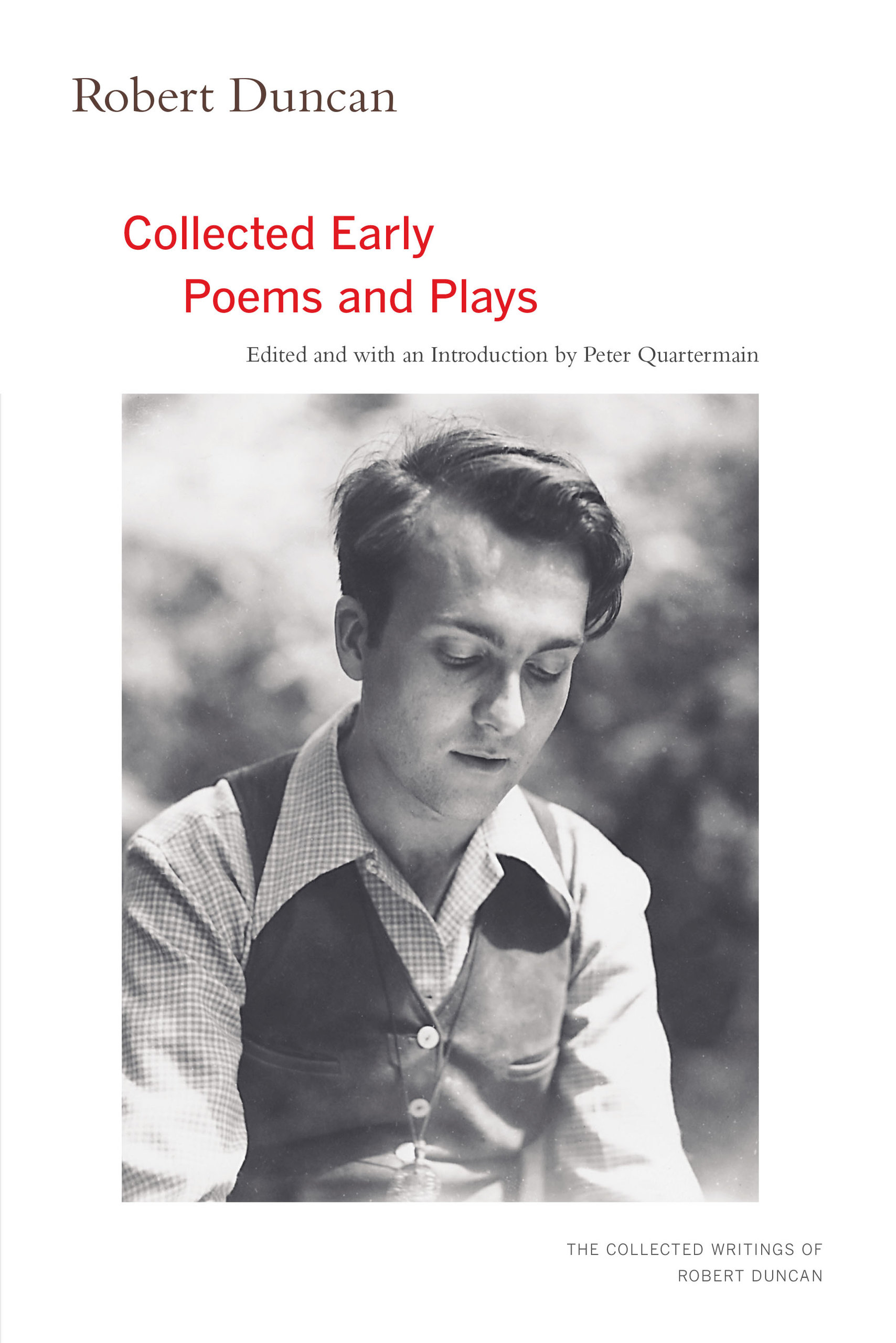
Robert Duncan
Also known as: Robert Edward Duncan, Edward Howard Duncan, Robert Symmes Duncan
Birthday
January 7, 1919
Birth Sign
Capricorn
Birthplace
Oakland, California
Age
Died at 69
Height
5 ft 10 in (178 cm)
About
Robert Edward Duncan was a seminal American poet, essayist, and painter born in Oakland, California. He spent most of his life in San Francisco, where he became a central figure in the city's literary renaissance and the broader Beat movement. His work blended complex visionary poetry with deep interests in Western esoteric traditions, mythology, and queer identity. Duncan drew significant influence from Ezra Pound, William Carlos Williams, D.H. Lawrence, and especially Hilda "H.D." Doolittle, a relationship that profoundly shaped his spiritual and artistic development.
Although often associated with the Beats, Duncan maintained a distinct style that set him apart from his younger contemporaries. He served as a mentor to figures like Allen Ginsberg and Jack Kerouac while simultaneously pushing the boundaries of poetic form through his own experimental work. His legacy endures through his extensive body of published poetry, his paintings, and the institutions he helped build to support avant-garde art.
Early Life & Background
Born into a family with a history of artistic inclination, Duncan was the son of Robert Symmes Duncan, a commercial artist, and Ruth Howard, a teacher. He spent his early years in Berkeley before moving to San Francisco in 1942, a move that would define the rest of his life. His education began at Berkeley High School, where he started writing poetry seriously. However, the Great Depression interrupted his formal studies, forcing him to leave the University of California, Berkeley, in 1936 without earning a degree. During this period, he worked various jobs including positions as a librarian, factory worker, and newspaper reporter while educating himself through voracious reading.
A pivotal moment occurred in 1940 when he met Hilda "H.D." Doolittle. This meeting initiated a two-decade-long intellectual and emotional connection that deeply influenced his early work. Around the same time, he befriended Kenneth Rexroth, a key figure in the San Francisco literary scene who introduced Duncan to circles of modernist poets and artists. Before gaining widespread recognition, Duncan immersed himself in the bohemian culture of the Bay Area, working as a librarian and engaging with the radical politics and artistic experiments of the era. These formative years laid the groundwork for his later contributions to the San Francisco Renaissance.
Career Growth
Duncan's career is defined by his role as a catalyst for the San Francisco Renaissance. In the 1940s, after settling in San Francisco, he co-founded the New Directions anthology series and began publishing in major literary journals. He met Allen Ginsberg and Jack Kerouac, becoming a mentor figure to the Beats despite being older than them. His first major collection, The Opening of the Field, appeared in 1960, though its roots were in the late 1950s. Other significant works from this period include Beneath the Arm (1968) and the long poem The Wings (1958).
The 1960s marked a peak in his critical acclaim. He published Selected Poems in 1960 and edited The Collected Books of Jack Spicer. His involvement in the gay rights movement and the counterculture scene brought his work to a wider, younger audience. In 1969, he won the prestigious Bollingen Prize, a major milestone that recognized his contribution to American poetry. He also served as the first unofficial Poet Laureate of San Francisco and taught briefly at Black Mountain College, influencing the next generation of poets. Throughout the 1970s and 1980s, he continued to publish prolifically, including A Book of Days (1972) and The Double Dream of Spring (1976). He remained a vocal advocate for LGBTQ+ rights and social justice until his death in 1988. His final collection, The Collected Books of Robert Duncan, was published posthumously that same year.
Career Timeline
Public Image & Style
Robert Duncan is portrayed as a visionary, intellectual, and compassionate figure who lived his values. His public image is one of a poet who advocated for peace, love, and artistic freedom. His content and tone are often described as mystical, lyrical, and deeply personal. He was known for his distinctive appearance, often wearing casual, bohemian clothing that reflected his rejection of conventional norms. Media portrayals of him emphasize his role as a bridge between generations of poets and his unwavering commitment to exploring the intersections of spirituality, sexuality, and art.
Fame & Fandom (iFAMOUS Rankings)
iFANN has evaluated Robert Duncan, but he does not currently hold a placement in the published rankings (Global Top 1,000 or a Top-100 scope list). He is not featured on the September 2026 iFAMOUS Rankings flagship list. While he lacks a formal fandom name, his audience consists primarily of scholars, poetry enthusiasts, and readers of the San Francisco Renaissance. Fans typically refer to themselves as "Duncan scholars" or simply as readers of the Beat and New American Poetry movements. The Robert Duncan Center and various university departments organize annual events and symposiums dedicated to his work. Fan-driven campaigns include digital archiving projects and social media hashtags like #RobertDuncan. Annual readings of his work on his birthday (January 7) and the anniversary of his death (February 3) are common rituals in literary circles, keeping his voice alive for new generations.
Interesting Facts and Legends
Duncan was a lifelong vegetarian and an active proponent of animal rights, a stance that was somewhat rare among his literary peers at the time. He was also a skilled painter and frequently illustrated his own books, blending visual art with his text in a way that few other poets attempted. While closely associated with the Beat poets, he maintained a distinct style rooted in mythological and esoteric themes that set him apart from their more confessional approach. He was a devout student of Western esotericism, including astrology, alchemy, and Kabbalah, which heavily informed the symbolism in his poetry. One of his most famous anecdotes involves his role in organizing the historic Six Gallery Reading in 1955, where Allen Ginsberg first read Howl; Duncan's organizational skills and support were crucial to the event's success, even if Ginsberg received the initial spotlight.
Notable Quotes
“I am a poet, and I write because I must.”
“The poem is a place where the world and the self meet.”
“Love is the only thing that matters.”
Family & Personal Life
Robert Duncan was born to Robert Symmes Duncan, a commercial artist, and Ruth Howard, a teacher. He grew up in Berkeley and attended Berkeley High School before leaving university without a degree. He never married and had no children. Throughout his life, he maintained close relationships with his siblings, though specific details about them are less documented than his romantic partners. He lived primarily in San Francisco, sharing homes with various partners over the years, including James Broughton. His domestic life was deeply intertwined with his artistic circle, creating a household that functioned as a hub for the San Francisco Renaissance.
Notable Connections
Hilda Doolittle, Allen Ginsberg, Jack Kerouac, Kenneth Rexroth, James Broughton, John Ashbery.
Relationships & Dating History
Robert Duncan's personal life was deeply intertwined with his art and his romantic relationships, particularly with other men in the San Francisco literary scene. His most significant relationship was with Hilda "H.D." Doolittle, whom he met in 1940. Their relationship spanned over two decades and was intense and intellectual, though H.D. was married to others during this time. They corresponded extensively, and Duncan dedicated much of his early work to her. The relationship ended with H.D.'s death in 1961, after which Duncan wrote a famous sequence of poems titled "In Memory of H.D." He also had a close, possibly romantic, friendship with the poet and priest William Everson, known as Brother Antoninus. Their emotional intimacy and shared creative vision suggest a deeper bond beyond platonic brotherhood.
Duncan had a significant romantic relationship with the filmmaker and poet James Broughton in the 1950s and 1960s. They lived together for a period and were part of the same artistic circle. The relationship eventually dissolved as both pursued other interests, but they remained friends and collaborators. Throughout his life, Duncan maintained relationships with various men, including the painter and poet John Ashbery, though their relationship was more professional. He was openly gay during an era when this was rare in the literary world, and his sexuality was a recurring theme in his work. As of 2026, Robert Duncan is deceased. He was never married and had no children.
- DatedHilda Doolittle1940 - 1961Deep intellectual and romantic connection spanning over two decades; she was married to others during this time.
- DatedWilliam Everson1940 - 1950Close friendship with possible romantic undertones; collaborated on several projects.
- DatedJames Broughton1950 - 1960Significant romantic relationship; lived together for a period.
Death & Aftermath
Died
February 3, 1988 (aged 69)
Death Place
San Francisco, California
Cause of Death
Complications from kidney disease
Robert Duncan passed away on February 3, 1988, at the age of 69 in San Francisco. His death followed a long struggle with kidney disease that had plagued him for several years prior. The literary community reacted with immediate and profound grief, as Duncan was widely regarded as a foundational figure of the San Francisco Renaissance and a vital link between the modernist tradition and the emerging Beat movement. Tributes poured in from peers who knew him best, including Allen Ginsberg, Gary Snyder, and Anne Sexton, all of whom spoke to his unique vision and unwavering commitment to artistic integrity.
A memorial service was held shortly after his passing at the First Unitarian Church in San Francisco. Hundreds of poets, artists, writers, and friends gathered to honor his life and work. The event served not only as a farewell but also as a reaffirmation of the cultural values Duncan championed throughout his career: openness, spiritual inquiry, and the liberation of queer identity within the arts. Following the funeral, the focus shifted to preserving his legacy. His extensive papers, manuscripts, and personal correspondence were donated to major academic institutions, specifically the University of California, Berkeley, and the State University of New York at Buffalo.
In the decades since his death, Duncan's influence has only grown. Posthumous publications continued to appear, most notably The Collected Books of Robert Duncan, which solidified his reputation as a master of American poetry. The establishment of the Robert Duncan Center at UC Berkeley provided a physical home for scholars and students to engage with his work directly. Today, his poems remain staples in university curricula, and his role in organizing pivotal events like the Six Gallery Reading is recognized as a defining moment in literary history. While he never achieved the commercial fame of some contemporaries, his impact on the trajectory of American poetry remains undeniable and enduring.
Net Worth (Estate Value)
$0
iFANN Editorial Team estimate
As a poet who died in 1988, Robert Duncan did not accumulate a traditional net worth in the way living celebrities do. His estate is managed by the University of California, Berkeley, and the State University of New York-Buffalo, which hold his papers. There are no credible reports of a multi-million dollar estate. Estimates of his financial standing are speculative and based on the value of his manuscripts and royalties, which are likely in the low six figures annually. No specific 2026 net worth figures exist because he has been deceased for nearly four decades, and his estate does not generate the kind of revenue streams associated with living celebrities. Any claims of a high net worth are likely confusion with other individuals named Robert Duncan.
Awards Won (4)
Robert Duncan received numerous accolades throughout his career, most notably the Bollingen Prize in 1969 for his contribution to American poetry. He was also awarded a Guggenheim Fellowship in 1956 and elected to the American Academy of Arts and Letters in 1975. His work was recognized with multiple grants from the California State Council on the Arts and a fellowship from the Poetry Society of America in 1958. Although he was nominated for a National Book Award in 1960, he did not win that specific prize.
1969 · Poetry
The Opening of the Field
1956 · Literature
Known For
The Opening of the Field
1960 · Poet
The Wings
1958 · Poet
Six Gallery Reading
1955 · Organizer
Keywords
Sources
Quick Facts
- Profession
- poet, writer, painter
- Born
- January 7, 1919
- Birthplace
- Oakland, California
- Died
- February 3, 1988
- Death Place
- San Francisco, California
- Gender
- Male
- Birth Sign
- Capricorn
Personal Details
- Full Name
- Robert Edward Duncan
- Height
- 5 ft 10 in (178 cm)
- Children
- Education
- Berkeley High School; University of California, Berkeley (attended without degree)
Frequently Asked Questions
Was Robert Duncan married?
What happened to Robert Duncan?
Is Robert Duncan still alive?
Who was Robert Duncan's muse?
What is Robert Duncan best known for?
Similar People
Join the community
fans discussing