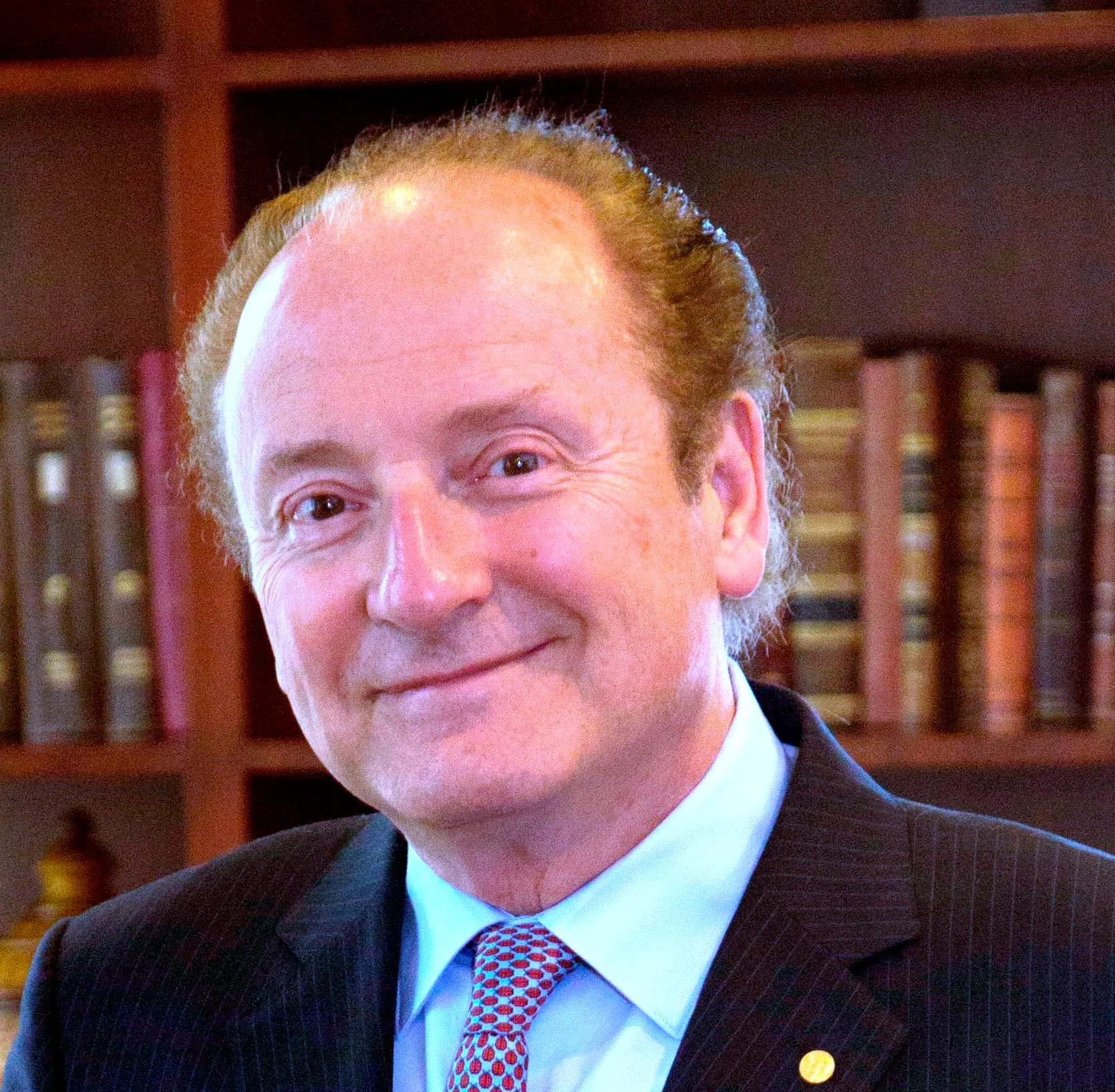
Robert C. Merton
 United States
Also known as: Robert Cox Merton
Birthday
July 31, 1944
Birth Sign
Sagittarius
Birthplace
New York City, New York, United States
Age
82 years old
About
Robert Cox Merton is an American economist and a leading figure in the field of financial economics. He currently serves as the School of Management Distinguished Professor of Finance at the MIT Sloan School of Management and holds the title of John and Natty McArthur University Professor Emeritus at Harvard Business School. His career has been defined by applying advanced mathematics to solve complex problems in finance, fundamentally changing how markets operate.
Merton achieved global fame for developing the Black–Scholes–Merton model, a continuous-time mathematical framework that revolutionized the pricing of stock options and derivatives. This work earned him the 1997 Nobel Memorial Prize in Economic Sciences alongside Myron Scholes. The formula provided the first practical method for valuing these instruments, enabling the massive expansion of the global derivatives market.
Today, his research focuses on lifecycle investing, retirement funding strategies, and macrofinance. He continues to publish extensively on the risks associated with financial innovation. As of 2026, he remains active in academia, emphasizing the ten principles of finance amidst technological disruption. Recently, he established a Nobel Laureate Workstation in Chongqing, China, dedicated to AI-driven finance.
Early Life & Background
Robert Cox Merton was born on July 31, 1944, in New York City, New York. His early years were spent in Manhattan, where he attended Stuyvesant High School, a specialized public institution known for its rigorous focus on science and mathematics. This environment fostered his deep interest in quantitative fields during his formative years.
He pursued higher education at the Massachusetts Institute of Technology (MIT), earning his Bachelor of Science degree in 1966. Merton remained at MIT for his graduate studies, receiving a Master of Science in 1967 and completing his Ph.D. in Economics in 1970. His doctoral dissertation, titled "Theory of Rational Option Pricing," laid the essential groundwork for his future breakthroughs in financial theory.
Before establishing his long tenure at MIT and Harvard, Merton began his academic career at Columbia University in 1975. It was during this period that he developed much of his foundational research on risk management and option pricing. These early years involved intense theoretical work that would eventually reshape the entire landscape of modern finance.
Career Growth
Merton's transition from theoretical economics to practical financial engineering began in earnest in 1973. While at Columbia, he published "Theory of Rational Option Pricing," extending the earlier work of Fischer Black and Myron Scholes. By introducing stochastic calculus and continuous-time modeling, he solved the option pricing problem in a way that made it usable for real-world markets.
The commercial impact of this work was immediate and massive. The resulting Black–Scholes–Merton model became the industry standard for pricing options, fueling an explosion in the derivatives market. In recognition of this contribution, Merton received the Nobel Memorial Prize in Economic Sciences in 1997. In 2010, he was honored with the Kolmogorov Medal from the International Association for Mathematical Physics. In 2021, he received the Killian Award, MIT's highest honor for faculty, recognizing his lifetime of contributions to the university and the field of finance.
A significant chapter in his career occurred during his time on the board of directors for Long-Term Capital Management (LTCM). Despite the sophisticated models Merton helped design, LTCM collapsed in 1998 due to excessive leverage and unforeseen market events. The firm required a $3.6 billion bailout orchestrated by the Federal Reserve Bank of New York. This event served as a stark lesson on the limitations of mathematical models when applied to systemic risk and human behavior.
Following the LTCM incident, Merton shifted his research focus toward lifecycle investing and retirement funding strategies. He has authored numerous books, including Dynamic Hedging and Finance, and continues to publish on the risks of financial innovation. As of 2026, he remains active in academia and recently established a Nobel Laureate Workstation in Chongqing, China, dedicated to AI-driven finance.
Career Timeline
Public Image & Style
Merton is portrayed as a brilliant, reserved, and humble intellectual. Media coverage focuses almost exclusively on his contributions to economic theory and his warnings about systemic risk. His content is strictly academic and analytical, devoid of the self-promotion seen in other industries.
He is respected by students and colleagues alike for his clarity of thought and dedication to fundamental principles. His presence in the financial world is one of quiet authority rather than loud celebrity. Colleagues describe him as a mentor who prioritizes rigorous analysis over flashy results. Notable magazine covers featuring Merton specifically are not prominent in general media; his appearances are typically limited to academic journals, financial trade publications, or interviews rather than mainstream lifestyle magazines like *Vogue* or *GQ*.
Fame & Fandom (iFAMOUS Rankings)
iFANN has not yet collected fame data for Robert C. Merton. He does not appear in the current published rankings for global celebrity influence. Status: NOT_EVALUATED — iFANN has not yet collected fame data for this person. Fandom name: none documented in iFANN data.
Fandom for Robert C. Merton does not exist in the traditional sense of pop culture fandom. He is revered by students of finance, economists, and practitioners in the financial industry, but there is no organized fanbase, unofficial name, or fan campaigns. Interactions are limited to classroom settings, conferences, and academic circles. His audience consists of professionals and scholars who study his work rather than fans who follow his personal life. He is frequently cited as one of the most influential economists of the 20th and 21st centuries, universally ranked among the top tier of financial theorists in academic literature.
Interesting Facts and Legends
One of the most famous anecdotes involving Merton concerns the irony of his own models failing to predict the collapse of Long-Term Capital Management. This story is often recounted in finance courses to illustrate the difference between model risk and market risk, highlighting that even the most brilliant theories cannot account for every variable in human behavior.
Merton played a key role in advising the U.S. government on financial regulation. His expertise helped shape policies regarding the oversight of complex financial instruments and the stability of the banking system. He was instrumental in creating the Financial Engineering program at MIT, which has trained generations of quantitative analysts and traders. This program stands as a testament to his ability to bridge the gap between abstract mathematics and practical application.
His deep interest in the intersection of finance and technology is evident in his recent work on AI-driven finance. This research explores how artificial intelligence can enhance decision-making in volatile markets while managing inherent risks. A notable quote from Merton states, "When you build a model the world looks very complicated, so you have to simplify. And it's the art of how you simplify which I think, to a large extent, determines whether your model is useful or not."
Notable Quotes
“When you build a model the world looks very complicated, so you have to simplify. And it's the art of how you simplify which I think, to a large extent, determines whether your model is useful or not.”
“Models are not reality.”
Family & Personal Life
Robert C. Merton maintains a notably private existence regarding his personal life. Unlike many public figures, there are no widely documented or confirmed details regarding his romantic history, dating life, marriages, or children in any major biographical source or academic profile.
No credible reports exist detailing specific partners, engagement dates, or family structures. Sources consistently refer to him solely in his professional capacity as a scholar and educator. There is no public record of divorce, separation, or widowhood, nor is there information on offspring. He keeps his family life strictly out of the public eye, allowing his academic contributions to remain the primary focus of his public persona. Physical attributes such as height are not recorded in public records, consistent with his low-profile personal life.
Notable Connections
Relationships & Dating History
Robert C. Merton maintains a notably private existence regarding his personal life. Unlike many public figures, there are no widely documented or confirmed details regarding his romantic history, dating life, marriages, or children in any major biographical source, news outlet, or academic profile. No credible reports exist detailing specific partners, engagement dates, or family structures.
Consequently, it is not possible to provide a chronological list of relationships or confirm his current relationship status beyond the fact that he keeps his private life out of the public eye. There is no public record of divorce, separation, or widowhood, nor is there information on offspring. Sources consistently refer to him solely in his professional capacity as a scholar and educator. His social media presence is minimal; he does not maintain active public profiles on platforms like Instagram, Twitter (X), or TikTok, preferring to communicate through academic channels and institutional websites.
Salary, Net Worth In 2026
$5 Million
iFANN Editorial Team estimate
iFANN Editorial Team estimates Robert C. Merton's net worth at approximately $5 million. As an academic rather than a corporate executive or entertainer, his wealth is derived primarily from salaries, book royalties, consulting fees, and speaking engagements.
Given his long tenure at elite institutions like MIT and Harvard, combined with the enduring value of his intellectual property through licensing and educational materials, his financial standing is substantial. However, it is not comparable to high-profile entertainers or tech moguls. There are no reports of major business ventures outside of academia or significant real estate holdings that would drastically alter these estimates. The bulk of his income stems from his distinguished positions in academia and the royalties from his influential textbooks. Specific dollar figures from celebrity net worth sites are often speculative or non-existent for non-celebrity academics.
Awards Won (3)
Robert C. Merton has received numerous prestigious awards throughout his career. He was awarded the Nobel Memorial Prize in Economic Sciences in 1997, shared with Myron Scholes. In 2010, he received the Kolmogorov Medal from the International Association for Mathematical Physics. In 2021, he was honored with the Killian Award, MIT's highest honor for faculty, recognizing his lifetime of contributions to the university and the field of finance.
1997 · Economic Sciences
Development of the Black-Scholes-Merton model
2010 · Mathematical Physics
Lifetime contributions to mathematical physics and finance
Known For
Black–Scholes–Merton model
1973 · Co-developer
Long-Term Capital Management
1998 · Board Member
Keywords
Sources
Quick Facts
- Profession
- economist, university teacher
- Born
- July 31, 1944
- Birthplace
- New York City
- Gender
- Male
- Birth Sign
- Sagittarius
Personal Details
- Full Name
- Robert Cox Merton
- Children
- Education
- Massachusetts Institute of Technology (B.S., 1966; M.S., 1967; Ph.D., 1970)
Frequently Asked Questions
How old is Robert C. Merton?
What did Robert C. Merton win the Nobel Prize for?
Is Robert C. Merton still alive?
Did Robert C. Merton go to jail?
Does Robert C. Merton have kids?
Similar People

Join the community
fans discussing