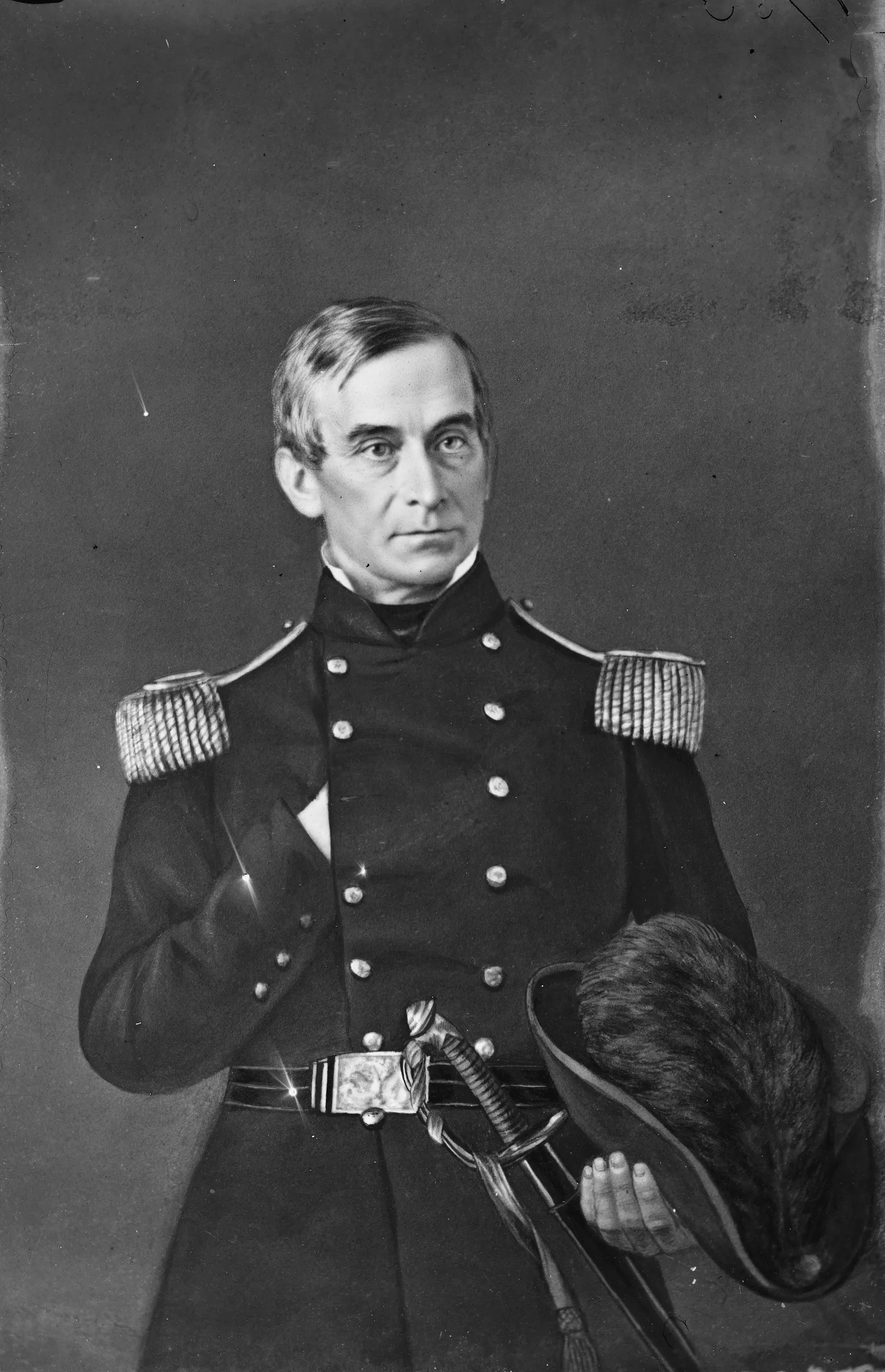
Robert Anderson
 United States
playwright•screenwriter•theatrical producer
Also known as: Robert Woodruff Anderson
Birthday
April 28, 1917
Birth Sign
Taurus
Birthplace
Manhattan, New York City, New York, USA
Age
Died at 91
About
Robert Anderson was an American playwright, screenwriter and theatrical producer whose best-known work put a subject on a Broadway stage in 1953 that most writers of the era would not touch. He was nominated for two Academy Awards for screenwriting and never won either one, a fact that tends to get lost in the shorthand about his career.
His reputation rests on a small, sharp handful of titles. Tea and Sympathy, which ran more than 700 performances on Broadway, and I Never Sang for My Father, which he adapted into a 1970 film with Gene Hackman and Melvyn Douglas. Add The Nun's Story, the 1959 picture that gave Audrey Hepburn one of her most interior roles, and you have the core of what he left behind.
Anderson wrote about people who cannot say what they mean. Schoolboys, nuns, sons, lonely strangers at a New England inn on Christmas Eve. He trusted silence and subtext, and he built a career out of the space between what his characters felt and what they were allowed to admit. He died in Manhattan in 2009 at 91, married for half a century to the actress Teresa Wright.
Early Life & Background
Robert Woodruff Anderson was born in Manhattan on April 28, 1917, and grew up in a city that was still, in his childhood, a theater town in the most literal sense. He came of age during the Depression, a stretch of years that shaped the frugal, watchful sensibility in his writing.
His family sent him to Phillips Exeter Academy in New Hampshire, one of the elite prep schools of the era, and from there to Harvard. The Exeter-to-Harvard path was the standard route for a certain kind of ambitious East Coast boy in the 1930s, but it also gave Anderson a close look at the world he would later dramatize: institutions that promise to mold boys and sometimes break them. Tea and Sympathy, with its boarding-school setting and its teacher's wife who understands too much, did not come from nowhere.
World War II interrupted the writing life before it started. Anderson served in the U.S. Navy, and when he came home he did what a lot of returning veterans with a Harvard degree and a literary ambition did. He sat down and wrote a play.
That first play, Come Marching Home, reached Broadway in 1945. It was a modest thing, an early step rather than an arrival, and it did not make him a name. What followed was close to a decade of quiet, deliberate work. Anderson wrote and rewrote, learned the shape of a three-act evening, and built a reputation among producers as a craftsman who could be trusted with intimate, character-driven material. He was in his mid-thirties by the time the theater began to pay attention to him properly, which is late for a wunderkind and about right for a writer of his temperament.
Career Growth
The play that changed everything opened on Broadway in 1953. Tea and Sympathy centered on a sensitive schoolboy suspected by his classmates and teachers of being homosexual, and on the housemaster's wife who tries to rescue him from their cruelty. It ran for more than 700 performances, an enormous number for a drama of that kind, and it made Anderson a major name in the American theater. He adapted it for the screen himself in 1956.
Hollywood came calling, and Anderson turned out to be unusually good at the adaptation game. His screenplay for The Nun's Story (1959) followed Audrey Hepburn as a Belgian woman struggling with her vows in a Congo mission hospital. The film earned him an Academy Award nomination for Best Adapted Screenplay. That same year, his stage play Silent Night, Lonely Night put two lonely strangers together at a New England inn on Christmas Eve, a setup he returned to again and again: two people, one room, everything unsaid.
He wrote the screenplay for The Sand Pebbles in 1966, the Steve McQueen naval drama set on a gunboat in 1920s China. In 1967 he had another Broadway hit with You Know I Can't Hear You When the Water's Running, a collection of four one-act comedies about sex and marriage that also ran more than 700 performances. The following year brought I Never Sang for My Father, his play about a son's long, failing attempt to reach his aging father.
Anderson adapted that one for the screen too. The 1970 film starred Gene Hackman as the son and Melvyn Douglas as the father, and it earned Anderson his second Oscar nomination for Best Adapted Screenplay. Douglas picked up an Oscar nomination of his own for the performance. The 1970s brought The Gypsy Moths (1969) and Conrack (1974), and in 1982 he wrote the television adaptation of The Member of the Wedding. Alongside his own writing, he produced plays by other people, among them The Days Between and Neil Simon's The Last of the Red Hot Lovers.
Career Timeline
Public Image & Style
Anderson's public image was that of the serious Broadway craftsman, not the celebrity playwright. He gave few interviews, skipped the gossip columns, and let the work speak. In photographs he looks like what he was: a prep-school and Harvard man in a dark suit, hair combed back, more likely to be mistaken for a banker than a dramatist.
Critics treated him as a writer of restraint. The word that followed him around was taste, sometimes as praise and sometimes as a slight, as though a play about a boy driven to despair by his schoolmates could be accused of being too well behaved. He never chased the experimental theater of his own era. He wrote well-made plays about private pain, and he did it for four decades.
His screen persona, insofar as he had one, was the adapter of literary and theatrical material. Hollywood hired him when a studio wanted a prestige picture with a moral center, and he delivered The Nun's Story and I Never Sang for My Father in exactly that register.
Fame & Fandom (iFAMOUS Rankings)
Fame data for Robert Anderson has not yet been gathered by iFANN, so there is no ranking to report. He is not on the September 2026 iFAMOUS Rankings flagship list either, which is unsurprising for a mid-century playwright who died in 2009.
What he has instead of a fandom is a repertory. There is no fanbase name, no organized campaigns, no birthday billboards. The people who care about Anderson are the ones who show up when a regional theater mounts Tea and Sympathy or when a film school screens I Never Sang for My Father for a class on adaptation. They are actors looking for a two-hander with real weight, and directors who want a script where the drama happens in what the characters refuse to say.
The closest thing to a fan ritual around him is the ongoing argument about whether Tea and Sympathy was brave or merely careful in its treatment of its subject. That debate has run since 1953 and shows no sign of stopping, which is its own kind of longevity.
Interesting Facts and Legends
Anderson's two Oscar nominations came fourteen years apart, and both were for adaptations rather than original screenplays, even though the source material for the second one was his own play.
He was married to Teresa Wright, who won the Best Supporting Actress Oscar in 1943 for Mrs. Miniver and was nominated again the following year for The Pride of the Yankees. The two of them made one of the quieter Oscar couples in Hollywood history, and they stayed married for close to fifty years.
His 1967 comedy You Know I Can't Hear You When the Water's Running has one of the longest titles ever to hang over a Broadway marquee, and it earned its keep with more than 700 performances. The title itself became a small catchphrase for a while.
A story that gets retold about Tea and Sympathy is that the play's sympathetic treatment of a boy suspected of being gay made it a target for censors in several cities, and that its long Broadway run was partly a rebuke to the people who wanted it shut down. That reading has hardened into legend over the decades, and the production's commercial success is a matter of record regardless.
Family & Personal Life
Anderson's family life was bound up almost entirely with one person: the actress Teresa Wright, whom he married in 1959. Wright had already been a movie star for more than fifteen years by then. She won the Academy Award for Best Supporting Actress for Mrs. Miniver in 1943 and was nominated for Best Actress the next year for The Pride of the Yankees, opposite Gary Cooper.
The couple stayed together until Anderson's death in 2009, a marriage of roughly five decades. Wright died in 2005, four years before her husband. Details about children and stepchildren are not documented in the available sources, and Anderson kept his private life out of the press to a degree that was unusual even for his era. He lived and died in Manhattan, the city of his birth.
Notable Connections
Relationships & Dating History
Robert Anderson's romantic history is short and unusually clean by the standards of a man who spent four decades in the theater and film business. There is exactly one documented relationship, and it lasted the rest of his life.
In 1959, at 42, he married the actress Teresa Wright. She was 40 and already a decorated film star, with an Academy Award for Mrs. Miniver and a second nomination for The Pride of the Yankees behind her. The timing was not accidental. That same year, Anderson's The Nun's Story was in theaters and Silent Night, Lonely Night was on Broadway, so he married at the peak of his own professional moment.
The marriage lasted until his death in Manhattan on February 9, 2009, roughly fifty years later. Wright died in 2005, four years before him. No separation, divorce, or other public relationship appears in the record. Anderson was married to Teresa Wright at the time of his death, and she had been widowed four years earlier.
As of 2026, both partners are deceased, and the marriage remains the only one documented for either of them.
- MarriedTeresa Wright1959 - 2009Married until his death in 2009; Wright died in 2005.
Death & Aftermath
Died
February 9, 2009 (aged 91)
Death Place
Manhattan, New York City, New York, USA
Cause of Death
Undisclosed
Robert Anderson died at his home in Manhattan on February 9, 2009. He was 91. Reports at the time gave no cause of death, and his family did not make one public, so the medical circumstances of his final months remain undocumented.
He had outlived most of the Broadway he wrote for. The theater district that greeted Tea and Sympathy in 1953, when a play about a boy suspected of being gay could still shock a house, had been replaced by a very different industry. Anderson kept working into the 1980s, but his last decades were quiet ones, and his death drew obituaries that read more like appreciations than news stories. The New York Times and the trade papers ran notices that led with the two titles that had defined him: the 1953 Broadway hit and the 1959 film that put Audrey Hepburn in a nun's habit.
Tributes came from the people who had acted in his work. Melvyn Douglas had won his second Oscar nomination playing the domineering father in I Never Sang for My Father, and Gene Hackman had played the son who could not reach him. Their performances are the record of what Anderson wrote best: men and women failing to say the thing that would save them.
He was survived by his wife of nearly fifty years, actress Teresa Wright, who had won an Oscar in 1943 for Mrs. Miniver and who died in 2005, four years before him. No public funeral was announced. No posthumous plays surfaced. No foundation was created in his name. What followed his death was simply the slow return of his best work to the repertory, where Tea and Sympathy and I Never Sang for My Father are still staged by companies that want a certain kind of American restraint.
Net Worth (Estate Value)
$3 Million
iFANN Editorial Team estimate
Robert Anderson's estate is not the kind that gets catalogued by the celebrity wealth trackers. There was no headline sale, no posthumous album, no licensing bonanza. What he left behind was a body of work and the residual income that comes with it, and research by the iFANN Editorial Team puts the estate's value at roughly $3 Million.
The money came from three places over his lifetime. Broadway royalties were the first and steadiest. Two of his plays ran more than 700 performances each, and a long-running show pays its author for every ticket, every touring company, and every amateur production that licenses the script. Tea and Sympathy and You Know I Can't Hear You When the Water's Running kept paying for decades after they closed.
Screen work was the second stream. Anderson wrote or adapted roughly a dozen produced features, including The Nun's Story, The Sand Pebbles, The Gypsy Moths and Conrack, plus several television movies. Screenwriters of his era did not receive the backend deals that came later, but a produced studio picture paid well up front and generated residual payments when it aired on television.
The third stream was production. Anderson put his own money and name behind other writers' plays, including Neil Simon's The Last of the Red Hot Lovers, and a producer's share of a hit is real money.
He and Teresa Wright lived modestly by Hollywood standards, in Manhattan rather than Beverly Hills, and there is no record of a large real estate portfolio or a major asset sale after his death in 2009. The estate has continued to collect royalties on the plays and films since then, a slow trickle rather than a windfall. Anderson's net worth in 2026 rests on that accumulated royalty income and the value of the copyrights themselves, which remain with his estate.
Awards & Accolades
Known For
Tea and Sympathy
1953 · Playwright
The Nun's Story
1959 · Screenwriter
I Never Sang for My Father
1970 · Playwright and screenwriter
You Know I Can't Hear You When the Water's Running
1967 · Playwright
The Sand Pebbles
1966 · Screenwriter
Keywords
Sources
Quick Facts
- Profession
- playwright, screenwriter, theatrical producer
- Born
- April 28, 1917, Manhattan, New York
- Died
- February 9, 2009, Manhattan, New York
- Age at Death
- 91
- Birth Sign
- Taurus
- Spouse
- Teresa Wright (m. 1959)
- Education
- Phillips Exeter Academy; Harvard University
- Military Service
- U.S. Navy, World War II
- Oscar Nominations
- 2 (1959, 1970)
Personal Details
- Full Name
- Robert Woodruff Anderson
- Spouse
- Teresa Wright
- Education
- Phillips Exeter Academy; Harvard University
Filmography
12
Total
8
Film
4
TV
Frequently Asked Questions
What was Robert Anderson famous for?
Who was Robert Anderson married to?
Did Robert Anderson win an Oscar?
When did Robert Anderson die?
What is Robert Anderson's most famous play?
Similar People
Join the community
fans discussing