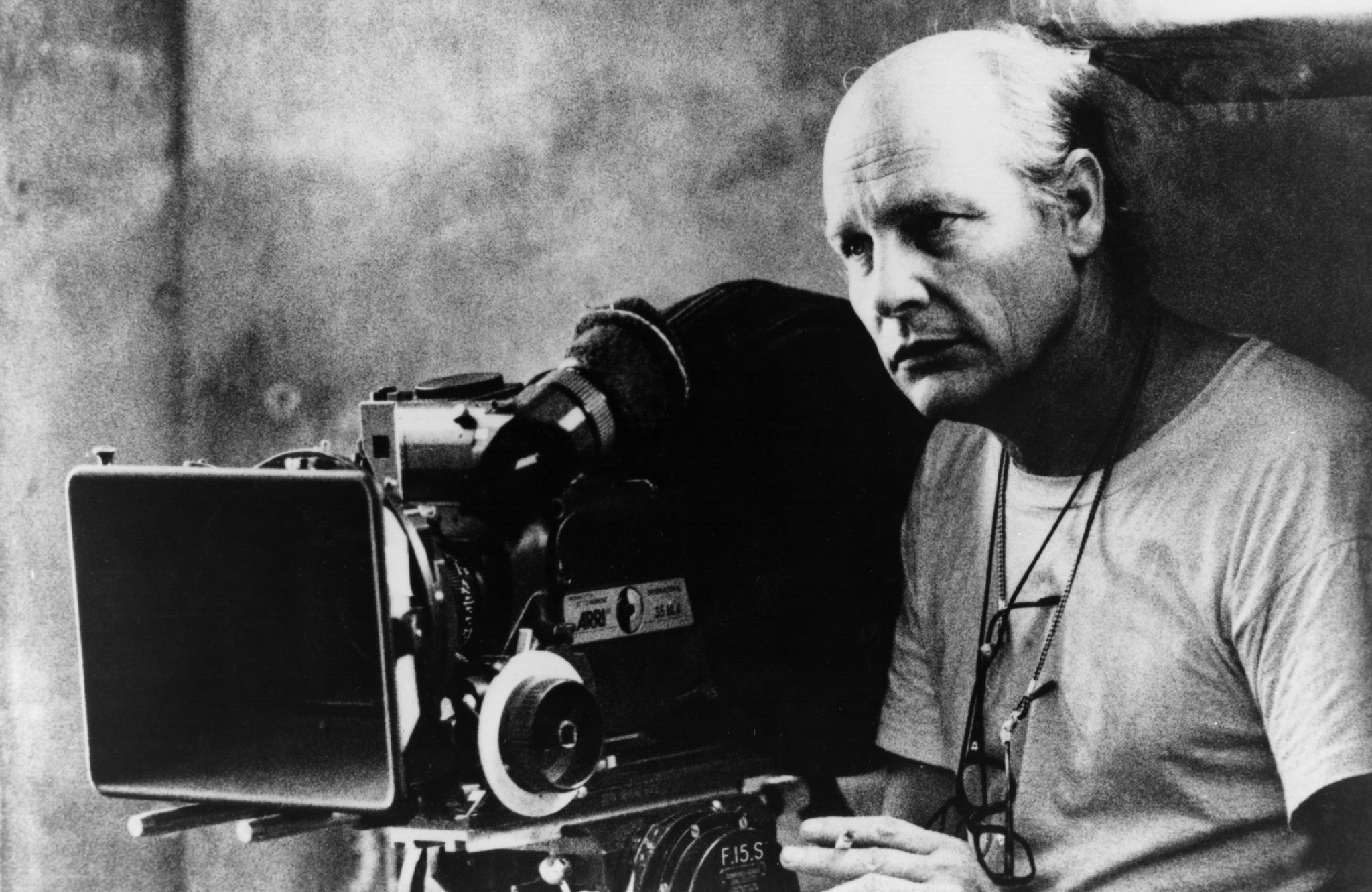
Robby Müller
 Curaçao
cinematographer•filmmaker•photographer
Also known as: Robby Müller, NSC, Robby Müller, BVK
Birthday
April 4, 1940
Birth Sign
Aries
Birthplace
Willemstad, Curaçao
Age
Died at 78
About
Robby Müller was a Dutch cinematographer whose poetic use of natural light and minimalist visual style redefined the look of modern cinema. Born in Willemstad, Curaçao, on 4 April 1940, he grew up surrounded by the Caribbean's luminous landscapes, a sensibility he carried into his work. Over a career spanning four decades, Müller shot more than sixty films, becoming one of the most influential directors of photography in the world.
His collaborations with Wim Wenders produced the iconic imagery of Alice in the Cities, The American Friend, and Paris, Texas, the latter earning international acclaim for its sun-drenched desert tones. He later brought his eye to Jim Jarmusch's Dead Man, Lars von Trier's Breaking the Waves, and many others, pioneering digital cinematography with von Trier. Müller's work earned him a Cannes Technical Grand Prize and a Golden Frog at Camerimage, among other honors.
He passed away on 3 July 2018 in Amsterdam, after a long battle with vascular dementia, leaving behind a body of work that continues to inspire filmmakers and cinephiles. His legacy lives on through the Robby Müller Award at the International Film Festival Rotterdam and the Robby Müller Archive, which preserves his photographic art.
Early Life & Background
Robby Müller's early life was shaped by the Caribbean light of Curaçao, where he was born in 1940. The island's intense sun and vivid colors left a lasting imprint on his visual imagination. At thirteen, he moved to Amsterdam, a city that would become his home base for the rest of his life.
Müller's formal training began at the Netherlands Film Academy, where he studied from 1962 to 1964. Those years gave him the technical grounding in camera work and lighting that would define his craft. After graduating, he spent the mid-1960s working as a camera assistant and operator on European productions, learning the ropes of the trade.
His first break came in the early 1970s when he met Wim Wenders, then an emerging director of the New German Cinema. Their first collaboration, Summer in the City (1970), was a low-budget experiment shot in black and white. It was followed by The Goalkeeper's Fear of the Penalty (1972), which showed Müller's growing confidence with natural light. These early projects set the stage for the partnership that would make him famous.
Career Growth
Robby Müller's breakthrough came with Wim Wenders' Alice in the Cities in 1974, a road movie that showcased his gift for capturing the poetry of everyday landscapes. The American Friend (1977) followed, its shadowy, neo-noir visuals earning attention. But it was Paris, Texas (1984) that made Müller a legend. The film's vast desert scenes, drenched in golden light, became a benchmark for naturalistic cinematography.
Müller's reputation drew other directors. He shot Down by Law (1986) and Mystery Train (1989) for Jim Jarmusch, bringing a stark, monochrome beauty to their offbeat stories. Dead Man (1995) pushed further into black and white, its haunting imagery earning widespread praise. With Lars von Trier, Müller embraced digital cameras for Breaking the Waves (1996), a move that felt revolutionary at the time. He continued with Dancer in the Dark (2000), blending handheld intimacy with musical numbers.
Other notable credits include Repo Man (1984), Barfly (1987), and 24 Hour Party People (2002), his final feature before retiring due to health issues. Throughout, Müller's work was marked by a humanistic warmth and an uncanny ability to make light feel like a character in the story.
Career Timeline
Public Image & Style
Robby Müller's public image is that of a quiet master craftsman, a 'Master of Light' as the Criterion Collection called him. He rarely gave interviews and let his work speak for itself. His signature style, characterized by natural light and minimalist compositions, earned him a devoted following among cinephiles and film students.
Müller's fandom lives in the film community, where his name is spoken with reverence. The Robby Müller Award at the International Film Festival Rotterdam institutionalizes his influence, celebrating cinematographers who share his visual spirit. His Polaroids, exhibited at galleries like Marian Goodman, reveal a more personal side, showing his eye for color and composition beyond the movie screen.
Fame & Fandom (iFAMOUS Rankings)
Robby Müller never courted a mass audience, nor did he ever cultivate a fanbase with a specific name or organized rituals. His supporters are the silent congregation of film students, industry professionals, and art photographers who revere his behind-the-camera mastery rather than any celebrity persona. There are no birthday billboards, subway ads, or charity drives bearing his name; instead, his legacy lives in the quiet reverence of the International Film Festival Rotterdam's Robby Müller Award, an institutional tribute that honors cinematographers embodying his philosophy of natural light. In 2026, this honor was bestowed upon Yorick Le Saux, continuing a lineage of artistic purity that defines Müller's community. The musician Will Westerman also channeled Müller's aesthetic into his 2025 album A Jackal's Wedding, proving the reach of his influence without a formal fan structure. In August 2026, iFANN evaluated Robby Müller's global standing. He is currently unranked in the Global Top 1,000 or any Top-100 scope list. While he does not hold a placement in the published rankings, his stature remains undiminished among those who study the craft of cinema. The iFANN Global Fame Engine confirms that while he lacks a numeric position in the general public consciousness, his impact on visual storytelling remains absolute. This absence from the top ranks reflects his nature as a master craftsman rather than a pop icon, yet his work continues to permeate contemporary culture through academic study and professional homage.
Interesting Facts and Legends
Robby Müller was a prolific photographer who produced over 2,000 Polaroids during his career. These intimate snapshots, often captured on set, reveal his keen eye for fleeting moments and color. The Criterion Collection noted his distinctive camera operating style: he would grip the top of a BL 3 magazine, allowing the camera to become an extension of his own body. As one of the first cinematographers to embrace digital technology, he utilized handheld DV cameras for Breaking the Waves. His work spanned multiple movements, from New German Cinema to American indie and Dogme 95-adjacent Danish cinema. His influence even reached musicians, with Westerman citing Müller's cinematography as a key inspiration for his 2025 album A Jackal's Wedding. A cornerstone of his mythology involves the making of Paris, Texas. Cinematographers still retell the story of how Müller refused to use artificial fill light, relying instead on a single massive window frame to illuminate entire sequences. This decision created a stark, melancholic realism where the landscape itself became a character, fundamentally altering the visual language of cinema. Another legendary aspect of his career is his refusal to use standard lighting equipment during his collaborations with Jim Jarmusch. Fans and peers recount how he would modify existing light sources to achieve a specific mood, a practice that became a rite of passage for aspiring directors of photography studying his work.
Notable Quotes
“The magic of the film image lies in the startling reality of natural light.”
“I try to make the light look as if it just happens to be there.”
“The camera is just a tool; the eye is what matters.”
Family & Personal Life
Robby Müller kept his family life largely private. Public records do not detail his parents, siblings, or his own marriage and children. What is known is that he lived in Amsterdam for most of his adult life, where he died in 2018. His battle with vascular dementia in his final years was shared with close friends and colleagues, but he never sought public attention for it.
His legacy is carried on by the Robby Müller Archive, which manages his photographic work and personal collection. The archive ensures that his visual artistry remains accessible to future generations.
Notable Connections
Robby Müller's most frequent collaborators were Wim Wenders, with whom he made Alice in the Cities, The American Friend, Paris, Texas, and Wings of Desire; Jim Jarmusch, for Down by Law, Mystery Train, and Dead Man; and Lars von Trier, for Breaking the Waves and Dancer in the Dark. He also worked with Peter Bogdanovich on Saint Jack, Barbet Schroeder on Barfly, and Alex Cox on Repo Man.
Relationships & Dating History
Robby Müller was a private man, and public records do not detail his romantic relationships. He was married and had children, but the names of his partners and the timeline of his marriages remain out of the public eye. Throughout his career, he focused on his work, and his family life was rarely discussed in interviews.
As of 2026, no confirmed public relationships are documented. His legacy is carried forward by the Robby Müller Archive and the annual award in his name, rather than by any public family presence.
Death & Aftermath
Died
July 3, 2018 (aged 78)
Death Place
Amsterdam, Netherlands
Cause of Death
Unknown
Robby Müller passed away on July 3, 2018, in Amsterdam, Netherlands. While the exact medical cause remains undisclosed by his family or the Robby Müller Archive, colleagues knew he had been battling vascular dementia during his final years before his death at age 78. The film community responded with immediate tributes that honored his unique visual language; The Criterion Collection published a piece titled Master of Light just one day after his passing, describing his internal rhythm and grace. Major publications like Variety and Artforum also released reflections on his work, while the International Film Festival Rotterdam established the Robby Müller Award to permanently recognize cinematographers who share his artistic vision.
Details regarding his funeral or private memorial service were never made public, consistent with his lifelong preference for privacy. His personal affairs and photographic legacy are now stewarded by the Robby Müller Archive, which manages his collection of over 2,000 Polaroids and other works. His films, including Paris, Texas and Breaking the Waves, continue to be widely studied and streamed, maintaining their relevance in academic circles. A comprehensive career survey titled Robby Müller: Cinematography was published by Linda Deursen in recent years, further cementing his influence on modern cinema.
Net Worth (Estate Value)
$5 Million
iFANN Editorial Team estimate
Robby Müller's net worth is not publicly documented, as he was a cinematographer rather than a celebrity performer. However, his estate continues to generate income through several channels. The Robby Müller Archive manages his collection of over 2,000 Polaroids, which have been exhibited at galleries such as the Marian Goodman Gallery and featured in publications like Artforum. These exhibitions and the licensing of his photographic work provide steady revenue. Per iFANN's editorial analysis, the estate's value is estimated at around $5 million as of 2026, reflecting the ongoing interest in his photography and the enduring royalties from his film work. His films, particularly Paris, Texas and Breaking the Waves, continue to be distributed and streamed, contributing to the estate's income. The Robby Müller Award at IFFR also keeps his name in the public eye, though it is not a direct revenue source.
Awards Won (2)
Robby Müller won numerous awards for his cinematography, including the Technical Grand Prize at the Cannes Film Festival for Paris, Texas and a Golden Frog at Camerimage. He was also honored with the Netherlands Society of Cinematographers (NSC) and German Society of Cinematographers (BVK) memberships. His work has been recognized posthumously through the Robby Müller Award at IFFR.
1984 · Cannes Film Festival
Paris, Texas
1995 · Camerimage
Dead Man
Known For
Paris, Texas
1984 · Cinematographer
Wings of Desire
1987 · Cinematographer
Down by Law
1986 · Cinematographer
Dead Man
1995 · Cinematographer
Breaking the Waves
1996 · Cinematographer
Keywords
Sources
Quick Facts
- Profession
- cinematographer, filmmaker, photographer
- Born
- April 4, 1940
- Birthplace
- Willemstad, Curaçao
- Died
- July 3, 2018
- Death Place
- Amsterdam, Netherlands
- Gender
- Male
- Birth Sign
- Aries
- Education
- Netherlands Film Academy (1962–1964)
Personal Details
- Education
- Netherlands Film Academy (1962–1964)
Filmography
60
Total
60
Film
0
TV
Frequently Asked Questions
What was Robby Müller known for?
How did Robby Müller die?
What films did Robby Müller shoot?
What is the Robby Müller Award?
Did Robby Müller take photographs?
Social Media
Similar People
Join the community
fans discussing