 United States
“Sam Mendes has made a movie that is as beautiful as it is brutal, a visual poem that captures the soul of the Great Depression and the hearts of its characters.”
Roger Ebert
Chicago Sun-Times
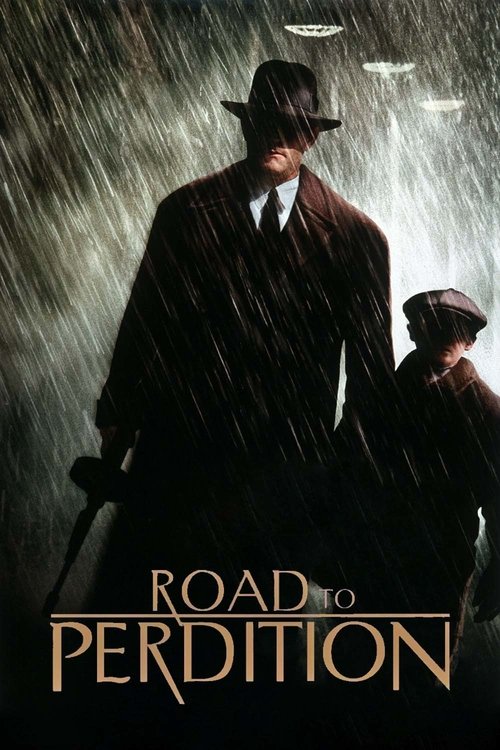
Sam Mendes' directorial debut in the crime genre arrived in July 2002 with a film that prioritized visual storytelling over action spectacle. Based on the graphic novel by Max Allan Collins and Richard Piers Rayner, the movie adapts a story of family loyalty and betrayal set during the Great Depression. The narrative focuses on Michael Sullivan, a hitman who balances his violent profession with his role as a father.
The film stands out for its deliberate pacing and atmospheric cinematography by Conrad Hall. It avoids the typical tropes of modern gangster movies by focusing on the emotional weight of violence rather than the thrill of the chase. Paul Newman delivers his final theatrical performance as the mob boss who raised Sullivan like a son, creating a complex dynamic that drives the entire plot forward.
Availability and pricing can change. Confirm on the provider's site before purchasing.
Michael Sullivan lives a quiet life in Rock Island, Illinois, during the winter of 1931. To his neighbors, he is a respectable man who works as a banker and spends time with his wife Annie and their two sons. In reality, Sullivan serves as the enforcer for John Rooney, the powerful Irish-American crime lord who controls the region's rackets. Rooney treats Sullivan with paternal affection, viewing him as a surrogate son while keeping the details of his own criminal empire hidden from the public eye.
Tensions rise within the organization when Connor Rooney, the boss's biological son, begins to act recklessly. Connor resents Sullivan's influence and status within the family business. His jealousy boils over after a botched bank robbery where he shoots a witness in front of Sullivan's young son, Michael Jr., who was hiding in the back seat of the getaway car. The boy survives but carries the trauma of seeing the murder.
Connor decides to silence the only witness to his crime by ordering the death of the Sullivan family. Men sent by Connor ambush the Sullivan home, killing Annie and the younger son Peter. Michael Jr. escapes because Connor hesitates at the last moment, perhaps due to a twisted sense of mercy or a sudden realization of the cruelty involved. Sullivan returns to find his family dead and realizes that the man he called father has turned against him.
Fleeing with his surviving son, Sullivan embarks on a journey across the Midwest. He seeks help from Frank Nitti, a Chicago gangster and rival of Rooney, hoping to use Nitti's resources to exact revenge. Along the way, they encounter Harlen Maguire, a charismatic hitman who becomes an unlikely ally. Sullivan teaches his son how to survive in a world filled with danger, showing him how to handle a gun and how to recognize a threat.
The road trip forces both men to confront the reality of their situation. Sullivan struggles with the morality of his actions and whether he can protect his son without corrupting him further. The bond between father and son deepens as they face constant threats from various criminal factions. Sullivan must decide if he can break the cycle of violence that has defined his life or if he will be consumed by it entirely.
As the story progresses, Sullivan closes in on his targets. He tracks down Connor and engages in a brutal confrontation that leaves no room for negotiation. The journey culminates in a final meeting with John Rooney, where Sullivan must choose between revenge and the future of his remaining family. The film builds toward a resolution that questions the cost of honor and the price of survival in a world governed by blood and money.
Theatrical Trailer
Critical Consensus
Sam Mendes directs a visually stunning crime drama that transcends genre conventions. With masterful cinematography by Conrad Hall and career-defining performances from Tom Hanks and Paul Newman, the film delivers a somber meditation on fatherhood, loyalty, and the consequences of violence.
“Sam Mendes has made a movie that is as beautiful as it is brutal, a visual poem that captures the soul of the Great Depression and the hearts of its characters.”
Roger Ebert
Chicago Sun-Times
“Mr. Mendes has crafted a film of such visual splendor and emotional depth that it feels less like a crime thriller and more like a Shakespearean tragedy set in the 1930s.”
A.O. Scott
The New York Times
“Hanks gives a performance of quiet intensity, and Newman brings a warmth and dignity to a role that could have easily been a caricature. It's a masterpiece of restraint.”
Peter Travers
Rolling Stone
Tom Hanks
Michael Sullivan
Paul Newman
John Rooney
Jude Law
Harlen Maguire
Tyler Hoechlin
Michael Sullivan Jr.
Daniel Craig
Connor Rooney
Stanley Tucci
Frank Nitti
Jennifer Jason Leigh
Annie Sullivan
Liam Aiken
Peter Sullivan
Director
Sam Mendes
Writers
David Self, Max Allan Collins, Richard Piers Rayner
Composer
Thomas Newman
Cinematographer
Conrad Hall
Producers
Dean Zanuck, Sam Mendes, Richard D. Zanuck, Glenn Williamson
Academy Awards (2003)
Best Cinematography: Won
Academy Awards (2003)
Best Supporting Actor: Nominated
Academy Awards (2003)
Best Adapted Screenplay: Nominated
BAFTA Awards (2003)
Best Cinematography: Won
Golden Globe Awards (2003)
Best Motion Picture – Drama: Nominated
Join the community
fans discussing