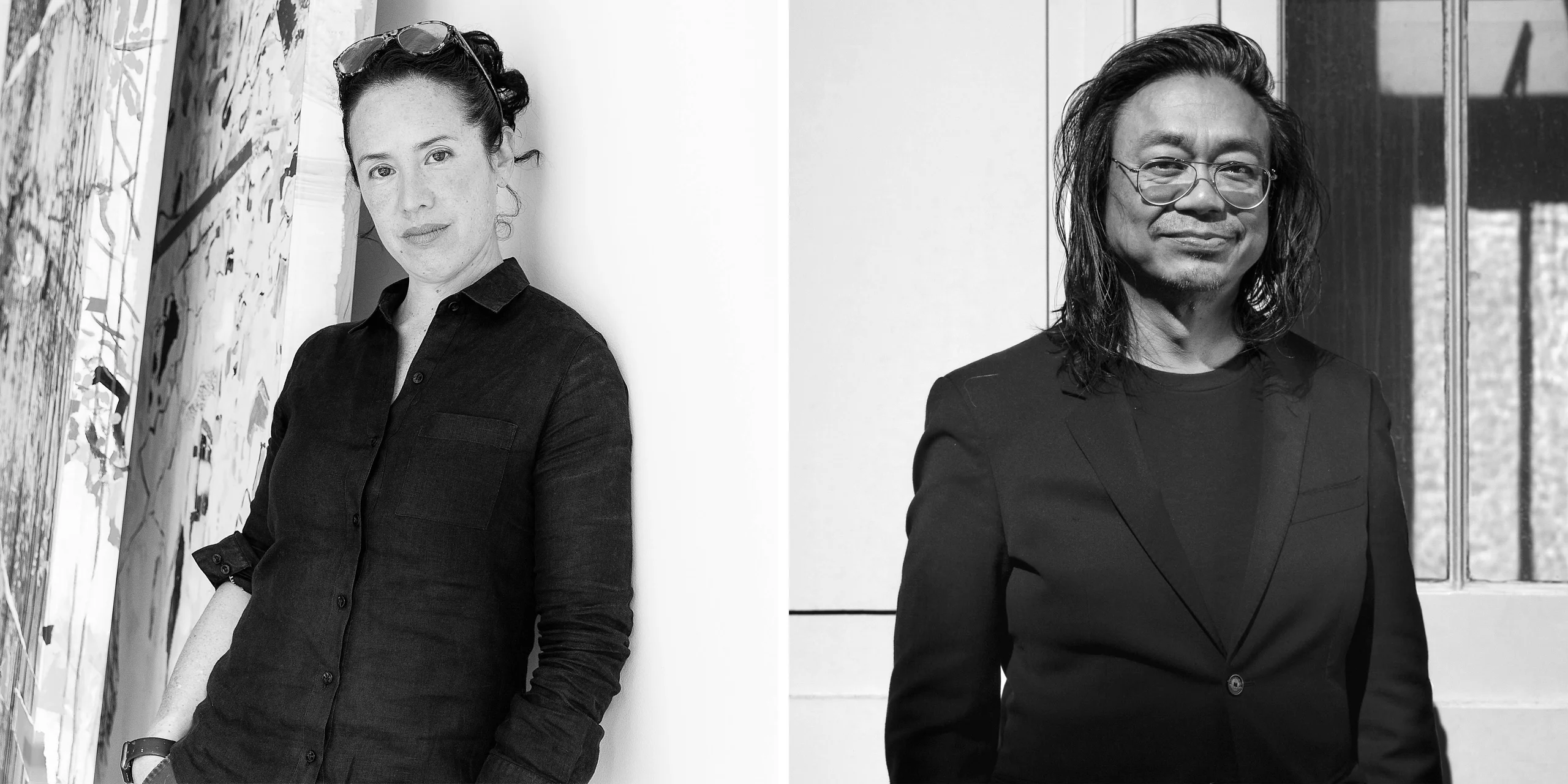
Rirkrit Tiravanija
 Thailand
Also known as: Rirkrit Tiravinija
Birthday
July 21, 1961
Birth Sign
Cancer
Birthplace
Buenos Aires, Argentina
Age
65 years old
About
Rirkrit Tiravanija is a Thai contemporary artist whose practice dissolves the line between art and everyday life. Born in Buenos Aires, Argentina, in 1961, he works across New York, Berlin, and Chiang Mai. His installations often take the form of kitchens, living rooms, or gathering spaces where visitors cook, eat, talk, or simply coexist. He rose to prominence in the early 1990s as a leading figure of relational aesthetics, a movement that treats human interaction as the medium of art. His iconic 1992 piece "Untitled (Free)", serving pad thai to gallery-goers, became a touchstone for participatory practice. Over three decades, he has shown at the Venice Biennale, Documenta, and the Whitney Biennial, and his work is held in major collections worldwide. He is also a dedicated educator, having taught at Columbia University and the Städelschule, shaping a generation of artists. As of 2026, he continues to produce ambitious projects, including representing Qatar at the Venice Biennale. His recent retrospective at Pirelli HangarBicocca and his interactive installations at Art Basel Qatar demonstrate his ongoing commitment to art as a social catalyst.
Early Life & Background
Tiravanija was born in Buenos Aires to a Thai diplomat father, and his childhood was spent across three continents: Thailand, Ethiopia, and Canada. This peripatetic upbringing, moving with his family's diplomatic postings, instilled in him a sense of being "always between cultures," a condition that would later permeate his art. He studied at the Ontario College of Art in Toronto before moving to the United States, where he attended the School of the Art Institute of Chicago and completed the Whitney Independent Study Program in New York. In the late 1980s, he was part of New York's downtown art scene, experimenting with performance and installation. His breakthrough came in 1992 at the 303 Gallery, where he set up a makeshift kitchen and cooked pad thai for visitors. The piece, titled "Untitled (Free)," transformed the gallery into a communal dining space, collapsing the distance between artist and viewer. It was a radical gesture that would define his career and catalyze the relational aesthetics movement.
Career Growth
After the success of "Untitled (Free)" in 1992, Tiravanija became a central figure in contemporary art. He participated in major international exhibitions, including the Venice Biennale, Documenta, and the Whitney Biennial, throughout the 1990s and 2000s. In 2004, he won the Hugo Boss Prize, one of the art world's most prestigious awards, recognizing his pioneering work in social interaction. He co-founded The Land Foundation in Chiang Mai, an experimental space merging art with sustainable agriculture. His teaching posts at Columbia University and the Städelschule in Frankfurt have influenced a generation of younger artists. Recent projects include a 2025–2026 retrospective at Pirelli HangarBicocca in Milan, "The House That Jack Built," and an exhibition at Gladstone Gallery in Brussels. In 2026, he was selected to represent Qatar at the Venice Biennale with the pavilion "A Gathering of Remarkable People," designed as a space for communal rituals. He also presented an interactive installation at Art Basel Qatar in February 2026.
Career Timeline
Public Image & Style
Tiravanija is widely regarded as the foremost practitioner of relational aesthetics. His signature style involves creating spaces for social interaction, cooking, eating, reading, or conversation, and his installations often function as stages or rooms. Critics and media consistently portray him as a pioneering, influential figure who collapses the distance between artist and viewer. He is described as "one of the foremost artists working with social interaction and activation." While he does not have a named fandom like music or film celebrities, his "fans" are art-world professionals, collectors, students, and enthusiasts who engage with his participatory installations. His teaching at Columbia and the Städelschule has cultivated a following among younger artists, and his influence extends through the relational aesthetics movement.
Fame & Fandom
Rirkrit Tiravanija operates within a sphere where the traditional architecture of fandom dissolves into the very fabric of his practice. His work does not cultivate a following in the manner of pop icons or athletes; there is no collective title for his audience, nor are there organized fan clubs, specific rituals, or branded campaigns. The individuals who engage with his installations are participants rather than spectators, invited to cook, eat, and converse within gallery spaces that function as communal kitchens. This dynamic erodes the hierarchy between artist and viewer, transforming passive observation into active collaboration without generating the viral folklore or idol worship typical of celebrity culture. While his influence permeates the contemporary art world through major exhibitions at institutions like the Venice Biennale and MoMA, his legacy rests on the quiet revolution of treating social interaction as an artistic medium rather than on a mobilized fanbase. There is no documented name for any group that might claim him as their own, reflecting the institutional and conceptual nature of his career. Regarding global standing, Rirkrit Tiravanija is currently evaluated by the iFANN Global Fame Engine but holds no placement in the published rankings. He is not listed among the Global Top 1,000 most famous people, nor does he appear on any Top-100 scope lists for contemporary artists. The system has assessed his profile and determined that while his impact on art history is profound, it does not translate into the mass-consumption metrics required for a ranked position. Consequently, no ordinal rank or score can be assigned to his current fame level.
Interesting Facts and Legends
Rirkrit Tiravanija was born in Buenos Aires in 1961 but holds Thai nationality due to his father's diplomatic career, having lived in Thailand, Ethiopia, and Canada before adulthood. His most celebrated work involved cooking and serving Pad Thai to gallery visitors, an event now considered a seminal moment in art history that established his reputation for participatory practice. He co-founded The Land Foundation in Chiang Mai, which operates as both an art space and a working farm. In 2026, his home featured in the Financial Times showcased a garden visible from every room, reflecting inspiration from Sri Lankan architect Geoffrey Bawa. A widely retold story in his lore involves an incident at The Kitchen in New York where he cooked Pad Thai for guests, effectively replacing the consumption of art objects with the shared experience of a meal. Another defining chapter in his career mythos is the 2023 retrospective A LOT OF PEOPLE at MoMA, which traced four decades of his work and featured over 100 pieces. His ongoing narrative includes the 2026 selection to represent Qatar at the Venice Biennale with a project focused on communal rituals, further cementing his status as a pioneer of social interaction in art.
Notable Quotes
“I wanted a garden visible from every room.”
“Art is a way of being in the world, not just looking at it.”
Family & Personal Life
Tiravanija is the son of a Thai diplomat, a role that shaped his nomadic childhood. He has not publicly shared details about his parents, siblings, or his own family. He currently lives between New York, Berlin, and Chiang Mai, splitting his time among these cities. His home in Chiang Mai, featured in a 2026 Financial Times profile, is designed with a garden visible from every room, reflecting his philosophy of dissolving boundaries between indoors and outdoors. The house features sliding doors and huge windows that blur the threshold between inside and outside, inspired in part by Sri Lankan architect Geoffrey Bawa. He has no publicly documented spouse, partner, or children.
Notable Connections
Tiravanija is associated with French critic Nicolas Bourriaud, who coined "relational aesthetics" to describe his work. His primary galleries are David Zwirner and Kurimanzutto. He has taught at Columbia University and the Städelschule, influencing younger artists. He collaborates with artists and farmers through The Land Foundation in Chiang Mai.
Relationships & Dating History
Tiravanija is notably private about his personal and romantic life. Publicly available sources do not document any specific romantic relationships, marriages, or partnerships. He has no publicly documented children from known relationships. His personal life is not a subject of tabloid coverage, and he has not been linked publicly to any romantic partners in credible media sources. As of 2026, no public information confirms a current partner, and his relationship status is not a matter of public record. His public persona centers on his artistic practice rather than personal relationships.
Salary, Net Worth In 2026
$10 Million
iFANN Editorial Team estimate
Per iFANN's editorial analysis, Rirkrit Tiravanija's net worth is estimated at $10 Million as of 2026. While exact figures are not publicly disclosed, his wealth stems from multiple sources. He is represented by major galleries David Zwirner and Kurimanzutto, which handle blue-chip contemporary artists, and his works are sold at major auction houses and held in significant museum collections. He has received major commissions, including the Qatar Pavilion at the Venice Biennale in 2026. He holds academic positions at Columbia University and the Städelschule, providing a steady income. His exhibitions at institutions like Pirelli HangarBicocca and MoMA PS1 also contribute to his financial standing. The retrospective "The House That Jack Built" and his participation in Art Basel Qatar in 2026 further bolster his earnings. His net worth has grown steadily over the years, reflecting his enduring influence in the art world.
Awards Won (1)
Tiravanija won the Hugo Boss Prize in 2004, one of contemporary art's most prestigious awards, recognizing his pioneering work in participatory and relational art. This is the most significant award he has won. His recognition primarily comes through exhibition invitations and institutional honors rather than competitive prizes.
2004 · Contemporary Art
Participatory and relational art
Known For
Untitled (Free)
1992 · Artist
The Land Foundation
2000 · Co-founder
The House That Jack Built
2025 · Exhibitor
Keywords
Sources
Quick Facts
- Profession
- Contemporary artist
- Born
- July 21, 1961
- Birthplace
- Buenos Aires, Argentina
- Gender
- Male
- Birth Sign
- Cancer
Personal Details
- Education
- Ontario College of Art, Toronto; School of the Art Institute of Chicago; Whitney Independent Study Program, New York
Frequently Asked Questions
What is Rirkrit Tiravanija known for?
Where is Rirkrit Tiravanija from?
What does Rirkrit Tiravanija's art look like?
Did Rirkrit Tiravanija win the Hugo Boss Prize?
Is Rirkrit Tiravanija married?
Join the community
fans discussing