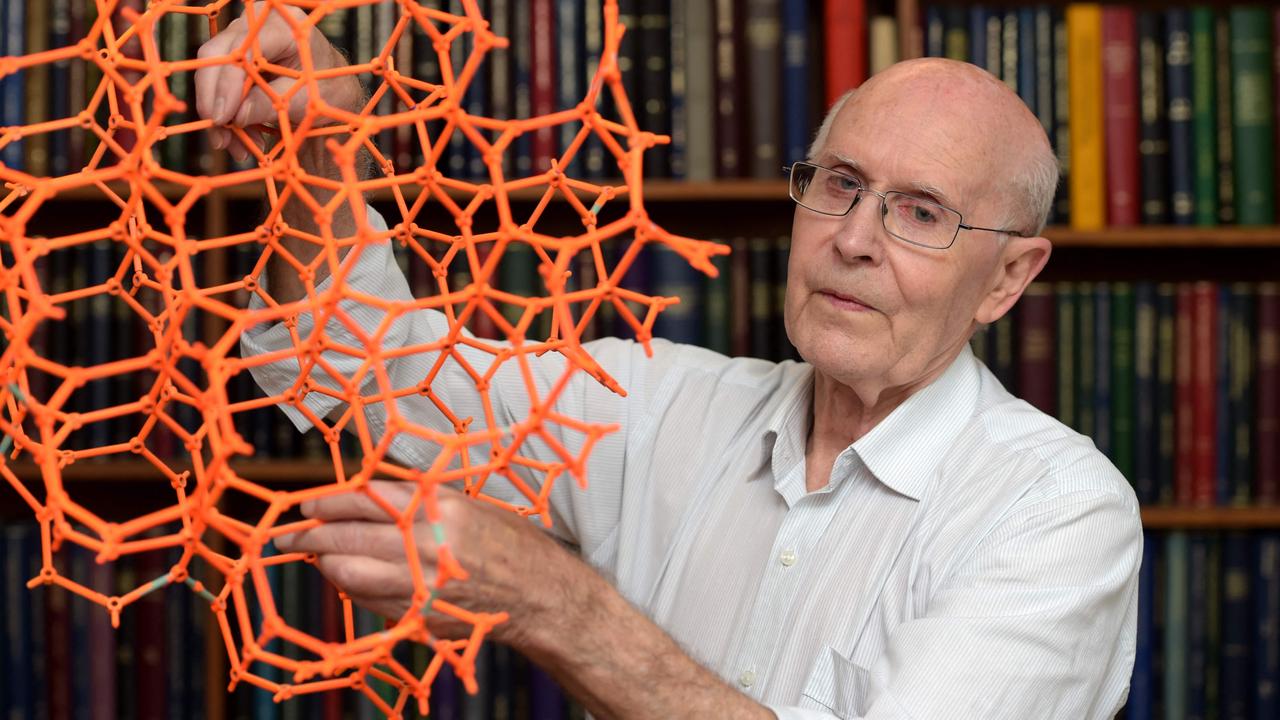
Richard Robson
 Australia
Birthday
June 4, 1937
Birth Sign
Gemini
Birthplace
Glusburn, Yorkshire, England
Age
89 years old
About
Richard Robson is an English-born Australian chemist who helped create an entirely new class of materials. He is Professor Emeritus of Chemistry at the University of Melbourne and one of the founders of metal-organic frameworks (MOFs), the porous crystalline structures that now play a role in everything from carbon capture to drug delivery. In 2025, he shared the Nobel Prize in Chemistry with Susumu Kitagawa and Omar M. Yaghi for this work, a recognition that came decades after his initial breakthrough.
Robson's research has been cited more than 21,000 times across 206 publications, and his 1989 paper is widely considered the starting point of the MOF field. He is a Fellow of both the Australian Academy of Science and the Royal Society. Now in his late eighties, he remains an active voice in chemistry, celebrated for both his scientific foresight and his modest, straightforward manner.
Early Life & Background
Richard Robson was born on June 4, 1937, in the small Yorkshire village of Glusburn, England. Growing up in the industrial north, he developed an early interest in how things are put together at the molecular level. In 1955, he matriculated at Brasenose College, Oxford, where he earned both his BA and D.Phil. in chemistry. His doctoral work focused on coordination chemistry, the study of compounds where central metal atoms bond to surrounding molecules.
After Oxford, Robson moved to the United States for postdoctoral research at the California Institute of Technology and Stanford University. It was a formative period, exposing him to some of the most innovative labs in the world. But in the 1970s, he made a life-changing decision: he emigrated to Australia and joined the faculty at the University of Melbourne.
At Melbourne, Robson began exploring how to design crystalline solids with specific architectures. In 1989, he published a paper describing a new way to link metal ions with organic bridging molecules to create porous, three-dimensional frameworks. The idea was met with skepticism. As he later recalled, some colleagues thought it was a whole load of rubbish. But Robson was convinced of its potential, and he even built wooden models to visualize the structures he proposed. That 1989 paper, initially dismissed by some, would become the foundation of an entire field.
Career Growth
Robson's 1989 breakthrough introduced a concept that would eventually be called metal-organic frameworks, or MOFs. Although the term itself came later, his work established the core idea: linking metal nodes with organic linkers to create materials with enormous internal surface area. In the decades that followed, he continued to refine and expand this chemistry, publishing over 200 papers and helping to establish crystal engineering as a major discipline.
The scientific community gradually caught up with his vision. MOFs proved to be extraordinarily versatile, with applications in carbon dioxide capture, toxic gas storage, catalysis, water purification, and pollutant extraction. By the 2010s, Robson was recognized as one of the field's pioneers, even as younger researchers like Omar Yaghi and Susumu Kitagawa pushed MOFs into new territory.
On October 8, 2025, the Royal Swedish Academy of Sciences announced that Robson, Kitagawa, and Yaghi would share the Nobel Prize in Chemistry for the development of metal-organic frameworks. For Robson, it was a validation of work that had been doubted for years. In his Nobel interview, he reflected on the early skepticism with characteristic understatement. The prize came with a monetary award of 11 million Swedish kronor, split three ways, giving Robson roughly 3.67 million SEK.
Career Timeline
Public Image & Style
Within the scientific community, Richard Robson is regarded as a humble pioneer whose foundational work was initially underestimated. He has no celebrity fandom, but among chemists, he is a respected elder statesman. His Nobel interview revealed a modest, straightforward personality; he openly acknowledged the early skepticism his work faced without bitterness. The University of Melbourne has described him as having pioneered an entirely new field of chemistry, and his legacy is one of quiet persistence and intellectual courage.
Fame & Fandom
Richard Robson commands a unique form of reverence that exists far from the roar of stadiums or the glow of social media feeds. His audience is not a legion of screaming fans but the global community of chemists who stand on the foundation he laid decades ago. There is no formal moniker for his followers; you will find no 'Robsonites' or organized fan clubs marching in his honor. Instead, his veneration manifests through the relentless citation of his work and the institutional pride of universities like Oxford and Melbourne. The scientific world treats his legacy with a quiet devotion, viewing his 1989 breakthrough as a sacred text in the annals of materials science. A recurring cultural touchstone for this audience is the playful comparison of his metal-organic frameworks to Hermione's handbag, a magical vessel holding infinite space within a small frame, which serves as the field's most accessible shorthand for his genius. While the Nobel announcement in late 2025 brought a wave of celebratory press and university tributes, these were professional acknowledgments rather than grassroots movements. The true measure of his influence remains the thousands of researchers building new technologies upon his porous structures. This enduring impact places him firmly within the digital consciousness of the modern era. According to the iFANN Global Fame Rankings, Richard Robson is currently the 72nd most famous person in AI, a standing he has held steady through the latest cycle.
Interesting Facts and Legends
Before computers could model complex molecules, Robson built physical wooden models to visualize his proposed architectures, a tactile approach that defined an era of discovery. His seminal 1989 paper actually predates the term 'metal-organic framework,' which Omar Yaghi would coin years later in the mid-1990s. Colleagues initially dismissed his theories as nonsense, a skepticism Robson recalled with characteristic humility during his Nobel interview. He trained at three of the globe's most elite institutions: Oxford, Caltech, and Stanford. Today, MOFs derived from his concepts are used to capture carbon dioxide, store toxic gases, extract pollutants from water, and catalyze chemical reactions. The legend of his career centers on the decades-long gap between his initial discovery and its ultimate vindication. At 88 years old, he traveled to Stockholm to personally accept the 2025 Nobel Prize, creating an iconic image of an elder statesman finally receiving his due. The media widely framed his discovery as a 'super sponge' or a 'Hermione's handbag' capable of holding vast internal surface areas within tiny external volumes.
Notable Quotes
“Some people thought it was a whole load of rubbish. But it didn't turn out that way.”
Family & Personal Life
Public information about Richard Robson's family is extremely limited. He is a private individual, and no reliable sources detail his parents, siblings, or personal household. His biography focuses almost entirely on his scientific career, with little mention of his life outside the lab. It is known that he emigrated from England to Australia in the 1970s, suggesting a personal commitment to his adopted country, but specifics about his spouse or children have not been made public.
Notable Connections
Susumu Kitagawa and Omar M. Yaghi shared the 2025 Nobel Prize in Chemistry with Richard Robson for the development of metal-organic frameworks. Kitagawa is a Japanese chemist at Kyoto University, while Yaghi is an American chemist at UC Berkeley. Together, the three scientists are considered the founding figures of the MOF field.
Relationships & Dating History
There is no public information about Richard Robson's dating history or romantic relationships. He has kept his personal life private, and no credible sources document any partnerships, marriages, or children. As of 2026, his relationship status is unknown, consistent with his low-profile personal life.
Salary, Net Worth In 2026
$1 Million
iFANN Editorial Team estimate
Richard Robson's financial profile reflects the life of a dedicated academic rather than a commercial mogul. His income streams consist primarily of his professorial salary, research grants, and the substantial funds awarded for his recent accolades. The 2025 Nobel Prize in Chemistry distributed 11 million Swedish kronor (approximately US$1.06 million) among the three laureates, allocating roughly 3.67 million SEK (about US$350,000) to Robson specifically. Per iFANN's editorial analysis, his estimated net worth stands at $1 Million as of 2026, a figure that accounts for his lifetime academic earnings alongside the Nobel award.
Awards Won (1)
Richard Robson won the 2025 Nobel Prize in Chemistry, shared with Susumu Kitagawa and Omar M. Yaghi, for the development of metal-organic frameworks. This is his most significant award, recognizing his foundational contributions to the field.
2025 · Chemistry
Development of metal-organic frameworks
Known For
Development of metal-organic frameworks (MOFs)
1989 · Pioneer
Nobel Prize in Chemistry
2025 · Co-laureate
Keywords
Sources
Quick Facts
- Profession
- chemist
- Born
- June 4, 1937
- Birthplace
- Glusburn, Yorkshire, England
- Gender
- Male
- Birth Sign
- Gemini
- Nationality
- Australian
- Education
- University of Oxford (BA, D.Phil.)
- Known for
- Development of metal-organic frameworks (MOFs)
- Awards
- Nobel Prize in Chemistry (2025)
Personal Details
- Full Name
- Richard Robson
- Education
- University of Oxford (BA, D.Phil.); postdoctoral research at Caltech and Stanford
Frequently Asked Questions
Is Richard Robson the chemist still alive?
What did Richard Robson win the Nobel Prize for?
When did Richard Robson invent MOFs?
Where is Richard Robson from?
How much is the Nobel Prize money that Richard Robson received?
Similar People
Join the community
fans discussing