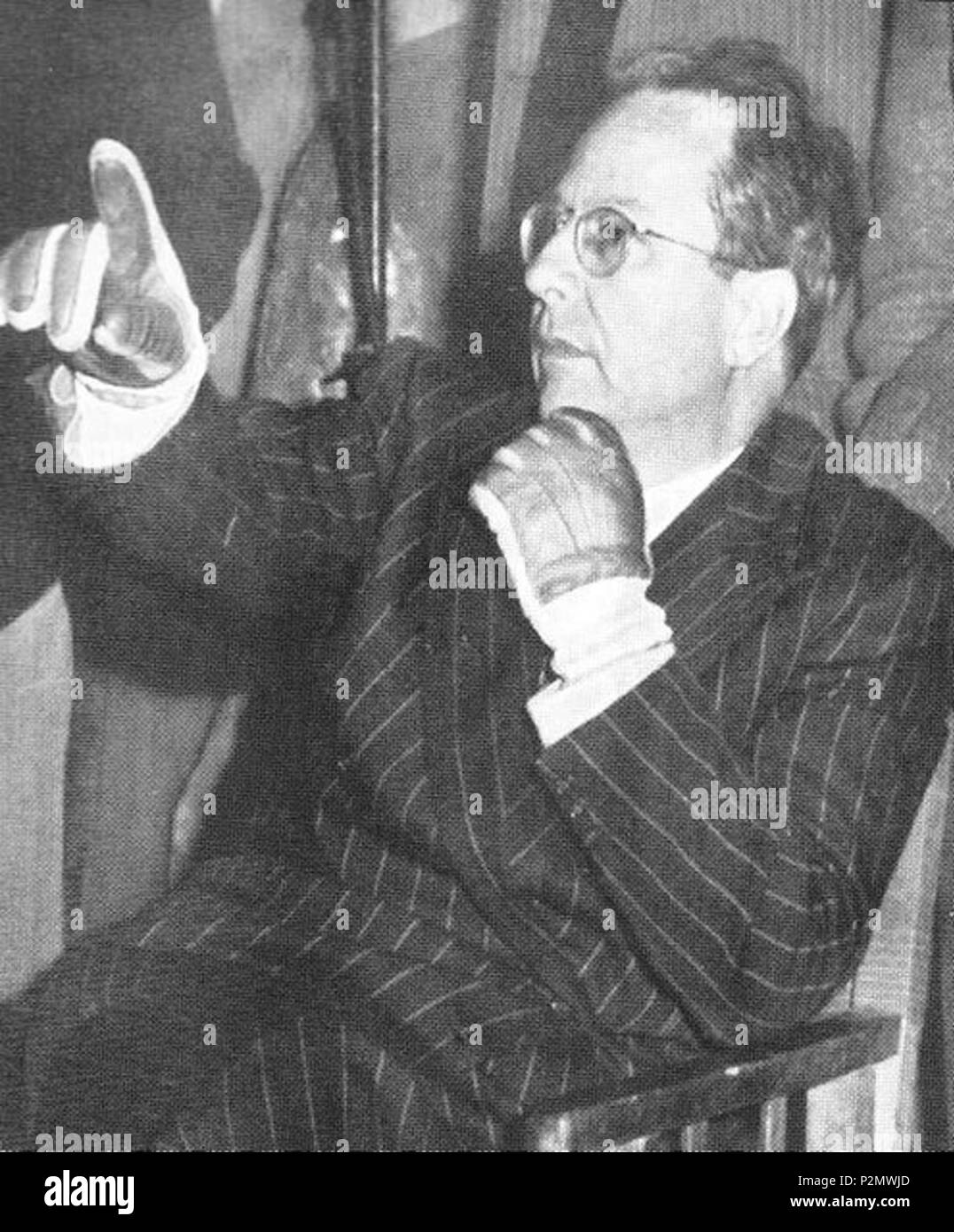
Riccardo Freda
 Egypt
Egyptfilm director•screenwriter•film editor
Birthday
February 24, 1909
Birth Sign
Sagittarius
Birthplace
Alexandria, Egypt
Age
Died at 90
About
Riccardo Freda was an Italian film director, screenwriter, and editor whose career spanned over four decades and more than forty films. He is best remembered as a pioneer of Italian horror cinema, having directed I Vampiri (1956), widely considered the first Italian sound horror production. His work also ranged across giallo thrillers, swashbucklers, sword-and-sandal epics, and spy adventures, marked by a flamboyant visual style and a love for popular genre storytelling.
Freda's films have gained a devoted following among genre enthusiasts, with recent restorations and home video releases introducing his work to new audiences. His collaborations with actress Barbara Steele in films like The Ghost (1963) and The Horrible Dr. Hichcock (1962) are particularly celebrated. He died in Rome in 1999, leaving behind a rich legacy that continues to be explored by critics and fans.
Early Life & Background
Riccardo Freda was born on 24 February 1909 in Alexandria, Egypt, to Neapolitan parents. He spent his early years in the cosmopolitan port city before moving to Milan for his education. Initially, Freda pursued a career as a sculptor, studying art and developing a keen eye for visual composition. He also worked as an art critic for newspapers, which sharpened his understanding of narrative and aesthetics.
Freda's path to cinema was unconventional. He presented himself as an 'American-style' director, openly opposing the Neorealism movement that dominated postwar Italian cinema. He was equally dismissive of traditional Italian comedy, favoring instead the spectacle and energy of genre pictures. This contrarian stance set the tone for a career defined by bold choices and a relentless drive to entertain.
Before stepping behind the camera, Freda immersed himself in the technical aspects of filmmaking, learning editing and screenwriting. His early experiences as a sculptor and critic gave him a unique perspective on visual storytelling, which he would later apply to his films. By the mid-1940s, he was ready to make his directorial debut, bringing a fresh, genre-driven sensibility to Italian cinema.
Career Growth
Freda's directorial debut came in 1946 with The White She-Wolf, a gothic horror that hinted at the themes he would explore throughout his career. But it was I Vampiri (1956) that cemented his place in film history as the first Italian sound horror film. The movie, starring Gianna Maria Canale and Antoine Balpêtré, told the story of a countess who murders young women to maintain her youth. It was a commercial success and launched a wave of Italian horror productions.
In the early 1960s, Freda delved into the giallo genre with The Girl Who Knew Too Much (1963), a stylish thriller that influenced the later works of directors like Mario Bava and Dario Argento. That same year, he directed The Ghost, a loose sequel to The Horrible Dr. Hichcock, starring Barbara Steele. The film was recently restored in 4K and released on Blu-ray by Severin Films in December 2025, bringing it to a new generation of fans.
Freda also made his mark in the sword-and-sandal genre with Goliath and the Dragon (1960) and the swashbuckler Black Eagle. He directed only one Western, but his versatility extended to spy films like Coplan Saves His Skin (1967). Known for his incredible speed, Freda often shot spectacular costume pictures in just three to six days. His 1969 film Double Face, starring Klaus Kinski, was released on Blu-ray by Arrow Video in 2019. Throughout his career, Freda's work has been the subject of retrospectives at festivals like Il Cinema Ritrovato, and in 2017, author Roberto Curti published a comprehensive biography, Riccardo Freda: The Life and Works of a Born Filmmaker.
Career Timeline
Public Image & Style
Riccardo Freda is remembered as a versatile and prolific genre filmmaker with a distinctive visual flair. Critics often describe his work as containing remarkable technical skill and powerful visual style, even when the subject matter was lurid or exploitative. He was a master of popular cinema, unafraid to embrace the sensationalism of horror and thriller genres.
Fans of Italian genre cinema hold Freda in high regard, appreciating his energetic storytelling and his role in pioneering Italian gothic horror. His collaborations with actress Barbara Steele are particularly celebrated, and his films have inspired a dedicated cult following. Recent restorations and home video releases have kept his work alive for new generations, ensuring that his legacy as a filmmaker continues to grow.
Fame & Fandom
Riccardo Freda currently holds no placement in the iFANN Global Top 1,000 rankings or any published Top-100 scope list as of August 2026. While he does not appear on the current global fame leaderboard, his standing within the specialized realm of Italian genre cinema remains formidable and deeply respected by critics and historians alike. The enthusiasm surrounding his work is channeled almost exclusively through dedicated film preservation societies, collectors of mid-century horror and sword-and-sandal epics, and scholars rather than a mass consumer movement with a unified identity. There is no formal name for his fanbase, nor are there organized groups self-designating as "Freda Fans" or engaging in large-scale public campaigns like birthday billboards. Instead, the reverence for Freda manifests as an academic and aesthetic appreciation for his role as a pioneer who bridged early Italian Gothic with the later giallo boom. Recent high-profile restoration projects, such as the 4K release of The Ghost by Severin Films, serve as the modern equivalent of fan rituals, drawing renewed discussion among giallo historians and collectors. These commercial efforts highlight the enduring demand for his visual style, which influenced giants like Dario Argento and Mario Bava, ensuring his legacy persists through critical reassessment and archival dedication rather than viral pop culture moments.
Interesting Facts and Legends
Riccardo Freda was a sworn enemy of Neorealism, always presenting himself as an American-style director to distinguish his work from Italian contemporaries. He possessed a legendary efficiency, capable of shooting spectacular costume pictures in as little as three to six days. Before entering cinema, he worked as a sculptor and newspaper art critic, a background that heavily influenced his distinct visual approach. I Vampiri (1957) stands as a landmark achievement, widely considered the first Italian sound horror production. Despite his versatility across multiple genres, he directed only one Italian Western in his entire career. His film The Horrible Dr. Hichcock (1962) is noted for its lavish and overripe depiction of necrophilia, a subject that generated significant controversy at the time. Within cult film circles, Freda is revered as the father of Italian horror, a title cemented by the atmospheric density of his collaborations with Barbara Steele. Contemporary accounts often cite his ability to deliver visually stunning productions under difficult conditions as a key element of his professional lore. His direction of Beatrice Cenci (1956) remains a significant entry in the canon of Italian historical drama, showcasing his skill beyond pure horror.
Family & Personal Life
Riccardo Freda was born to Neapolitan parents in Alexandria, Egypt, where he spent his early childhood. His family's Italian heritage would later influence his career choices, though he spent most of his professional life in Italy. Details about his parents or any siblings are scarce in public records.
Freda was educated in Milan, where he developed his artistic interests. He never publicly shared much about his family life, and no records of marriage or children have been confirmed. He passed away in Rome on 20 December 1999, with his personal life remaining largely private.
Notable Connections
Riccardo Freda collaborated with some of the most distinctive actors in genre cinema. Barbara Steele starred in his horror classics The Horrible Dr. Hichcock and The Ghost, becoming the iconic scream queen of Italian gothic. Klaus Kinski brought his intense presence to Double Face (1969). Robert Flemyng also appeared in the Dr. Hichcock films. These partnerships helped define the look and feel of Freda's most enduring work.
Relationships & Dating History
There is no public information about Riccardo Freda's romantic relationships or marriages. He was a private individual, and his personal life was not widely covered in the media. As a filmmaker who died in 1999, his relationships were not a topic of modern celebrity gossip. Based on available sources, no confirmed relationships can be documented.
At the time of his death, his marital status is unknown, and there are no records of a spouse or partner. His focus was clearly on his work, and he left behind a vast filmography rather than a public romantic history.
Death & Aftermath
Died
December 20, 1999 (aged 90)
Death Place
Rome
Cause of Death
Unknown
Riccardo Freda, the Italian film director, screenwriter, and editor known for pioneering sword-and-sandal and horror genres, died on December 20, 1999, at the age of ninety. He was born on February 24, 1909, in Alexandria, Egypt. Available records do not provide an official medical statement, coroner's ruling, or autopsy report detailing the specific cause of death, limiting information to the fact of his passing as reported by family and press at the time. No public details regarding his final days, last public appearance, or specific circumstances leading up to his death were made public.
Public reaction included a tribute published in The Guardian on December 24, 1999, which highlighted his reputation for shooting spectacular costume pictures across various genres, noting his ability to work efficiently from three to six hours a day. Specifics regarding the funeral or memorial service, including the date, location, nature, notable attendees, or burial and cremation details, were never made public in the available search results.
The enduring resonance of Freda's work was cemented long after his passing, with recent years bringing significant critical and commercial attention through major restorations. Severin Films released a 4K Blu-ray of The Ghost in late 2025, while Arrow Video issued acclaimed editions of Double Face and The Iguana with the Tongue of Fire in 2019. These releases followed the publication of Roberto Curti's comprehensive biography in 2017, ensuring that the director's flamboyant visual style and pioneering contributions to Italian horror remained accessible to new generations of enthusiasts.
Net Worth (Estate Value)
$10 Million
iFANN Editorial Team estimate
Riccardo Freda passed away in 1999, so his net worth is best understood through the ongoing revenue generated by his films. His estate continues to earn from home video releases, streaming licensing, and festival screenings. Recent examples of his enduring commercial appeal include the 4K restoration of The Ghost released by Severin Films and the Arrow Video Blu-ray of Double Face. Per iFANN's editorial analysis, the total value attributed to his estate is $10 Million. This figure reflects the continued interest in his work, with new restorations and critical reassessments driving demand. His legacy as a pioneer of Italian horror ensures that his films remain valuable properties for distributors and collectors alike.
Awards & Accolades
View 1 records, honours and achievementsKnown For
I Vampiri
1956 · Director
The Horrible Dr. Hichcock
1962 · Director
The Ghost
1963 · Director
The Girl Who Knew Too Much
1963 · Director
Double Face
1969 · Director
Keywords
Sources
Quick Facts
- Profession
- film director, screenwriter, film editor
- Born
- February 24, 1909
- Birthplace
- Alexandria, Egypt
- Died
- December 20, 1999
- Death Place
- Rome, Italy
- Gender
- Male
- Birth Sign
- Sagittarius
Personal Details
- Education
- Educated in Milan
Filmography
40
Total
40
Film
0
TV
Frequently Asked Questions
Who was Riccardo Freda?
What is Riccardo Freda's most famous movie?
How old was Riccardo Freda when he died?
Where was Riccardo Freda born?
Did Riccardo Freda have any children?
Similar People
Join the community
fans discussing