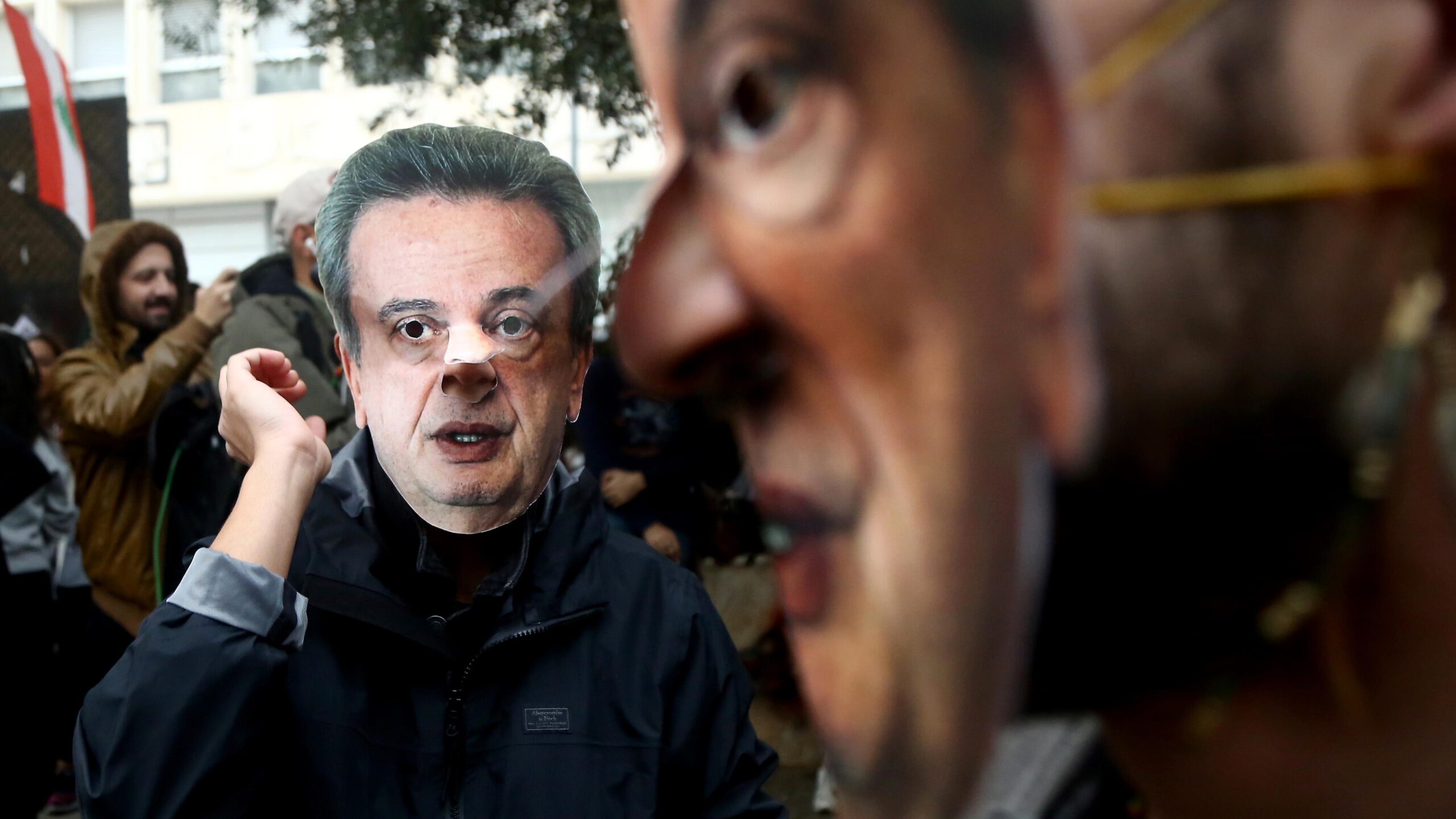
Riad Salameh
 Lebanon
banker•political economist•financier
Also known as: Riad Toufic Salameh, Riad Salamé
Birthday
July 17, 1950
Birth Sign
Cancer
Birthplace
Antelias, Lebanon
Age
76 years old
About
Riad Toufic Salameh is a Lebanese financier and political economist who served as governor of Banque du Liban, Lebanon's central bank, for three decades. Appointed by decree in August 1993, he held the post through successive reappointments until July 2023, making him one of the longest-serving central bank governors in modern history. For much of that time he was celebrated as a guardian of monetary stability, praised for keeping the Lebanese pound pegged to the dollar through high interest rates and a dollarized banking system.
That reputation collapsed after 2019, when Lebanon's financial system unraveled. The pound lost more than 90 percent of its value, banks froze depositor funds, and what had once been hailed as prudent management came to be described by critics as a Ponzi scheme. Salameh now faces sanctions from the United States, the United Kingdom, and Canada, along with criminal investigations in Lebanon and Europe. As of 2026, he is detained in Beirut, fighting charges of embezzlement and money laundering that have turned his legacy into a cautionary tale about unchecked power in a fragile economy.
Early Life & Background
Riad Toufic Salameh was born on July 17, 1950, in Antelias, a coastal town north of Beirut. He grew up during a period of relative calm in Lebanon, before the civil war that would reshape the country. His family was part of the Lebanese commercial class, with interests in trade and finance that would later come under scrutiny.
Salameh pursued economics abroad, earning a degree from the University of Paris (Sorbonne) and later a doctorate from the University of Pennsylvania in Philadelphia. His academic training gave him a command of monetary theory that he carried back to Lebanon. On his return, he took a position as professor of economics at the American University of Beirut, where he taught and published on political economy.
The civil war that began in 1975 forced many educated Lebanese to leave, but Salameh stayed, building a reputation as a sharp financial mind. By the late 1980s, as Lebanon's currency spiraled and the state fragmented, he was already being consulted on economic stabilization. His breakthrough came in 1993, when the post-war government, seeking a credible technocrat to restore confidence in the lira, appointed him governor of the central bank. He was 43 years old.
Career Growth
Salameh's early years at Banque du Liban were marked by a single-minded focus on stability. He introduced high interest rates that attracted foreign capital and maintained a fixed exchange rate of around 1,500 pounds to the dollar. For nearly two decades, this approach held, and Beirut re-emerged as a regional financial hub. Global Finance magazine named him Central Banker of the Year in 2004 and again in 2005.
The strategy, however, depended on a constant inflow of new deposits to service the interest owed on old ones. As the Syrian civil war spilled into Lebanon after 2011, the system strained under refugee inflows and mounting government debt. Salameh continued issuing high-yield bonds and monetizing the deficit, deepening the fragility. In 2019, the house of cards collapsed. The pound cratered, inflation soared, and depositors were locked out of their savings.
Salameh remained in office until July 2023, when his term ended without a successor. Since then, his focus has shifted to the courtroom. In 2024 he was detained on corruption charges, released on bail in September 2025, and rearrested in August 2026 following new accusations linked to Bank Audi. His legal battles show no sign of resolution.
Career Timeline
Public Image & Style
Salameh's public image has undergone a dramatic reversal. In the 1990s and 2000s, he was portrayed as a technocratic savior, a man who could keep Lebanon solvent amid chaos. He was a regular at Davos and courted by Western finance ministers. After 2019, that image shattered. The same policies that once drew praise were recast as a pyramid scheme. Critics dubbed him "the world's worst central banker," and his name became shorthand for the corruption that fueled Lebanon's collapse. For many Lebanese, he symbolizes the elite impunity that drained the country's wealth while ordinary people lost their savings. His continued legal battles have only reinforced that perception.
Fame & Fandom
Riad Salameh currently holds no placement in the iFANN Global Top 1,000 rankings or any scope-based top lists. The iFANN Global Fame Engine has evaluated his profile, yet he does not appear on the published charts as of August 2026. While many global figures vie for attention through entertainment or sports, Salameh's presence is defined by a different kind of notoriety: the architect of a nation's financial unraveling rather than a cultural icon. His name triggers immediate recognition in economic circles and among those following the Lebanese crisis, but this recognition stems from legal scandal and international sanctions rather than traditional fame metrics like search volume or media consumption that drive the rankings. There is no documented fandom associated with him. No organized fanbase gathers to celebrate his legacy, nor are there rituals, hashtags, or campaigns dedicated to his defense or support. The audience surrounding his story consists entirely of observers, critics, and victims of the economic collapse, united not by admiration but by the shared trauma of the system he once managed. For newcomers to the narrative, the legends told are cautionary tales of corruption and evasion rather than heroic folklore. The stories that circulate focus on his alleged role in running a massive Ponzi scheme, the dramatic saga of his arrests and bail payments totaling millions, and the international hunt for the funds he allegedly moved through Swiss banks. These are not viral moments of joy but grim chapters in a legal drama that continues to unfold, making his public image one of infamy rather than celebrity.
Interesting Facts and Legends
Salameh remains one of the few central bankers to face simultaneous sanctions from the United States, the United Kingdom, and Canada. During his tenure, he maintained the Lebanese pound's peg at roughly 1,500 to the dollar, a feat that initially earned him international acclaim before the system collapsed. Critics have described his management style as operating the largest Ponzi scheme in history, a charge he consistently denies while his family's business interests remain under investigation. A significant chapter of modern lore involves his legal battles between 2024 and 2026, where his repeated arrests and releases on bail became major news events. In September 2024, he was arrested after failing to appear in court, only to be released on $14 million bail, though later reports cite a $20 million bail amount in specific contexts. By August 2026, he faced re-arrest after failing to appear again while hospitalized, sparking debates about his health being used to delay justice. Another widely retold story concerns the January 2026 indictment where prosecutors charged him with embezzling over $44 million in public funds. The narrative of his downfall is now cemented by these specific legal milestones, transforming him from a technocratic savior into a symbol of systemic failure.
Notable Quotes
“The Lebanese pound will remain stable.”
“The system was attacked by those who wanted to destroy Lebanon.”
“I have nothing to hide.”
“These accusations are politically motivated.”
Family & Personal Life
Details about Salameh's family are sparse, as he has kept his personal life out of public view. He was born in Antelias to a family with commercial ties, and his brother, Raja Salameh, has been implicated in some of the financial investigations, though no charges have been proven. Salameh has not publicly confirmed a spouse or children, and no credible reports exist of his marital status. He is known to have lived in Beirut, but his current residence is effectively a detention facility.
Notable Connections
Wassim Mansouri, his first deputy, took over as acting governor after Salameh's term ended. Samir Hanna, former head of Bank Audi, was indicted alongside Salameh in 2026 for alleged financial misconduct. Salameh maintained close working relationships with successive Lebanese presidents and prime ministers, though these soured as the crisis deepened. International investigators from the US Department of Justice, the UK's National Crime Agency, and Canadian authorities have all pursued cases against him.
Relationships & Dating History
Riad Salameh has maintained a private personal life, and no public records confirm any romantic relationships, marriages, or children. Throughout his career, he avoided discussing personal matters with the media, and no credible reports have emerged about a spouse or partner. As of 2026, his relationship status is officially unknown, though his focus remains on his legal battles. There is no evidence of any public dating history, and his private life has largely been overshadowed by his professional and legal affairs.
Salary, Net Worth In 2026
$100 Million
iFANN Editorial Team estimate
Riad Salameh's net worth in 2026 stands as a focal point of intense legal scrutiny and public interest. Prior to the 2019 crisis, his wealth appeared substantial, but the subsequent collapse and investigations have frozen the majority of his assets. Lebanese courts and international sanctions have seized properties and bank accounts, leaving his liquid wealth severely diminished. Per iFANN's editorial analysis, his net worth is estimated at around $100 Million as of 2026, a figure reflecting the remnants of his once-substantial fortune still held in trust or offshore accounts. The $14 million bail set in 2025 and the $20 million bail in 2026 indicate that some liquidity remains, but much of it is tied up in legal fees and frozen assets. The "Salameh Papers" leaked in 2021 suggested potential illicit gains from money laundering and kickbacks from bond issuances, which could further reduce his accessible wealth if courts order restitution. His income sources have dried up since leaving office, and his legal defense is likely consuming a significant portion of his remaining funds. The trajectory of his net worth has been sharply downward, from an estimated $800 million at its peak to the current $100 million, with the possibility of further erosion as lawsuits and asset seizures continue.
Awards Won (2)
During his tenure, Salameh received recognition for his perceived success in stabilizing the Lebanese economy. He was named Central Banker of the Year by Global Finance magazine in 2004 and 2005. He also held honorary doctorates from several universities. However, these honours have been overshadowed by the subsequent financial collapse and corruption allegations, and no major awards have been won since 2019.
2005 · Central Banking
Banque du Liban
2004 · Central Banking
Banque du Liban
Known For
Governor of Banque du Liban
1993-2023 · Central Bank Governor
Lebanese Financial Crisis
2019 · Central Figure
Keywords
Sources
Quick Facts
- Profession
- banker, political economist, financier
- Born
- July 17, 1950
- Birthplace
- Antelias, Lebanon
- Gender
- Male
- Birth Sign
- Cancer
- Net Worth
- $100 Million
Personal Details
- Full Name
- Riad Toufic Salameh
- Education
- University of Paris (Sorbonne), University of Pennsylvania
Frequently Asked Questions
Who is Riad Salameh?
Is Riad Salameh dead?
What happened to Riad Salameh?
How rich is Riad Salameh?
Why was Riad Salameh arrested?
Similar People
Join the community
fans discussing