 United States
“A landmark achievement in music video history, pioneering the long-form music film format and establishing Jackson as a visionary artist.”
Rolling Stone
Rolling Stone
Part of a Collection
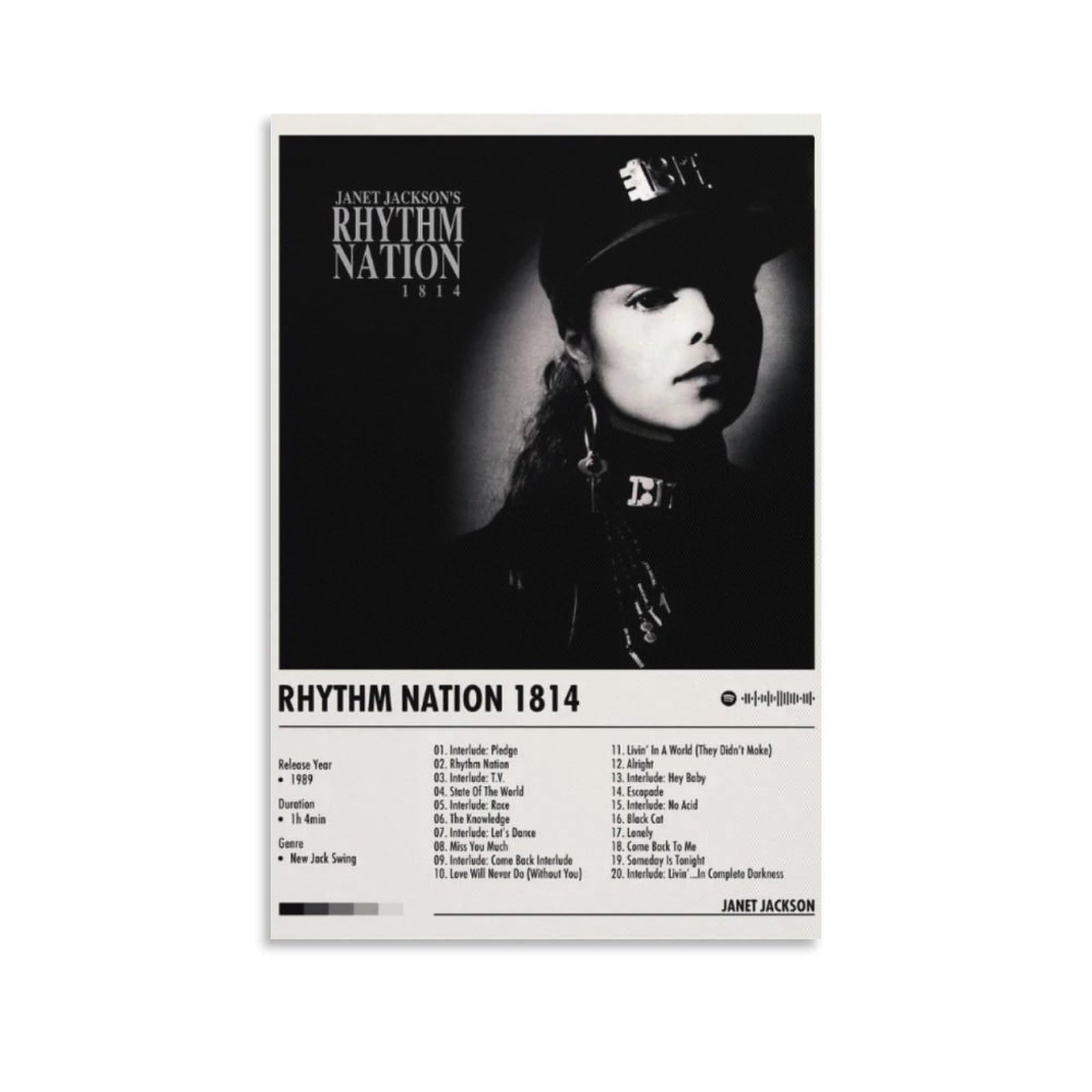
In 1989, Janet Jackson released a 30-minute musical film that would redefine the music video format. Directed by Dominic Sena, this short film served as a visual companion to her fourth studio album, weaving together three of its most powerful tracks: "Rhythm Nation," "Miss You Much," and "The Knowledge." Shot in the iconic Bradbury Building in Los Angeles and the Glenarm Power Plant in Pasadena, the film presented a stark, dystopian world where Jackson and her dancers, clad in matching black military-style uniforms, moved with precision and purpose.
The choreography, a blend of sharp isolations and synchronized group movements, became instantly recognizable and influenced countless music videos in the decades that followed. Premiering on MTV on September 16, 1989, the same day the album hit stores, the film was a cultural event. It later found a home on VHS and LaserDisc through A&M Video, with the home release earning double platinum certification from the RIAA.
The film's impact was immediate and lasting. It earned a Grammy Award for Best Long Form Music Video in 1990, and its influence extended far beyond awards. Choreographers like Wade Robson and Travis Payne have cited Jackson's routine as a major inspiration. Entertainment Weekly called it "legendary," and Rolling Stone dubbed it "the gold standard for dystopian dance pop music videos." For Jackson, it was a statement of artistic ambition and a milestone in her evolution as a performer.
Free with ads
Availability and pricing can change. Confirm on the provider's site before purchasing.
The film opens in a bleak, industrial landscape, with Jackson and her troupe performing the title track "Rhythm Nation" against the backdrop of the Glenarm Power Plant. The choreography is sharp, almost militaristic, as the dancers move in perfect sync, their black uniforms blending with the grime of the setting. The song's lyrics call for unity and social change, setting the tone for the film's broader message.
Amidst these high-energy performance sequences, the narrative introduces two young musicians, their faces etched with hope and ambition. They are seen practicing their craft, dreaming of making it big. But their story takes a darker turn as they fall into substance abuse, their talents fading as addiction takes hold. These scenes are intercut with Jackson's performances, creating a stark contrast between the discipline of her movement and the chaos of their decline.
The second segment, set to "Miss You Much," shifts the emotional register. Jackson's choreography becomes more fluid and expressive, hinting at longing and vulnerability. The narrative thread of the struggling musicians continues, their struggles becoming more pronounced. The setting moves to the Bradbury Building, its ornate ironwork and skylights providing a visually striking backdrop that contrasts with the earlier industrial decay.
As the film progresses, the themes of social consciousness become more explicit. The lyrics of "The Knowledge" address issues like racism, poverty, and the need for education. Jackson's performance grows more urgent, her movements more forceful, as if she is leading a charge. The two musicians' storylines begin to converge with the larger dance collective, suggesting that their salvation lies in joining this movement.
The film's structure is a rhythmic interplay between narrative and performance, with each song building on the last. The choreography, designed by Anthony Thomas, is a masterclass in precision, with every gesture and step contributing to the overall visual impact. The film does not shy away from the darkness of its subject matter, but it also offers a glimmer of hope through the power of music and community.
By the end, the two musicians have found their way back to the fold, their struggles overcome by the collective energy of the Rhythm Nation. The film stops short of a neat resolution, instead leaving the audience with a sense of possibility and the belief that change is attainable if people come together.
Official Music Video
Critical Consensus
While traditional review aggregator scores are unavailable for this short film, critical consensus holds that Rhythm Nation 1814 is a landmark achievement in music video history, pioneering the long-form music film format and establishing Janet Jackson as a visionary artist whose choreographic precision and social consciousness set a new standard for the medium.
“A landmark achievement in music video history, pioneering the long-form music film format and establishing Jackson as a visionary artist.”
Rolling Stone
Rolling Stone
“Legendary, highlighting its enduring influence on subsequent generations of choreographers and music video directors.”
Entertainment Weekly
Entertainment Weekly
“The gold standard for dystopian dance pop music videos, praising its fusion of social commentary with pop spectacle.”
Rolling Stone
Rolling Stone
Director
Dominic Sena
Composers
Janet Jackson, Jimmy Jam, Terry Lewis
Producer
Propaganda Films
Grammy Award for Best Long Form Music Video (1990)
Best Long Form Music Video: Won
Grammy Hall of Fame Induction (2026)
Album: Inducted
Join the community
fans discussing