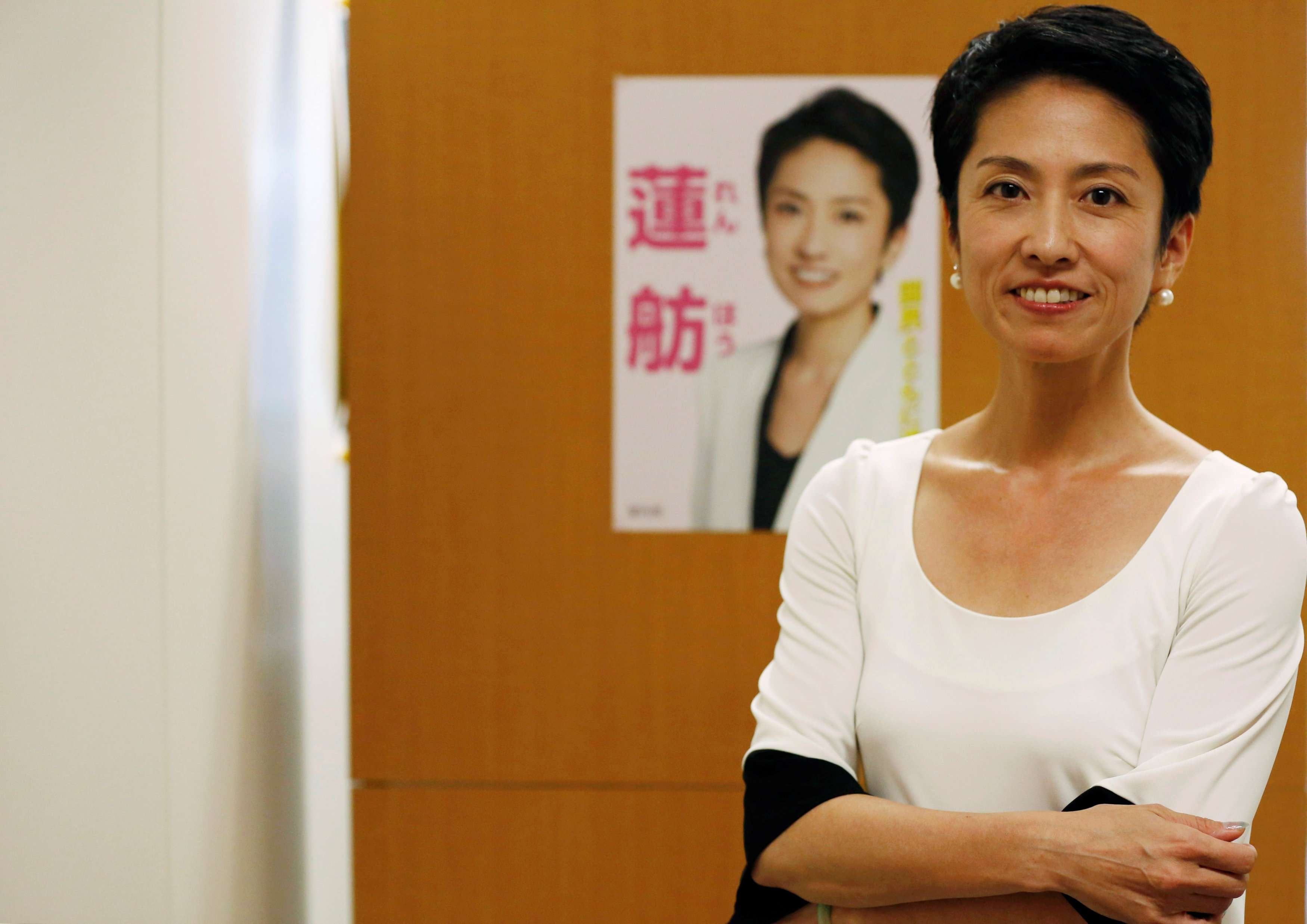
Renhō
 Taiwan
Also known as: Renho, Renhō Murata, Renho Murata, Murata Renho, Hsieh Lien-fang, Lien-fang, Xie Lianfang, Lianfang, Murata Renhō, Renhou
Birthday
November 28, 1967
Birth Sign
Sagittarius
Birthplace
Meguro, Tokyo, Japan
Age
58 years old
About
Renhō Saitō, known simply as Renhō, is a Japanese politician and former journalist who has served in the House of Councillors since 2004, with a brief gap in 2024. Born in Tokyo's Meguro ward on November 28, 1967, she began her career as a television news anchor before entering politics. Renhō is renowned for her eloquent speeches and broad recognition, and she continues to be a prominent voice on gender equality and social issues. Her political career has been marked by historic firsts, including being the first woman to lead the Democratic Party and the first mixed-race politician to head a major Japanese political party. As of 2026, Renhō serves as the leader of Japan's opposition, the Constitutional Democratic Party, and remains a central figure in the nation's political landscape. Her leadership is characterized by her commitment to democratic values and her ability to connect with the public through her communication skills. She is also known for her active social media presence, engaging with citizens on platforms like Instagram and Twitter. Renhō's influence extends beyond politics, as she is often cited as a role model for women and minorities in Japan. Her current work focuses on opposition to the ruling party and advocating for policies that address social inequalities.
Early Life & Background
Renhō was born in Meguro, Tokyo, to a Taiwanese father, Xie Zhexin, and a Japanese mother. Her birth name is Hsieh Lien-fang (謝蓮舫), and she also goes by the Japanese name Saitō Renhō. She spent part of her childhood in Taiwan before returning to Japan. Her mixed heritage made her a notable figure in Japanese public life from an early age. She studied at Meiji University, where she developed an interest in law and politics. Before entering politics, Renhō built a successful career in broadcast journalism. She worked as a news anchor and television reporter, becoming a well-known media personality. Her journalism background gave her significant name recognition and public trust, which she later leveraged in her political career. Her time as a television presenter also developed her communication skills, which political observers have noted as one of her key strengths. She was also an actress early in her career, listed as a profession alongside politician and journalist.
Career Growth
Renhō's political career began in 2004 when she was first elected to the House of Councillors. She was re-elected in 2010, 2016, 2022, and again in 2025. In September 2016, Renhō made history by being elected as the first female leader of Japan's main opposition Democratic Party (DPJ), and the first mixed-race politician to head a major political party in Japan. She led the party from 2016 to 2017. The BBC reported that she 'broke another glass ceiling' with this achievement. In 2024, Renhō ran for Tokyo governor with backing from the Constitutional Democratic Party, the Japanese Communist Party, and the Social Democratic Party. She finished third behind incumbent Yuriko Koike. More recently, in May 2026, Renhō suffered an upset loss in the CDP Tokyo chapter leadership race. Despite this setback, she continues to strengthen her presence at the forefront of the Constitutional Democratic Party. As of 2026, she serves as the leader of Japan's opposition. In March 2026, Renhō clashed with Prime Minister Sanae Takaichi in the Diet over the dual surname issue, with both drawing on their personal experiences. She also delivered campaign speeches in support of journalist Shuntaro Torigoe.
Career Timeline
Public Image & Style
Renhō is known for her eloquent public speaking and strong communication skills, which she developed during her journalism career. Political observers have noted that her personality sets her apart from the typically stolid, dull image of Japanese politicians. She is seen as a champion for gender equality in Japanese politics, described as 'Japan's new icon for gender equality' by the East Asia Forum. She has also been a voice for women's issues in the Diet, including the dual surname debate. TIME magazine profiled her with the headline question 'Renho Murata Could Be Japan's First Female Prime Minister' in September 2016.
Fame & Fandom
Renhō stands apart in the Japanese political landscape not as a figure of idol worship, but as a symbol of a shifting era. Her support base consists of voters and constituents who rally behind her historic role as the first woman to lead a major party and her advocacy for gender equality, rather than a dedicated fanbase engaging in chart pushes or birthday billboards. There is no formal fandom name documented for her following, reflecting a constituency defined by political alignment rather than pop culture devotion. The stories that circulate about her focus on her legislative trailblazing and her unique position as a mixed-race politician in the Diet, devoid of the viral folklore or extraordinary crowd reactions seen in entertainment circles. While she maintains an active presence across social media platforms, these serve as tools for political communication rather than stages for fan rituals. In terms of global recognition metrics, iFANN has evaluated her standing with precision. Renhō is currently evaluated as Unranked in the Global Top 1,000 and holds no placement in any Top-100 scope list according to the August 2026 data from the iFANN Global Fame Engine. This evaluation reflects her status as a significant national figure whose fame is concentrated within Japan's political sphere rather than achieving the broad international penetration required for a ranked position in the global engine's published lists.
Interesting Facts and Legends
Renhō Saitō, known simply as Renhō, carries the characters for 'lotus' and 'boat' in her Japanese name, 蓮舫, while her Taiwanese name is Hsieh Lien-fang (謝蓮舫). She has secured five victories in the House of Councillors elections: 2004, 2010, 2016, 2022, and 2025. Standing at approximately 160 cm (5'3"), she matches the average height for a Japanese woman yet towers over the typically stolid image of her colleagues. Before her current tenure, she served as executive deputy leader of the Constitutional Democratic Party of Japan before running for Tokyo governor. A memorable moment defining her political style occurred when she told Monocle in 2026 that she would not be 'getting the saké,' signaling her distinct approach to power dynamics. Her legacy includes historic milestones such as becoming the first female head of Japan's main opposition party in September 2016, a move widely cited as a landmark for gender politics. She also made headlines in 2020 during the Tokyo gubernatorial election challenge against incumbent Yuriko Koike, where she ran as the candidate for the Constitutional Democratic Party of Japan. Her return to the House of Councillors in 2025 marked a continuation of a career that began in 2004, solidifying her place as a persistent voice for women's issues and the dual surname debate.
Notable Quotes
“I won't be getting the saké.”
“Japanese politicians tend to be stolid and dull, but Murata is different.”
Family & Personal Life
Renhō is married to Nobuyuki Murata, and the couple has three children together, including twins. Her family life has been a topic of public interest, particularly given her status as a working mother in Japanese politics. She has spoken publicly about the challenges of balancing family and career in a society where women face significant barriers in the workplace. Her father, Xie Zhexin, is Taiwanese, and her mother is Japanese. She spent part of her childhood in Taiwan before returning to Japan.
Notable Connections
Relationships & Dating History
Renhō is married to Nobuyuki Murata, and the couple has three children together, including twins. Details about how they met and their early relationship are not widely publicized. There are no publicly documented relationships before her marriage, and no divorces or separations have been reported. As of 2026, she remains married to Nobuyuki Murata. No public dating history outside her marriage has been credibly reported.
- MarriedNobuyuki MurataCurrentRenhō is married to Nobuyuki Murata, and the couple has three children together, including twins.
Salary, Net Worth In 2026
$2 Million
iFANN Editorial Team estimate
iFANN currently estimates Renhō's net worth at $2 Million as of 2026. As a Japanese politician, her primary income source remains her parliamentary salary, which amounts to approximately ¥22 million annually (roughly US$150,000). Prior to entering politics, she accumulated substantial earnings through her extensive career as a television news anchor and reporter. These combined professional achievements form the basis of her current financial standing.
Awards & Accolades
View 5 records, honours and achievementsKnown For
First female leader of the Democratic Party of Japan
2016 · Party Leader
Tokyo gubernatorial candidate
2024 · Candidate
Keywords
Sources
Quick Facts
- Profession
- politician, journalist, actor
- Born
- November 28, 1967
- Birthplace
- Meguro, Tokyo, Japan
- Gender
- Female
- Spouse
- Nobuyuki Murata
- Birth Sign
- Sagittarius
Personal Details
- Full Name
- Hsieh Lien-fang
- Spouse
- Nobuyuki Murata
- Children
- 3
- Education
- Meiji University
Frequently Asked Questions
Is Renhō married?
What is Renhō's real name?
How old is Renhō?
What party does Renhō belong to?
Did Renhō win the Tokyo governor election?
Similar People
Join the community
fans discussing