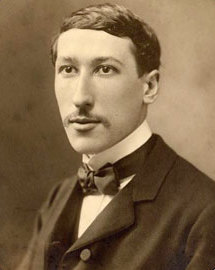
René Guénon
 Egypt
Egyptwriter•metaphysician•philosopher
Birthday
+1886-11-15
Birth Sign
Scorpio
Birthplace
Blois
Age
Died at 64
About
René Guénon, born René Jean-Marie-Joseph Guénon on November 15, 1886, in Blois, France, was a writer and metaphysician whose work bridged Eastern and Western thought. He is also known by his Arabic name, Abdalwahid Yahia. Guénon dedicated his life to exploring esotericism, sacred science, and traditional studies, and he became a prominent voice in 20th-century philosophy. His writings sought to present Eastern metaphysics and traditions, which he saw as universal, to Western readers while staying true to their original spirit. In 1910, at age 24, he was initiated into Islamic esotericism, a path that deeply influenced his later work. Guénon wrote primarily in French, and his books have been translated into more than twenty languages, reaching a global audience. He also contributed an article in Arabic to the journal Al Marifah. Guénon passed away on January 7, 1951, in Cairo, Egypt, leaving behind a rich intellectual legacy that continues to resonate.
Fame & Fandom
René Guénon never sought a crowd, yet his ideas found one. The French metaphysician who vanished into Cairo in 1930 left behind no fan club with a catchy name or a dedicated subreddit. His followers are not a mob of selfie-takers but a scattered network of scholars and traditionalist thinkers who call themselves adherents of the Traditionalist School. They engage with his work through dense texts like *The Reign of Quantity* rather than viral campaigns or birthday billboards. Guénon famously despised the cult of personality, refusing to cultivate a public image while living as Shaykh `Abd al-Wahid Yahya until his death. Today, his influence ripples through unexpected channels, from King Charles III's environmental critiques to Steve Bannon's political worldview. These readers treat his writings as sacred science, debating his rejection of modernity in quiet corners of academia and online forums. There are no rituals, no inside jokes, and no fan-funded projects for a man who believed wisdom should stand on its own merits. Despite his reclusive nature, the global attention on his legacy has solidified his standing among historical figures. According to the iFANN Global Fame Rankings, René Guénon is currently the 36th most famous person from Egypt, a position he has held steady since the previous cycle.
Interesting Facts and Legends
Born in Blois in 1886, René Guénon adopted the Arabic name Abdalwahid Yahia after converting to Sunni Islam in 1930. He spent the final two decades of his life in Cairo, where he lived in seclusion and rejected biographical details. His most enduring concept is the 'Reign of Quantity,' a critique arguing that the modern age reduces all values to material numbers. This thesis remains central to discussions on Western esotericism and conservative thought. A recurring story in his lore involves his sharp criticism of both liberalism and communism, which later drew interest from figures like Mussolini and Hitler, though Guénon himself remained critical of political regimes imposing ideology. In 2019, *The Catholic Herald* labeled him a heretic, highlighting the tension between his syncretic views and mainstream religious institutions. While some internet communities occasionally meme his strict rejection of modernity, there are no verified folkloric anecdotes of crowds fainting or riots erupting over his presence. His legacy is defined by the sheer weight of his books and the serious intellectual engagement they provoke rather than any theatrical public moment.
Death & Aftermath
Died
+1951-01-07 (aged 64)
Death Place
Cairo, Egypt
Cause of Death
Unknown
René Guénon died on January 7, 1951. He passed away at the age of sixty-four after two decades of living in relative seclusion following his conversion to Islam and adoption of the name Shaykh `Abd al-Wahid Yahya. His final days were marked by the quiet withdrawal from public life he had cultivated since moving to Egypt in 1930. The circumstances of his passing align with the private nature of his later years. While details regarding the funeral service remain unspecified in available records, the rites were likely conducted according to Islamic tradition given his status as a Shaykh.
Immediate public tributes, vigils, or institutional memorials were absent, consistent with his niche audience and deliberate distance from the Western literary scene. Posthumously, his legacy expanded through the continued publication of his extensive bibliography, including major works like The Crisis of the Modern World. Academic discussions and the classification of his ideas as foundational to the Traditionalist school of thought have sustained his influence long after his death. His estate has been managed primarily through the ongoing release of his writings by publishers such as World Wisdom, ensuring his metaphysical inquiries remain central to traditionalist studies.
Awards & Accolades
Keywords
Quick Facts
- Profession
- writer, metaphysician, philosopher
- Born
- +1886-11-15
- Birthplace
- Blois
- Died
- +1951-01-07
- Death Place
- Cairo
- Gender
- Male
- Birth Sign
- Scorpio
Join the community
fans discussing