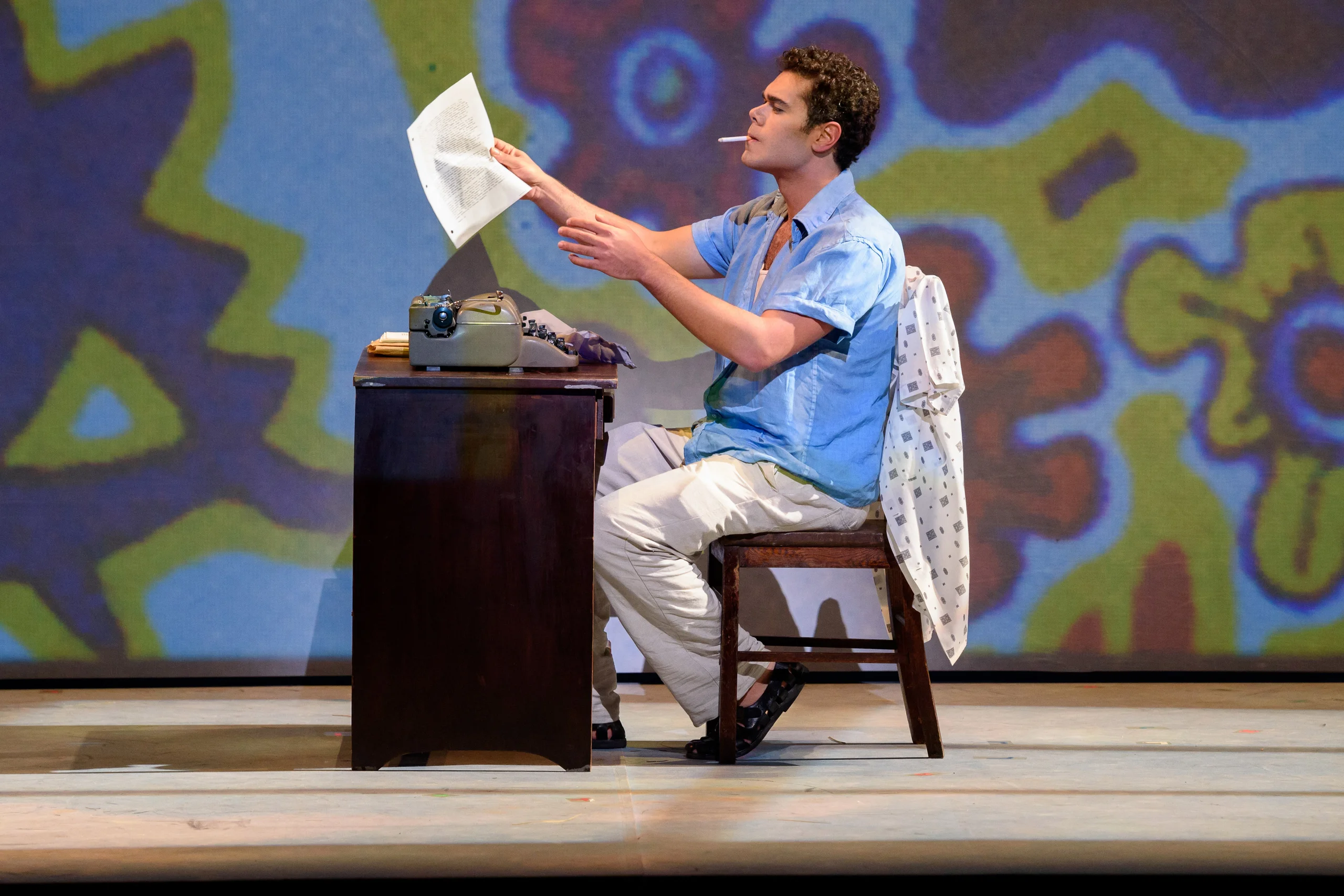
Reinaldo Arenas
 Cuba
Birthday
July 16, 1943
Birth Sign
Cancer
Birthplace
Aguas Claras, Holguín, Cuba
Age
Died at 47
About
Reinaldo Arenas was a Cuban poet, novelist, and playwright whose hallucinatory, baroque fiction and unflinching memoir made him one of the most defiant voices to emerge from revolutionary Cuba. He is best known for the novel El mundo alucinante (1969) and for Before Night Falls, the memoir he dictated in his final months and which was published after his death in 1992. His work openly criticized Fidel Castro, the Cuban Revolution, and the government's persecution of homosexuals and dissidents, and it cost him his freedom and eventually his homeland.
Arenas's reputation rests on a relatively small but intense body of work: the five-novel Pentagonía cycle, several poetry collections, short stories, and plays. His style blends surrealism, historical fantasy, and autobiographical candor, and his memoir remains a key account of the Cuban dissident movement and the costs of political repression. He died in New York City on December 7, 1990, at age 47, after years of illness, and his posthumous influence has only grown, with a 2000 film adaptation and a 2017 opera extending his reach to new audiences.
Early Life & Background
Reinaldo Arenas was born on July 16, 1943, in Aguas Claras, a rural hamlet near Holguín in Oriente province, eastern Cuba. He was an only child raised in extreme poverty; his father was an agricultural laborer and his mother worked the land, and the family moved constantly among the countryside. As a boy he roamed the fields and forests around his home, and he later said that this solitary, nature-bound childhood shaped his imagination and his sense of being an outsider.
His formal education was limited and interrupted. He was largely self-taught as a reader, and his first serious exposure to literature came through borrowed books and the local library rather than through privileged schooling. In his teens he became involved with the anti-Batista underground, and after the 1959 revolution he moved to Havana, where he studied philosophy and literature at the University of Havana. He supported himself working at the National Library, where he read voraciously and met writers and artists outside the revolutionary mainstream.
His pivotal pre-fame moment came in 1967, when his first novel, Celestino antes del alba (published in English as Singing from the Well), won a national literary prize. The win brought him recognition, but the novel's surreal, non-realist style and its refusal to conform to socialist-realist expectations quickly drew official suspicion, setting the pattern for the rest of his life in Cuba.
Career Growth
The 1967 prize for Celestino antes del alba opened doors, but Arenas's follow-up, El mundo alucinante (1969), a hallucinatory historical novel about the rebel friar Fray Servando Teresa de Mier, is widely regarded as his masterpiece and became his international breakthrough. Its publication abroad cemented his reputation as a writer who would not bend to revolutionary norms, and official harassment intensified through the 1970s. He was held in Cuban prisons, including the notorious El Morro, and was pressured into a rehabilitation period, yet he continued writing clandestinely.
In 1980 he left Cuba in the Mariel boatlift, one of roughly 120,000 Cubans who arrived in the United States that year. In exile he published El palacio de las blanquísimas mofetas (1980) and Otra vez el mar (1982), the latter written in Cuba and smuggled out of the country. Settling in New York City and later Miami, he wrote prolifically, taught, gave readings, and became a prominent voice of the Cuban exile and gay communities. In his final months he dictated his memoir, Before Night Falls, which was published posthumously in 1992 and became his most widely read book. A 2000 film adaptation directed by Julian Schnabel, starring Javier Bardem, brought his story to a global audience, and a 2017 opera further extended his cultural reach.
Career Timeline
Public Image & Style
Arenas's public image is that of the defiant dissident and gay exile: a writer who refused to conform, wrote in a hallucinatory, baroque style, and paid for it with prison and exile. Media portrayals emphasize his courage and his tragic end. His content, whether novels, memoir, or poetry, is intense, lyrical, and confrontational. He was openly gay at a time when homosexuality was criminalized in revolutionary Cuba, and this openness became central to both his life and his work. Contemporary descriptions emphasize his thin build and intense, restless manner rather than specific measurements. In photographs he often appears gaunt, with a direct, challenging gaze that matches the tone of his prose.
Fame & Fandom (iFAMOUS Rankings)
iFANN has not yet collected fame data for Reinaldo Arenas, so no ranking is available. His fame rests on a literary reputation rather than on mass-media visibility: he is a canonical figure in Cuban and LGBTQ literature, taught in university courses and cited in scholarly lists of major Latin American writers of the 20th century, but he never appeared on glossy magazine covers or bestseller lists in his lifetime. He is not on the September 2026 iFAMOUS Rankings flagship list.
His readership is scholarly and literary rather than fandom-style, and the fanbase has no formal name. Communities form around Cuban-exile and LGBTQ literary circles, university courses, and documentaries such as Conducta Impropia. No documented fan campaigns, billboards, or charity drives exist under a fandom banner. In recent years, however, his work has surfaced in bookTok-style content, with readers discovering him through viral videos and online reading communities, a quiet afterlife for a writer who never had a conventional fan club.
Interesting Facts and Legends
He wrote Otra vez el mar in Cuba and had the manuscript smuggled out of the country, a story that has become part of his lore. Too ill to write in his final months, he dictated Before Night Falls into a tape recorder. He worked at the National Library in Havana, where he read widely outside official channels. The 1984 documentary Conducta Impropia (Improper Conduct) features Arenas and remains a key source on the persecution of gay Cubans. A 2017 opera brought his life to the stage. Fans of his work still retell the story of his farewell letter to Diario las Américas, though the full text circulates in varying translations.
Family & Personal Life
Reinaldo Arenas was an only child, born to an agricultural laborer father and a mother who worked the land. The family lived in extreme poverty in rural Oriente province, moving constantly among the countryside. Arenas never married and had no known children. In his memoir he wrote candidly about his relationships and encounters, but he kept his family background largely private, and few details about his parents or their later lives are documented in reliable sources. His household in exile was solitary; friends and literary colleagues formed his closest circle in New York and Miami.
Notable Connections
Javier Bardem played Arenas in the 2000 film adaptation. Julian Schnabel directed that film. Jaime Manrique wrote the foreword to Before Night Falls and has spoken about Arenas. Fray Servando Teresa de Mier is the historical subject of El mundo alucinante. Vivero, a Cuban LGBT activist, has been quoted on Arenas's legacy.
Relationships & Dating History
Arenas was openly gay at a time when homosexuality was criminalized and persecuted in revolutionary Cuba, and this is central to both his life and his work. He never married and had no known children. Documented relationships and partners are limited, because much of his romantic life is known through his own memoir and friends' accounts rather than through press coverage.
In the 1960s and 1970s in Havana, Arenas wrote candidly in Before Night Falls about numerous affairs and encounters, often conducted under the threat of arrest. These partners are largely unnamed or pseudonymous in his memoir, and no reliable public record identifies them. He also described a serious relationship during the repressive years that ended under the pressure of state harassment and imprisonment; the partner is not publicly identified in credible sources.
After the 1980 Mariel boatlift, Arenas lived in New York City and later Miami and had relationships that friends described in interviews and documentary accounts, including the documentary Conducta Impropia, but no partner has been publicly confirmed by name in mainstream sources. Some accounts of his final years mention a companion who helped him during his illness, but this is not consistently confirmed and should be treated as unconfirmed. At the time of his death in 1990, he was not married and had no current partner.
Death & Aftermath
Died
December 7, 1990 (aged 47)
Death Place
New York City, New York, USA
Cause of Death
Suicide while dying of AIDS (reported)
Reinaldo Arenas died on December 7, 1990, in New York City, at age 47. He had been diagnosed with AIDS in 1987 and was seriously ill in his final months. Multiple accounts describe his death as a suicide while dying of AIDS, and a farewell letter was sent to the Miami newspaper Diario las Américas. The exact circumstances, including who found him, vary slightly across sources and are best attributed rather than stated as absolute fact.
Too sick to continue writing, Arenas dictated his memoir, Before Night Falls, into a tape recorder and spent his last months organizing his papers and correspondence. At the time of his death he reportedly had five novels under contract. The memoir was published posthumously in 1992 and became the defining account of his life, later adapted into a 2000 film directed by Julian Schnabel and starring Javier Bardem, who received an Academy Award nomination for the role. A 2017 opera based on his life brought his story to a new audience.
Tributes came from Cuban exile writers and gay-rights figures. A 2016 assessment argued he still matters for Cuba's LGBT community, quoting activist Vivero that his rebellious gestures still have a lot of validity. A 2020 retrospective honored his lessons on repression and exile. In 2012 he was inducted into the Chicago LGBT Hall of Fame. No reliable public valuation of his estate exists; his literary rights are managed by his publishers and literary executors, with revenue from book royalties, translations, the film adaptation, and the opera.
Net Worth (Estate Value)
$1 Million
iFANN Editorial Team estimate
No credible celebrity-net-worth site publishes a figure for Reinaldo Arenas, and no reliable public valuation of his estate exists. The iFANN Editorial Team's analysis of his known earnings, royalties, and literary rights points to roughly $1 million as a working estimate for the estate in 2026. That figure is necessarily speculative: Arenas lived modestly in exile, and his income came from book royalties, translations, and occasional teaching and readings rather than from bestsellers or media appearances.
Posthumous revenue streams include royalties from Before Night Falls, which became his most widely read book after its 1992 publication, translations of his novels and poetry, licensing for the 2000 film adaptation and the 2017 opera, and academic permissions. His literary rights are managed by his publishers and literary executors. There is no record of major catalog sales or legal settlements involving his estate. Any specific dollar figure should be treated as an estimate, not a confirmed fact.
Awards Won (2)
Arenas won Cuba's national literary prize in 1967 for his first novel, Celestino antes del alba. In 2012 he was inducted into the Chicago LGBT Hall of Fame. No major international literary prizes were awarded to him in his lifetime; his reputation rests on critical acclaim and posthumous influence.
2012 · Inductee
Lifetime achievement
1967 · Literary Prize
Celestino antes del alba
Known For
El mundo alucinante
1969 · Author
Before Night Falls
1992 · Author (memoir)
Celestino antes del alba
1967 · Author
Otra vez el mar
1982 · Author
Keywords
Sources
Quick Facts
- Profession
- writer, poet, playwright
- Born
- July 16, 1943
- Birthplace
- Aguas Claras, Holguín, Cuba
- Died
- December 7, 1990
- Death Place
- New York City, New York, USA
- Gender
- Male
- Birth Sign
- Cancer
Personal Details
- Full Name
- Reinaldo Arenas
- Education
- University of Havana (philosophy and literature)
Frequently Asked Questions
Why was Reinaldo Arenas imprisoned?
Is Before Night Falls a true story?
When did Reinaldo Arenas leave Cuba?
How did Reinaldo Arenas die?
What is Reinaldo Arenas best known for?
Similar People

Join the community
fans discussing