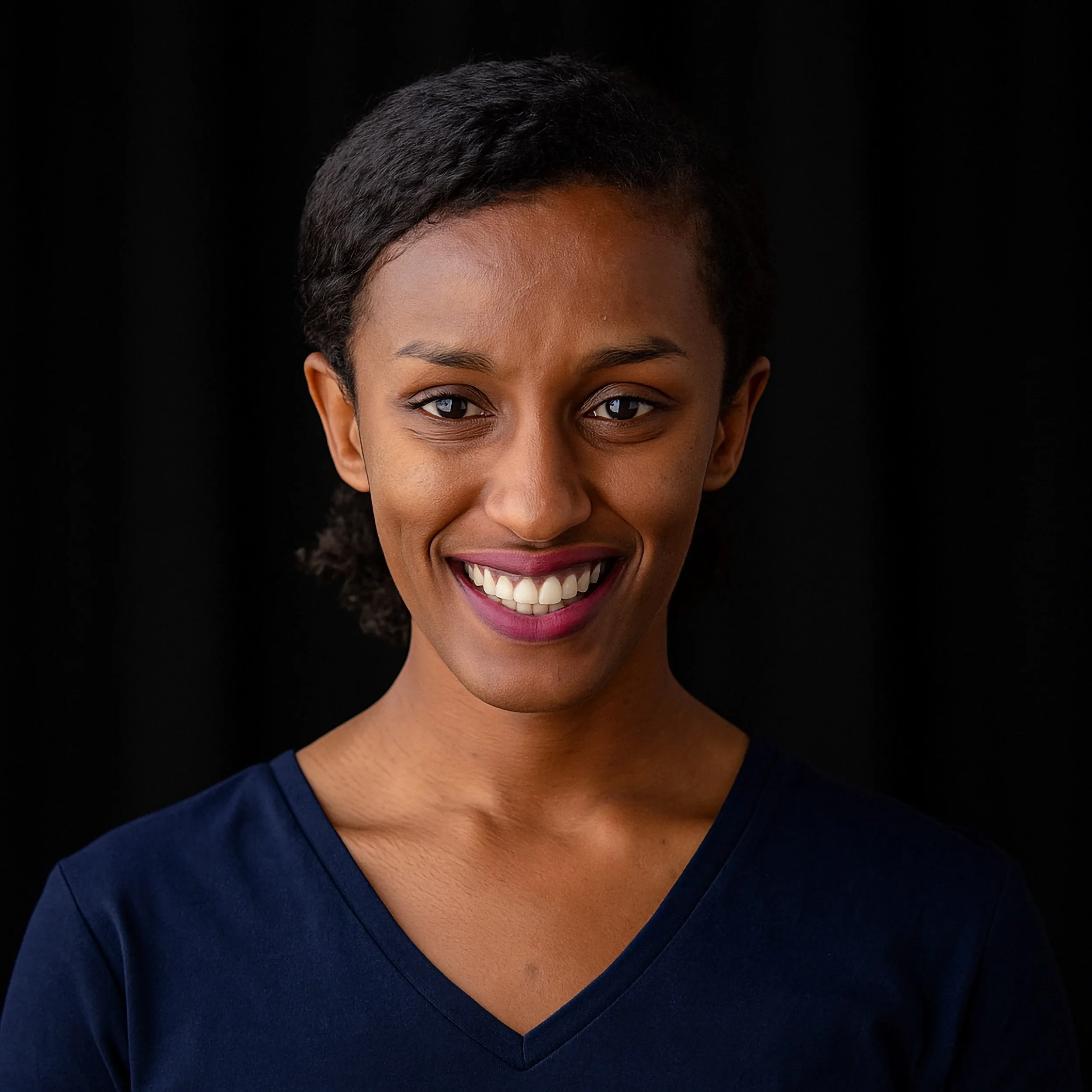
Rediet Abebe
 Ethiopia
computer scientist•academic•researcher
Birthday
January 1, 1991
Birth Sign
Capricorn
Birthplace
Addis Ababa, Ethiopia
Age
35 years old
About
Rediet Abebe is an Ethiopian computer scientist who works at the intersection of algorithms, artificial intelligence, and social inequality. She is an assistant professor of computer science at the University of California, Berkeley, where she leads research on how computational tools can address pressing social problems like poverty, homelessness, and unequal access to opportunity. Her work has earned her recognition as a leading voice in algorithmic fairness and equity in AI.
Abebe is perhaps best known for co-founding two influential communities: Mechanism Design for Social Good (MD4SG) and Black in AI. These initiatives have helped shape the field by connecting researchers and advocating for greater diversity in artificial intelligence. She has been featured in Quanta Magazine and the Boston Review, and her research has been supported by an Andrew Carnegie Fellowship.
As of 2026, Abebe continues to teach and research at Berkeley, pushing the boundaries of how computer science can be used for social benefit. She remains an active contributor to academic and policy discussions on the role of AI in society.
Early Life & Background
Rediet Abebe was born in Addis Ababa, Ethiopia, in 1991. She grew up under the Ethiopian national curriculum, showing early academic promise. In the 8th grade, she received a merit-based scholarship that allowed her to leave Ethiopia and pursue her secondary education abroad, a pivotal moment that set the stage for her global academic journey.
She went on to Harvard University for her undergraduate studies, where she earned a bachelor's degree. She continued at Harvard, completing a master's degree in applied mathematics in 2016 and another in computer science. During her time at Harvard, Abebe became interested in how theoretical computer science could be applied to social issues, a passion that would define her career.
After Harvard, Abebe moved to Cornell University for her doctoral studies, working under the supervision of Jon Kleinberg. Her PhD research focused on algorithms and mechanism design for social good, exploring how these tools could address inequality and distributive justice. It was during her graduate studies that she observed how vulnerable populations in wealthy nations lack access to vital resources, an insight that shaped her research agenda.
Career Growth
Abebe's breakthrough came with the co-founding of Mechanism Design for Social Good (MD4SG) in 2016, an interdisciplinary research network that applies mechanism design to improve social welfare. The following year, she co-founded Black in AI with Inioluwa Deborah Raji and others, creating a vital community for Black researchers in artificial intelligence.
In December 2019, Abebe made history as the first Black woman to earn a PhD in computer science from Cornell University. She then served as a Junior Fellow at the Harvard Society of Fellows, a prestigious three-year postdoctoral position. In March 2021, she joined UC Berkeley as an assistant professor of computer science, where she continues her research on algorithmic fairness and equity in AI.
In 2022, Abebe received an Andrew Carnegie Fellowship, which came with a $200,000 stipend to support her research. Her work has been published in venues like the Boston Review, and she has spoken at international institutions, including Tampere University in Finland, on topics such as trust and quality assurance in higher education.
Career Timeline
Public Image & Style
Abebe is portrayed in media as a trailblazer and a bridge-builder between rigorous theoretical computer science and real-world social justice concerns. Her signature style is interdisciplinary, combining mechanism design, algorithmic game theory, and social choice theory to address inequality. The tone of her public content is scholarly and measured, aimed at academic audiences and policy circles.
She does not have an official or unofficial fandom name, as her following is within academic and scientific communities rather than popular culture. There are no documented fan-culture rituals or a distinctive social media voice; her public communication is professional and research-focused.
Fame & Fandom (iFAMOUS Rankings)
Rediet Abebe commands a distinct presence within the global landscape of technology and social justice, yet her influence operates through the rigorous channels of academia rather than the spectacle of celebrity culture. She has cultivated a dedicated following among researchers, students, and advocates who champion her work on algorithmic fairness, but this audience does not organize under a formal fandom name or engage in the ritualistic behaviors typical of pop icons. Her supporters are defined by their professional alignment with her mission to dismantle inequality in artificial intelligence, gathering around initiatives like Blacks in AI rather than forming a fan club. The scale of her reach is measured in citations, policy impacts, and the growth of inclusive tech communities, reflecting a depth of engagement that prioritizes substance over viral moments. While she has no official fanbase name documented in public records, her impact resonates deeply within the scientific community, particularly among underrepresented groups in computer science who view her as a pivotal figure for equity. iFANN's Global Fame Engine has evaluated Rediet Abebe, but they do not currently hold a placement in the published rankings (Global Top 1,000 or a Top-100 scope list). This evaluation reflects her status as a highly influential expert whose fame is concentrated in specialized fields rather than the general population.
Interesting Facts and Legends
Rediet Abebe made history in December 2019 as the first Black woman to earn a PhD in computer science from Cornell University, a milestone achieved after leaving Ethiopia following the 8th grade on a merit-based scholarship. Her academic journey includes a Junior Fellowship at Harvard's Society of Fellows before her appointment as an assistant professor at UC Berkeley was announced in March 2021. That same spring, Quanta Magazine featured her profile discussing how she tackles inequality through computational tools. In April 2022, she joined six other UC professors as a Carnegie Fellow, recognized for her work in improving educational outcomes and algorithmic fairness. Her research extends beyond theory into public discourse, where she has addressed the mental health challenges facing PhD students and the broader social implications of AI systems. These verified achievements form the core of her legacy, establishing her as a bridge between theoretical computer science and real-world social justice concerns without the need for folklore or viral anecdotes.
Notable Quotes
“My research broadly falls in the fields of algorithms and AI, with a focus on issues of inequality and distributive justice.”
“I use the tools of theoretical computer science to understand pressing social problems, and try to fix them.”
“We need to think about how to design algorithms that are fair and equitable, not just efficient.”
Family & Personal Life
Details about Abebe's family are not publicly documented. She was born in Addis Ababa, Ethiopia, and left the country after the 8th grade to pursue her education abroad. There is no public information about her parents, siblings, or extended family. She has not shared details about her household or personal life in interviews or public profiles.
Notable Connections
Abebe's PhD advisor at Cornell was Jon Kleinberg, a prominent computer scientist known for work on networks and algorithmic fairness. She co-founded Black in AI with Inioluwa Deborah Raji, a notable AI researcher focused on algorithmic auditing. She has also engaged in public discourse on AI's social impact with MIT economist Daron Acemoglu through the Boston Review.
Relationships & Dating History
Rediet Abebe keeps a notably private profile. There is no publicly documented information about her dating history, romantic relationships, marriages, or children. No credible sources, including news outlets, interviews, or biographical profiles, report any public romantic partnerships.
As of 2026, her relationship status is not publicly known; there is no evidence of a current partner, engagement, marriage, or divorce. The absence of information is itself the most accurate statement that can be made, she has not shared details of her personal or romantic life in any verifiable public forum. Similarly, there is no public record of any children.
Salary, Net Worth In 2026
$1 Million
iFANN Editorial Team estimate
As of 2026, Rediet Abebe's net worth is not publicly reported by any credible financial or celebrity-net-worth source. As an academic assistant professor at a public university, her compensation follows standard academic salary scales; UC Berkeley assistant professor salaries in computer science typically range from approximately $120,000 to $180,000 annually, though no specific figure for Abebe is publicly available. She has no documented business ventures, endorsement deals, or commercial enterprises. Her wealth sources are limited to her academic salary and research grants, such as the $200,000 Carnegie Fellowship stipend. No celebrity-net-worth site, financial outlet, or Google-surfaced figure provides an estimate for her net worth. She is not deceased, so estate value is not applicable. Given the lack of public data, per iFANN's editorial analysis, her net worth is estimated at around $1 Million.
Awards Won (1)
Rediet Abebe's most significant award is the Andrew Carnegie Fellowship, which she won in 2022. This competitive fellowship, awarded by the Carnegie Corporation of New York, came with a $200,000 stipend to support her research. Her other recognitions, such as being named a Junior Fellow at the Harvard Society of Fellows, are appointments rather than competitive awards.
2022 · Research Fellowship
Research on algorithms and social inequality
Known For
Algorithmic Fairness and Equity in AI
2016 · Researcher
Mechanism Design for Social Good (MD4SG)
2016 · Co-founder
Black in AI
2017 · Co-founder
Keywords
Sources
Quick Facts
- Profession
- computer scientist, academic, researcher
- Born
- 1991
- Birthplace
- Addis Ababa, Ethiopia
- Gender
- Female
- Birth Sign
- Capricorn
- Education
- Harvard University, Cornell University
- Current Position
- Assistant Professor, UC Berkeley
Personal Details
- Education
- Harvard University (BA, SM in Applied Mathematics, SM in Computer Science); Cornell University (PhD in Computer Science)
Frequently Asked Questions
Who is Rediet Abebe?
What did Rediet Abebe achieve at Cornell?
Is Rediet Abebe married or dating anyone?
What is Rediet Abebe's net worth?
Where is Rediet Abebe from?
Social Media
Similar People
Join the community
fans discussing