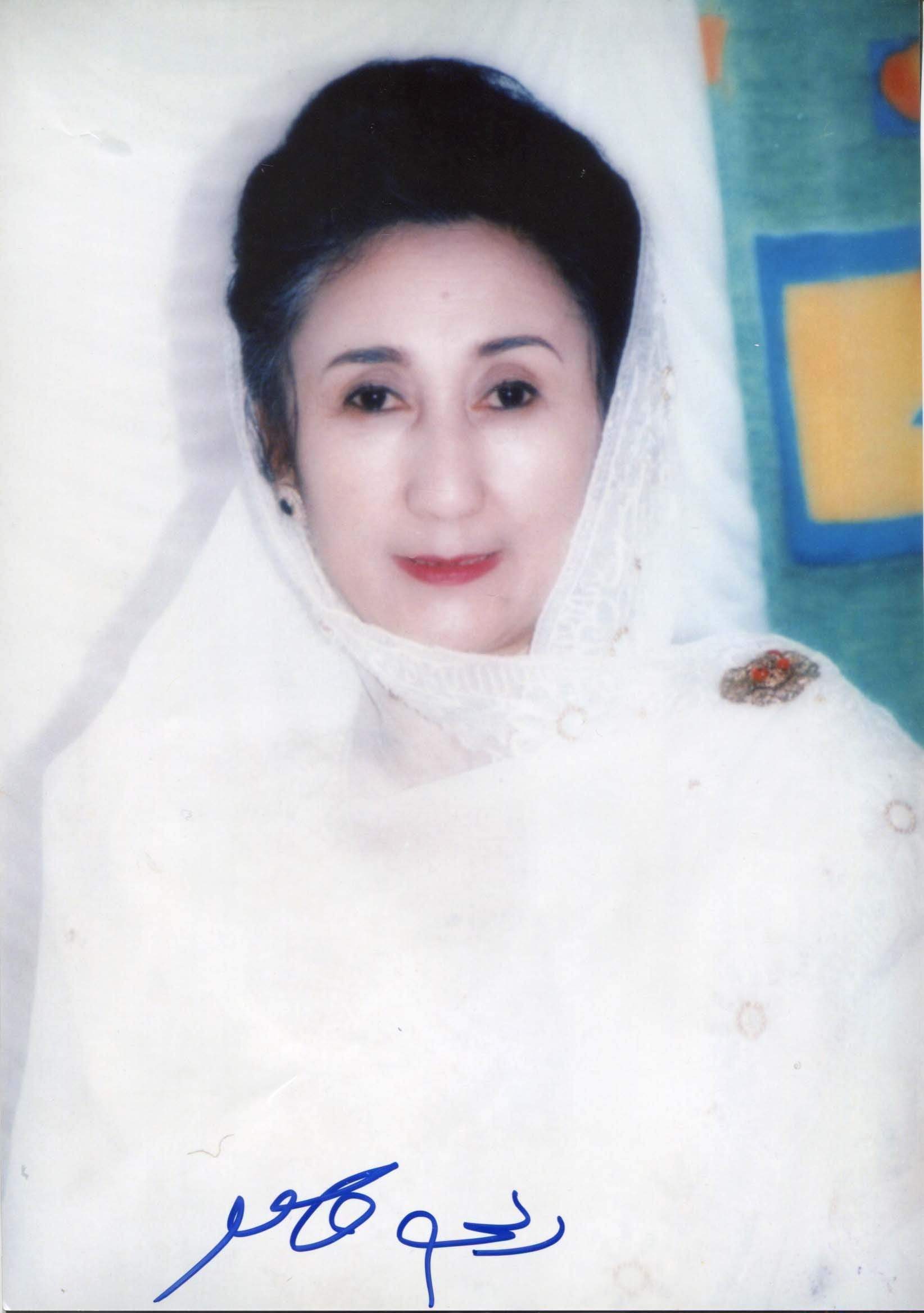
Rebiya Kadeer
 China
Chinahuman rights defender•merchant•politician
Also known as: Rabia Kadir, 热比娅·卡德尔
Birthday
November 15, 1946
Birth Sign
Scorpio
Birthplace
Altay City, Xinjiang, China
Age
79 years old
About
Rebiya Kadeer is a Uyghur human rights activist, former businesswoman, and politician. Born in Altay City in China's Xinjiang region, she became one of China's wealthiest women in the 1980s before her arrest and imprisonment in 1999. After her release in 2005, she fled to the United States, where she became the president of the World Uyghur Congress and the most prominent international voice for Uyghur rights. Her advocacy has earned her recognition from Western human rights organizations, while the Chinese government labels her a separatist. As of 2026, she remains an active commentator on Uyghur issues, most recently condemning death sentences in the Bangkok bombing case.
Early Life & Background
Rebiya Kadeer was born on November 15, 1946, in Altay City, a small town in China's Xinjiang region. She was one of eleven children in a poor Uyghur family. Growing up, she experienced the economic and social discrimination that shaped her later activism. She once recalled, "I grew up with many questions like, Why do my people face suppression? Why do they treat my people with cruelty? Why do my people face economic discrimination?"
Kadeer's rise began in commerce. In the 1980s, she built a business empire through real estate and trade, becoming a millionaire and reportedly the richest woman in China at the time. Her flagship project, the Rebiya Kadeer Trade Center in Urumqi, became a symbol of Uyghur entrepreneurship. Her success gave her significant social standing within the Uyghur community and eventually led to her service in the National People's Congress in Beijing.
Career Growth
Kadeer's political career took a dramatic turn in 1999 when she was arrested on charges of sending confidential reports to her husband, a U.S.-based broadcaster who supported East Turkistan independence. She was sentenced to eight years in prison. Her imprisonment drew international attention, and human rights organizations campaigned for her release. In 2005, she was freed on compassionate grounds and fled to the United States, settling in Virginia.
In exile, Kadeer became the most prominent leader of the overseas Uyghur community. She was elected president of the World Uyghur Congress, a position she held for years. Under her leadership, the WUC advocated for Uyghur autonomy and raised awareness of human rights abuses in Xinjiang. She testified before the U.S. Congress, including a 2015 appearance before the House Foreign Affairs Committee. In 2010, the documentary "The 10 Conditions of Love" told her story and the Uyghur struggle, sparking a diplomatic incident at the Melbourne Film Festival when China demanded its withdrawal.
Career Timeline
Public Image & Style
Kadeer's public image is sharply polarized. In the West, she is often described as the "spiritual mother of Uighurs" and the most prominent human rights advocate for her people. The Chinese government, by contrast, brands her a terrorist and separatist. She is seen as a dual figure: a successful businesswoman turned political dissident. Her advocacy focuses on raising international awareness of the Uyghur situation, and she is a prolific speaker at international forums. She is known for her petite stature and calm, determined demeanor in public appearances.
Fame & Fandom
Rebiya Kadeer commands a devoted following among those who track the Uyghur struggle, though her supporters do not gather under a single formal banner or coined name. Her audience is less a pop-culture fandom and more a global network of human rights advocates, diaspora communities, and scholars who rally around her narrative of resilience. There are no viral chart campaigns or organized streaming pushes; instead, loyalty is expressed through sustained attention to her speeches at forums like Oslo and Geneva, where she articulates the plight of her people with a clarity that resonates deeply. The story of her transformation from a wealthy businesswoman in the 1980s to a political prisoner and then an exiled icon remains the central legend told to newcomers, framing her life as a stark study in contrasts. Despite this intense engagement from specific circles, iFANN's Global Fame Engine has evaluated Rebiya Kadeer but currently does not place her within the published rankings, meaning she holds no position in the Global Top 1,000 or any Top-100 scope list. This absence from the numbered tiers reflects the niche nature of her fame rather than a lack of impact; her influence is concentrated in geopolitical discourse and human rights advocacy rather than mass entertainment metrics. While millions may know her name in regions affected by the issues she raises, the broad, data-driven signals required for a ranked placement on the global scale remain below the threshold for inclusion in the current edition. Her standing is defined by the weight of her words and the gravity of her history, even if the algorithmic engines of global celebrity have yet to assign her a specific ordinal rank.
Interesting Facts and Legends
Born in Altay City, Rebiya Kadeer is one of eleven children and the mother of eleven children herself, a family dynamic that often anchors her public persona as a matriarchal figure. She has frequently described her life trajectory as a series of sharp contrasts: rising as one of China's wealthiest women in the 1980s, facing arrest and imprisonment, and eventually emerging as a prominent international activist after fleeing to the United States. In a 2011 interview, she offered a sobering reflection on her path, stating, "I can't say the struggle will always be peaceful." A significant chapter of her legacy involves the Rebiya Kadeer Trade Center in Urumqi, once a landmark of her commercial success before its demolition in 2024. Her voice has been featured at major international gatherings, including the Oslo Freedom Forum and the Geneva Summit for Human Rights and Democracy. A widely retold moment in her biography occurred upon her arrival in the United States, when she received a rapturous welcome from supporters who had waited years for her freedom. This reception marked a pivotal turning point, transforming her from a detained dissident into a global symbol of resistance. Her nomination for the Nobel Peace Prize in 2006 further cemented her status as a figure of immense moral weight, drawing attention from organizations worldwide to the cause of Uyghur autonomy.
Notable Quotes
“I grew up with many questions like, Why do my people face suppression? Why do they treat my people with cruelty? Why do my people face economic discrimination?”
“I can't say the struggle will always be peaceful.”
Family & Personal Life
Kadeer is the mother of eleven children. Her second husband, Sirajidin (also spelled Siraj), is a U.S.-based broadcaster who supports East Turkistan independence. The alleged transmission of confidential reports to him led to her 1999 arrest. The couple was separated by her imprisonment and subsequent exile. Kadeer has been based in Washington, D.C., and Virginia since her exile. Detailed public information about her other marriages and romantic relationships is limited, as her public profile has focused on her activism.
Notable Connections
Kadeer is closely associated with the World Uyghur Congress, which she led as president for many years. Her husband, Sirajidin, a U.S.-based broadcaster, played a central role in her arrest. She has also worked with the Uyghur Human Rights Project and spoken at institutions like Duke University and the Oslo Freedom Forum.
Relationships & Dating History
Kadeer's most significant relationship was with her second husband, Sirajidin, a broadcaster in the United States who supported East Turkistan independence. They married at some point before 1999. The alleged transmission of confidential reports to him led to her arrest that year. The couple was separated by her imprisonment and subsequent exile. As of 2026, Kadeer is married to Sirajidin, though they have lived apart for many years due to her exile.
- MarriedSirajidinCurrentU.S.-based broadcaster supporting East Turkistan independence; central to her 1999 arrest.
Salary, Net Worth In 2026
$1 Million
iFANN Editorial Team estimate
Rebiya Kadeer's current net worth is estimated at $1 Million per iFANN's editorial analysis. While she was formerly a millionaire in China during the 1980s, her financial landscape shifted dramatically following her arrest and subsequent exile. Her former business assets, most notably the Rebiya Kadeer Trade Center, were lost over time, culminating in the building's demolition in 2024. With her commercial empire dismantled, her income now likely derives primarily from speaking engagements and her extensive work with various human rights organizations. Estimates of her net worth are scarce, but this figure reflects her modest current circumstances compared to her earlier days as one of China's wealthiest individuals.
Awards & Accolades
View 3 records, honours and achievementsKnown For
President of World Uyghur Congress
2006 · President
The 10 Conditions of Love
2010 · Subject
Keywords
Sources
Quick Facts
- Profession
- human rights defender, merchant, politician
- Born
- November 15, 1946
- Birthplace
- Altay City, Xinjiang, China
- Gender
- Female
- Birth Sign
- Scorpio
Personal Details
- Spouse
- Sirajidin
- Children
- 11
Filmography
1
Total
1
Film
0
TV
Frequently Asked Questions
Is Rebiya Kadeer still alive?
What is Rebiya Kadeer's net worth?
How many children does Rebiya Kadeer have?
Why was Rebiya Kadeer imprisoned?
What is the World Uyghur Congress?
Join the community
fans discussing