“Hitchcock has created a movie that is both a puzzle and a love story, a thriller and a meditation on the nature of observation.”
Roger Ebert
Chicago Sun-Times
 United States
"One broken leg. One suspicious neighbor. One perfect view."
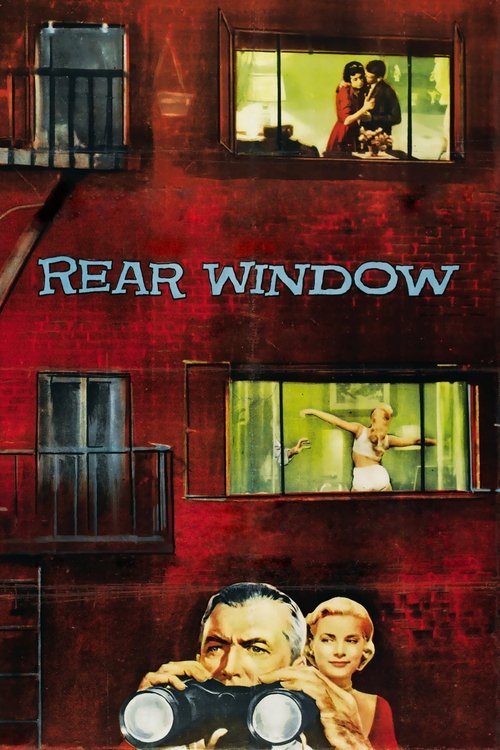
In the summer of 1954, Alfred Hitchcock locked his audience inside a single Greenwich Village apartment and refused to let them leave. The view from that apartment's rear window belongs to L.B. Jefferies (James Stewart), a globe-trotting photojournalist laid up with a broken leg. With nothing but time and a telephoto lens, he starts watching his neighbors. What begins as idle curiosity turns into a chilling obsession when he becomes convinced that a traveling salesman across the courtyard, Lars Thorwald (Raymond Burr), has murdered his wife. His glamorous girlfriend Lisa Fremont (Grace Kelly) and his pragmatic nurse Stella (Thelma Ritter) dismiss his theory as the bored fantasy of a man with too much time on his hands. But Jefferies can't let it go, and his fixation pulls everyone into a dangerous game of observation and intrusion.
Shot on a massive indoor set that recreated an entire apartment block, the film cost $1 million to produce and went on to earn over $37 million worldwide, a testament to its enduring appeal. Hitchcock's meticulous direction, combined with Robert Burks's cinematography and Franz Waxman's tense score, creates a claustrophobic atmosphere that keeps viewers on edge. The movie earned four Oscar nominations, including Best Director and Best Screenplay for John Michael Hayes, who adapted Cornell Woolrich's short story "It Had to Be Murder." With a rating of 8.3 on IMDb and a 98% Rotten Tomatoes score, Rear Window remains a cornerstone of suspense cinema, exploring themes of isolation, morality, and the ethics of looking.
Availability and pricing can change. Confirm on the provider's site before purchasing.
The sweltering heat of a Greenwich Village summer in 1954 has L.B. "Jeff" Jefferies (James Stewart) confined to his apartment with a broken leg, the result of a crash while covering a car race in France. The injury has sidelined him for weeks, and his restless spirit, accustomed to danger and travel, is now trapped in a wheelchair. To fill the hours, he watches the neighbors in the courtyard behind his building. There's a composer wrestling with writer's block, a lonely woman who sets a table for an imaginary guest, a sculptress, a couple with a small dog, and Miss Torso, a dancer who practices her routines in front of open windows. Jeff's nurse Stella (Thelma Ritter) visits daily, and she's quick to mock his voyeurism, warning that "we've become a race of Peeping Toms." But Jeff's attention is drawn to Lars Thorwald (Raymond Burr), a salesman whose wife is bedridden and frequently complains. Jeff notices Thorwald making suspicious trips with a large case and a rope, and then the wife's constant presence stops. The blinds come down, and Thorwald's behavior grows erratic.
His girlfriend Lisa Fremont (Grace Kelly), a fashion model who embodies everything Jeff's rugged lifestyle isn't, arrives with dinner and a new negligee, hoping to convince him to settle down. Instead, Jeff convinces her to help him investigate. When his old friend, Detective Thomas Doyle (Wendell Corey), stops by, Jeff shares his suspicions. Doyle dismisses them, pointing out that there's no evidence of a crime, and warns Jeff to stay out of it. But Jeff can't let it go. He and Lisa devise a plan to get a closer look. They send a note to Thorwald, luring him out, and then Lisa slips into his apartment to search for clues. Meanwhile, Jeff watches from his window, his anxiety mounting as Thorwald returns earlier than expected. Through his telephoto lens, he sees Lisa discover something, but then she's caught. Thorwald confronts her, and a struggle ensues. Jeff is helpless, unable to move, as he watches the woman he loves in danger.
The film's power lies in its single-room perspective. The audience sees only what Jeff sees, and the camera never leaves his apartment, forcing us to share his paranoia and his helplessness. The narrative tightens like a noose as Jeff's suspicion turns into a desperate need for confirmation. The ethical dilemma at the heart of the story is unflinching: Is it right to spy on your neighbors? Does witnessing a crime without intervening make you complicit? As Jeff grows more reckless, ignoring the warnings of Stella and the police, the line between witness and participant blurs. The story builds to a confrontation that threatens to destroy not only his safety but also his relationship with Lisa, all while maintaining a claustrophobic atmosphere within the confines of the apartment and the courtyard.
REAR WINDOW ('54) - Re-issue Trailer
Rear Window Original Theatrical Trailer
Rear Window - Trailer
Critical Consensus
A masterclass in suspense, Rear Window features Alfred Hitchcock at the height of his powers, delivering a taut, claustrophobic thriller that explores the ethics of voyeurism with wit, style, and unforgettable performances.
“Hitchcock has created a movie that is both a puzzle and a love story, a thriller and a meditation on the nature of observation.”
Roger Ebert
Chicago Sun-Times
“Rear Window is a masterpiece of tension, a film that traps you in its web just as Jeff is trapped in his apartment.”
Pauline Kael
The New Yorker
“Alfred Hitchcock has made a film that is both thrilling and thought-provoking, a testament to his genius as a storyteller.”
Bosley Crowther
The New York Times
“A gripping tale of suspense that showcases the director's ability to create tension within a confined space.”
Variety Staff
Variety
James Stewart
L.B. Jefferies
Grace Kelly
Lisa Fremont
Raymond Burr
Lars Thorwald
Wendell Corey
Thomas Doyle
Thelma Ritter
Stella
Judith Evelyn
Miss Lonelyhearts
Georgine Darcy
Miss Torso
Ross Bagdasarian
Songwriter
Director
Alfred Hitchcock
Writers
John Michael Hayes, Cornell Woolrich
Composer
Franz Waxman
Cinematographer
Robert Burks
Producer
Alfred Hitchcock
Academy Awards (1955)
Best Director: Nominated
Academy Awards (1955)
Best Film Editing: Nominated
Academy Awards (1955)
Best Sound Recording: Nominated
Academy Awards (1955)
Best Screenplay: Nominated
Golden Globe Awards (1955)
Best Motion Picture – Drama: Nominated
Golden Globe Awards (1955)
Best Director: Nominated
Golden Globe Awards (1955)
Best Supporting Actress: Nominated
BAFTA Awards (1955)
Best Film from any Source: Nominated
BAFTA Awards (1955)
Best British Actor: Nominated
Join the community
fans discussing