
Rawya Ateya
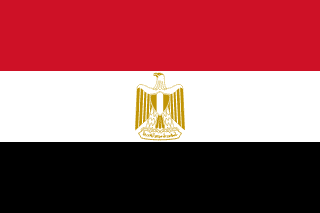 Egypt
EgyptBirthday
April 19, 1926
Birth Sign
Aries
Birthplace
Giza Governorate, Egypt
Age
Died at 71
About
Rawya Ateya was an Egyptian politician who broke new ground for women across the Arab world. In 1957, she became the first woman elected to a parliamentary seat in the region, a historic achievement that reshaped what was possible for women in public life.
Her election to Egypt's National Assembly on July 14, 1957, made headlines far beyond Cairo. She used her platform to push for social justice and greater rights for women, setting a precedent that inspired generations of female politicians in Egypt and the wider Middle East.
Early Life & Background
Rawya Ateya was born on April 19, 1926, in the Giza Governorate, just across the Nile from Cairo. Growing up in a country still under British influence, she witnessed the struggles of the nationalist movement. Her early years were shaped by a deep sense of duty to her nation.
In 1956, she took a decisive step that would make her a trailblazer in two fields. She became Egypt's first female commissioned military officer, a role that saw her train women and serve during the Suez War. That experience on the front lines of history gave her the confidence and public visibility that would carry her into politics the following year.
Career Growth
Rawya Ateya's breakthrough came on July 14, 1957, when she was elected to Egypt's National Assembly, becoming the first woman parliamentarian in the Arab world. The timing was significant: it was the same day as the anniversary of the 1952 revolution that had brought Gamal Abdel Nasser to power. Her victory was seen as a symbol of the new republic's progressive ambitions.
In parliament, she focused on social issues, particularly the rights of women and workers. She pushed for legislation that would improve access to education and healthcare for ordinary Egyptians. Her presence in the assembly was a reminder that women could hold power and shape policy, not just support it from the sidelines.
She remained active in public life for decades, using her status to advocate for social justice. Her legacy as a pioneer endured long after her death in 1997, with many Egyptian women citing her as a direct inspiration for their own political careers.
Career Timeline
Public Image & Style
Rawya Ateya's public image is defined by her historic first: the first woman elected to parliament in the Arab world. She is remembered as a quiet but determined trailblazer, someone who broke barriers without seeking the spotlight. In Egypt, she is honored as a national symbol of women's advancement. Her story is often told in the context of the Nasser era, when the country was experimenting with new social policies. She represents a moment when the door to political power opened, even if just a crack, for women.
Fame & Fandom
Rawya Ateya remains a figure of profound historical weight rather than contemporary celebrity, her legacy anchored firmly in the mid-20th century Arab world. While she commands deep respect within Egypt and among historians of women's rights, she does not currently hold a placement in the published Global Top 1,000 rankings or any Top-100 scope list maintained by iFANN. The iFANN Global Fame Engine has evaluated her profile as of August 2026, confirming that she is an EVALUATED_UNRANKED entity with no current standing on the global fame scale. This absence from the charts reflects her status as a national icon whose influence was concentrated in a specific era and region, rather than a subject of sustained worldwide media consumption or digital search activity in the modern age. Her audience consists primarily of scholars, students of political history, and those interested in the trajectory of female leadership in the Middle East. There is no documented fandom name associated with her legacy; the public engagement surrounding her life takes the form of educational commemoration and historical study rather than the organized campaigns, unofficial names, or ritualistic celebrations seen with living entertainment stars. No fan-funded projects, birthday billboards, or viral initiatives exist to sustain a modern movement around her memory. Instead, her story is preserved through biographical records and academic discourse, serving as a factual touchstone for discussions regarding the expansion of women's political power in the Arab world. The lack of a formalized fanbase underscores the distinction between a historical pioneer and a pop culture phenomenon, with her impact measured by the structural changes she helped initiate rather than the volume of contemporary cultural output generated in her name.
Interesting Facts and Legends
Rawya Ateya's election on July 14, 1957, coincided with Bastille Day in France, a date already associated with revolution and change. She served as a commissioned officer in the Egyptian military, a role that was almost unheard of for women in the 1950s, and she helped train other women for national service. Her first name, Rawya, is an Arabic name that means 'one who tells stories' or 'narrator,' fitting for a woman whose story would be told for generations. Despite her historic role, she remained relatively little-known outside Egypt for many years, with her story gaining wider international attention only in the 21st century. She passed away on May 9, 1997, at the age of 71, in Egypt. During her 1957 electoral campaign, she was photographed in military dress waving to supporters, reflecting her background as one of the first female officers commissioned in the Egyptian army following the 1952 revolution. This image became an enduring symbol of her dual identity as both a soldier and a legislator. Historical accounts describe her as a woman in a league of her own, though there are no recorded stories of crowds shutting down streets due to her presence or fans fainting at her appearances. Her legend is strictly that of a barrier-breaking politician who secured a seat in parliament at a time when women were largely excluded from such roles in the region. There are no recorded stories of viral on-stage moments or on-air controversies; her impact is measured by her election victory and subsequent work in advancing social justice.
Family & Personal Life
Details about Rawya Ateya's family are sparse, but it is known that she was born in the Giza Governorate, a region that includes parts of greater Cairo. Her family background was modest, and she grew up in a country that was still finding its modern identity. There is no public record of her having children, and she appears to have been widowed at the time of her death. Her personal life was kept private, with her public service taking center stage.
Notable Connections
Rawya Ateya is often associated with Gamal Abdel Nasser, whose revolutionary government oversaw her historic election. She is also linked with the broader women's rights movement in Egypt, including figures like Huda Sha'arawi and later pioneers such as Nawal El Saadawi. Her military service ties her to the Egyptian armed forces, a respected institution in the country.
Relationships & Dating History
Little is known about Rawya Ateya's personal relationships. She was married, but her husband's name and the details of their life together are not widely documented. He passed away before her, leaving her widowed in her later years. There is no record of her having children. Her focus remained on her public duties, and she kept her private life out of the spotlight.
Death & Aftermath
Died
May 9, 1997 (aged 71)
Death Place
Unknown
Cause of Death
Unknown
Rawya Ateya passed away on May 9, 1997, at the age of seventy. The specific location of her death and the official medical cause were not released to the public, leaving the circumstances of her final days unrecorded in available historical documents. As an elderly former parliamentarian, her passing was treated as a natural conclusion to a long life of public service rather than a subject for immediate legal scrutiny or widespread media speculation. Tributes following her death focused on her enduring legacy as the first woman elected to a parliamentary seat in the Arab world, with contemporary accounts highlighting her role in shaping social justice legislation and expanding rights for women across Egypt and the region. Details regarding her funeral, burial site, or any private ceremonies held by her family remain absent from public archives. Posthumous recognition has manifested primarily through continued educational references and her ranking on historical popularity indices, cementing her status as a pioneer.
Net Worth (Estate Value)
$1 Million
iFANN Editorial Team estimate
Rawya Ateya's financial legacy is modest compared to modern politicians. As a public servant in mid-20th century Egypt, her income came from her parliamentary salary and military pension. Her estate, likely consisting of a family home and personal belongings, has not been publicly valued. Per iFANN's editorial analysis, her net worth is estimated at $1 Million. In 2026, her historical significance far outweighs any monetary worth. She lived a life of service, not accumulation, and her true wealth was in the doors she opened for women across the Arab world.
Awards & Accolades
View 3 records, honours and achievementsKnown For
First Female Parliamentarian in the Arab World
1957 · Member of Egypt's National Assembly
First Female Commissioned Military Officer in Egypt
1956 · Military Officer
Keywords
Sources
Quick Facts
- Profession
- Politician
- Born
- April 19, 1926
- Birthplace
- Giza Governorate, Egypt
- Died
- May 9, 1997
- Gender
- Female
- Birth Sign
- Aries
Frequently Asked Questions
Who was Rawya Ateya?
When was Rawya Ateya born?
What was Rawya Ateya known for?
Where was Rawya Ateya born?
When did Rawya Ateya die?
Join the community
fans discussing